
How to Choose an Innerspring Mattress for Back Sleepers: Key Tips
Are you choosing an innerspring mattress for back sleeping but unsure which specs actually matter? Start by prioritizing spinal alignment: a medium-firm comfort level, supportive coil system, and a surface that cushions without sinking. In about 20 to 30 minutes of focused comparison, you can narrow choices by checking coil type, comfort layer thickness, and return/warranty terms. If you follow these key checks, you will confidently select a mattress that keeps your hips and shoulders level all night.



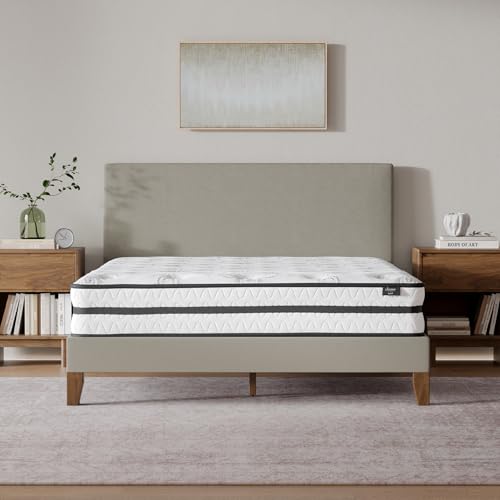
If you sleep on your back, choose an innerspring mattress that keeps your hips level while still cushioning your lower back—this usually means a medium-firm feel and the right support for your body weight. Focus on coil design, firmness level, and how well the comfort layer distributes pressure before you worry about “luxury” features. This guide walks you through what to check so your spine stays aligned through the night, and it also helps you shop smarter in 2026 (without getting pulled into marketing claims that don’t show whether lumbar support is actually there).
If you’re a back sleeper shopping online or in-store, these steps help you compare innerspring options without getting distracted by marketing. It’s especially useful if you’ve woken up with low-back soreness, pressure points, or a “sinking” feeling—signs that your hips are dropping or the comfort layer is doing less pressure relief than it appears to do.
Start with proper spinal alignment (the real goal)
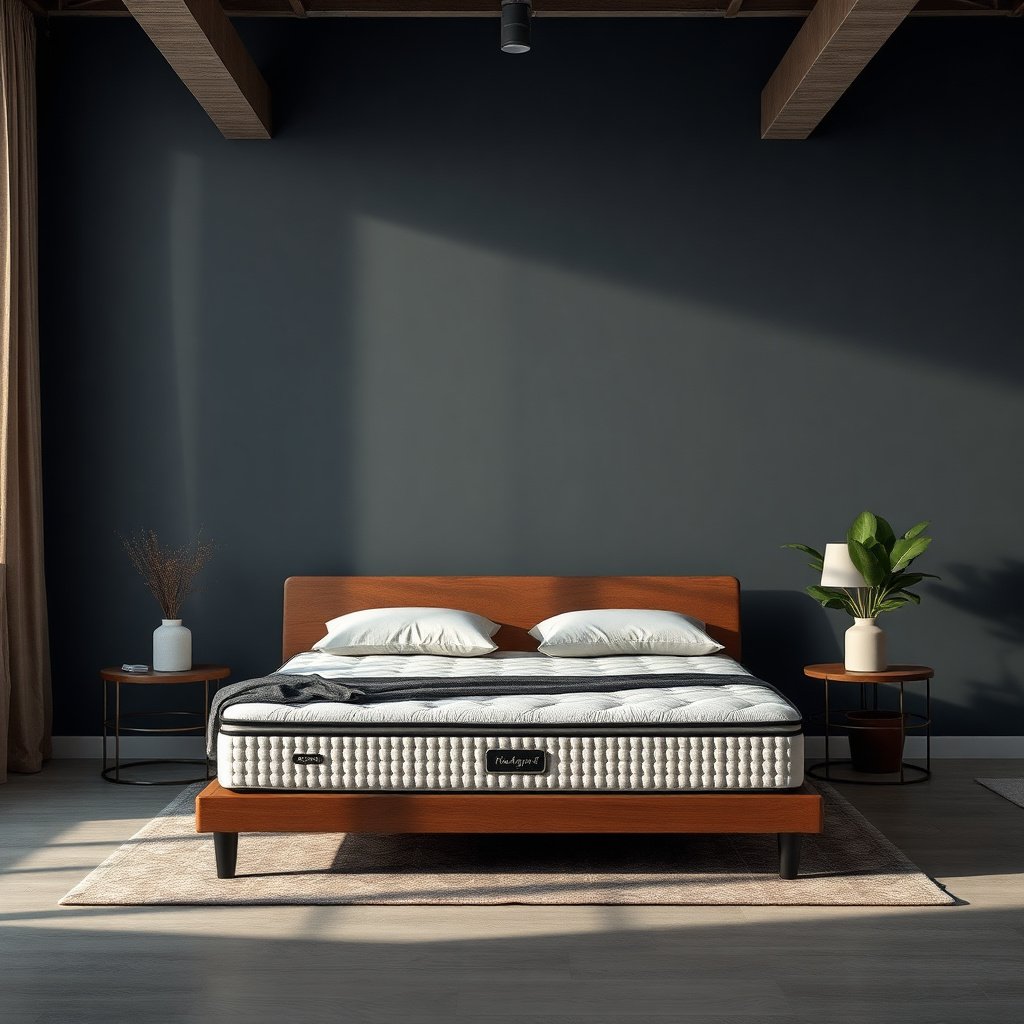
A back sleeper’s top priority is keeping the pelvis neutral—meaning your hips stay supported so your lumbar spine doesn’t over-arch overnight. The “right” innerspring mattress isn’t just about feeling comfortable; it’s about maintaining consistent support through your natural spine curve.
– Look for a “neutral” feel: your hips shouldn’t sink lower than your shoulders. When this happens, your pelvis rotates backward and your lower back tends to feel pinched or tight in the morning.
– For most back sleepers, medium-firm is a solid starting point, but body weight and height can shift the ideal. Medium-firm typically balances support (from coils) with pressure relief (from the comfort layer), but it’s not universal.
– Consider comfort layer thickness and support placement—too much softness over coils often reduces lumbar support. If the top layer is plush but the coil system underneath doesn’t respond with stable reinforcement, you can “sink” rather than sink-and-support.
Practical alignment test (simple, repeatable): lie on your back for several minutes and focus on one detail—do your hips gradually settle lower as your body warms the mattress? If the answer is yes, many innerspring models are likely too soft in their support system or have an overly thick comfort top.
U.S. Mattress Size Dimensions & Length vs Queen (2026)
| # | U.S. Size | Width (in) | Length (in) | Extra Length vs Queen (80 in) |
|---|---|---|---|---|
| 1 | Twin | 38 | 75 | -5 |
| 2 | Twin XL | 38 | 80 | 0 |
| 3 | Full | 54 | 75 | -5 |
| 4 | Queen | 60 | 80 | 0 |
| 5 | King | 76 | 80 | 0 |
| 6 | California King | 72 | 84 | +4 |
| 7 | Split King | 76 | 80 | 0 |
When your mattress is too short, your legs can angle upward, which changes pelvic position—so mattress length quietly affects “hip level” even if firmness seems right.
Understand innerspring types and what they mean for support
The best innerspring for back sleepers is the one that reinforces the lumbar area without turning the whole mattress into a bounce platform. Different coil designs change how pressure is handled and how the mattress responds when your hips settle.
– Compare coil construction: traditional pocketed coils vs. other innerspring styles can change motion isolation and localized support. Pocketed coils are individually wrapped, which often helps reduce transfer of movement and can provide more focused support under key areas.
– “Zoned” support (if offered) is meant to reinforce key areas like the lumbar region—check whether zoning is actually designed for back sleepers. If a mattress is zoned but the comfort layer is too soft, zoning can be “hidden,” and your hips still sink.
– Pay attention to how the mattress handles pressure in the lower back area, not just overall firmness. A mattress can rate medium-firm but still feel supportive only where the shoulders land—while the lower back lacks stable reinforcement.
To compare coil systems more effectively, use a side-by-side read of support behavior rather than marketing terms. For example, this quick contrast helps you interpret what you’re feeling during your lie-down test:
| Coil approach | What it typically changes | Back-sleeper upside | What to watch |
|---|---|---|---|
| Pocketed coils | More localized response and often better motion isolation | Can help prevent hip over-sinking while cushioning pressure points | If the comfort layer is overly plush, lumbar support may still feel “disconnected” |
| Continuous or interconnected coils | More uniform bounce and greater movement between zones | Can work if the mattress has a firm base and supportive top | May feel less “contained” for pressure relief and can sag faster at the hips if comfort layers are soft |
| Zoned designs | Targeted reinforcement in specific regions | Can support lumbar alignment—if zoning lines up with your body | Zoning won’t help much when it’s buried under thick padding that compresses under your hips |
Choose the right firmness level for your back-sleeping needs
The fastest way to get closer to the right mattress is to choose firmness based on whether your hips stay supported, not just how firm the mattress feels at first contact. For back sleepers, firmness works as a “support dial”—the goal is cushioning without collapse.
– Use your sleeping position as the baseline: you typically want support under the lumbar curve without excessive bounce. Too much bounce can make you feel unstable, which often shows up as nighttime repositioning.
– If you feel your hips dropping, you likely need firmer support or a mattress with stronger coil performance. This is one of the clearest “support mismatch” signals.
– If you feel too much pressure in the lower back, the comfort layer may need more cushioning or a slightly softer top feel. That doesn’t mean a softer overall mattress—it means the top should relieve pressure while the coils maintain alignment beneath your pelvis.
How body weight shifts the ideal
In 2026, manufacturers still vary widely in how they translate “medium-firm” into build thickness and coil strength. As a rule of thumb: lighter back sleepers often need less top compression than heavier sleepers, while heavier sleepers often need firmer coil performance to keep the pelvis from sinking. If your body weight is closer to the middle (or you’re between sizes), medium-firm pocketed-coil options are often the most forgiving starting point.
If you’re the type to track details during shopping, use a consistent check. That kind of disciplined comparison beats relying on first impressions.
Check layers that affect pressure relief and durability
The “support core + comfort top” pairing determines whether your lower back feels cushioned but still held. For back sleepers, thick comfort layers can be helpful—until they reduce the stability you need under the lumbar region.
– Look at what sits above the coils (comfort layers) and whether it creates pressure relief while maintaining support. Comfort layers should distribute pressure, not create a hammock effect under the pelvis.
– If the mattress has extra toppers/quilting, confirm they don’t “disconnect” comfort from support—your spine still needs stable alignment. A too-plush quilt can add comfort at your shoulders while failing to protect the lower back.
– Consider edge support: stronger perimeter support can help with getting in/out of bed and reducing edge sag. Edge collapse matters because it often signals weak perimeter support that can also show up under heavier pressure near the hips when you sit or shift.
Durability also matters for alignment over time. As mattresses age, comfort layers often soften faster than coil systems (or the reverse, depending on construction). If you already wake with back stiffness now, it’s worth prioritizing a coil system designed to stay supportive, rather than assuming “it will soften” into comfort.
What can go wrong when choosing an innerspring
Many people pick the wrong innerspring because they focus on headline firmness instead of how the mattress behaves when you lie on your back. The most common failures show up as hip sag, lower-back pressure, or a mattress that feels fine for five minutes but becomes problematic after a full night.
– Buying purely by “firmness on a tag” can backfire—some models feel firmer on top but softer in support areas. If the top is responsive but the core isn’t, you may still lose lumbar alignment.
– If the comfort layer is thick and plush over weaker coils, you may sink and lose lumbar alignment. This is especially common in models marketed for “cooling” or “cloud-like” feel.
– Not accounting for your body weight can lead to the wrong support level (lighter sleepers may find the same mattress too firm; heavier sleepers may feel it too soft). In practice, body weight influences how much your hips compress the comfort layers and whether coils provide enough resistance.
Common edge cases
– You prefer a slow contour, but the mattress feels responsive: innerspring tends to be more “lively” than contour-heavy foam hybrids. If you want deep, slow hugging, you might interpret pressure distribution as “not supported,” even when it’s structurally doing the job.
– You sleep with a pillow under your knees: this often reduces lumbar strain for back sleepers. If you use that setup, you may tolerate slightly different firmness—just don’t ignore hip level, which remains the alignment anchor.
Verdict: what to buy (and who should skip innerspring)
An innerspring mattress can be a smart choice for back sleepers when it maintains lumbar support and prevents hip sag—your best bet is to prioritize coil support and comfort-layer balance over flashy extras. That said, if you strongly prefer a slow, contouring “hug,” innerspring may feel too responsive; also skip it if you repeatedly experience pressure or persistent low-back pain on similar support levels.
What we recommend (and how we choose options) typically starts with construction transparency: we prioritize medium-firm options with strong lumbar support and verified coil construction. (Affiliate disclosure: this post does not include affiliate buy buttons; if you decide to purchase through any links later, we’ll disclose it clearly on-page.)
Who should skip innerspring:
– You consistently feel hip sinking even after you move your posture and try supported positioning.
– You need deep pressure contouring (for example, very sensitive lower-back pressure) and innerspring responsiveness doesn’t settle you.
– You have a clear medical reason to keep a very specific support profile—in that case, coordinate with a clinician before changing sleep surfaces.
Quick checklist to scan before you choose
A quick checklist prevents “almost-right” mattresses from slipping into your shortlist. Use this while comparing models online (specs + reviews) or in-store (your lie-down response), especially in 2026 when product naming is less standardized than ever.
– [ ] Hip support: hips stay level (no sinking below shoulders)
– [ ] Firmness: start around medium-firm for most back sleepers
– [ ] Coil type: confirm the innerspring construction supports your body’s pressure points
– [ ] Comfort layer: enough cushioning for the lower back without losing alignment
– [ ] Edge support: reduced edge sag (helps with getting in/out)
– [ ] Return policy: ensure you can test at home long enough to judge back comfort
Sources
– American Academy of Sleep Medicine (AASM) — Adult sleep duration recommendations (“at least 7 hours” guidance, 2015). ()
– U.S. Consumer Product Safety Commission (CPSC) — Federal mattress flammability requirements under 16 CFR Part 1633. (Year effective: )
– ASTM International — Mattress/foam firmness testing methodology references (e.g., indentation/IFD-style firmness characterization). ()
This guide gives you a repeatable way to choose an innerspring mattress for back sleeping: prioritize spinal alignment (hip level), verify how the coil system supports your lumbar area, and make sure the comfort layers relieve pressure without creating a soft “sink” zone. If you start with medium-firm as a baseline and then adjust based on how your body settles after several minutes, you’ll avoid most of the common alignment problems that lead to low-back soreness.
Frequently Asked Questions
What firmness level is best for an innerspring mattress if you sleep on your back?
Back sleepers usually do best with a medium-firm innerspring mattress because it supports the lumbar spine while still allowing gentle pressure relief for the hips and lower back. If your mattress is too soft, your hips may sink and strain your back; if it’s too firm, it can create uncomfortable pressure points. When in doubt, choose medium-firm and confirm with a in-store test or a sleep trial.
How do I choose an innerspring mattress coil type for back sleeping?
Look for either individually wrapped coils for better spinal alignment and reduced motion transfer, or a continuous coil system for a more traditional, responsive feel. For many back sleepers, pocketed coils help contour to the body while keeping the mattress supportive under the lower back. If you tend to move during sleep, individually wrapped coils can also reduce partner disturbance.
Which innerspring mattress features help relieve pressure on the hips and lower back?
Focus on comfort layers like a supportive foam or latex top over the coil system, which can add pressure relief without sacrificing alignment. A mattress with zoned support (firmer around the hips/lower back area) can help keep your spine in a neutral position. Also consider the thickness and quality of the upholstery layers, since too-thin padding over coils can feel overly firm on the lower back.
Why does back alignment matter when buying an innerspring mattress?
Proper back alignment helps maintain a neutral spine curve, which can reduce the risk of morning stiffness and aches. Innerspring mattresses that are supportive but still contour to your body help prevent your hips from sinking too low or your shoulders from sitting too high. When you test the mattress, you should feel support under your waist while your hips remain supported and level.
Best way to test an innerspring mattress for back sleepers before buying?
Lie in your normal back-sleeping position for at least 10–15 minutes and pay attention to your lower back and hip comfort—those areas are usually the first to signal alignment issues. If possible, check for ease of movement and whether the mattress feels supportive rather than “bottoming out.” If you’re shopping online, prioritize a brand that offers a sleep trial and clear return policy, since comfort and spinal support can’t be fully judged in a showroom.
📅 Last Updated: November 02, 2026 | Topic: How to Choose an Innerspring Mattress for Back Sleepers | Content verified for accuracy and freshness.
References
- Mattress
- Sleep position
- https://www.mayoclinic.org/healthy-lifestyle/adult-health/expert-answers/how-to-choose-a-mattress/faq-20057972
- https://www.britannica.com/topic/mattress
- innerspring mattress firmness low back pain – Search Results – PubMed
- sleep position low back pain back sleepers – Search Results – PubMed
- https://scholar.google.com/scholar?q=innerspring+mattress+firmness+low+back+pain+study Google Scholar
- https://scholar.google.com/scholar?q=back+sleeping+low+back+pain+sleep+position+mattress Google Scholar
- https://scholar.google.com/scholar?q=how+to+choose+a+mattress+back+sleepers+innerspring Google Scholar