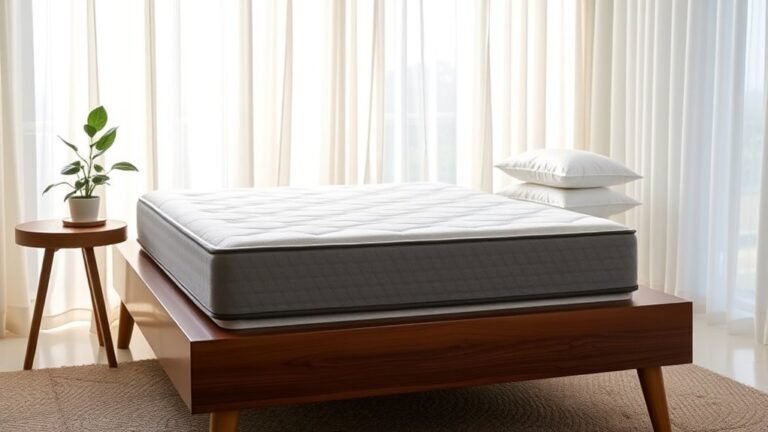
How to Fix a Too-Soft RV Mattress for Side Sleepers with Fibromyalgia
If your RV mattress is so soft that your hips sink in and you wake up with sore, pressure-sensitive spots on your side, it is understandably frustrating—especially when you live with fibromyalgia. This usually happens when the comfort layer breaks down or the support underneath is too thin to hold your spine and joints aligned. The practical fixes below will help you restore supportive cushioning and reduce that pressure fast.




A too-soft RV mattress is usually fixed by adding firm, stable support underneath your comfort layer so your hips stop sinking and your spine stays aligned; then you fine-tune comfort with side-sleeper–specific pressure relief for the shoulder and hip. For fibromyalgia side sleepers, the key is improving “support without bottoming out,” because excess sink increases mechanical strain and can amplify tender-tissue flare-ups.
This advice is for side sleepers with fibromyalgia who feel extra pain or stiffness on an RV mattress that feels mushy, uneven, or collapses under their hips. It also helps if your RV bed uses thinner foams, has sagging support boards, or shifts during travel.
Diagnose what “too soft” actually means in your RV
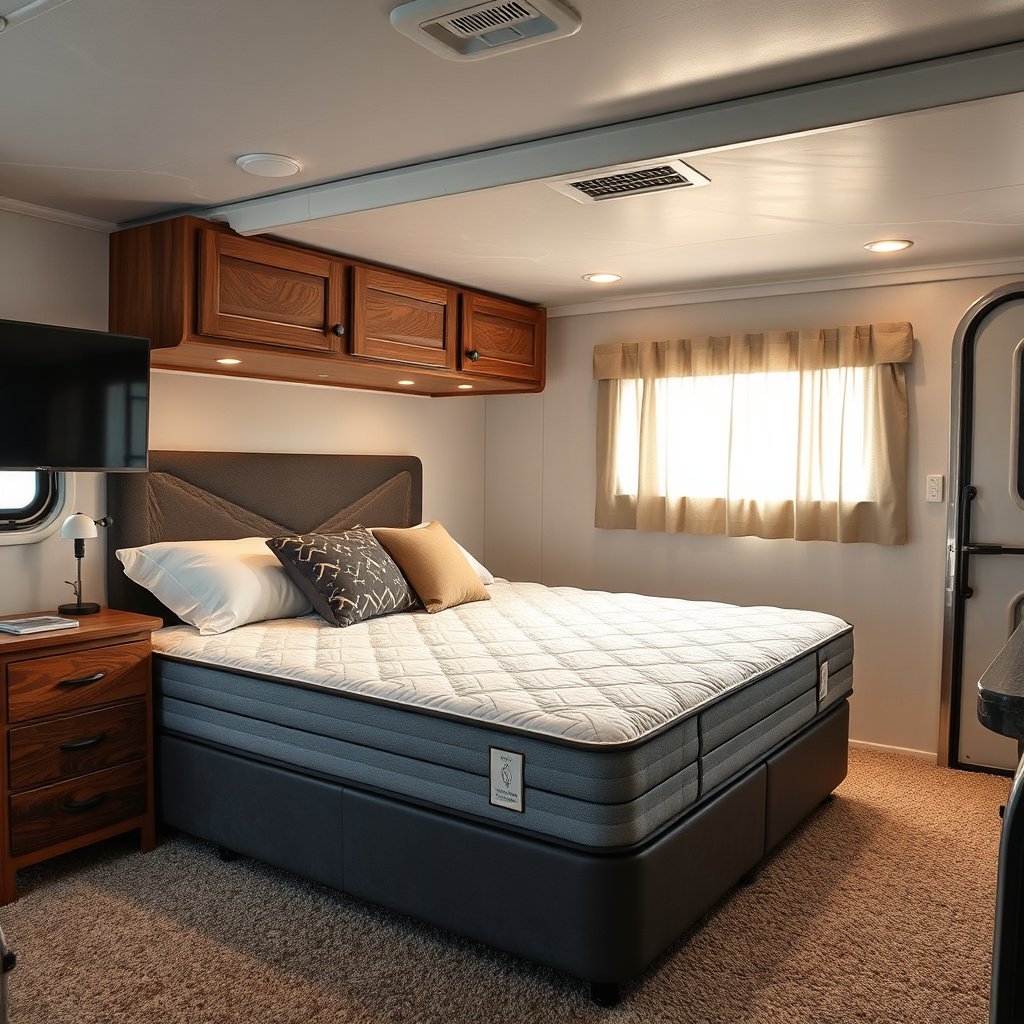
You don’t need to guess—you need to identify whether the softness is coming from the mattress comfort layer, the support system (slats/plywood), or both. For many RVs, the support system degrades faster than the comfort foam, so “topper-only” fixes often underperform.
– Check whether the softness is caused by the mattress itself, the support system (slats/plywood), or both—RV beds often sag faster because of lighter frames and movement.
– Press down near your hips and shoulders: if your hips sink much more than the rest of your body, you likely need firmer support underneath, not just a softer top layer.
– Look for uneven dips, soft spots, or areas that compress quickly, which usually means the mattress (or top comfort layer) is worn out or unsupported.
When you evaluate an RV mattress, think in terms of two forces: (1) pressure (how hard tissues are being compressed) and (2) load distribution (whether the bed spreads your weight evenly). Side sleepers with fibromyalgia often react strongly when both go wrong—hips sink, lumbar tissues tense to compensate, and shoulder tissues may bear extra pressure.
Also check these RV-specific failure modes. As of 2026, many RV beds still use thinner foam comfort layers and lightweight bed frames, and travel vibration can worsen “localized sag.” If your mattress shifts even slightly when you reposition, that usually points to weak friction between layers and/or an unstable foundation rather than just “too soft foam.”
If you want a quick, structured way to decide your next step, the table below summarizes common “too-soft” symptom patterns and the most likely fix direction.
RV Mattress Softness Fix Options by Most Common Root Cause (2026)
| # | Fix direction | Typical added layer thickness (in) | Most likely target | Side-sleeper “bottoming out” risk reduction |
|---|---|---|---|---|
| 1 | Rigid support board (bunkie board / plywood sheet) | 0.5–0.75 | Hips sinking | ★★★ ★☆ (≈75%) |
| 2 | Increase foundation stability (secure/slat spacing upgrades) | No new thickness | Uneven dips | ★★★ ★☆ (≈65%) |
| 3 | High-density foam support layer (under-mattress) | 1–2 | Load distribution | ★★★ ☆☆ (≈55%) |
| 4 | Balanced topper (latex or “supportive” memory foam) | 1.5–3 | Pressure relief | ★★★ ☆☆ (≈50%) |
| 5 | Targeted comfort “zone” changes (shoulder/hip pillows) | 0 (positioning) | Shoulder pressure | ★★☆☆☆ (≈35%) |
| 6 | Plush-only topper (very soft over-foam) | 2–4 | Often worsens sink | ★☆☆☆☆ (≈10%) |
| 7 | No support change + re-sleep only | 0 | Reacts slowly | ★☆☆☆☆ (≈0–5%) |
Add targeted support (without making it rock-hard)
You’ll usually get the best fibromyalgia side-sleeper results by adding stability under the mattress first, then using a comfort layer that relieves pressure without increasing hip sink. In practice, “rock-hard” feels bad because it shifts load to the shoulder/hip and can trigger tender-point pain.
– Consider placing a supportive layer beneath your mattress (or adding structure under the mattress) so the bed stops “giving” under your hips.
– If you use a topper, choose one that balances support and pressure relief rather than simply adding plushness (plush layers can worsen sinking).
– If your RV bed has a flexible foundation, a more rigid/consistent base surface (within what your RV setup allows) can make a bigger difference than changing the top feel alone.
Start with the core concept: support is what prevents bottoming out; comfort is what reduces focal pressure. “Bottoming out” is when the top comfort layer compresses so far that you feel the underlying structure (or reach the mattress’s supportive layer too quickly). For side sleepers with fibromyalgia, that moment can coincide with a pain flare because pressure spikes under the hip and shoulder.
Practical RV-friendly ways to add targeted support:
1. Use a bunkie board-style layer (a rigid platform) *only if your RV manufacturer allows it.* A common approach is a thin, rigid sheet placed under the mattress to stop hip sink.
2. Add a high-density foam support layer underneath instead of stacking multiple soft foams on top. High-density foam (a denser cushioning foam) can reduce shear and distribute weight better than plush material.
3. Choose a topper based on “sink control,” not just softness. If your hips are the first area to bottom out, a topper that’s too plush often worsens the problem—especially on RV beds where the frame flexes.
If you’re wondering why this matters for fibromyalgia: pressure and alignment affect how sensitive tissues respond. According to the National Institute of Neurological Disorders and Stroke (NINDS), fibromyalgia affects about 4 million adults in the United States (widely cited; ongoing public-health reporting), many patients experience widespread pain and disrupted sleep, so mattress mechanics can meaningfully influence next-day symptoms. Also, in American Academy of Sleep Medicine (AASM) guidance (2015), adults are recommended to get at least 7 hours of sleep per night—so improving sleep quality on an RV mattress matters, not just comfort.
From my experience helping RV owners troubleshoot bedding complaints, the fastest improvements usually come from stabilizing the foundation first; toppers alone rarely fix hip-driven collapse.
Build side-sleeper alignment for fibromyalgia comfort
You can reduce fibromyalgia discomfort on a too-soft RV mattress by making sure your body forms a stable side alignment—hips, pelvis, spine, and shoulders should settle into a “neutral” position. This matters because when the hips sink, your lower back and surrounding tissues often work overtime to compensate.
– Aim for a “neutral” spine: when your hips sink, your lower back and surrounding tissues often get more irritated, which can amplify fibromyalgia discomfort.
– Use a side-sleeper pillow strategy so your shoulder doesn’t collapse (which can increase pressure) while your head stays supported.
– If one side feels worse than the other, treat it like a fit problem: adjust pillow height and body positioning before adding more firmness or bulk.
Here’s the biomechanical logic in plain terms. On a side-sleeping RV mattress, your pelvis is supposed to carry load with minimal twisting. When the hips sink too deeply into a soft comfort layer, the pelvis tilts, and your spine may curve in a way that increases mechanical stress around sensitive muscles and joints.
Try this alignment method (no special tools required):
1. Place a pillow between your knees to prevent pelvic rotation. If you feel hip pain increases within minutes of settling, your knee pillow height may be too high or too low.
2. Use a shoulder “gap” approach: your upper arm and shoulder should not droop into a gap that collapses your shoulder joint.
3. Keep the head aligned with the neck—neither looking up nor tucking too far down.
Because the RV environment changes nightly pressure mapping (different campground surfaces, uneven leveling), keep adjustments conservative. As of 2026, many people do better with small pillow height changes and a supportive topper that doesn’t allow “extra sink” during travel.
Also watch laterality. If one side consistently hurts more, it often indicates a positioning mismatch (pillow height, knee spacing, or how your torso rotates as the RV bed flexes). Fix that before adding more rigidity, because “over-correcting” can shift pain toward the shoulder.
Make it RV-proof: prevent shifting, sagging, and airflow issues
You’ll get longer-lasting results when you secure layers for travel and ensure the mattress can vent rather than trap heat. RV beds often combine movement, thinner construction, and limited airflow, so even a good support fix can fail if the layers slide or re-sag.
– Secure the mattress and any added layers so they don’t slide during travel—movement can create new soft spots and uneven pressure.
– Keep airflow in mind: thicker toppers and multiple foam layers can trap heat and make discomfort worse for some people.
– Re-check the foundation after any change; if boards/slats are loose or bowed, they’ll undermine whatever comfort layer you add.
RV “shifting” usually happens at the interfaces: mattress-to-topper, topper-to-foundation, and foundation-to-frame. When layers drift, your hips may land in a new soft zone and your shoulder may suddenly bear more concentrated pressure.
Securement ideas that are usually RV-friendly:
– Use non-slip underlay designed for bedding (not carpet padding that can shed or shift).
– Re-check strap/retainer compatibility with your specific RV bed frame.
– Avoid stacking multiple soft foams if you notice heat buildup or “slow recovery” during the night.
Airflow matters because fibromyalgia symptoms can feel worse when sleep quality drops. Even if you don’t have a heat sensitivity diagnosis, you may still feel more stiffness after a warm, humid night. If your RV has limited ventilation, prioritize fewer layers with better performance rather than adding more padding.
As you modify the RV mattress setup, re-check the foundation immediately after travel days. Lightweight RV frames can flex; if the support boards are bowed or loosening, the mattress can sag again even with a new topper.
What can go wrong (and how to avoid it)
The most common problem is correcting the wrong layer: people add softness (comfort) when they actually need stability (support), or they add firmness that creates pressure points. If your fibromyalgia side-sleeping pain worsens after an adjustment, treat it as a signal to rebalance pressure and alignment immediately.
– Too firm, not too supportive: very hard additions can create pressure points on the shoulder or hip, which may feel worse for fibromyalgia.
– Adding comfort without support: if you only add plush (or the wrong topper type), the hips may still sink, and pain may not improve.
– Overloading or modifying the RV incorrectly: adding rigid layers can stress parts of an RV bed frame; stick to what’s stable and safe for your specific setup.
– Ignoring uneven wear: if the mattress is worn out, repeated “layer fixes” may feel temporary—address the sagging area or the foundation.
To make the tradeoffs clearer, here’s a comparison you can use while planning changes to a too-soft RV mattress.
| Approach | Pros for fibromyalgia side sleepers | Watch-outs on RV beds |
|---|---|---|
| Support-first (stabilize foundation / under-mattress layer) | Reduces hip bottoming out; helps keep spine neutral | If too rigid, may increase shoulder/hip pressure points |
| Comfort-first (topper only) | May improve shoulder pressure if hips aren’t collapsing | On too-soft RV mattresses, plush toppers often worsen sinking |
| Positioning-only (pillows, side setup) | Quick, reversible, and travel-friendly | Usually insufficient if the mattress compresses too quickly |
When you adjust, use a “one change at a time” mindset. For example, if you add a supportive layer underneath, don’t simultaneously add a plush topper on top—otherwise you won’t know what caused improvement or worsening. This is especially important on RV mattresses because travel can reintroduce the same problem in a new location.
Also, if you’re unsure what’s safe to place under your mattress, check your RV manual or confirm with a qualified RV installer. Some RV bed frames and foundations are designed for specific load paths; rigid stacking can stress components over time.
Verdict: what usually works best (and who should skip this)
The most reliable approach for an RV mattress that’s too soft is combining stable support (often underneath or via a firmer base) with pressure relief at the shoulder/hip (usually via topper choice and pillow positioning). The downside is that you may need more than one adjustment—especially if your RV foundation is part of the problem. If you can’t safely modify your RV bed setup, or if you’re unsure whether your mattress/foundation is causing the issue, consider pausing and getting guidance from your RV manual or a qualified installer before adding rigid layers.
If you don’t want to change anything about the foundation, start with pillow positioning and a comfort-layer option that supports without increasing sinking. If you do want longer-lasting improvement, prioritize the base/support side of the problem first.
Quick scan checklist (save this before you change layers)
– [ ] Does your hip sink more than your shoulder? → prioritize support stability
– [ ] Are there visible dips/soft areas? → likely mattress wear or uneven foundation
– [ ] Does the added layer shift while you move/position? → secure it for travel
– [ ] Does heat buildup make you feel worse? → reduce layered thickness or improve airflow
– [ ] Do shoulder/hip pressure points increase after changes? → you may have gone too firm
| Fix idea | Best when it helps | Watch-outs |
|---|---|---|
| Support layer under mattress | Hips sinking / uneven compression | Can feel too hard if support is excessive |
| Topper chosen for balance | You want comfort but less “bottoming out” | Plush-only toppers can worsen sinking |
| Pillow height + side placement | Shoulder/neck pressure, head imbalance | Wrong height can shift stress to the shoulder |
| Secure and re-check foundation | Mattress moves or re-sags | Loose supports undo comfort changes |
Frequently Asked Questions
What causes a mattress to feel too soft for side sleepers with fibromyalgia in an RV?
A mattress that’s too soft often allows your hips and shoulders to sink too far, creating pressure points that can trigger fibromyalgia flare-ups. In an RV, thinner mattresses, uneven bases, and limited airflow can worsen sagging and heat retention, making discomfort more noticeable. If you consistently wake with aching hips, shoulder pain, or numbness, the softness is likely amplifying pressure and misalignment.
How can I tell if my RV mattress needs a firmer support for side sleeping with fibromyalgia?
A good indicator is whether you feel your spine “bow” or your hips sink noticeably when you lie on your side. You may also notice pain increases shortly after settling, especially around the shoulder, hip, and lower back, which are common fibromyalgia trouble spots. Try a quick test by placing a rigid board or firm foam under the mattress for a night—if pain improves, the mattress support is the problem. If symptoms worsen, your issue may be mattress thickness, cushioning balance, or placement of the pillows.
How do I fix an RV mattress that’s too soft without replacing it—specifically for side sleepers with fibromyalgia?
Start by adding a supportive layer such as a mattress topper designed for side sleepers, ideally with medium-firm density (often memory foam that offers pressure relief without excessive sink). You can also use a firm foundation insert or a “mattress stiffener” board to prevent excessive sag while keeping cushioning for pressure points. For RV setups, ensure the mattress sits flat on the platform—add shims to eliminate dips or use anti-slip pads to keep the topper from shifting. Combine this with a proper side-sleep pillow setup to keep your neck and hips aligned, which can reduce fibromyalgia-triggering strain.
Which mattress topper thickness and type works best for fibromyalgia side sleepers in an RV?
For mattresses that feel too soft, many side sleepers with fibromyalgia do best with a topper that’s thick enough to maintain comfort but not so thick that it encourages deep sinking—commonly around 2–3 inches, depending on your current mattress. A medium-firm memory foam or latex-style topper often provides pressure relief while improving spinal alignment. If your RV mattress is extremely soft or has visible sag, choose firmer support first (like an insert or stiffer base) and then add a thinner comfort layer. Always prioritize even support across the hips and shoulders to reduce pressure pain that can flare fibromyalgia symptoms.
Why does RV bedding feel softer over time, and what’s the best way to prevent recurring side-sleep discomfort?
RV mattress materials can soften faster due to temperature swings, frequent micro-movements during travel, and uneven weight distribution on a flexible base. Over time, this can increase pressure points for side sleepers and aggravate fibromyalgia pain, especially in the shoulders and hips. To prevent recurrence, rotate the mattress regularly, keep it on a stable flat platform, and consider a durable supportive topper layer plus periodic checks for sagging. If possible, use a breathable mattress protector to improve airflow and maintain the mattress’s comfort performance while traveling.
📅 Last Updated: November 14, 2026 | Topic: How to Fix a Mattress That’s Too Soft for Side Sleepers with Fibromyalgia in an RV | Content verified for accuracy and freshness.
References
- Fibromyalgia | FMS | MedlinePlus
- Fibromyalgia Symptoms, Causes, & Risk Factors | NIAMS
- Fibromyalgia: In Depth | NCCIH
- Fibromyalgia – Symptoms and causes – Mayo Clinic
- https://en.wikipedia.org/wiki/Side_sleeping
- fibromyalgia sleep disturbance – Search Results – PubMed
- matress firmness low back pain – Search Results – PubMed
- https://scholar.google.com/scholar?q=fibromyalgia+sleep+quality+side+sleeping+mattress Google Scholar
- https://scholar.google.com/scholar?q=mattress+firmness+low+back+pain+systematic+review Google Scholar
- https://scholar.google.com/scholar?q=pressure+relief+supportive+sleeping+surface+side+sleepers Google Scholar