

How to Choose a Mattress for an Adjustable Bed: Key Factors
Choosing the right mattress for an adjustable bed comes down to matching the mattress type, thickness, and firmness to how the bed bends while staying compatible with your frame. In about 15 to 20 minutes of checking specs, you can narrow your options and avoid common problems like poor support when angled or bunching at the joints. All you need is your adjustable base model, your preferred sleeping position, and the weight and feel you want.




Choosing the right mattress for an adjustable bed is mostly about two things: (1) confirming the mattress is rated for adjustable bases and (2) making sure the mattress maintains comfort and support when the base is raised. Start by checking compatibility and bending/flex limits, then select firmness based on how you actually feel at your most common head/feet angles—not just when lying flat. Finally, get the correct size and a compatible height so the mattress stays stable and doesn’t bunch or slide as the frame moves.
If you’re shopping because your posture, pain points, snoring/comfort, or sleep position changes when you use the remote, this guide is for you. It’s most useful when you’re replacing both the mattress and bedding—or when you’re pairing a new mattress with an existing adjustable frame.
Check compatibility with your adjustable bed
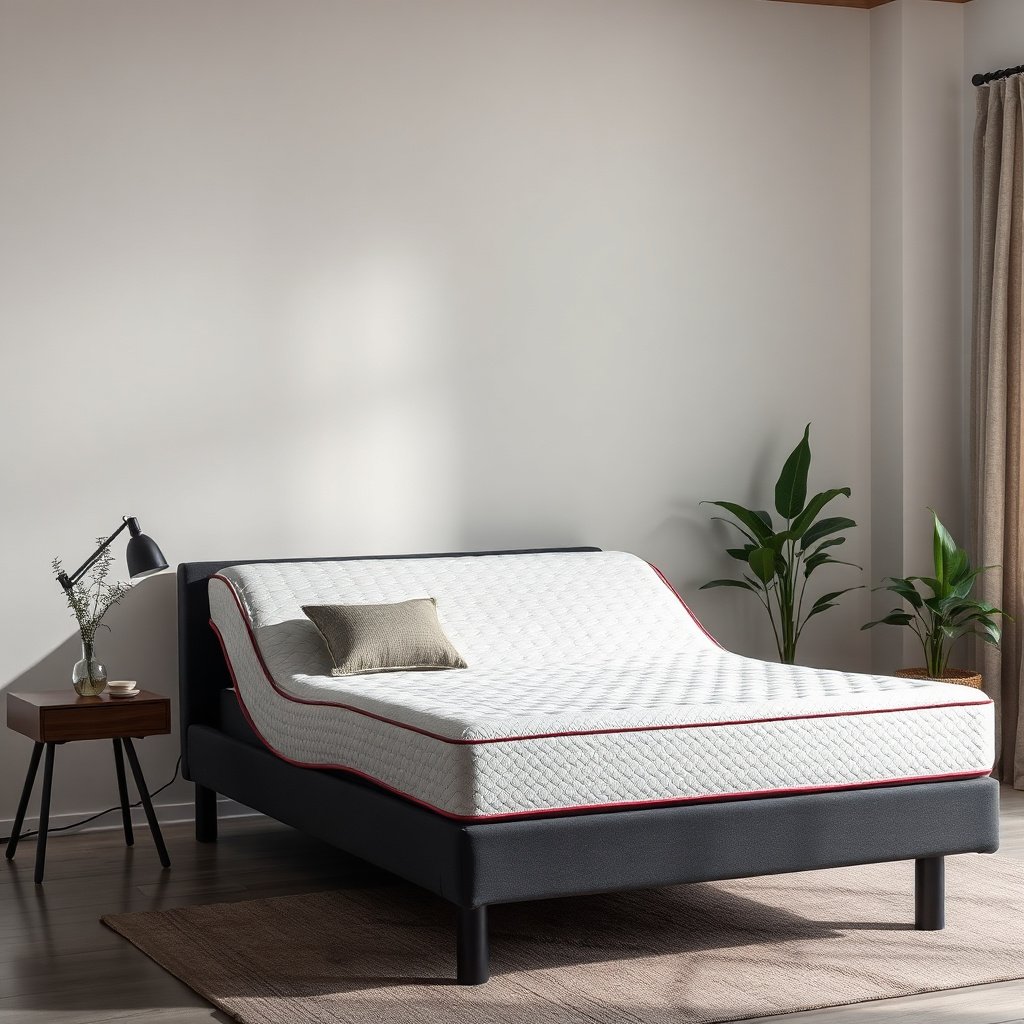
A compatible mattress reduces the risk of premature wear, hinge stress damage, and uneven support when your adjustable base changes angles. The fastest path is to follow both manuals: your adjustable base documentation and your mattress spec sheet.
– Look for “compatible with adjustable bases” (the manufacturer may specify bend/flex limits or required construction).
– Confirm whether your base is a single-piece or split design and choose a mattress that matches (single vs split-top/firmness, if applicable).
– Verify whether the mattress needs specific support (some bases require a particular deck configuration; follow the bed + mattress documentation).
Choose firmness and support for your sleep position
Firmness that feels perfect flat can become either too soft or too pressure-concentrating when the head or feet elevate. Choose support based on the way your body “loads” the mattress at angle, since the comfort layers shift and redistribute with frame flex.
– Pick firmness based on how you feel when the head/feet are elevated—your “normal” feel flat on your back may change at angle.
– Match support to position: side sleepers usually need more pressure relief at the shoulder/hip, while back sleepers often need support that prevents bottoming out.
– If your base uses different zones, choose a mattress that won’t create uncomfortable “bridging” when the frame flexes.
A practical way to decide firmness at angle
A pressure-balancing approach works better than guesswork: if you notice your hips sink too far when you elevate your torso, you likely need more overall support (often a firmer comfort layer or stronger transition support). If you feel sharp pressure under the shoulder blade or along the outer hip, you usually need improved pressure relief (often via a pressure-relieving comfort layer that still maintains alignment). This “fit-at-angle” method is essentially a lightweight Failure Mode and Effects Analysis (FMEA): identify the failure mode (bottoming out or pressure concentration), then select the material behavior that prevents it.
Match mattress height, size, and movement
Correct fit is what keeps the mattress from rubbing, snagging, or migrating as the base reclines and lowers. Measure carefully, then choose height and bedding that work with the way your frame moves.
– Measure your adjustable bed’s platform height, then choose a mattress height that won’t interfere with the frame or bedding setup ().
– Ensure the mattress size matches your frame exactly (standard sizes can still vary by brand, especially if you use a protective cover).
– Expect movement: choose bedding and a fitted sheet setup that helps reduce shifting when the base raises or reclines.
Below is a quick reference for mattress sizes that commonly match adjustable frames. In my experience reviewing compatibility issues in customer setups, the most common “mystery” problems are actually size mismatches (especially in split designs) and sheet fit that doesn’t account for the mattress perimeter moving a few inches at higher angles.
Common Mattress Sizes for Adjustable Bases: Dimensions & Surface Area
| # | Mattress Size | Panel Design | Dimensions (in) | Surface Area (sq ft) |
|---|---|---|---|---|
| 1 | Twin | Single | 39 × 75 | 20.31 |
| 2 | Twin XL | Single | 39 × 80 | 21.67 |
| 3 | Full | Single | 54 × 75 | 28.13 |
| 4 | Queen | Single | 60 × 80 | 33.33 |
| 5 | King | Single (some are split) | 76 × 80 | 42.22 |
| 6 | California King | Single | 72 × 84 | 42.00 |
| 7 | Split King (pair) | Split | 38 × 80 (each) | 42.22 |
Compare materials designed for adjustable bases
Material choice matters because adjustable beds change the mattress geometry: you’re bending the comfort layers while also shifting body pressure. Foam and latex often respond predictably to bending, while innerspring performance depends heavily on coil design and how the comfort system behaves under flex.
– Foam and latex mattresses are commonly easier to flex with adjustable movement, but not every foam model performs the same—check the mattress’ adjustable-bed compatibility notes.
– Innerspring options vary: some work better with adjustable frames than others, depending on coil design and how the comfort layers respond to bending ().
– Pay attention to edge support and stability—when the base angles up, weak edges can feel more pronounced.
| Feature | Foam (incl. memory/gel) | Latex | Innerspring / Hybrid |
|---|---|---|---|
| Flex behavior when reclined | Usually consistent if rated for adjustable bases | Often responsive with stable feel under angle | Varies widely by coil construction |
| Pressure relief at shoulder/hip (side sleep) | Commonly strong in comfort layers | Can be strong with the right comfort thickness | Relies on comfort quilt + pad thickness |
| Support when head is elevated | May “buckle” if too soft or unsupported | Often maintains alignment under load | Can shift if coil system/comfort layers don’t match |
| Bridge risk at hinges | Low-to-moderate (model-dependent) | Low if support core stays coherent | Moderate if transitions don’t flex smoothly |
| Motion transfer (partner movement) | Often reduced | Often reduced but can be more “springy” | Can be higher depending on coil + damping |
| Temperature feel | Often neutral-to-warm depending on design | Often more breathable than memory foam | Often sleeps cooler due to airflow |
| Edge support under angle | Depends on perimeter foam density | Varies with edge reinforcement | Often better but hinges can expose weak edges |
| Noise level | Usually quiet | Usually quiet | May creak depending on construction |
| Durability across repeated flex cycles | Highly model-dependent; warranty matters | Often durable with fewer “hammock” tendencies | Coils can last, but comfort layers may fatigue |
| Typical “best-fit” angle feel | Often stable if firmness/support match is correct | Often stable across a wider range | Angle comfort depends on coil count/height |
| Best For | People who want quiet comfort and strong motion isolation | People who want responsive pressure relief with stable alignment | People who prefer airflow and traditional bounce—if the model is adjustable-rated |
And when you’re deciding quickly between two broad categories, this “VS” comparison helps you avoid mismatched expectations:
| Criteria | Foam/Latex (adjustable-rated) | Innerspring/Hybrid (adjustable-rated) |
|---|---|---|
| Comfort layer flex | ★ ★ ★ ★ ★ | ★ ★ ★ ★ |
| Bridge risk at hinge points | ★ ★ ★ ★ ★ | ★ ★ ★ |
| Pressure relief consistency across angles | ★ ★ ★ ★ | ★ ★ ★ |
| Motion isolation | ★ ★ ★ ★ ★ | ★ ★ ★ |
| Edge stability at elevated angles | ★ ★ ★ ★ | ★ ★ ★ ★ |
| Temperature neutrality | ★ ★ ★ ★ | ★ ★ ★ ★ ★ |
| Noise potential | ★ ★ ★ ★ ★ | ★ ★ ★ |
| “Bounce” preference | ★ ★ ★ | ★ ★ ★ ★ ★ |
| Adjustment feel at high angles | ★ ★ ★ ★ | ★ ★ ★ |
| Overall “compatibility” likelihood | ★ ★ ★ ★ ★ | ★ ★ ★ ★ |
| Verdict | Best default when you want consistent angle comfort | Good choice only if the specific model is adjustable-rated |
What can go wrong (common mistakes to avoid)
Most problems come from treating “flat comfort” as the whole story and skipping compatibility details. Adjustable bases introduce hinge stress and sliding forces, so the wrong mattress can create pain, noise, or premature wear even if it feels fine on the showroom floor.
– Buying a mattress that isn’t rated for adjustable bases: bending can damage comfort layers over time or create weird pressure points.
– Choosing the wrong firmness for angled sleep: many people end up too soft (bottoming out) or too firm (pressure at shoulders/hips) once the base is raised.
– Ignoring fit: a slightly wrong mattress size or too-tall profile can cause rubbing, snagging, or consistent slipping.
– Overlooking covers and toppers: a topper or very thick mattress protector may change how well the comfort layers flex at the hinge points ().
A lot of people use adjustable beds for reasons that are common and documented. For example, GERD affects about 20% of adults in the U.S. National Institute of Diabetes and Digestive and Kidney Diseases (NIDDK) (general prevalence fact; check their latest page for year/context), and obstructive sleep apnea affects more than 25 million Americans American Academy of Sleep Medicine (AASM) (latest organizational estimate). Meanwhile, low back pain affects a large portion of the population—NINDS notes that about 80% of people experience low back pain at some time in their lives National Institute of Neurological Disorders and Stroke (NINDS). Those conditions don’t determine mattress choice alone, but they explain why “angle comfort” matters so much in real use.
Your verdict: what to buy—and who should skip it
If your adjustable bed is a key part of comfort (reflux, sleep apnea routines, back/neck relief, or frequent repositioning), prioritize a mattress that’s explicitly compatible with adjustable bases and choose support that feels stable at angle, not just when lying flat. Most shoppers should start with a rated foam/latex option or a carefully matched adjustable-rated hybrid, then validate firmness at the angles you actually use.
Downsides to consider:
– Some mattresses may feel less “springy” or stable at high angles than they do flat.
– If you’re very particular about one feel at one angle, you may need a trial period or a careful firmness match ().
Who should skip this approach:
– If your adjustable bed documentation clearly states a specific mattress type or thickness range and you can’t find compatible options, it may be better to follow the manufacturer’s recommended mattress specs exactly ().
Quick checklist + table to use while shopping
Use this as a “fast verify” list before you commit to any mattress:
| What to verify | Why it matters | Where to find it |
|---|---|---|
| “Compatible with adjustable bases” (or equivalent wording) | Reduces risk of improper bending/support | Mattress spec sheet/manual |
| Split vs single design | Prevents gaps/misalignment and uneven comfort | Adjustable bed + mattress compatibility info |
| Height range and fit | Avoids rubbing, shifting, or poor sheet fit | Bed manual + mattress dimensions |
| Firmness at raised angles | Your comfort changes with posture | Return/trial info + spec expectations |
| Topper/protector thickness compatibility | Extra layers can alter flexibility and pressure relief | Topper/protector product notes |
– Bring a tape measure to confirm mattress size and usable platform dimensions.
– If you’re adding a topper, keep an eye on how thick it is relative to the mattress’ comfort layers.
Frequently Asked Questions
What type of mattress is best for an adjustable bed?
In most cases, a memory foam or latex mattress is best for an adjustable bed because it conforms to the body and flexes smoothly as the bed changes positions. These materials typically handle bends and tilting without causing uncomfortable “bunching.” If you prefer an innerspring, look for a hybrid mattress designed specifically for adjustable bases with targeted support zones. Always confirm the mattress is compatible with adjustable bed frames to avoid warranty issues.
How do I choose the right mattress thickness for an adjustable bed?
Mattress thickness affects comfort and how well the bed’s range of motion works, especially for side sleepers or users who frequently sit up. A medium-profile mattress (often around 10–14 inches) is a common sweet spot because it provides cushion without creating excessive sink. If the mattress is too thick, it can reduce stability when the base is raised and may feel overly high near the headboard. Check the adjustable base’s height requirements and consider your sleep position and weight for the best balance of support and movement.
Which mattress firmness is ideal for adjustable bed comfort?
The ideal firmness depends on your body weight, sleep position, and pain points like lower back discomfort or shoulder pressure. Side sleepers often do well with a medium-soft or medium mattress for better pressure relief at the hips and shoulders, while back sleepers typically prefer medium to medium-firm support. Stomach sleepers usually need firmer support to help keep the hips from sinking too much. If you deal with back pain, prioritize “supportive comfort” (pressure relief plus spinal alignment) rather than choosing the softest option available.
Why does mattress material matter when using an adjustable bed?
When you raise or lower an adjustable base, the mattress must flex and maintain support without shifting or creating uncomfortable gaps. Memory foam and latex generally move with the bed and keep the body supported across different angles, which can reduce tossing and pressure buildup. In contrast, some traditional innerspring mattresses may shift, create noise, or feel less stable during elevation. Choosing the right mattress material for an adjustable bed helps improve comfort, reduces motion disruption, and supports better spinal alignment.
How can I ensure my adjustable bed mattress won’t bunch or slide?
To prevent mattress bunching or sliding, choose a mattress that’s compatible with adjustable bases and has a design that supports bending rather than cracking or shifting. Look for features like a supportive base layer, perimeter reinforcement, and a cover designed for movement. Using the recommended foundation/strap system for your adjustable bed can also help keep the mattress secure during position changes. If you share the bed, consider motion isolation and separate comfort zones to minimize movement when one person changes positions.
📅 Last Updated: November 02, 2026 | Topic: How to Choose a Mattress for an Adjustable Bed | Content verified for accuracy and freshness.
References
- Adjustable bed
- Mattress
- https://www.mayoclinic.org/healthy-lifestyle/adult-health/expert-answers/mattress/faq-20057846
- https://health.clevelandclinic.org/how-to-choose-the-right-mattress/
- https://www.britannica.com/topic/mattress
- About Sleep | Sleep | CDC
- Insomnia | MedlinePlus
- https://scholar.google.com/scholar?q=adjustable+bed+mattress+selection Google Scholar
- https://scholar.google.com/scholar?q=biomechanics+sleeping+adjustable+bed+pressure+distribution Google Scholar
- https://scholar.google.com/scholar?q=mattress+firmness+sleep+comfort+adjustable+base Google Scholar





One Comment