How to Choose a Mattress for Stomach Sleepers
Choosing the right mattress for stomach sleeping comes down to supporting your hips and keeping your spine neutrally aligned. In about 10–20 minutes, you can narrow your options by matching firmness to your body weight, selecting materials that reduce pressure buildup without letting you sink, and confirming the mattress keeps your pelvis from dropping. All you need is your approximate weight range, your current pain points, and a willingness to test using the same position you sleep in.




If you sleep on your stomach, choose a mattress that prevents your hips from sinking too much while still letting your shoulders feel comfortable. The best fit usually means “stable support” (often firmer than you’d pick for side sleeping) plus a surface that helps you stay aligned instead of rotating toward your back.
If you’re a stomach sleeper with back/hip discomfort, waking up with soreness, or your midsection feels like it “drops,” this is for you. The advice is especially relevant if you’re buying online without trying the exact model in person.
How stomach sleepers should prioritize support
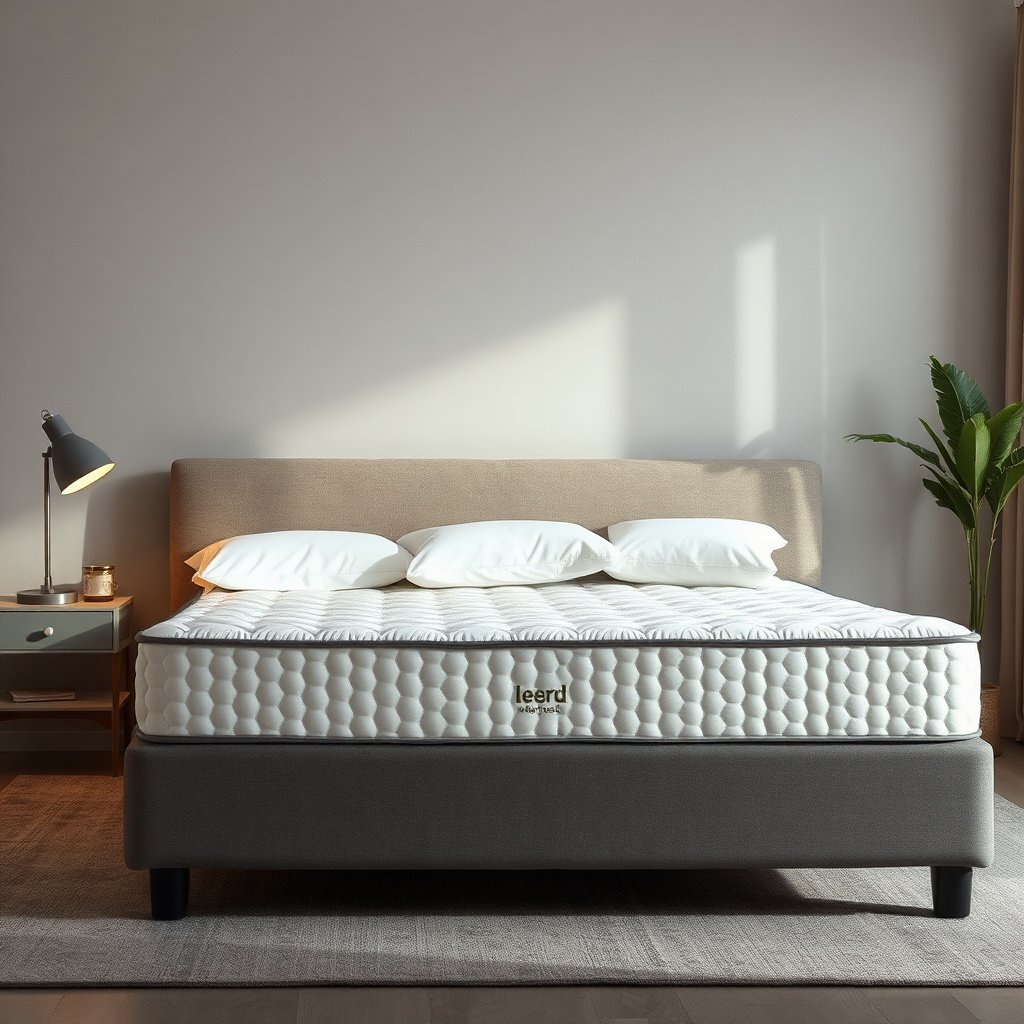
– Focus on preventing hip sag: your goal is to keep your spine as level as possible when you’re lying on your stomach.
– Choose a mattress that offers “buoyancy + stability,” so your shoulders and midsection feel supported rather than swallowed.
– Avoid overly soft comfort layers that can create a deeper groove where your hips sink.
Stomach sleeping tends to be unforgiving because your lumbar spine (lower back) has to stay supported while your hips bear a lot of your body weight. A mattress for stomach sleepers should do two things at once: (1) keep your hips from sinking below your shoulders and (2) reduce the “grabby” feeling that makes it easy to twist your torso during the night. When you lose that balance, many people wake up with that classic combination of low-back tightness and rib/shoulder pressure, even if the mattress initially feels “comfortable” for the first few minutes.
In practice, that means you want support that feels stable under your torso—not just a mattress that feels plush on top. Look for designs that balance a responsive “float” (buoyancy) with firm underlying support (stability). Many mattress for stomach sleepers reviews go straight to “firm” or “plush,” but the better signal is how the bed behaves when you lie still in your stomach position: does it hold your midsection up, or does it let your hips form a noticeable indentation?
What “buoyancy + stability” looks like during a real stomach test
When you settle into the position, your goal is a gentle, even feel across your shoulders and upper chest without an exaggerated dip in your hips. If you notice that your pelvis drops first, your back often has to compensate by arching or twisting—two common pathways to morning soreness. For mattress for stomach sleepers, stability is often created by the support core (like coils) and by comfort layers that are firm enough not to collapse under torso pressure.
Choose a firmness level that won’t let your hips sink
– In general, stomach sleepers usually do better with a firmer feel than many side sleepers—test for “lift,” not just softness.
– Use your body as the measuring tool: when you press into the bed, your midsection shouldn’t sink significantly more than your shoulders.
– If you’re between feels, lean firmer—then adjust comfort with an appropriate topper only if you truly need it (and keep it from softening the support too much).
For mattress for stomach sleepers, firmness isn’t about feeling hard; it’s about resisting the specific weight pattern your body creates when your hips are lower than your shoulders. Many people mistakenly assume that “soft but supportive” works for stomach sleeping. Soft surfaces can be comfortable during a quick lie-down, but they may allow your comfort layers to compress enough to deepen the groove under your hips.
A useful way to think about mattress for stomach sleepers is “lift versus sink.” Lift means that when you settle, the bed supports your pelvis enough to keep your spine from forming a curved “U” shape. Sink means your hips drop first, and your back tries to compensate. If you’re unsure, this rule tends to help: when you’re truly settled, your midsection should not sink noticeably deeper than your shoulders.
A practical firm-feel test (especially when shopping online)
If the mattress for stomach sleepers is available in a showroom, spend time in your stomach position long enough to feel how it behaves after the initial “landing” period. If you’re buying online, use the brand’s stated construction details (support core type, comfort layer type, and approximate comfort layer thickness) plus the return window to validate alignment. According to ASTM D3574, indentation force deflection (IFD)—a common firmness test—relates to how quickly a material compresses under a defined amount of indentation, which is why “firm-feel” specifications can be a helpful baseline when you can’t physically test immediately. ASTM D3574 (Standard Test Methods for Flexible Cellular Materials Used for Upholstered Products)
Firmness trade-off: pressure can rise as support gets firmer
Leaning firmer is often the safest move for mattress for stomach sleepers, but “firmer” can also mean “more pressure.” On a very firm bed, shoulders or ribs can feel compressed if the comfort layer is thin or too stiff. That’s why the goal isn’t maximum firmness; it’s stable support with enough surface comfort to prevent localized pain.
Mattress types that usually work for stomach sleepers
– Hybrids (coil + foam or latex comfort layers) are often a safe starting point because coils can add stability under the hips.
– Latex mattresses can provide a more responsive, supportive feel that may reduce “stuck in the bed” sinking—check the comfort layer thickness so it doesn’t become too plush.
– All-foam beds can work, but you’ll want to be extra careful about how thick and soft the top layers are; look for support that stays firm under the torso.
Different mattress designs change two critical variables for mattress for stomach sleepers: how much the bed “gives” under your hips, and how quickly it springs back when you shift. Hybrids are popular for a reason—support cores built with coils often create a more stable platform under the midsection. That stability can reduce hip sag even when the comfort layer is somewhat thick.
Latex can also be a strong candidate for stomach sleepers because latex tends to be more resilient and responsive than many memory-foam formulations. That responsiveness can help the mattress for stomach sleepers avoid the “stuck” sensation that encourages twisting. The trade-off is that some latex models are engineered with a thicker comfort layer that can still allow sink if the layers aren’t firm enough for your body weight and build.
All-foam mattresses are not automatically wrong for stomach sleepers, but they require extra attention to construction. The key question for mattress for stomach sleepers is whether the foam beneath the comfort layer remains firm and supportive under torso pressure. If the top layers are too soft or too thick, even a bed labeled “supportive” may still form a deep indentation under the hips.
Quick comparison: which build is easiest to keep stable?
| Mattress build | Pros for stomach sleepers | Watch-outs |
|---|---|---|
| Hybrid (coil + foam/latex) | More stable support under the hips; easier to keep the spine level when you lie still. | Some hybrids have a too-soft comfort layer—check comfort thickness and softness, not just the word “support.” |
| Latex-forward | Responsive feel can reduce sinking and help you feel “on top” rather than swallowed. | If the comfort layer is thick and plush, the hips can still drop; verify firmness under torso pressure. |
| All-foam | Can work if the support core is firm and the comfort layer isn’t overly thick/soft. | Soft top layers can increase hip sag; two “firm” models can feel very different based on comfort-layer design. |
How to test and tune your setup before you commit
– During any in-home or showroom test, spend time lying in your stomach sleeping position (not just a quick flop), and check alignment from shoulders through hips.
– Pay attention to pillow height: if your head is lifted too high, it can force awkward spine angles even with the right mattress.
– If the mattress comes with a return policy, plan your evaluation window in advance so you can decide based on comfort and alignment (not just the first-night feel).
A mattress for stomach sleepers is only “right” if your alignment stays workable once you’re actually settled. That’s why testing time matters: the initial feel can be misleading. Many beds feel supportive for the first few minutes, then your hips gradually sink as your body temperature and soft tissue relax into the comfort layers.
Pillow height is part of the mattress decision
Even the best mattress for stomach sleepers can fail if your pillow lifts your head too high. When your neck is forced upward, your upper spine and ribcage angle change, which often increases strain down the chain. If your pillow places your chin or forehead too far above your chest, try reducing loft or switching to a flatter pillow for stomach sleeping.
Use the return window to judge alignment, not just first-night comfort
Because mattress for stomach sleepers depends on how your hips settle relative to your shoulders, you want time to observe morning soreness patterns. As of 2026, many online brands still offer sleep trials measured in nights, which can be a practical way to confirm whether the mattress maintains spine alignment once your body fully relaxes into the build. For example, a 100-night trial can be more useful than a short window if your soreness takes a couple of days to show up.
Online Mattress Trials (U.S. brands) — Try Time for Alignment Checks (2026)
| # | Brand | Sleep trial length | Common return basis | Trial suitability ★ |
|---|---|---|---|---|
| 1 | Saatva | 100 nights | Comfort preference | ★★★★☆ |
| 2 | Tuft & Needle | 100 nights | Comfort preference | ★★★★☆ |
| 3 | Casper | 100 nights | Comfort preference | ★★★★☆ |
| 4 | Purple | 100 nights | Comfort preference | ★★★★☆ |
| 5 | Helix | 100 nights | Comfort preference | ★★★★☆ |
| 6 | Nectar | 365 nights | Comfort preference | ★★★★★ |
| 7 | DreamCloud | 365 nights | Comfort preference | ★★★★★ |
Note: trial terms can change; confirm the current policy on the brand’s official trial/returns page before relying on a specific number.
What can go wrong with a “stomach-sleeper” mattress
– Getting too soft: even if it feels comfortable at first, a plush top can increase hip sink and worsen back or hip strain.
– Going too firm: extreme firmness can create pressure points in shoulders or ribs, and you may end up shifting positions more during the night.
– Ignoring comfort-layer thickness: two “firm” mattresses can feel very different if one has a thick, flexible comfort layer and the other doesn’t.
A mattress for stomach sleepers is often marketed using broad categories like “all positions” or “plush comfort.” Those labels can be true in a general sense, but stomach sleeping is a specific biomechanical challenge: it’s easy for a bed to feel nice until the hips settle. If you ignore hip sink, you can end up with a mattress that feels “fine” in the showroom and then contributes to morning soreness at home.
Too soft: the midsection drops after you settle
A common failure mode for mattress for stomach sleepers is excessive hip sink caused by soft comfort layers. Even a comfortable top can compress enough to create a deeper groove, which can force your lower back to arch. If you wake up with tightness in the low back or groin/hip discomfort, that pattern often points to insufficient stability under the pelvis.
Too firm: pressure replaces sink as the problem
The opposite is also real for mattress for stomach sleepers. Some people push firmness too far to stop sag. On a very firm mattress with a thin or stiff comfort layer, shoulders or ribs can feel pressured—especially if your stomach-sleep posture keeps those areas in contact all night. Pressure points can also trigger micro-movements, which reduces sleep quality even if alignment looks “straight.”
Comfort-layer thickness matters as much as firmness labels
Two mattresses can be described with the same general firmness word yet feel very different because comfort layer thickness and material properties change how the bed supports you after settling. For mattress for stomach sleepers, that means you should treat “firm” as a starting point and focus on what the comfort layer does under torso weight.
Verdict and quick checklist
If you want the simplest path: choose a mattress with stable, firm support that keeps your hips level, then confirm comfort using your alignment and pressure points—not marketing terms. Skip mattresses that feel like they cradle your midsection too deeply, even if they’re marketed as “all sleepers” or “plush.”
If you’re dealing with consistent back/hip discomfort or you frequently wake with soreness, prioritize alignment first and comfort second for a mattress for stomach sleepers—then tune with pillow height and, if needed, a very thin topper that won’t soften the support too much. If symptoms persist despite your changes, it’s wise to consult a clinician for posture and pain-related guidance.
Quick scan checklist (save this):
| What to check | What “good” feels like for stomach sleeping |
|---|---|
| Hip sink | Hips don’t drop noticeably below shoulders |
| Spine alignment | Less twisting/arching when you’re truly settled |
| Surface comfort | No sharp pressure at ribs/shoulders |
| Mattress build | Support stays stable under torso (often helped by coils/latex) |
| Setup tweaks | Pillow height doesn’t force your neck upward |
Skip this advice (or be more cautious) if:
– You have a medical condition that changes your sleep positioning needs—ask a clinician for mattress guidance.
– You’re very sensitive to pressure and tend to prefer “softer, forgiving” surfaces; you may need a carefully chosen firmness level rather than simply going firmer.
Frequently Asked Questions
What mattress firmness is best for stomach sleepers?
Stomach sleepers typically do best with a medium-firm to firm mattress because it helps keep the hips from sinking, which can prevent lower back strain. If the mattress is too soft, your pelvis may drop and create an uncomfortable spinal misalignment. Look for a supportive feel with good pressure relief at the chest and shoulders without excessive “give” in the midsection.
How do I choose the right mattress type for stomach sleeping?
For many stomach sleepers, memory foam can work if it’s not too contouring—choose firmer foam layers or a hybrid with added support. Latex is often a good option because it delivers resilient support and tends to keep the spine more level. Innerspring and hybrid mattresses usually provide strong edge and core support, which helps prevent sagging under your hips.
Which mattress features help prevent lower back pain for stomach sleepers?
Prioritize strong core support, such as a reinforced center or a high-density support base, to reduce hip sinkage. Additional features like zoned support (firmer in the lumbar area) and a thicker comfort layer that still feels responsive can improve spinal alignment. Also consider a mattress that keeps you from “trapping” in deep foam, which can shift your posture during the night.
Why do stomach sleepers need a supportive mattress rather than a plush one?
Plush mattresses often allow the hips to sink too far, creating a curve that can stress the lower back and lead to morning stiffness. Stomach sleeping already places your neck and back in a less neutral position, so mattress support becomes even more important. A supportive mattress helps maintain alignment by keeping your torso and hips on a flatter plane.
What’s the best way to test a mattress before buying for stomach sleeping?
Whenever possible, test the mattress in-store by lying on your stomach for several minutes and check whether your hips sink noticeably. You should feel support under your midsection and a mostly straight alignment from shoulders to hips. If shopping online, use the brand’s trial period and confirm return terms, and consider pairing the mattress with a supportive pillow setup to reduce neck strain.
📅 Last Updated: November 02, 2026 | Topic: How to Choose a Mattress for Stomach Sleepers | Content verified for accuracy and freshness.
References
- Sleep position
- Sleep tips: 6 steps to better sleep – Mayo Clinic
- mattress firmness sleep quality randomized trial – Search Results – PubMed
- mattress firmness low back pain systematic review – Search Results – PubMed
- stomach sleeping spinal alignment neck pain – Search Results – PubMed
- mattress pressure distribution body position – Search Results – PubMed
- https://scholar.google.com/scholar?q=how+to+choose+a+%20mattress+for+stomach+sleepers Google Scholar
- https://scholar.google.com/scholar?q=mattress+firmness+spinal+alignment+sleep+position Google Scholar
- https://scholar.google.com/scholar?q=stomach+sleeping+back+pain+neck+pain+study Google Scholar