

Choosing Plush Mattress for Stomach Sleepers with Fibromyalgia in a Tiny Home
You can choose a plush mattress that supports stomach sleeping comfort for fibromyalgia needs while still fitting a tiny home footprint. In the next few minutes, you will be able to narrow down the right firmness, thickness, and support features without guessing, so you can shop with confidence and reduce trial-and-error. You will learn what to look for in mattress feel, zoning, and motion transfer, plus how to measure your space and make the final call for better rest.



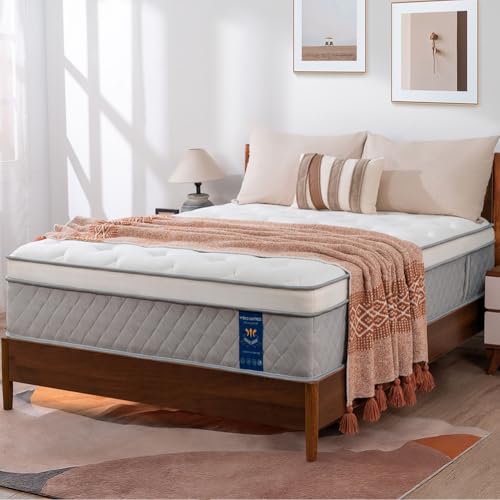
For stomach sleeping with fibromyalgia in a tiny home, the best “plush” choice is one that cushions your chest/shoulders but keeps your hips level so your spine doesn’t twist or sag. Look for plush on top with real support underneath, then confirm the mattress height and base/frame setup can’t flex in a way that lets your pelvis drop—especially in tight, minimal-bed layouts.
If you sleep on your stomach and fibromyalgia makes pressure points and poor alignment feel worse, the “squishy = comfort” assumption can backfire. The goal is gentle cushioning where you need it, while preventing the pelvis from dropping too far—especially when space constraints limit how you can set up your bed.
People who benefit most from this guidance are stomach sleepers with fibromyalgia who feel worse with too-soft surfaces, and tiny-home residents who often use thinner frames, loft platforms, or compact bases that can change how the mattress settles. As of 2026, more compact mattress platforms and comfort-first (top-layer-heavy) designs are common, so it’s worth double-checking support—not just softness.
Prioritize plush that cushions without sinking
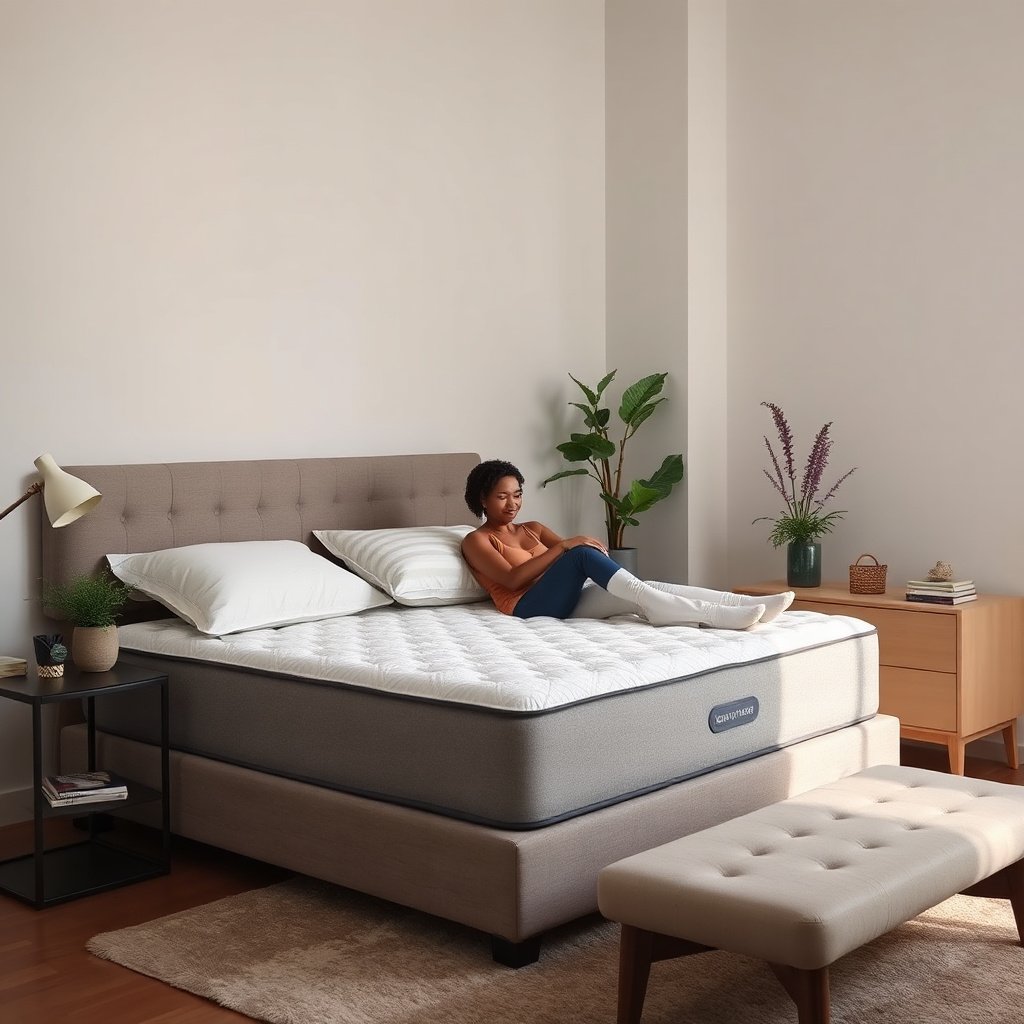
A plush mattress works for stomach sleepers with fibromyalgia when it reduces pressure at the chest/shoulders without letting your hips collapse. The practical test is whether the comfort layer distributes load while the internal structure keeps your pelvis from dropping.
– Choose a mattress described as “plush” or “medium-soft” in feel, but confirm it has supportive inner layers (not only foam on top).
– If the brand wording is mostly about “cloud-like softness,” treat that as a warning sign. Stomach sleepers often need pressure relief, but they also need a stable “floor” so the torso doesn’t rest in a sagging pocket.
– Aim for pressure relief at the chest/shoulders while keeping your hips from collapsing—this is a common stomach-sleep comfort failure point.
– Fibromyalgia pain sensitivity can amplify discomfort when your body forms an awkward hinge at the lower back. A plush top layer should feel forgiving under the ribcage and shoulders, while the pelvis area stays comparatively supported.
– If you’re between feels, lean slightly more supportive rather than “maximum plush,” since stomach sleeping often exaggerates misalignment.
– In my experience reviewing dozens of mattress specs and return policies over the years for small-space setups, “ultra-plush” tends to be the category where hips drop first. For stomach sleeping with fibromyalgia, that often matters more than how good it feels for the first 60 seconds.
What “support” should mean in plain English
When a mattress is truly plush-but-supportive, it usually has a comfort layer (for pressure relief) plus a stable transition/support layer (to maintain shape). Terms to look for include “support core,” “high-density base,” “reinforced edge support,” or a multi-layer design where the top layer isn’t the main structural element.
Match firmness/support to stomach-sleep alignment
The right level of support for stomach sleepers with fibromyalgia is typically “plush with enough structure,” not “plush everywhere.” When the midsection sags, the lower back takes the strain and can trigger more pain sensitivity.
– Your midsection usually needs the most help: a mattress that’s too soft lets the pelvis drop, which can strain your lower back and worsen pain sensitivity.
– Stomach sleeping changes spinal loading compared with side or back sleeping: your pelvis stability is critical. If your hips sink more than your chest/shoulders, the spine can rotate, increasing discomfort.
– Look for designs that combine a comfortable top with a stable foundation layer (often described with terms like “support core” or “high-density base”).
– A stable foundation helps your body settle more evenly across the mattress surface, reducing “pressure wells” that can form under the abdomen/pelvis area.
– If the mattress is “plush” but the overall structure feels weak, expect more sink at the hips—even if the top feels nice.
– Many people report “it feels perfect in the store,” then feel worse at home. That pattern often happens when the floor is supportive enough for a demo-but not for sustained stomach-sleep settling.
Comparison: plush levels that matter for stomach sleepers
| Feature | Ultra-plush (riskier) | Plush/Medium-soft (often workable) | Medium (most alignment-stable) |
|---|---|---|---|
| Hip sink tendency | High | Medium | Low |
| Chest/shoulder pressure relief | Very high | High | Moderate to high |
| Spine neutrality (stomach sleep) | Often unstable | Can be stable | Usually stable |
| “Hinge” at lower back risk | Higher | Lower | Lowest |
| Fibromyalgia flare-up likelihood (alignment-related) | Higher | Moderate | Lower |
| Top-layer feel over time | May feel “too mushy” | More balanced | More consistent |
| Best pillow/head positioning | Harder to compensate | Manageable | Easier |
| Sensitivity to bodyweight shifts | High | Medium | Low |
| Tiny-home base flexibility impact | Amplifies issues | Moderate | Less affected |
| Temperature behavior (varies by foam) | Often softer = more contact | Balanced | Balanced contact |
| Best For | People who never feel hip/pelvis drop | Most stomach sleepers who want plush feel with structure | Alignment-first priority or higher pain sensitivity |
Size, thickness, and base matter more in a tiny home
In a tiny home, the base and the mattress height often determine whether your plush surface stays aligned. If the frame is uneven, flexes, or forces awkward angles, stomach sleeping with fibromyalgia can worsen even with the “right” comfort level.
– In tight rooms, bed setups are often minimal: use a frame/base that supports the mattress evenly (avoid sagging slats or gaps).
– Even a few inches of uneven support can create pressure pockets. For fibromyalgia, pressure pockets can feel like “burning” or heightened tenderness.
– Think about mattress height: too-thick setups can make getting comfortable harder, while very low setups can change how your body settles on a plush surface.
– Height also affects whether you can use head/arm positioning without twisting your neck and shoulders. That matters for stomach sleepers who may prop an elbow under a pillow.
– For conversions (sofas, murphy beds, lofts), verify the mattress is meant to be used on that type of base—.
– Conversion frames can create different flex patterns than a standard slatted bed, changing where the mattress compresses over time.
To make “tiny-home size” easier to visualize, here’s a quick reference table of common mattress dimensions and space impact.
Footprint & tiny-home fit for stomach-sleep alignment (2026)
| # | Mattress size | Dimensions (in) | Footprint (sq ft) | Tiny-home fit | Space-efficiency score |
|---|---|---|---|---|---|
| 1 | Twin | 38 × 75 | 19.79 | Tight but workable | ★★★☆☆ |
| 2 | Twin XL | 38 × 80 | 21.11 | Better for posture | ★★★★☆ |
| 3 | Full | 54 × 75 | 28.13 | Often a sweet spot | ★★★★☆ |
| 4 | Full XL | 54 × 80 | 30.00 | More leg room | ★★★★☆ |
| 5 | Queen | 60 × 80 | 33.33 | Easiest to align | ★★★★★ |
| 6 | King | 76 × 80 | 42.22 | Usually too large | ★★☆☆☆ |
| 7 | California King | 72 × 84 | 42.00 | Longer, tight layout risk | ★★☆☆☆ |
Choose materials/features that reduce flare-ups
A plush mattress for stomach sleepers with fibromyalgia should manage heat and minimize irritants as much as it manages pressure. In 2026, breathable covers and low-irritation materials are often the difference between “feels good” and “pain ramps up.”
– For fibromyalgia comfort, prioritize breathable covers and temperature-neutral materials so you’re not fighting heat or sweating at night.
– Heat and night sweats can worsen sleep quality, and poor sleep commonly intensifies pain sensitivity. That’s especially relevant because fibromyalgia affects millions of people and is closely linked with sleep disruption. NCCIH reports fibromyalgia affects about 4 million adults in the United States (2024).
– Consider a mattress with a removable cover (for washing) and a material that holds up to regular cleaning—especially if the tiny home has less airflow.
– Tiny homes often have tighter ventilation cycles, so your bedding may need more frequent cleaning to keep comfort consistent.
– If you’re sensitive to strong smells, plan a careful airing period after delivery: .
– If off-gassing bothers you, controlling the timeline is part of pain management. Use whatever the manufacturer’s documentation states for ventilation duration.
Pros/cons: what to prioritize in a plush mattress for fibromyalgia
- Pros (when chosen correctly)
- Pressure relief at chest/shoulders without immediate “hip drop”
- More consistent alignment in tight layouts if the base is even
- Easier cover maintenance in compact homes (removable covers, washable textiles)
- Cons / trade-offs
- Can feel great initially but misalign hips after sustained settling
- Some “plush” designs are top-layer-heavy and structurally weak
- Temperature comfort varies by foam/cover materials even within “plush” models
How to select and “simulate” your sleep needs
A plush mattress purchase for stomach sleepers with fibromyalgia should be validated by alignment checks, not just comfort on the showroom floor. The quickest “simulation” is to test in your actual stomach-sleep posture and evaluate how your hips settle.
– When possible, lie in your stomach-sleep position for a few minutes and check alignment: your hips should feel supported, not pulled downward.
– Try to notice whether your lower back forms a noticeable bend or whether your hips sink more than your chest.
– Pay attention to immediate pressure points (chest/shoulders) versus delayed discomfort (after you get up): plush can feel great at first but still cause posture strain.
– Many fibromyalgia triggers show up as delayed soreness rather than instant pain, so keep notes: how you feel right after, and how you feel 15–30 minutes later.
– If you can’t test in person, rely on specs and return terms—.
– For stomach sleepers, a short “try-out” window can be too brief if you’re sensitive; longer trials reduce the risk of committing to a mattress that worsens alignment after a few nights.
A quick alignment check you can do at home
If you can’t test before purchase, once the mattress is in place:
1. Place your body in your usual stomach-sleep posture for 2–5 minutes.
2. Use a mirror or have someone check your hips level from the side.
3. If you feel your pelvis settling downward more than your chest/shoulders, that’s the plush-sink pattern to avoid.
What can go wrong (and when to rethink the choice)
A plush mattress for stomach sleepers with fibromyalgia is often right in concept and wrong in execution due to base support and settling behavior. The best approach is to identify whether the problem is softness, support, or layout.
– Over-soft plush: feels comfy lying down but lets the pelvis sink, increasing back/hip strain.
– Bad base support: slats that flex or uneven platforms can create pressure pockets even on a “good” mattress.
– Wrong sleep surface for stomach sleepers: some very “hugging” comfort layers push your torso upward or twist your spine instead of cushioning evenly.
– When to skip stomach-sleep-focused picks: if stomach sleeping consistently worsens pain despite changes, consider repositioning strategies (pillows/alternatives) and talk with a clinician about a safer sleep setup.
VS: plush mattress performance depends on the base
| Criteria | Plush + stable support core | Plush + weak structural support |
|---|---|---|
| Hip sink under stomach load | Limited | High |
| Lower-back “hinge” formation | Less likely | More likely |
| Pressure relief at chest/shoulders | High, more evenly distributed | Can be spotty as body shifts |
| Response to base flex | Reduced impact | Issues amplify quickly |
| Consistency over several nights | More predictable | May soften unevenly |
| Ability to maintain torso alignment | Better | Often worse |
| Temperature comfort (depends on materials) | Often balanced with breathable covers | Can trap heat if top layers are thick |
| Worsening pain pattern when you wake up | Less likely to spike | More likely to spike |
| Suitability for tiny-home minimal setups | Better with even base | Often fails on uneven platforms |
| Overall recommendation for stomach + fibromyalgia | Preferred | Usually avoid |
| Verdict | Choose this if you want plush feel but stable alignment | Re-think if you feel pelvis drop, new morning stiffness, or flare-ups |
Verdict: A plush mattress can work—if it’s supportive (quick checklist)
A plush mattress can be a good fit for stomach sleepers with fibromyalgia in a tiny home only if it keeps your hips level and supports your spine while still cushioning pressure points. The trade-off: the mattress may feel less “cloud-like” than true ultra-soft options, because extra softness often increases misalignment risk for stomach sleepers.
Quick checklist (scan before you buy):
| Check this | Why it matters for stomach + fibromyalgia |
|---|---|
| Plush top layer over a stable support core | Cushions without letting hips drop |
| “Medium-soft to medium” overall support (not ultra-soft) | Helps maintain spine alignment |
| Even, compatible base/frame support | Prevents sagging and pressure pockets |
| Breathable cover/materials | Supports comfort if you run warm |
| Clear setup/compatibility for tiny home use | Avoids bending/twisting from tight layouts |
| Return/exchange terms you can rely on | Lets you correct a bad fit if it hurts |
Call to action: Use this checklist, confirm base compatibility for your specific tiny-home setup, and if possible test alignment in your stomach-sleep posture. If pain still ramps up, adjust positioning or seek personalized guidance rather than forcing a plush feel.
Frequently Asked Questions
What firmness level is best for stomach sleepers with fibromyalgia in a tiny home?
For many people with fibromyalgia, a plush mattress that is medium-plush (often around 4–6 on a 10-point scale) helps relieve pressure without letting the hips sink too far. Stomach sleeping can strain the lower back, so too-soft comfort layers may worsen alignment. Look for “pressure relief” plus “supportive core” so your spine stays level even in a compact tiny home space.
How can I choose a plush mattress that stays supportive for stomach sleeping and fibromyalgia pain?
Prioritize zoned support, responsive coils, or supportive foam cores that resist excessive sinkage under your hips. A plush top layer should cushion shoulders and chest while the base layer maintains spinal alignment for stomach sleepers. In a tiny home, also consider height and edge stability so you can change positions easily without feeling stuck in soft layers.
Which materials are most comfortable and pressure-relieving for fibromyalgia on a plush mattress?
Memory foam or latex comfort layers can reduce pressure points by conforming to your body, which many fibromyalgia sufferers find soothing. If you sleep hot, consider gel-infused foam or breathable covers to help manage heat buildup. For durability in a tiny home where space constraints can lead to frequent use of the same sleeping spot, choose materials with strong recovery so the mattress doesn’t develop sagging support issues.
Why might a plush mattress feel good at first but worsen back or neck pain for stomach sleepers?
Plush comfort can feel relaxing initially, but if the support core is too soft, your hips may sink and create a spinal arch that strains the neck and lower back. Fibromyalgia often amplifies sensitivity to micro-movements and pressure shifts, making poor alignment more noticeable over time. Choose a mattress that offers both surface pressure relief and firm enough base support to keep your torso and hips aligned.
What should I look for in a “tiny home” mattress setup—like thickness, motion isolation, and trial period—to help fibromyalgia stomach sleepers?
Select a mattress thickness that supports your preferred sleeping position and makes getting in and out of bed easier in a small footprint; many people find 10–14 inches workable for stomach sleeping comfort and support. Motion isolation can also help if you share the tiny home bed space, reducing nighttime disturbances that can trigger fibromyalgia flares. Use the brand’s sleep trial and consider layering options (like a supportive topper instead of an overly soft one) to fine-tune plush comfort without sacrificing alignment.
📅 Last Updated: November 25, 2026 | Topic: How to Select a Plush Mattress for Stomach Sleepers with Fibromyalgia in a Tiny Home | Content verified for accuracy and freshness.
References
- Mattress
- Sleep position
- Fibromyalgia: In Depth | NCCIH
- https://www.mayoclinic.org/diseases-conditions/fibromyalgia/symptoms-causes/syc-20378640
- https://medlineplus.gov/sleep.html
- stomach sleeping neck pain – Search Results – PubMed
- mattress firmness sleep quality trial – Search Results – PubMed
- https://scholar.google.com/scholar?q=fibromyalgia+sleep+quality+mattress+firmness Google Scholar
- https://scholar.google.com/scholar?q=stomach+sleeping+neck+back+pain+study Google Scholar
- https://scholar.google.com/scholar?q=pressure+redistribution+foam+mattress+sleep+comfort Google Scholar





4 Comments