How to Select Adjustable Mattress for Side Sleepers with Hot Flashes
To select an adjustable mattress for side sleepers with hot flashes in a tiny home, prioritize breathable cooling layers, pressure-relieving support, and a compact adjustable base that stays stable when you change elevation. You can narrow your options in about an hour using your room dimensions, sleep position needs, and the mattress height and cover materials you want. Start by measuring the platform space and noting your temperature triggers, then match those details to adjustable compatibility and airflow.




If you’re a side sleeper with hot flashes, choose an adjustable mattress system that keeps your spine aligned at side-sleep angles and prevents heat buildup between your body and the mattress surface. Start by matching your pressure points (hips/shoulders) and then verify the cooling materials and adjustability range so you can reduce sweating without “sleeping propped up” all night. This guide walks you through what to check—especially when space is tight in a tiny home.
If you sleep on your side and deal with night sweats or sudden overheating, this selection process is for you. It’s also for tiny-home setups where the bed must fit limited square footage, work with minimal power access, and be manageable to move or store during reconfiguration.
Prioritize side-sleep alignment and pressure relief
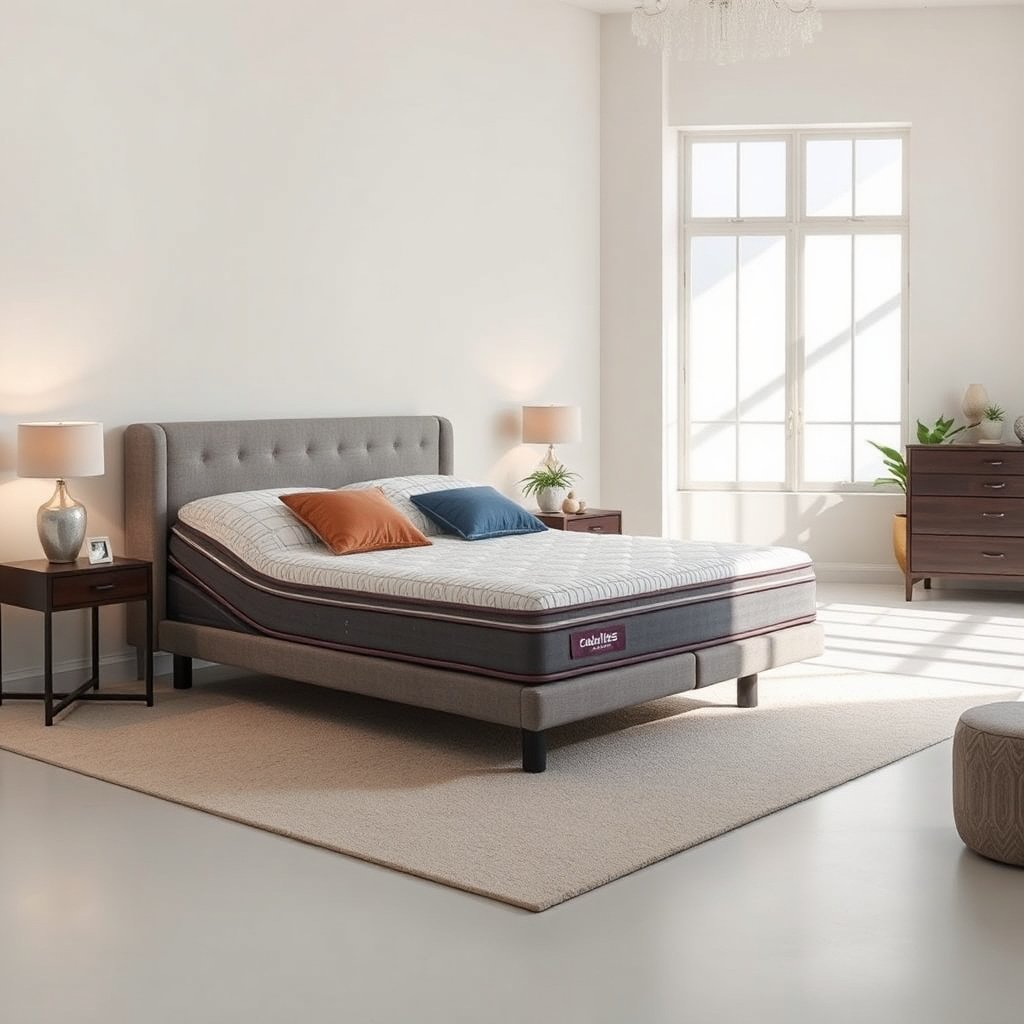
For side sleepers with hot flashes, the fastest path to cooler, steadier sleep is correct alignment plus pressure relief—before you even think about cooling labels. When your hips and shoulder are supported without the torso rolling, you’re less likely to “micro-wake,” sweat more, and then adjust again all night.
– Look for side-sleeper comfort that specifically supports your hips and shoulder without letting your torso roll forward or collapse.
– Aim for pressure relief at the shoulder/hip area first, then confirm the mattress still feels stable when you adjust head or leg elevation.
– If the adjustable system has multiple height “zones,” verify the firmness/feel stays consistent when the bed tilts (no sudden hard/soft transitions).
To make this practical, think in terms of two checks you can do in minutes:
1) The “hip sink” check: In your normal side-sleep posture, your pelvis should feel cradled—not forced upward and not sinking so far that your lower back twists.
2) The “shoulder shelf” check: Your upper shoulder should feel like it rests on a supportive surface rather than being pushed into the mattress like a hammock.
Also note the clinical logic behind “redistribution.” Pressure-injury guidance for people who are immobile commonly uses repositioning intervals around every 2 hours to reduce prolonged pressure exposure (National Pressure Injury Advisory Panel (NPIAP)). You’re not treating an injury, but you are trying to avoid long, uninterrupted pressure under hotspots—especially when night sweats can make skin feel more vulnerable and uncomfortable.
Finally, in 2026, many adjustable bases now include pre-programmed presets for head/leg elevation. That’s useful only if presets still preserve your side-sleep alignment. If you wake with your shoulder “pinched” or your hips feeling uneven after you use a preset, cooling won’t matter.
Choose adjustability that matches hot-flash nighttime changes
Hot flashes rarely follow a perfect schedule, so your adjustable mattress should let you react quickly while keeping your side-sleep posture stable. In other words: choose adjustability that supports your cooling movements, not one that forces you into awkward angles.
– Confirm the adjustability range you need (head lift and leg/overall tilt) is actually available on the model—check the specs, not just marketing.
– Typical targets: look for head/upper-body elevation that can reach at least ~30° for intermittent cooling and higher limits (often ~60–70° on many adjustable bases) for contingency positioning (exact ranges vary by model).
– Prefer controls and presets that let you change position without causing you to fidget awake—especially when you’re already trying to cool down.
– Check that the mattress height and tilt still feel natural for side sleeping, not like you’re sliding toward the edge.
Here’s what “matches hot-flash nighttime changes” usually means in real use:
– You need micro-adjustments, not constant repositioning. If your setup requires several button presses plus waiting for the bed to stop, you’ll be more awake during a sweat episode.
– You need side stability at the angle you’ll actually use. Many people start with a low elevation (think: “slight incline to breathe easier / reduce heat”) and only go higher if discomfort continues.
If your base offers both head elevation and leg elevation, prioritize what affects your sleep comfort most:
– Head elevation can help when you feel “overheated in the chest/upper torso.”
– Leg elevation can help when discomfort shifts and you want overall circulation comfort without changing shoulder pressure as much.
Practical side-sleep warning: if a model uses “steep” head lifts by default in its best-selling presets, test whether the tilt makes your torso rotate or forces you toward the pillow edge. A cooling plan fails if you end up sliding, re-sinking, or waking to re-center.
Select cooling features that don’t trap heat
Cooling works only when the materials manage both heat and moisture—because hot flashes often worsen when sweat lingers against skin. Choose breathable layers that feel neutral at bedtime (not “cool” only on the first minute, then warmer after your body temp rises).
– Prioritize breathable comfort layers (for example, airflow-friendly tops or covers) because hot flashes often worsen when heat and moisture linger against skin.
– Look for moisture-wicking and breathable cover options, and avoid combinations that feel “warmer” even before you sweat (especially on summer nights).
– If there’s a removable cover, confirm whether it’s washable and what materials it’s made from:
– Commonly washable cover setups to look for: removable polyester or cotton-polyester knit covers (often machine-washable on cold; tumble-dry low only if the care label allows). If you see “dry-clean only” or “do not machine wash,” that’s a red flag for night sweats.
There’s also a room-temperature angle that matters more than most people expect. According to the National Sleep Foundation, a comfortable bedroom temperature for sleep is often cited in the 60–67°F (15.6–19.4°C) range (National Sleep Foundation). For hot flashes, this doesn’t replace mattress cooling, but it reduces the overall heat load so your bedding can do its job.
To help you compare cooling strategies quickly, here’s a practical “setpoint fit” scan based on whether you’re inside the commonly recommended sleep range:
Bedroom Setpoints for Sleep Comfort (Hot-Flash-Friendly Scan)
| # | Bedroom Setpoint | Range Status | Hot-Flash Comfort Fit | Evidence Tie-in | Fit Rating |
|---|---|---|---|---|---|
| 1 | 56°F (13.3°C) | Below common range | ★★★☆☆ | 60–67°F target is missed | Low |
| 2 | 58°F (14.4°C) | Below common range | ★★★☆☆ | May feel chilly after sweating | Low |
| 3 | 59°F (15.0°C) | At lower edge (often still low) | ★★★★☆ | Close, but may under-shoot | Moderate |
| 4 | 60°F (15.6°C) | Inside common range | ★★★★★ | Meets 60–67°F target | High |
| 5 | 62°F (16.7°C) | Inside common range | ★★★★★ | Supports evaporative cooling | High |
| 6 | 65°F (18.3°C) | Inside common range | ★★★★★ | Often stable across night | High |
| 7 | 68°F (20.0°C) | Above common range | ★★★☆☆ | Increases heat load for skin | Low |
Note: this table is a room-temperature overlay, not a substitute for mattress cooling. In 2026, many “cooling” toppers focus on initial touch temperature; hot flashes require moisture management and airflow continuity all night.
Make it work in a tiny home (size, power, and footprint)
For tiny homes, the best adjustable mattress is the one you can safely move and operate without trapping the bed against walls, cords, or doors. That means measuring clearance for tilt, planning power access, and choosing components that won’t become a daily hassle.
– Measure your real space constraints: mattress dimensions, clearance for opening drawers/doors, and room for you to adjust the bed position.
– Typical clearance to plan for: at minimum, confirm you can keep several inches of gap around the moving base edges plus enough room at the head/foot to lift without contacting walls.
– Check power requirements and whether cables/furniture placement will interfere with the bed’s movement.
– Power planning rule of thumb: verify your base’s power brick/adapter placement so it doesn’t sit under the moving frame or create a “cord snag” zone during elevation.
– Consider maneuverability: can you move the mattress or base through your doorways, down a narrow hallway, or onto a loft/raised platform if your tiny home uses one?
Hot flashes already disrupt sleep; tiny-home friction adds more. Common failure points include:
– Loft ceilings: Head elevation can reduce clearance so your pillows or headboard contact the ceiling.
– Wall proximity: Many adjustable bases “grow” toward the wall during elevation, especially if they’re placed flush.
– Drawer systems: If the base tilts into a drawer area, you get vibration noise and reduced range.
A quick perspective: hot flashes are extremely common in menopause—about 75% of women experience them during the menopausal transition (North American Menopause Society (NAMS)). For many people, that means recurring sleep disruption, so the mattress must be easy to use at 2 a.m., not just comfortable on day one.
What can go wrong (and how to avoid it)
Adjustable mattresses can help, but the wrong setup can create new discomfort that mimics “heat” even when you’ve chosen breathable materials. The goal is stable side-sleep feel at the angles you’ll actually use.
– Over-tilting: If you rely too heavily on elevation, you may create new pressure points or strain your neck/shoulders while side sleeping.
– Mismatched feel when adjustable: Some comfort layers can change how “supportive” the mattress feels when it’s angled—confirm the side-sleep feel holds at your typical tilt.
– Cooling that’s only marketing: A “cooling” label won’t help if the cover traps heat or the comfort layer is too dense for your climate.
– Fit issues in tight spaces: Even if a mattress fits on paper, the base’s movement may require extra clearance you didn’t account for.
To keep the tradeoffs clear, here’s a scan you can evaluate before you commit:
| Why an adjustable bed helps hot-flash side sleeping | Where it can backfire |
|---|---|
| Pressure relief at the hotspot | Angle changes can move support under hips/shoulders |
| Quick cooling adjustments during night sweats | Presets may be too steep for comfortable side sleep |
| Better breathing comfort for some sleepers | Heads-up positioning can shift your spine alignment |
| Reduced need to sleep “propped up” manually | Base movement requires real clearance and power-safe placement |
Verdict: what to pick (and who should skip this approach)
Choose an adjustable mattress if you need frequent position changes to manage overheating and want to reduce restlessness without constantly getting up. The best match for side sleepers with hot flashes is one that keeps alignment steady at the angles you’ll actually use, while also using breathable, moisture-managing layers that don’t feel warmer as the night goes on.
Skip this approach—or at least test longer—if:
– you find adjustability makes you more aware of movement/edge shifting,
– your space can’t provide safe clearance for tilting,
– or you’re sensitive to airflow/cooling covers that don’t feel comfortable right away.
In 2026, the market offers more cooling textiles and more quiet motors, but the core requirement remains the same: side-sleep support must not collapse when the base changes angle.
Quick scan checklist (save this)
| What to verify | Why it matters for hot flashes + side sleeping | Notes |
|---|---|---|
| Side-sleep support at hips/shoulders | Reduces heat-trapping pressure and improves comfort when angled | Look for hip cushioning that doesn’t “hammock” and shoulder support that feels stable |
| Real adjustability range available | You need the angles that help you cool without awkward tilts | Confirm your model supports at least ~30° head lift and has safe clearance at your likely angles |
| Control/preset ease | Less waking up = fewer heat-sweat cycles | Prefer tactile controls or presets you can reach without searching for buttons |
| Breathable, moisture-managing top layer/cover | Helps prevent heat buildup during night sweats | Prefer removable, machine-washable covers with breathable knit/mesh construction |
| Clearance for movement in your tiny home | Tilting needs space to work safely | Measure wall/headboard/foot clearance after placing the base in its final location |
| Power/setup requirements you can support | Prevents cables/placement from blocking the base | Confirm adapter/cord routing won’t contact moving parts and fits your outlet location |
Frequently Asked Questions
What features should I look for in an adjustable mattress for side sleepers with hot flashes in a tiny home?
Prioritize cooling and airflow by choosing a breathable cover (e.g., phase-change fabric, cotton, or breathable knit) and a mattress design that doesn’t trap heat. Look for an adjustable base with smooth head/upper-body elevation so you can reduce overheating and improve comfort while side sleeping. In a tiny home, also select a model with a compact profile and reliable adjustability to avoid wobble in a smaller footprint.
How do I choose the right firmness level for side sleeping when I get night sweats or hot flashes?
For side sleepers, medium to medium-firm is often best because it supports your hips while keeping your shoulders comfortably cradled, which can reduce pressure that makes hot flashes feel worse. If your shoulder or hip “bottoms out” when the bed is flat, increase firmness; if you feel pressure points, soften slightly. Since adjustable positions can shift weight, test firmness with common sleeping angles (like slightly elevated head) rather than only the fully flat setting.
How should I set my adjustable mattress angles to reduce hot flashes while staying comfortable on my side?
Start with a modest head elevation (often around 2–6 inches or a low-to-mid tilt) to encourage airflow and minimize chest heat buildup. For side sleepers, consider slight elevation adjustments that reduce strain on the shoulder and help you maintain spinal alignment, rather than extreme recline. If your feet or hips feel strained, use zone/hinge adjustments (if available) or alternative presets so you can fine-tune comfort without overheating.
Which cooling materials and technologies work best in an adjustable mattress for hot flash relief?
Look for breathable, moisture-wicking fabrics on top, plus internal materials that support heat dissipation such as gel-infused foam, latex, or phase-change layers. Pay attention to designs compatible with adjustable bases, since some foams can retain heat when repeatedly bent; ventilated airflow channels and open-cell structures are often helpful. In a tiny home, cooling matters even more because ambient heat can build up, so choose a mattress cover that stays comfortable and washable for temperature and sweat control.
Why is an adjustable mattress especially helpful for side sleepers in a tiny home, and what should I check before buying?
An adjustable mattress can help you change positions throughout the night to maintain comfort during hot flashes, improving sleep quality even in limited space. Before buying, check the base dimensions, weight capacity, power type (corded vs. remote), and how the mattress performs when elevated so it doesn’t overheat or shift. Also confirm practical details for a tiny home—such as easy setup, compatibility with your existing bed frame or platform, and ease of cleaning the cooling cover.
📅 Last Updated: November 25, 2026 | Topic: How to Select an Adjustable Mattress for Side Sleepers with Hot Flashes in a Tiny Home | Content verified for accuracy and freshness.
References
- https://www.mayoclinic.org/diseases-conditions/hot-flashes/symptoms-causes/syc-20352736
- https://www.nia.nih.gov/health/hot-flashes-and-night-sweats-menopause
- https://www.nia.nih.gov/health/sleep-and-aging
- About Sleep | Sleep | CDC
- menopause hot flashes sleep disruption – Search Results – PubMed
- mattress firmness pressure ulcer side sleeping sleep quality – Search Results – PubMed
- https://en.wikipedia.org/wiki/Side_sleeping
- https://scholar.google.com/scholar?q=hot+flashes+night+sweats+sleep+disruption+temperature Google Scholar
- https://scholar.google.com/scholar?q=side+sleeping+mattress+firmness+pressure+relief+study Google Scholar
- https://scholar.google.com/scholar?q=adjustable+bed+sleep+quality+side+sleepers+research Google Scholar