How to Choose a Cooling Mattress for Back Sleepers: Buyer Guide
You slide into bed after a long day, and the moment you settle onto your back, you notice whether the mattress holds heat along your shoulders and lower back. The right cooling mattress can make that difference quickly, and you can narrow your options in about 15–30 minutes once you know what to check. You will learn which cooling features actually matter for back sleepers—then you can shop with confidence and choose a mattress that stays comfortable all night.
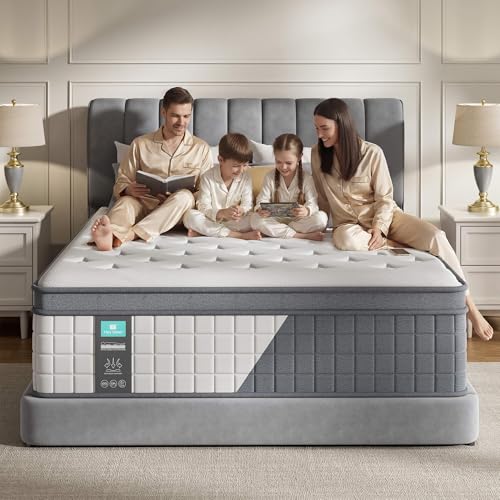



If you’re a back sleeper who wakes up warm or sweaty, the best cooling mattress is the one that balances airflow-based heat control with support that keeps your spine neutral—not just a bed covered in “cooling” marketing. Start by evaluating the comfort layer’s breathability (cover + foam/latex structure) and then confirm the support core prevents you from sinking and trapping heat around your hips and lower back.
If you sleep on your back and you wake up warm, sweaty, or “stuck” on the bed surface, this is for you. It’s also helpful if you’ve tried a cooling feature before but felt it didn’t actually improve night-to-night temperature.
Look for real heat control, not just “cooling” labels
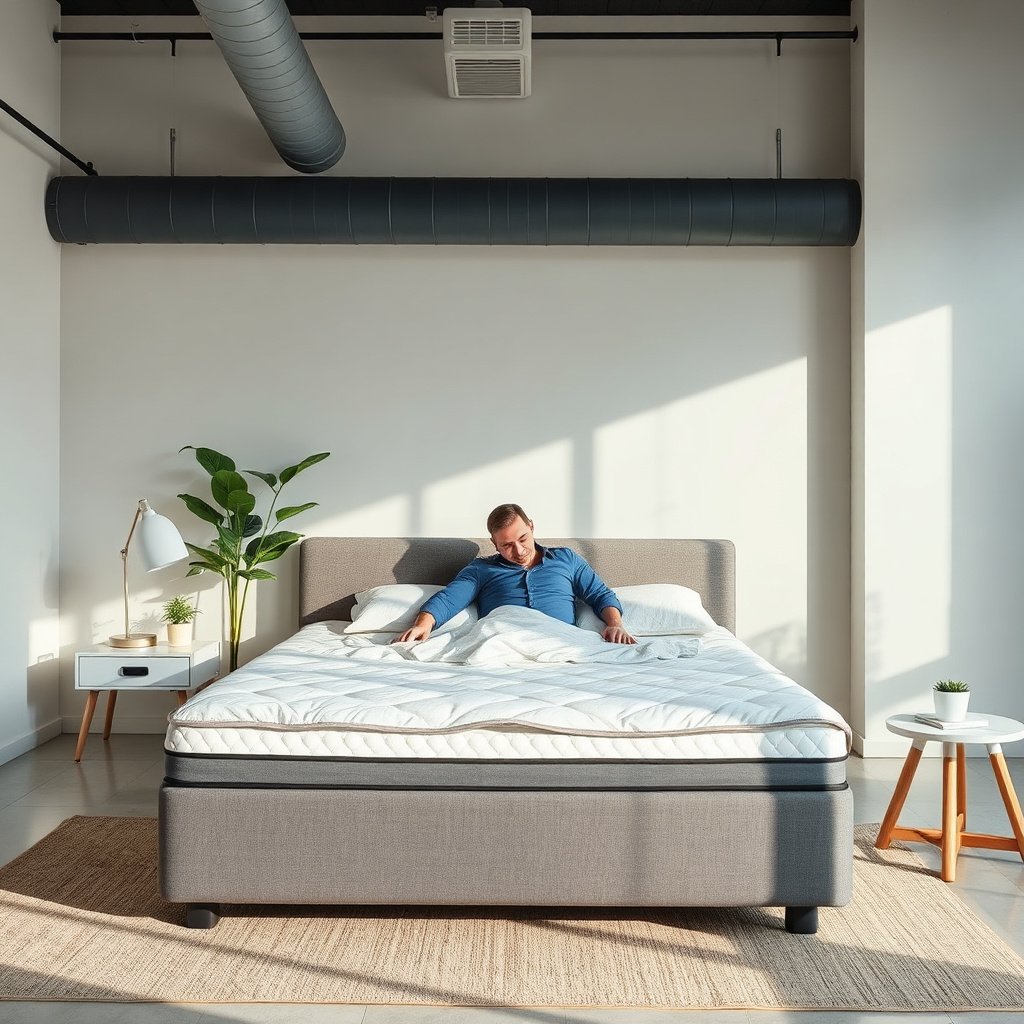
A cooling mattress for back sleepers should manage heat by moving it away from your body and preventing hot, humid air from building up at the surface. In practice, that means prioritizing breathable construction across the comfort layer and cover—not relying on gel or gimmicks alone.
Prioritize breathable construction over surface gimmicks
– Prioritize breathable construction: Ventilated foams, open-cell designs, and airflow-focused comfort layers generally handle heat better than “cooling” that’s only cosmetic. A mattress can feel cool at first, but if the comfort layer compresses and blocks airflow, your body heat still builds up.
– Check the cover: A breathable knit fabric can reduce heat buildup near your skin. If the cover is removable (and washable), you can also keep sweat-absorbing fibers from degrading over time, which matters for both feel and temperature control.
– Gel or phase-change materials: If a mattress uses gel or “phase change” materials, treat it as a *supporting component*, not the cooling system. Gel often changes the feel more than the overall thermal performance—especially once the comfort layer warms and compresses under your weight.
Why airflow matters: according to NIST, the thermal conductivity of still air is ~0.026 W/m·K (around 300 K), which is why trapped air inside a mattress structure can affect how heat spreads and dissipates (NIST, thermal conductivity of air (300 K)). When your comfort layer traps heat and humidity, the surface can feel warmer even if the mattress includes a cooling feature.
What to feel for during evaluation
– Look for a cover that doesn’t feel “sticky” or overly tight against your skin.
– If the mattress is described as cooling, check whether the design includes ventilated channels, open-cell foams, or breathable quilting—not just a thin top layer.
– If possible, consider how the mattress holds up when you shift positions—surface heat control is only helpful if the airflow design still works after compression.
Match firmness and support to back-sleeper alignment
A cooling mattress for back sleepers must keep your spine in neutral alignment while managing heat at the surface. If the bed is too soft, you’ll sink more around the hips, increase contact pressure, and often feel warmer because airflow decreases where your body compresses the comfort layer.
Aim for neutral support—not just “not too firm”
– Aim for neutral spine support: The mattress should support your lower back without forcing your hips to sink excessively or pushing your shoulders too high. Neutral alignment reduces muscle fatigue and also reduces how much your body “pools,” which can trap heat.
– Choose a comfort level that won’t let you “bottom out”: Too-soft comfort layers can increase contact pressure and reduce airflow at the surface. That combination often drives warm sleep—especially for back sleepers who stay relatively still for long stretches.
– Look for consistent support across the sleep area: Edge support matters. Back sleepers who rest near the perimeter (or reposition mid-night) can experience more localized sinking, which can increase heat retention at the places contacting the mattress most.
From a heat-management perspective, the biggest problem is not simply temperature—it’s whether your body compresses the comfort layer enough to reduce ventilation and create a “microclimate” of warm, humid air. For that reason, a “cooling mattress” that lacks supportive structure may fail even if it feels cool for the first few minutes.
Quick alignment cue you can use
When lying on your back, focus on whether your lower back stays supported and your hips stay roughly level with your torso. If you notice a noticeable dip at the hips, you’ll likely feel warmer over time because the compressed comfort layer becomes less breathable.
Compare common cooling mattress types (and what they’re best at)
Different mattress constructions cool differently, and the “best cooling mattress for back sleepers” depends on which mechanism you need most: ventilation, pressure relief, or bounce that prevents that stuck feeling.
Memory foam with cooling features
– Memory foam with cooling features: These beds often contour and relieve pressure—useful for back sleepers who need gentle support under the lumbar area. However, heat retention varies by foam type, thickness, and airflow design. If you go memory foam, look for explicit ventilation/heat-dissipation construction (for example, open-cell foam or internal channels), not only a cooling cover.
Latex (often naturally breathable)
– Latex (often naturally breathable): Latex tends to promote airflow and bounce. Many back sleepers find it reduces the “stuck in the bed” feeling that can trap heat when you remain in one position for hours. If you’re sensitive to sink, latex-based cooling mattresses often feel more breathable simply because your body doesn’t compress the comfort layer as deeply.
Hybrids (foam/latex + coils)
– Hybrids (foam/latex + coils): Coil cores usually increase airflow compared with an all-foam design. Cooling performance still depends on what’s above the springs (cover + comfort layer). If the top layers are dense or poorly ventilated, the coils can’t fully “rescue” surface temperature.
Pros/cons snapshot for back sleepers
| Type | Pros (cooling + alignment) | Watch-outs |
|---|---|---|
| Ventilated memory foam | Comforting contour + pressure relief; works well if the lumbar region stays supported. | Can retain heat if ventilation is limited or the comfort layer is too thick/soft. |
| Latex | Often breathes well; responsive surface can reduce “stuck” feelings. | If overly firm or too thin in the comfort layer, pressure relief may be limited. |
| Hybrid with coil airflow | Coils increase airflow; supportive base can improve spinal neutrality. | Top comfort layer design still controls surface warmth—cheap/closed structures can underperform. |
Material-level reality check (thermal conduction and why ventilation still wins)
Below is a practical way to think about why a cooling mattress for back sleepers depends on more than “cold-touch” materials. According to NIST, liquid water has thermal conductivity ~0.60 W/m·K (near room temperature), which helps explain why sweat management and evaporation matter for cooling comfort (NIST, thermal conductivity of water (~300 K)). If a mattress traps moisture and limits evaporation/air movement, the surface can feel warmer even when materials aren’t “hot.”
How Cooling-Focused Materials Influence Heat Spread (Typical Thermal Conductivity)
| # | Material / Structure | Typical thermal conductivity (W/m·K) | Cooling implication | Airflow-friendly rating |
|---|---|---|---|---|
| 1 | Still air (ventilated micro-spaces) | ~0.026 | Trapped air can reduce heat conduction, but only ventilated designs avoid buildup. | ★★★★★ |
| 2 | Open-cell foam (air-containing) | ~0.03–0.04 | Better internal airflow potential when channels remain open. | ★★★★☆ |
| 3 | Natural latex foam | ~0.04–0.06 | Often more breathable and less “sinky,” improving surface air exchange. | ★★★★☆ |
| 4 | Polyurethane “memory” foam | ~0.02–0.04 | Thermally moderate, but airflow can drop if the comfort layer compresses deeply. | ★★★☆☆ |
| 5 | Cotton / wool blend knit cover | ~0.04 | Breathability depends on weave; good covers support moisture release. | ★★★★☆ |
| 6 | Polyester micro-knit cover | ~0.04–0.05 | Often smooth and breathable; performance depends on the specific knit density. | ★★★★☆ |
| 7 | Non-breathable TPU/vinyl protector layer | ~0.15–0.25 | Can reduce moisture transport/air exchange, raising perceived warmth. | ★★☆☆☆ |
Note: Thermal conductivity ranges vary by formulation and test method. For shopping decisions, focus on design that maintains airflow channels under body compression—especially for a cooling mattress used by back sleepers.
Dial in the fit: your body, your sleeping habits, and the basics
A cooling mattress for back sleepers works best when the mattress size and support match your body type and sleep environment. Even strong cooling design can underperform if bedding blocks breathability or if your sleeping position compresses the wrong comfort zone.
Consider your body type and pressure profile
– Consider your body type: If you sink deeply, you’ll need support-focused materials (or a different firmness) so you stay aligned while staying cooler. Alignment prevents you from over-compressing comfort layers that otherwise would help with airflow.
– Think about bed climate and bedding: Even the best cooling mattress can feel warmer with non-breathable sheets or thick top layers. Choose breathable bedding that matches your temperature needs (for example, lighter weaves that don’t trap moisture).
– Test “night feel,” not just first-night feel: Comfort layers can change how quickly you perceive warmth as your body settles over multiple nights. If a brand offers trial/return terms, use that window to evaluate temperature over several nights.
A practical shopping method (what to do in-store or at home)
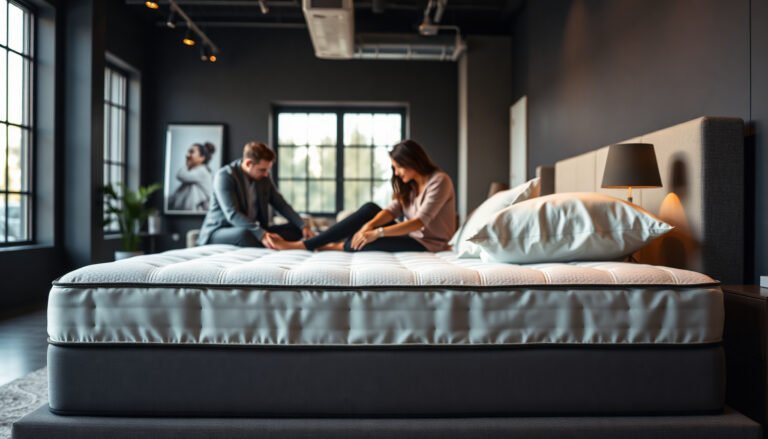
When comparing two cooling mattresses for back sleepers, lie in your normal position for long enough to form a realistic “heat feel.” Then shift slightly and reassess—because what matters is how the comfort layer behaves under compression, not how it feels when you’re weightless.
Also, take note of your bedding and protector setup right away. In my experience adjusting room setups for warmer sleepers, the biggest difference often comes from whether the sheets and mattress protector breathe consistently—especially during the first hour after you get into bed.
What can go wrong when choosing a cooling mattress
A cooling mattress can disappoint when the design cools at first but loses airflow under load, or when accessories undo the intended heat management. Most “cooling failures” trace back to missing support, thin cooling layers, or bedding that traps moisture.
– Cooling without support: Some beds feel cool initially but soften too much, causing spinal drift. That drift often increases contact pressure, reduces airflow, and leaves you feeling warmer even though the cover or gel is “cold.”
– Too much “cooling” gimmick: If the cooling layer is thin or the cover blocks airflow, you may not notice a meaningful difference. Look at the full build: cover + quilting + comfort foam + support core.
– Bedding can cancel the effect: Heated sleepers frequently overlook sheets, mattress toppers, and protectors. A thick, non-breathable topper can make a cooling mattress feel warmer—even if the mattress itself is well-ventilated.
– Durability surprises: Cooling materials and covers can wear differently than the support core. Follow manufacturer care guidance and respect warranty terms so the cooling mattress for back sleepers maintains its intended structure and airflow over time.
Edge cases worth planning for
– If you’re sensitive to pressure relief, don’t assume “cooling” replaces comfort. A bed can be breathable and still fail if it doesn’t relieve pressure at the shoulders/hips for your build.
– If you frequently sleep near the edge, make sure the support core and edge construction don’t let you sink—edge-related sinking often increases heat buildup.
Verdict / tip: a smart way to buy (and who should skip this)
A smart approach is to choose a cooling mattress for back sleepers that delivers support + airflow together—breathable comfort layers (or latex/ventilated designs), a ventilated build (often coils or open-cell structures), and a cover that doesn’t trap heat. Avoid choosing based on “cooling” alone; confirm the mattress prevents your hips from sinking and keeps your lower back aligned.
Skip (or rethink) this approach if:
– You already sleep very cool and are sensitive to firmer, more responsive surfaces—some breathable/cooling-forward builds can feel less “hugging.”
– You’re prone to discomfort on overly firm setups—back-sleeper alignment still matters, and cooling tech won’t fix poor pressure relief.
– You can’t take advantage of return/trial terms and can’t evaluate temperature over a few nights.
If you’re deciding today, prioritize a mattress that looks like a ventilation system first and a “temperature gadget” second—then support your spine neutrally so the bed stays breathable under your normal sleeping load.
Cooling mattress scan checklist (save this)
| What to check | What “good” looks like |
|---|---|
| Comfort layer | Designed for airflow/heat management (not only a thin cooling add-on) |
| Support for back-sleeping | Neutral alignment; hips don’t sink excessively |
| Cover fabric | Breathable, ideally removable/washable |
| Construction | Ventilated layers and/or a coil/hybrid core for airflow |
| Bedding compatibility | Sheets/protector that don’t block breathability |
| Care & longevity | Manufacturer care instructions you can follow |
| Trial/return | Time window to evaluate temperature over multiple nights |
Sources
– CertiPUR-US program documentation (official certification criteria for foam used in many mattresses):
– OEKO-TEX standards overview (official approach for testing certain textile inputs):
– U.S. Consumer Product Safety Commission (CPSC) flammability standard for mattresses (16 CFR Part 1633):
– Manufacturer documentation for the specific mattress you’re considering (cooling cover materials, care instructions, and construction claims):
– NIST (National Institute of Standards and Technology), thermophysical properties used to explain heat-transfer behavior (thermal conductivity of air/water): NIST, thermophysical properties (thermal conductivity of air and water)
– NIST (National Institute of Standards and Technology), thermochemical property used to explain evaporation-driven cooling limits (latent heat of vaporization): NIST, thermochemical properties (enthalpy/latent heat of vaporization)
A cooling mattress for back sleepers is ultimately a system—support that preserves alignment, breathable materials that keep airflow active under compression, and bedding that doesn’t trap moisture. Use the checklist above to verify heat control throughout the build, not just at the surface, and you’ll be far more likely to sleep cooler without sacrificing comfort or spinal neutrality.
Frequently Asked Questions
What features should a cooling mattress have for back sleepers?
Look for breathable materials like gel-infused foam, latex, or phase-change fabric that help regulate body temperature and reduce heat buildup. A supportive back-sleeper feel also depends on the right foam density and coil design—especially lumbar support zones that keep your spine aligned. Ventilation through the mattress cover and pocketed airflow pathways can further improve cooling performance.
How do I choose the right cooling mattress firmness for back sleeping?
Most back sleepers do best with medium-firm to firm support because it cushions pressure points while maintaining spinal alignment. If you’re waking with lower-back discomfort, you may need a slightly firmer mattress or better lumbar support to prevent sinking. For lighter sleepers, a medium feel with cooling comfort layers can reduce heat while still supporting the hips and shoulders.
Why does a cooling mattress still feel warm for some people who sleep on their back?
Even cooling mattresses can retain heat if the top comfort layer is too thick, made from less breathable materials, or if your room is already warm. Body weight and sleep position matter—back sleepers who sink too much can trap heat around the hips and lower back. Confirm the mattress has active airflow features (vented layers, breathable covers) and consider using a cooling pillow or breathable sheets for better heat dissipation.
Which cooling mattress type is best for back sleepers: memory foam, hybrid, or latex?
Hybrid mattresses often work well because they combine responsive coil support with cooling comfort layers, helping back sleepers maintain alignment without excessive sink. Latex is naturally breathable and typically sleeps cooler with less heat trapping, making it a strong option if you want buoyant support. Memory foam can be great for contouring, but choose gel or aerated designs with strong airflow and ventilation to avoid heat buildup.
Best how-to tip: What should I look for when testing a cooling mattress in-store or at home?
Spend time in your back-sleeping position and check alignment—your lower back should feel supported, not arched upward or forced flat. Press your palm on the surface after a few minutes to judge whether heat builds quickly; cooling covers and airflow should feel consistently comfortable. If buying online, use trial periods and prioritize mattresses with clear cooling claims, breathable covers, and good lumbar support for back sleepers.
📅 Last Updated: November 02, 2026 | Topic: How to Choose a Cooling Mattress for Back Sleepers | Content verified for accuracy and freshness.
References
- thermoregulation sleep temperature – Search Results – PubMed
- sleep environment temperature sleep quality study – Search Results – PubMed
- mattress firmness low back pain clinical trial – Search Results – PubMed
- cooling bedding thermal comfort gel foam memory foam – Search Results – PubMed
- https://medlineplus.gov/sleep.html
- https://nia.nih.gov/health/sleep/how-get-better-sleep
- Sleep position
- https://scholar.google.com/scholar?q=cooling+matress+thermal+comfort+sleep+quality Google Scholar
- https://scholar.google.com/scholar?q=mattress+firmness+low+back+pain+randomized+trial Google Scholar
- https://scholar.google.com/scholar?q=sleep+temperature+thermoregulation+bedroom+cool+sleep Google Scholar