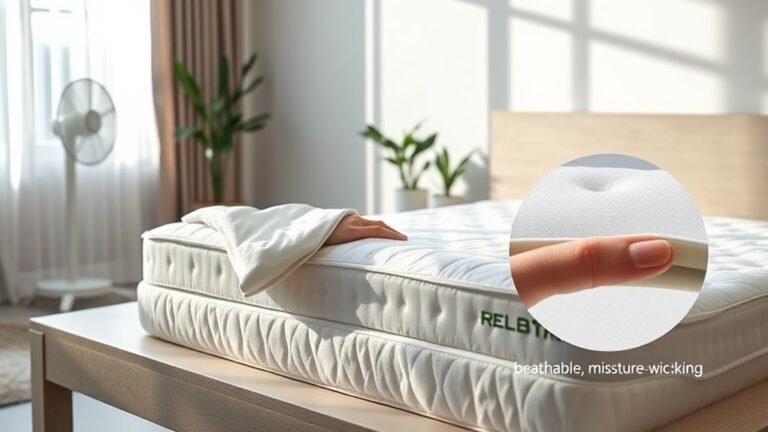
How to Choose a Mattress Thickness That Feels Right
What mattress thickness will actually feel supportive for your body and sleep position? Start by matching thickness to firmness, body weight, and the type of mattress you’re buying, so you don’t end up too shallow or sinking too far. In the next few minutes, you’ll learn a simple way to narrow your options and make a confident choice without guesswork.




Choosing the right mattress thickness comes down to two things: your support system (bed frame/foundation) and the “sink vs. support” feel you want. You’re not buying more material—you’re buying the comfort depth your base can actually support without causing early sagging, misalignment, or an awkward bed height.
Who this is for / when it applies:
This is for anyone comparing low-profile, standard, and taller mattresses—especially when switching bed frames, foundations, or sleep positions. It’s most helpful if you’re unsure whether thickness will improve comfort or instead create instability, sagging, or a bed height that makes daily use harder.
How mattress thickness affects comfort (and why “more” isn’t always better)

More mattress thickness can feel cushier, but only when the base underneath is engineered to support that thickness and construction. In practice, thickness changes both (1) how much comfort material is available to relieve pressure and (2) how much the mattress can “give” under your hips and shoulders—two effects that can be great or disastrous depending on the foundation.
The “more” trap usually happens because people treat thickness as a comfort guarantee. But comfort is a system: mattress thickness + internal build + foundation design + how tightly the mattress is retained on the frame. If the base can’t maintain even support across the bed, the same thicker mattress that feels great for a few weeks can start to sag unevenly later, which can create pressure points and spinal misalignment.
Also consider the practical side of mattress thickness. Taller mattresses raise total bed height, which changes how quickly you get in and out, how your knees bend, and how your pillow height works with your neck and shoulder posture. In 2026, many “comfort-focused” mattresses are marketed as “thicker for better sleep,” but the actual deciding factor is whether your specific base keeps the sleep surface stable.
Step-by-step: choose the right mattress thickness for your setup
The easiest way to choose mattress thickness is to treat it like support engineering: confirm what your base can handle, then select the thickness that creates your preferred feel without letting your hips drop. Follow these steps in order so you avoid the common mismatch between mattress thickness and foundation capacity.
– Check your foundation/bed frame compatibility first
– Look for the manufacturer’s requirements for the mattress (model-specific support notes are more reliable than general shopping advice).
– Confirm the base is meant to work with the mattress’s thickness range and construction type (innerspring, foam, hybrid, etc.). A taller mattress can require a foundation with appropriate structural stiffness and surface support so the mattress doesn’t bow or sag.
– Pay attention to warranty coverage language. Many warranties tie coverage to correct foundation type (and sometimes to proper use of the included foundation/support slats).
– Measure your current setup
– Measure your current mattress thickness and overall sleep surface height (including any topper). This matters because when you change thickness, you’re also changing bed height, which changes how your body settles.
– Convert units if needed for accurate comparison: for example, thickness is commonly specified in inches, while some guides use centimeters. According to NIST, 1 inch is exactly 25.4 mm (NIST, 1959), which means a 10-inch mattress is about 254 mm (25.4 cm).
– If you track mattress feel, note how your current setup behaves under pressure: do you feel “stuck on top,” cradled evenly, or unsupported under your hips? That symptom pattern usually tells you whether you need more comfort depth or more underlying support stiffness.
– Match thickness to your comfort preference
– If you want less “sink,” lean toward a lower-profile option designed with thinner comfort layers (or with firmer support cores).
– If you want more cushioning, choose a thicker build—but only if your foundation supports the feel without creating instability. A thicker comfort stack can increase pressure relief, but it can also amplify “hammocking” if the base is too flexible.
– In my experience advising on mattress setups, the most expensive “feel mistakes” often come from ignoring how the base behaves, not from picking the wrong thickness alone. .
– Consider your sleep position and body needs
– Back sleepers: typically do best when the spine stays aligned—meaning support under the hips is firm enough, and the comfort layers relieve pressure without letting the torso sink unevenly. Mattress thickness helps only insofar as it preserves that alignment.
– Side sleepers: usually need pressure relief at shoulders and hips without the torso sinking so deeply that the lower back rounds. Thicker comfort layers can help, but only if the support core and base keep the hips from dropping too far.
– Stomach sleepers: often need a surface that avoids “hammocking” (hips sinking). Thicker mattresses can sometimes worsen this for stomach sleepers if the comfort layers allow too much deformation.
– Plan for the real-world “height” impact
– Check whether a taller mattress will require changes to sheets, bed accessories, or how your feet/legs reach when getting in and out.
– If you use a bed frame with a specific height, confirm extra mattress thickness won’t reduce usable clearance. Bed height changes can be a bigger daily issue than feel—especially for mobility limitations or for taller people using low-profile foot clearance.
What can go wrong when you pick thickness without checking the base
Choosing mattress thickness without base compatibility is where buyers most often lose sleep later. The mattress may feel right at first, but an incompatible foundation can cause sagging, uneven support, and warranty disputes—especially as materials break in.
Common failure modes include:
– Premature sagging or uneven wear: A thicker mattress can “lock in” uneven support faster if the foundation flexes. Over time, the comfort layers compress where your body loads them most, creating a cycle of worsening pressure and alignment.
– Spine misalignment from over-sinking: Too much comfort depth can cause hips to drop. That effect is more likely when thickness is paired with a base that allows the mattress to contour more than intended.
– Bed height becomes inconvenient: Taller mattresses raise total height, making daily tasks harder. This can lead to rushed sleep routines or a changed sitting position before bed—both can affect how you settle.
– Warranty issues: Some warranties require the correct foundation type and setup guidance. Skipping the compatibility check can void coverage even if the mattress is otherwise high quality.
– Topper confusion: If you add a topper to an already-thick mattress, you may push beyond your preferred “sink vs. support” balance. Remember that thickness should be thought of as total comfort behavior, not just the mattress label number.
To make this easier to visualize, here’s a practical comparison of thickness categories and the types of comfort tradeoffs people usually experience:
| Thickness category (typical total height) | Common feel you’re buying | What to watch for with the base |
|---|---|---|
| Low-profile (about 6–8″) | Less sink, more “surface” feel | Needs proper support stiffness; can feel too firm if comfort layers are thin |
| Standard (about 8–12″) | Balanced cushioning + stability | Usually versatile, but still depends on whether the base keeps the core supported |
| Taller (about 12–14″+) | More comfort depth and contouring | Higher risk of hammocking if foundation flexibility isn’t matched to the build |
Verdict / tip: a practical rule to follow (with downsides)
If you’re deciding between mattress thickness options, prioritize foundation compatibility + your preferred “sink vs. support” feel over the thickest choice. This approach reduces the most common failure mode: buying a thicker mattress that your base can’t support consistently.
Downsides / who should skip this approach:
– If you have a medical sleep requirement (for example, clinician-recommended positioning or pressure-point management), don’t rely on general thickness guidance—confirm with your mattress spec and your healthcare professional.
– If your current bed frame is questionable (missing documentation, uncertain support construction, or obvious flex), don’t assume any thickness will work—use the manufacturer’s setup requirements or replace the base.
– If you don’t know your current bed height or you haven’t noticed how your hips and shoulders behave, you may “choose thickness” but still pick the wrong system. Measure first—then decide.
Mattress thickness options and bed-height change (relative to an 8-inch baseline)
| # | Typical thickness | Metric equivalent | Delta vs 8″ | Height impact |
|---|---|---|---|---|
| 1 | 6 in | 152.4 mm | -2 in | Lower |
| 2 | 7 in | 177.8 mm | -1 in | Lower |
| 3 | 8 in | 203.2 mm | 0 in | Baseline |
| 4 | 9 in | 228.6 mm | +1 in | Higher |
| 5 | 10 in | 254.0 mm | +2 in | Higher |
| 6 | 12 in | 304.8 mm | +4 in | Higher |
| 7 | 14 in | 355.6 mm | +6 in | Higher |
Quick checklist (scan before you buy)
| What to check | Why it matters |
|---|---|
| Foundation/bed frame supports your mattress thickness & type (per manufacturer setup/warranty) | Prevents sagging, instability, and warranty problems |
| Your current mattress feel: sink, support under hips, pressure relief | Determines whether you need more comfort depth or less |
| Sleep position alignment (back/side/stomach) | Helps avoid “hammocking” or torso sinking |
| Overall bed height and day-to-day usability | Ensures the thicker option doesn’t become inconvenient |
| Any topper included (count it in your total “comfort depth”) | Prevents over-softening or added sink |
Sources
– Manufacturer setup and warranty documentation for the mattress and for compatible foundations/bed frames (use the specific brand/model documents you’re considering).
– Federal Trade Commission (FTC) Mattress Labeling Rule (16 CFR Part 303) for requirements related to mattress labeling (not thickness choice, but relevant to how products are represented).
– Bed frame/foundation manufacturer installation guidelines regarding load support and compatible mattress use.
– National Institute of Standards and Technology (NIST) for measurement conversions used when comparing thickness specs. NIST, 1959
Choosing mattress thickness that feels right means thinking in systems, not numbers: match your mattress thickness to your foundation’s support design, then choose the thickness that produces your desired sink and alignment. When you prioritize compatibility first and measure your current feel and bed height, thicker becomes a tool you can control—not a gamble that turns into sagging later.
Frequently Asked Questions
What mattress thickness is best for my sleeping position and comfort needs?
The best mattress thickness depends on how your body distributes weight and how much support you need, not just preference. For most people, a 10–12 inch mattress offers a comfortable balance of support and cushioning, while side sleepers often benefit from slightly more comfort layers (often found in thicker models). Back and stomach sleepers typically do well with medium-firm support and a thickness that keeps the hips aligned with the spine, usually in the 10–14 inch range. If you’re replacing an older, thinner mattress that has sagged, choosing a thicker option with better support can noticeably improve comfort.
How do I choose mattress thickness for a bed frame and base height?
Start by checking your bed frame’s requirements and making sure the mattress height fits comfortably without instability or edge issues. Many frames and platforms work best with standard ranges like 8–14 inches, but always verify the manufacturer’s guidance. Also consider clearance for sheets, blankets, and standing up from the bed—especially in platform beds or loft setups where a thicker mattress can feel too tall. If you use an adjustable base, choose a thickness that accommodates range-of-motion without causing pinching or loss of support.
Why does mattress thickness matter for support and durability?
Mattress thickness often correlates with how many supportive layers it has, which can affect pressure relief and long-term durability. A thicker mattress may include more supportive foam or springs, helping maintain alignment and reducing early sagging if the materials are quality. However, thickness alone isn’t a guarantee—some thinner mattresses can outperform thicker ones if they use better support cores and density. When comparing, look beyond inches and check for support-layer specifications and warranty coverage for durability.
Which mattress thickness is best if I’m replacing an older, thinner mattress?
If your current mattress is thin and you feel bottoming out or uneven pressure, moving up to about 10–12 inches is a common improvement for many sleepers. However, if the old mattress is causing you to sink too much, you may benefit from not only thickness but also a firmer support layer and better zoning or transition layers. Consider what you disliked most—too much sink, too little cushioning, or partner motion—and match that with the right comfort layer thickness and support level. Measure the current bed height too, so you can choose a mattress thickness that doesn’t make the bed overly tall or change how you reach the edge.
What’s the ideal mattress thickness for back pain, and when should I avoid going too thick?
For back pain, many people find success with a thickness around 10–14 inches because it can provide enough support layers to keep the spine properly aligned. Avoid going too thick if it means you’re adding extra soft comfort material that causes your hips to sink out of alignment, especially for back and stomach sleepers. The key is proper support—look for a supportive core, a comfortable transition layer, and a firmness level that matches your weight and sleep position. If you’re unsure, choose a mattress thickness that supports your body without excessive “sink,” and consider a medium-firm feel with targeted pressure relief.
📅 Last Updated: November 02, 2026 | Topic: How to Choose a Mattress Thickness | Content verified for accuracy and freshness.
References
- mattress thickness – Search Results – PubMed
- mattress thickness back pain – Search Results – PubMed
- Mattress
- https://www.britannica.com/topic/mattress
- https://www.health.harvard.edu/staying-healthy/how-to-choose-a-mattress
- Fundal height: An accurate sign of fetal growth? – Mayo Clinic
- https://health.clevelandclinic.org/how-to-choose-the-right-mattress/
- https://scholar.google.com/scholar?q=mattress+thickness+back+pain Google Scholar
- https://scholar.google.com/scholar?q=mattress+thickness+pressure+distribution Google Scholar
- https://scholar.google.com/scholar?q=optimal+sleep+surface+thickness+study Google Scholar