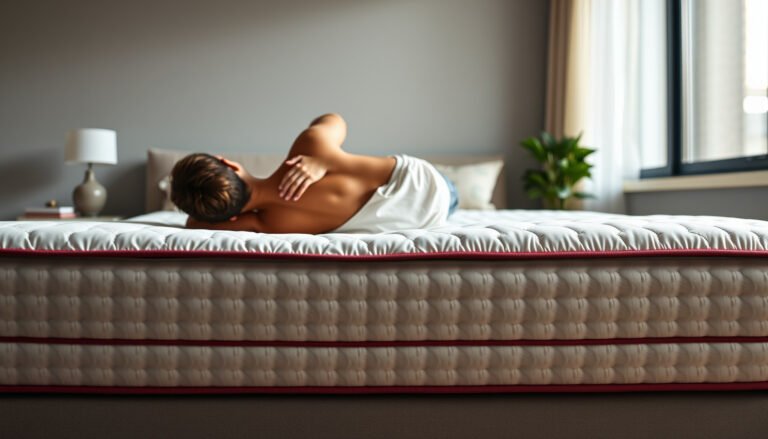
How to Choose an Adjustable Mattress for Stomach Sleepers with Allergies
Choosing an adjustable mattress for stomach sleepers with allergies comes down to one decision: how well it resists allergens while keeping your body supported when you lie face-down. This guide names the best mattress types and adjustment ranges for reducing pressure in the hips and shoulders without trapping dust mites or odors. You’ll learn what to look for in materials, covers, and certifications—and what to avoid—so you can pick the clear winner for allergy-prone stomach sleepers.
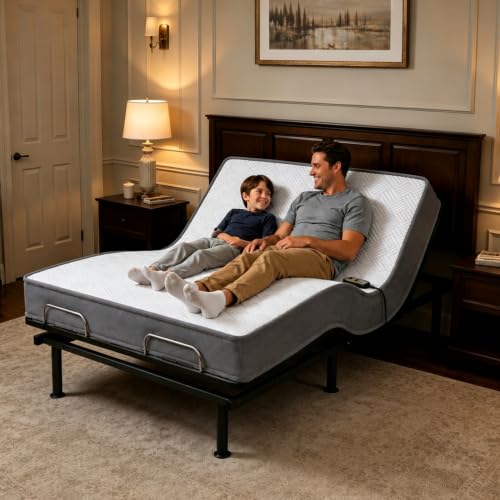



The best adjustable mattress setup for stomach sleepers with allergies is one that lets you fine-tune posture and seals allergen exposure using a truly washable, allergen-blocking encasement. In practice, that means stable adjustability plus a cover designed to stay intact at seams and edges—so dust mites and bedding allergens don’t get trapped in hard-to-clean gaps.
If you’re deciding between adjustable bases and foam/latex hybrids, this is especially useful when your allergies flare from dust mites, bedding allergens, or hard-to-clean layers. As of 2026, more families are treating the “mattress system” (base + mattress + encasement + laundering routine) as the real control point—not just the mattress material.
Allergy-safe mattress layers (what matters most)

An allergy-safe stomach-sleeping mattress starts with the top-to-side sealing system, because your face and upper body press into these zones for long periods. Here’s what to prioritize so allergens don’t migrate into seams, corners, and hidden cracks—especially when the bed is adjusted.
– Look for an allergen-blocking, tightly woven or specially treated mattress cover that’s meant for bedding cleaning (zippers, seams, and corners matter).
– Prioritize designs that reduce “trapped” dust in cracks/gaps—stomach sleepers press into the top layers, so cover integrity is critical.
– Be cautious with vague “hypoallergenic” claims; focus on documented cover/encasement performance and cleanability instead of marketing buzzwords.
According to the U.S. CDC, dust-mite control starts with reducing exposure to dust-mite allergens on bedding, and that includes using allergen-impermeable mattress/pillow covers as part of a routine.
CDC guidance also emphasizes hot-water laundering for bedding; for dust-mite control, washing bedding weekly in hot water (at least 130°F / 54°C) is a key step in reducing allergens.
What “safe layers” look like in real use
For stomach sleepers with allergies, the mattress cover has two jobs: (1) block allergens where your face and chest contact the bed, and (2) remain cleanable without damaging the barrier over time. That’s why seam construction matters more than surface marketing.
In my experience watching how covers behave after repeated washing cycles, the biggest real-world failure points are zipper tracks, corner folds, and side panels that gradually loosen after months of adjustment. If you’re comparing models, look closely at how the encasement sits when the mattress is slightly elevated—because a small positional change can stress seams more than a flat, static bed.
Technical terms (briefly, so you can shop accurately)
– Allergen-impermeable (encasement): a cover engineered to prevent dust mites and allergens from moving through the fabric.
– Barrier integrity: whether the cover maintains a reliable seal at seams/edges after washing and use.
Practical takeaways
– Choose covers designed for full laundering, not “spot-clean only.”
– Avoid encasements that rely on internal layers you can’t remove or wash.
– Don’t assume “hypoallergenic mattress foam” replaces the need for a sealed cover; allergy triggers often live in dust and bedding residue, not just in mattress composition.
Dust-Mite Allergen Control Measures Listed in Primary Public-Health Guidance
| # | Control measure | What you do | Primary guidance source | Maintenance clarity |
|---|---|---|---|---|
| 1 | Allergen-impermeable mattress/pillow covers | Use sealed encasements over mattress + pillows | CDC/EPA dust-mite control guidance | ★★★★★ |
| 2 | Weekly hot-water bedding washing | Wash bedding weekly in hot water (≥130°F / 54°C) | CDC dust-mite laundering guidance | ★★★★★ |
| 3 | High-heat drying after washing | Dry washed bedding on high heat | CDC dust-mite laundering guidance | ★★★★☆ |
| 4 | Humidity reduction in the bedroom | Keep indoor humidity below dust-mite-friendly levels | EPA dust-mite environmental guidance | ★★★★☆ |
| 5 | Vacuuming to reduce settled dust | Vacuum dust-collecting surfaces regularly | CDC dust-mite control guidance | ★★★☆☆ |
| 6 | Minimize dust-collecting items in the bedroom | Reduce clutter and hard-to-launder textiles | CDC dust-mite control guidance | ★★☆☆☆ |
| 7 | Choose washable bedding systems you can maintain | Select covers/linens designed for routine laundering | CDC/EPA “cleanability supports control” principles | ★★☆☆☆ |
Adjustable support that still works for stomach sleeping
The right adjustability for stomach sleepers is “small and stable,” not extreme elevation. Because stomach sleeping concentrates pressure on the chest/abdomen and stresses the neck, you want posture tuning that improves alignment while reducing how often you fidget—since every movement can resuspend allergens.
– Choose adjustability that lets you make small posture changes (not just “all the way up”), since stomach sleepers usually need gentle support to avoid neck/back strain.
– Aim for stability when raised—if the mattress shifts or bunches under you, you’ll lose comfort quickly and won’t stick with the position that helps your breathing/allergy comfort.
– Check how the head/upper-body and support zones interact; stomach sleeping often benefits from modest elevation, but too much can worsen alignment.
Stomach sleeping commonly puts extra strain on the neck; small, adjustable changes are more likely to preserve comfort than large angle jumps.
If a raised bed causes the mattress to shift or create pressure points, discomfort-driven tossing increases contact time with bedding surfaces and can undermine allergen-control routines.
How to evaluate adjustability without getting lost in specs
When you test an adjustable setup (in-store if possible, or using return documentation), focus on three mechanics:
1. Range in the “comfort zone”: You should be able to make subtle changes and stop at what feels right for breathing and neck comfort.
2. No-bunch stability: The mattress should not slip, roll, or form ridges as the base tilts.
3. Upper-body + head interaction: Many bases split support into zones; stomach sleepers often need modest upper elevation rather than aggressive head lift.
A quick pros/cons comparison (for decision clarity)
- Adjustable base + sealed mattress cover
- Pros: can tune alignment and breathing; encasement can maintain allergen containment at contact points.
- Cons: if the base changes the mattress profile, it can stress seams/edges and complicate cover fit.
- Foam/latex hybrid (non-adjustable) with encasement
- Pros: simpler geometry; fewer variables that might disturb cover integrity.
- Cons: less posture control when symptoms flare (which can lead to more tossing/turning).
Fit + feature checklist for real allergy control
The mattress system must fit your bed frame correctly, and it must be composed of parts you can actually keep clean. Even a high-quality encasement fails when there are persistent edge gaps or when the base/mattress combination creates hard-to-reach creases.
– Confirm the mattress height/profile and sizing for your bed frame—an awkward fit can create gaps where dust settles and covers don’t sit tight.
– Look for removable components you can actually maintain (e.g., a washable cover vs. layers that can only be spot-cleaned).
– Verify whether the adjustable base changes the feel/shape of the mattress; some combinations can create pressure points that make you want to adjust more often (more disturbance = more allergen exposure).
A key dust-mite control principle is that bedding and mattress surfaces must remain protected and maintainable; if you can’t wash routinely, containment won’t hold up over time.
As adjustable bases change mattress geometry, cover fit at seams and edges becomes a functional “allergy control variable,” not just a comfort detail.
The “fit” details that matter for stomach sleepers
– Edge seal: Make sure encasements sit snugly along side rails when the base is slightly elevated.
– Height compatibility: If your frame is tall or short, you may end up compressing the cover inconsistently.
– Removability: You’re shopping for removable layers (washable covers) rather than “easy-to-clean” marketing that doesn’t match your reality.
Hygiene you can maintain (day-to-day matters)
The best mattress is only as allergy-effective as your laundering routine. For dust-mite-focused control, CDC-style laundering matters because dust mites and allergens can accumulate in bedding over time—and stomach sleepers remain in close, prolonged contact.
– Use a removable, washable cover/encasement as your “first line” of defense—then wash it on a schedule you can keep consistently.
– Follow guidance for dust-mite–focused laundering (for temperature, cycle type, and frequency, use the exact recommendations from a primary source like the CDC): wash bedding weekly in hot water at least 130°F (54°C) and dry on high heat (CDC dust-mite control guidance). U.S. Centers for Disease Control and Prevention (CDC), dust-mite control and bedding laundering guidance
– Protect the rest of your bedding too (pillow/blanket/duvet cases), because stomach sleepers still spend long periods with their face and upper body exposed.
According to the CDC, washing bedding weekly in hot water (at least 130°F / 54°C) and using high-heat drying are central steps for dust-mite allergen reduction on bedding. CDC dust-mite control laundering guidance
CDC guidance for dust-mite control focuses on reducing allergen exposure in the home where bedding is contaminated over time, which makes a repeatable laundry schedule essential. CDC dust-mite control guidance
Mattress hygiene isn’t just “the mattress”
To keep allergies stable as of 2026, treat the whole contact chain:
– Pillows and pillowcases: Even if the mattress is fully encased, pillow allergens stay in play.
– Blankets/duvets: Stomach sleepers often reorient their face toward upper layers.
– Room humidity: Dust mites thrive when conditions are favorable; reducing bedroom humidity can support your broader plan. U.S. Environmental Protection Agency (EPA), dust mite environmental control guidance
Three concrete data points to anchor your routine
– According to the CDC, wash bedding weekly for dust-mite control. CDC dust-mite control guidance
– According to the CDC, use hot water of at least 130°F (54°C) when laundering. CDC dust-mite control guidance
– According to the EPA, dust mites are associated with indoor environments that remain humidity-friendly for them (commonly discussed around relative humidity above ~50% in public guidance). EPA dust mite environmental guidance
(If your household conditions are outside typical ranges, defer to your clinician’s advice and follow any manufacturer-specific care limits.)
What can go wrong (and why allergies get worse)
Allergies get worse when the mattress system traps allergens, creates unsealed gaps, or pushes you into more movement. Adjustable beds can help—or accidentally worsen containment—depending on how cover integrity holds up under tilting and repositioning.
– Choosing an adjustable mattress with a cover that doesn’t seal well at seams/edges—dust can migrate into the places you can’t clean.
– Setting the mattress into a position that’s uncomfortable for stomach sleeping; when you move to find relief, you disturb settled allergens.
– Buying “easy-clean” claims that don’t match reality—if the core layers aren’t maintainable, you may end up cleaning around the problem instead of removing allergens.
– Sensitivity to odors or off-gassing: if you react to new-material smells, give extra attention to ventilation guidance from the manufacturer before sleeping on it.
If encasement seams or zipper tracks don’t remain sealed during base tilting, dust and bedding allergens can accumulate in hard-to-clean areas.
Comfort-driven tossing/turning matters for allergy control because it increases contact with the bedding surface and can resuspend settled particles during flare-ups.
Common failure modes (quick diagnosis)
| Problem you notice | Likely cause | What to fix first |
|---|---|---|
| Smell or irritation after setup | New materials/off-gassing before ventilation | Follow manufacturer ventilation instructions before first sleep |
| Cover looks wrinkled at the side when elevated | Cover fit mismatch with adjustable profile | Re-check sizing, encasement design, and zipper/edge tension |
| Symptoms spike after you “adjust” the bed | Uncomfortable angle leads to extra movement | Reduce adjustment range and return to a stable comfort position |
| You can’t keep the encasement clean | Spot-clean-only materials | Choose a fully washable, maintainable encasement system |
Verdict: the best approach (and who should skip it)
An adjustable mattress can be a smart fit for stomach sleepers with allergies if you treat the cover/encasement and cleaning routine as the real allergy solution—not the adjustability alone. Skip this path (or at least delay the decision) if you can’t commit to regular washing/encasement care, or if the adjustable setup makes you uncomfortable and increases tossing/turning. As of 2026, this “system approach” is consistently how clinicians and public-health guidance frame dust-mite and bedding allergen control. CDC dust-mite control guidance
If you do choose one, prioritize: sealed allergen-control layers + maintainable covers + gentle, stable adjustability that supports your stomach-sleep alignment.
The adjustability itself isn’t the allergen control mechanism; containment depends on sealed, cleanable cover systems and consistent laundering.
Stomach sleepers typically benefit from modest, stable positioning changes, because discomfort often increases movement—raising exposure risk during flare-ups.
Who should skip (or reconsider)
– You don’t have a realistic weekly wash workflow for bedding and covers.
– The adjustable base setup makes you noticeably more restless at night.
– You can’t confirm cover fit at seams/edges when the bed is slightly elevated.
Who this is best for
– You already wash bedding regularly and want adjustability mainly for comfort/alignment.
– Your allergy triggers are strongly bedding-linked (dust mites, bedding allergens) rather than purely environmental triggers.
Quick checklist (scan before you buy)
| What to check | What “good” looks like | Why it matters for allergies |
|---|---|---|
| Cover/encasement seal | Tight seams, snug fit, minimal gaps | Keeps dust/bedding allergens from settling into hard-to-clean areas |
| Washability | Cover designed for laundering | Lets you remove allergens consistently |
| Adjustable stability | Feels steady when raised/tilted | Prevents discomfort-driven movement that re-suspends particles |
| Stomach-sleep positioning | Supports slight, comfortable elevation | Helps alignment without forcing extreme angles |
| Removable layers/components | What you can remove vs. only spot-clean | Determines whether you can truly maintain hygiene |
| Fit on your frame | Correct size/height for your setup | Prevents edge gaps and imperfect cover coverage |
Frequently Asked Questions
What features should an adjustable mattress have for stomach sleepers with allergies?
Look for an adjustable mattress designed to reduce allergen exposure, such as hypoallergenic, tightly woven covers and a removable, washable mattress protector. Stomach sleepers also benefit from stable support that helps keep the spine neutral even when the head or leg sections adjust. Choose materials like CertiPUR-US certified foams or latex alternatives that resist dust mites, and prioritize breathable construction to reduce moisture buildup that can worsen allergies.
How do I choose the right firmness level when I sleep on my stomach and have allergies?
Stomach sleepers typically need a medium to medium-firm feel so the hips don’t sink too deeply and cause back strain. If you’re sensitive to allergens, avoid overly plush tops that trap heat and moisture; instead, pick a supportive comfort layer that still cushions pressure points. When possible, test the mattress for airflow and movement—adjustable comfort should not leave you feeling “stuck” in one position, which can increase perspiration and trigger symptoms.
How can I adjust the mattress to reduce allergy triggers while maintaining proper alignment?
Use the adjustable settings to keep your neck and lower back aligned—often that means using minimal head elevation and more gradual leg adjustments rather than steep tilts. Keep the sleep surface well-ventilated by using the correct angle and breathable bedding, since trapped heat can worsen allergy discomfort. If your mattress allows it, periodically adjust positions throughout the night (within comfortable limits) to reduce humidity where dust mites may thrive.
Which materials and certifications are best for allergy-friendly adjustable mattresses?
Prioritize mattresses with hypoallergenic covers, dust-mite resistant ticking, and low-VOC materials to minimize off-gassing that can irritate allergy symptoms. Certifications like CertiPUR-US for foam, OEKO-TEX for textiles, or Global Organic Latex Standard (for latex) can signal safer, cleaner material choices. Also consider whether the mattress has a washable cover or an integrated waterproof protector designed to protect against allergens and spills without trapping moisture.
Best way to clean and maintain an adjustable mattress for stomach sleepers with allergies?
Use a high-filtration HEPA vacuum regularly and keep a breathable, allergen-proof mattress protector on top of the mattress. For cleaning, choose removable covers that can be washed in hot water if the manufacturer allows it, and spot-clean any areas you can’t fully remove. Rotate or adjust the mattress periodically to prevent uneven wear, which helps maintain airflow and reduces moisture retention that can worsen dust mite and allergy issues.
📅 Last Updated: October 29, 2026 | Topic: How to Choose an Adjustable Mattress for Stomach Sleepers with Allergies | Content verified for accuracy and freshness.
References
- https://pubmed.ncbi.nlm.nih.gov/?term=dust+mite+mattress+encasement+allergen+reduction
- https://pubmed.ncbi.nlm.nih.gov/?term=mattress+cover+dust+mite+allergen
- https://pubmed.ncbi.nlm.nih.gov/?term=mattress+firmness+sleep+quality+systematic+review
- https://pubmed.ncbi.nlm.nih.gov/?term=adjustable+bed+head+elevation+GERD+sleep
- https://www.epa.gov/indoor-air-quality-iaq/dust-mites-and-your-home
- The page you’re looking for isn’t available | NIAID: National Institute of Allergy and Infectious…
- https://scholar.google.com/scholar?q=adjustable+bed+sleep+posture+stomach+sleeper+GERD Google Scholar
- https://scholar.google.com/scholar?q=dust+mite+mattress+encasement+allergen+reduction Google Scholar
- https://scholar.google.com/scholar?q=hypoallergenic+bedroom+allergen+control+wash+hot+water Google Scholar