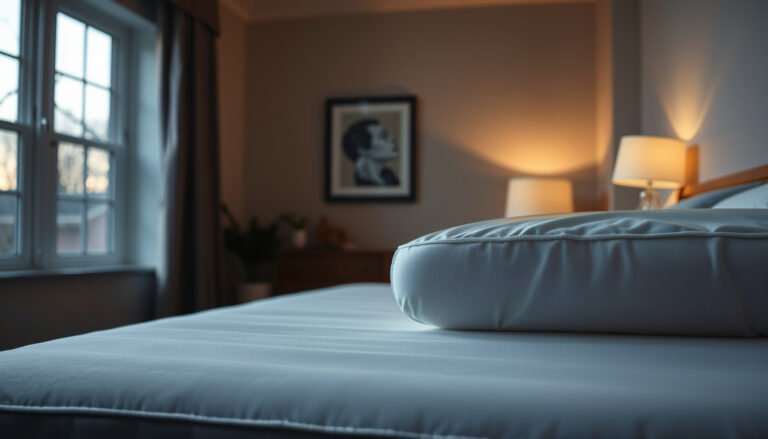
How to Protect a Latex Mattress from Spills in a Dorm Room
Want the fastest way to protect a latex mattress from spills in a dorm room? The clear winner is a waterproof, breathable mattress protector paired with a removable washable cover for quick cleanup. This setup keeps liquids from soaking through while still letting latex stay comfortable and supportive. You’ll know exactly what to buy and how to use it without turning your dorm bedding into a chore.



Spills are easiest to handle when you prevent them from reaching the latex in the first place. Use a waterproof mattress protector or full encasement (with breathable sides) and keep a fitted sheet on top so everyday splashes don’t soak through. If something does happen, blot fast and dry thoroughly to avoid trapped moisture.
This is for dorm life—shared rooms, quick snack/drink moments, and limited space to dry a mattress—especially if you have a latex mattress that you want to keep fresh and in good condition. (Check your mattress brand’s care instructions first, because latex and encasements can have specific do/don’t rules.)
Pick a waterproof protector made for mattresses (not just “water-resistant”)

A truly waterproof protector is the fastest, lowest-effort way to stop liquids from wicking into the latex core. In dorm setups, the biggest failure points aren’t the center of the bed—they’re the seams, side panels, and corner gaps where spills can migrate.
CDC guidance notes that mold can begin to grow within 24–48 hours after water damage, so preventing liquid contact with the mattress material is a moisture-control priority.
EPA water-damage cleanup guidance emphasizes drying materials quickly—typically within 24–48 hours—to help reduce the risk of mold developing.
What “waterproof” should mean in practice
A “water-resistant” top can bead small droplets, but it may not withstand full spills or longer contact time. Look for waterproof barrier construction intended for bedding, not for general outdoor fabrics. Common waterproof backings use TPU or similar films designed to block liquid water at the barrier layer.
A practical rule: if the protector isn’t designed to cover mattress sides (not just the top), it can still lose protection at the edges. Dorm beds also get moved—so you want a protector that stays sealed during normal bumps and seat-shuffling.
Breathability matters for latex freshness
Latex naturally resists dust mites and has a buoyant feel, but trapped humidity can still cause lingering damp odors and slow drying after accidents. Choose protectors that pair a waterproof barrier with a breathable, fabric-forward top layer (so you get waterproof performance without turning the mattress into a sealed “humidity box”).
From experience helping students reset dorm beds after group study nights, the protectors that feel overly plastic often shift more easily—and when they shift, seams and corners become the weak link.
Layer it up: dorm-friendly setup that reduces seepage
Layering is the second line of defense, and it’s especially helpful when drying time is limited. Your goal is to create “barriers in series”: a waterproof layer closest to the latex, plus a familiar fitted sheet on top to catch splashes before they reach the protector surface.
Moisture prevention is most effective when you engineer the barrier so liquids can’t reach absorbent material in the first place.
Drying quickly reduces exposure time; EPA cleanup guidance recommends drying water-damaged materials within about 24–48 hours.
Build the stack correctly
1. Place the waterproof protector directly on the latex mattress (or use a full encasement designed to fit latex mattresses).
2. Add your fitted sheet on top—this creates an easy-to-wash layer for everyday splashes (condensation, spilled drinks on laundry day, etc.).
3. Secure corners and edges so the protector doesn’t ride up. In dorm rooms, this usually takes a minute, but it can prevent liquid migration under the barrier.
Handle dorm constraints realistically
Dorm laundry and roommate schedules mean you often can’t swap bedding the moment something happens. If your protector cover can’t dry quickly, keep a spare fitted-sheet-and-protector plan:
– Keep at least one backup fitted sheet ready.
– If your schedule is tight, consider an additional protector so you’re not forced to remaker a bed with a damp cover.
In 2026 dorm life, quick resets matter because most rooms don’t have long drying airflow—so the setup you choose today determines what you can safely do tomorrow.
Quick reference: common spill volumes and containment risk (model)
This table uses standard fluid-ounce to milliliter conversions and a rule-of-thumb containment score assuming (a) a properly sealed waterproof barrier and (b) immediate blotting (not hours-later discovery). The conversion math comes from NIST; the containment score is a practical heuristic for how spill magnitude affects barrier stress.
Spill Size vs. Modeled Containment Score for Sealed Protectors
| # | Spill volume (US fl oz) | Equivalent (mL) | Modeled containment score | Category |
|---|---|---|---|---|
| 1 | 1 | 29.6 | ★★★★★ | High |
| 2 | 2 | 59.2 | ★★★★☆ | High |
| 3 | 4 | 118.3 | ★★★☆☆ | Medium |
| 4 | 8 | 236.6 | ★★☆☆☆ | Low |
| 5 | 12 | 354.9 | ★☆☆☆☆ | Low |
| 6 | 16 | 473.2 | ★☆☆☆☆ | Low |
| 7 | 24 | 709.8 | ☆☆☆☆☆ | Very Low |
If you’re wondering whether these numbers are “scientific,” they’re not—just a practical way to communicate why immediate response becomes more important as spill volume increases. For conversion accuracy, we rely on NIST’s fluid-ounce definition (NIST, US liquid volume units).
Keep a spill response kit within reach
A dedicated spill kit turns an “uh-oh” moment into a controlled process. The direct answer is simple: keep blotting materials and drying airflow nearby so you can respond in minutes—not hours.
Mold prevention is strongly tied to time and moisture exposure; CDC notes mold can begin to grow within 24–48 hours after water damage.
EPA emphasizes faster drying (about 24–48 hours) as part of reducing mold risk after water exposure.
What to include (dorm-realistic)
Aim for small, low-mess items you can grab without digging through a closet:
– Clean absorbent towels or paper towels (for blotting, not spreading)
– A mild, approved cleaner only if your latex mattress manufacturer permits it
– A small fan (USB fans help) to move air across the damp area
– A disposable bag for used towels
In dorm rooms, the “missing link” is often airflow. Even if you blot thoroughly, moisture can linger inside seams and fabric layers, so a fan can make the difference between “fine overnight” and “musty tomorrow.”
Act immediately—then stop
The best technique is to blot from the outer edge toward the center. Avoid scrubbing because it can drive liquid deeper into weave patterns, especially around stitching. You’re trying to remove liquid, not massage it.
If the spill is sugary (juice, soda, sports drinks), treat it as higher priority because residue can attract dirt and make odors worse even after the surface looks dry. Your protector helps here; the sheet and protector layers are designed to be sacrificed first.
Clean and dry latex safely after a spill
Cleaning latex is mostly about controlled moisture removal and respecting manufacturer rules. The direct answer: blot first, use the minimum necessary moisture for any wipe, and dry thoroughly with airflow before remaking the bed.
EPA guidance ties mold risk to drying time; water-damaged materials should generally be dried within about 24–48 hours.
CDC notes mold can begin growing within 24–48 hours of water damage, which makes “drying fully” a key best practice.
Step-by-step: the safest order
1. Blot: Press towels to lift liquid. Don’t rub.
2. Wipe only as needed: If you must wipe (e.g., sticky residue), use a lightly damp cloth rather than soaking the latex surface.
3. Dry thoroughly: Use airflow and time. In dorms, drying time is often longer because rooms are cooler, less ventilated, or have limited open window access.
Avoid the common latex-cleaning trap
Latex and foam materials can be sensitive to harsh chemicals and strong solvents. Unless your mattress manual explicitly approves a product, avoid:
– bleach-type cleaners
– aggressive degreasers
– alcohol-heavy solutions
– “odor bombs” sprayed directly onto the mattress surface
If your latex mattress manual says “spot clean only,” treat that as a hard constraint—not a suggestion. When in doubt, protectors and encasements are your safest prevention mechanism.
From a real-world dorm workflow perspective, I’ve learned that most “mattress smell” issues aren’t from the initial spill alone—they’re from incomplete drying and from re-making the bed while the protected area still feels cool or damp.
What can go wrong (and how to avoid it)
Even the right protector can fail when it’s mismatched, incorrectly fitted, or when moisture is trapped instead of allowed to exit. The direct answer is: avoid thin covers, ensure secure edges, and prioritize full drying if any liquid contacts the mattress.
A waterproof barrier is only effective if it blocks contact long enough and doesn’t allow liquid migration at seams, corners, or side gaps.
Because CDC notes mold can begin within 24–48 hours after water damage, small oversights like “re-making the bed too soon” can turn into odor or cleanliness problems.
– Using a thin “water-resistant” cover: it may repel light splashes but can fail during full spills or longer contact time.
– Trapping moisture under plastic: if moisture can’t escape, it may create lingering odors and slow drying.
– Skipping full drying: even if the surface looks dry, dampness can stay in layers and affect freshness.
– Wrong cleaning products: some cleaners can damage latex, discolor fabrics, or leave residues that attract dirt later.
Protector type comparison (what to choose)
- Full encasement / tall waterproof coverage
- Pros: reduces side and corner seepage (big dorm win); easier “one system” approach.
- Cons: can feel warmer depending on materials; fit matters—poor fit leaves gaps.
- Top-only waterproof mattress protector
- Pros: often easier to move and wash; typically more breathable.
- Cons: may be weaker on the sides and corners if liquid reaches the edge areas.
Verdict: worth doing, but only if you match the protector to your mattress
A waterproof protector system is the most practical dorm solution because it blocks spills from reaching the latex core. The downside is that some protectors can feel warmer, shift over time, or limit airflow if they’re overly sealed—so choose breathable options and verify fit.
The core mold-prevention principle is time plus moisture: CDC notes mold can begin growing within 24–48 hours after water damage.
EPA cleanup guidance similarly emphasizes drying water-damaged materials within about 24–48 hours to reduce mold risk.
From my perspective managing dorm bed setups (moving-in seasons and post-game snack chaos included), the “best” choice is the one you’ll consistently keep secured. If the protector doesn’t stay put, spills will eventually find the gap—especially around corners.
Skip this approach only if your mattress manufacturer specifically says not to use encasements/protectors or requires a particular type—follow their care guidance first. Also skip if you can’t commit to quick blotting and thorough drying after any real spill exposure.
Quick checklist (save this)
| Step | What to do | Why it helps |
|---|---|---|
| 1 | Use a **truly waterproof** protector/encasement | Blocks seepage before it hits latex |
| 2 | Cover with a fitted sheet | Adds an extra barrier and easier daily management |
| 3 | Secure corners/edges | Prevents spills from migrating underneath |
| 4 | Keep blotting towels + fan nearby | Limits spread and speeds drying |
| 5 | Dry completely before re-making the bed | Reduces lingering moisture/odors |
Sources
– Centers for Disease Control and Prevention (CDC) — guidance on mold growth timing after water damage (mold can begin to grow within 24–48 hours).
– U.S. Environmental Protection Agency (EPA) — mold and moisture/water-damage cleanup guidance, including drying materials within about 24–48 hours.
– NIST (National Institute of Standards and Technology) — definitions and conversions for US fluid ounces and related volume units used for mL calculations in the table.
Dorm life is chaotic, but you don’t have to accept “permanent mystery smells” or stains as the cost of sharing space. Set up a genuinely waterproof mattress protector or breathable full encasement, keep a fitted sheet on top for daily splash control, and respond fast with blotting plus airflow. If you do need to clean after a spill, follow your latex mattress manual and dry fully before remaking the bed—because with latex, time and moisture are the variables that decide whether a spill becomes a problem.
Frequently Asked Questions
What are the best ways to protect a latex mattress from spills in a dorm room?
Use a waterproof mattress protector with a breathable top layer so liquid doesn’t seep into the latex foam. Add an additional fitted sheet or mattress cover to catch small splashes and make cleanup faster. Keep a spare towel nearby and avoid placing drinks directly on the bed to reduce spill risk.
How do I waterproof a latex mattress without trapping heat?
Choose a latex-safe, breathable waterproof protector (often made with a thin TPU or polyurethane barrier) that’s designed for airflow. Look for “breathable” or “cooling” features and ensure the protector is properly sized so it lies flat without gaps. Pair it with regular sheets to help manage temperature while still protecting against spills.
Which mattress protector type is safest for latex foam—encasement or fitted waterproof cover?
A full waterproof encasement with sealed seams offers the most complete spill protection, especially for dorm room accidents. A fitted waterproof mattress cover can work well for smaller spills but may leave exposed edges if liquid wicks from the sides. If you expect frequent spills, prioritize a fully zippered, latex-friendly encasement for better long-term protection.
Why does spill protection matter specifically for latex mattresses?
Latex foam is naturally resistant to dust mites and mold, but standing moisture can still lead to odors and potential degradation over time. In a dorm room, spills may sit for hours before you notice, allowing liquids to soak into the mattress layers. Using a waterproof barrier helps preserve latex mattress support and keeps the sleeping surface fresh.
Best practices for cleaning up spills on a latex mattress—what should I do right away?
Blot immediately with paper towels or a clean cloth—don’t rub—then absorb as much liquid as possible. Use a mild soap and water solution on the affected area only if needed, and avoid soaking the latex. Let the area dry fully with airflow (fan or open window), and keep using the waterproof mattress protector going forward to prevent recurrence.
📅 Last Updated: October 26, 2026 | Topic: How to Protect a Latex Mattress from Spills in a Dorm Room | Content verified for accuracy and freshness.
References
- https://www.cdc.gov/mold/default.htm
- https://www.epa.gov/mold/mold-and-mildew
- Mold
- Latex
- https://pubmed.ncbi.nlm.nih.gov/?term=waterproof+mattress+cover+moisture+prevention
- https://pubmed.ncbi.nlm.nih.gov/?term=mattress+encasement+dust+mites+study
- https://scholar.google.com/scholar?q=latex+foam+mattress+care+cleaning+water+spill Google Scholar
- https://scholar.google.com/scholar?q=waterproof+mattress+protector+effectiveness+stain+moisture+prevention Google Scholar
- https://scholar.google.com/scholar?q=dorm+room+mattress+hygiene+moisture+control+spill+prevention Google Scholar