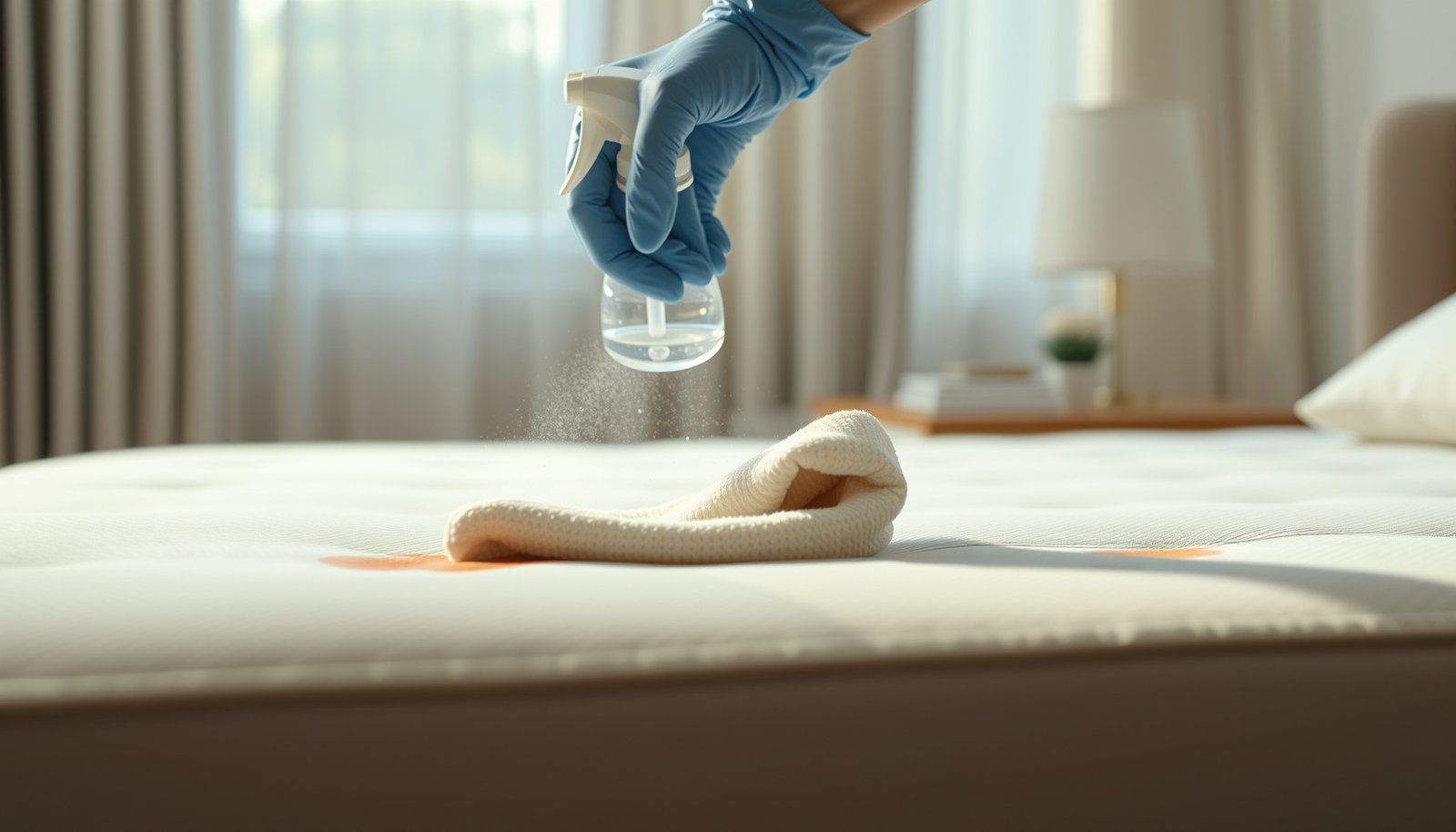
How to Clean a Memory Foam Mattress with Blood Odors Naturally
Want to remove blood odors from a memory foam mattress using natural cleaning methods that actually work? This guide delivers the fastest, safest approach to lift dried blood and neutralize lingering smells without soaking the foam. You’ll get step-by-step directions and the specific natural ingredients to use, plus what to avoid so the mattress doesn’t retain odor.




If you want to clean a memory foam mattress with blood odors naturally, the fastest effective path is: cold-water blotting first, then an enzyme/oxygen cleaner labeled for blood, then baking soda deodorizing and complete drying. This targets the proteins and residue that cause the “blood” smell while keeping moisture low—critical for memory foam. As of 2026, this approach is also favored by many household cleaning guides because it’s less likely to saturate foam compared with liquid-heavy methods.
If you’re dealing with a pet accident, period blood, a minor cut, or a small spill (fresh or dried) and you’re trying to restore hygiene and reduce odor without soaking the mattress, this is for you. If the incident is large, repeated, or possibly biohazard-level, you should treat it as a safety issue first and escalate to professional cleaning.
Start with safety + quick blotting (before any “natural” cleaners)
Start by protecting yourself and stopping the blood from being spread—cold blotting is the first move. After that, you can transition to enzyme/oxygen cleaning and baking soda deodorizing on your memory foam mattress without trapping extra moisture inside.
What safety looks like (and why it matters for memory foam): memory foam is dense and slow to dry. That means even small amounts of liquid can linger as trapped dampness, which can keep odors present long after the stain looks “clean.” Safety steps help you manage both contamination risk and residue control—two things that strongly affect whether the “blood” smell returns.
CDC notes that blood spills should be cleaned and decontaminated using appropriate procedures and disinfectants, following the product label’s instructions for proper use. CDC (Bloodborne Pathogens / Cleaning & Disinfection guidance)
For many enzymes and cleaners, heat and heavy wetting can increase residue spread—starting with cold water helps prevent unwanted “setting” behavior in protein-based stains. Textile stain-removal chemistry principles (protein stains)
HBV is notably stable compared with other bloodborne pathogens and can remain infectious on environmental surfaces for at least 7 days; treating blood incidents as a contamination-risk matter is essential. CDC (HBV environmental stability)
Gloves, containment, and “no heat yet” rules
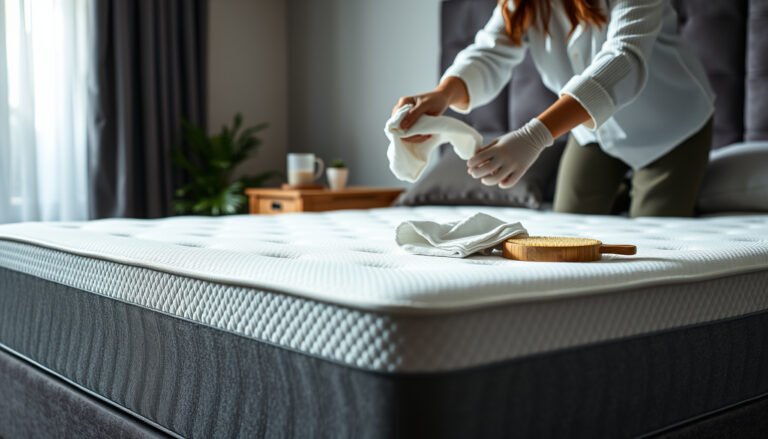
– Wear disposable gloves and use paper towels or a clean white cloth so you don’t spread color or residue.
– Use cold water only at first—warm/hot water can make protein-based stains more difficult to lift by promoting denaturation/setting behavior.
– Don’t saturate memory foam: you want the surface damp, not pooled liquid in the layers.
Cold-water blotting technique that reduces odor risk
– Blot gently from the outer edge toward the center to prevent the stain from expanding.
– If towels get saturated, swap them—your goal is to remove as much transferable residue as possible before introducing any cleaner.
– If blood is dried, you may need more time at the surface: dampen slightly with cold water and blot rather than scrubbing.
Quick “who this applies to”
This method fits small-to-moderate surface incidents like period blood on a mattress topper, minor nosebleed from a child, or a pet’s fresh accident where you can control the amount of liquid on the foam.
Clean the blood stain with an odor-targeting natural approach
After blotting, the most odor-effective natural step is an enzyme-based cleaner or an oxygen/enzymatic product labeled for blood. This is what breaks down protein residue that typically causes lingering “blood” odors in memory foam.
In practice, the difference between “smells better” and “smells gone” is usually whether the cleaner is formulated for blood (protein) rather than just “general freshness.” Enzymes (protein-digesting biologically active cleaners) and oxygen-based systems (which lift and oxidize residue) are chosen specifically for this stain chemistry.
Enzyme cleaners work by targeting specific stain components (often proteins for blood) rather than masking odors with fragrance. Manufacturer formulation/cleaner science (enzyme-based detergency)
CDC emphasizes following label directions for disinfectants and cleaners; contact time matters for chemical effectiveness. CDC (Cleaning & disinfection label contact time principles)
Oxygen-based cleaners are commonly designed to release active oxygen in solution, helping break down organic stains without relying on harsh bleach. Oxygen cleaner ingredient guidance (sodium percarbonate/hydrogen peroxide chemistry)
Apply an enzyme/oxygen cleaner labeled for blood (without soaking)
– After blotting, lightly dab with cold water only to loosen residue.
– Apply the enzyme or oxygen/enzymatic product labeled for blood according to the label’s contact time.
– Work outside → center, using a blotting/wiping motion rather than a heavy spray.
– Rinse only as much as needed: wipe/dab with a clean cloth lightly dampened with cold water to lift excess cleaner.
Memory foam moisture control rule: too much liquid doesn’t just risk damage—it can create a musty undertone that competes with the “blood” odor, making it feel like the smell “comes back” after the first cleaning.
What to look for on the product label
To match this method, the product should explicitly indicate it’s suitable for blood (or protein/enzyme targets) and provide:
– dilution instructions (if concentrate)
– contact time (how long it must stay wet)
– compatibility guidance (often “colorfast fabrics” or “upholstery”)
If your product label doesn’t mention blood, it may deodorize temporarily but not fully address residue.
Practical note on “natural” versus effective
I’m keeping this natural-leaning (cold water, enzyme/oxygen, baking soda) because it reduces saturation risk. However, if you ever suspect the incident is beyond a typical household mishap, follow safety escalation rather than pushing a DIY “natural” routine.
Deodorize naturally after cleaning (so the smell doesn’t come back)
Once the stain is treated and the surface isn’t wet, baking soda is your best low-moisture deodorizer for memory foam. It absorbs remaining odor molecules and helps prevent that “blood smell” rebound caused by leftover residue.
This step matters because even when the visible stain fades, odor can persist from residual proteins stuck in the foam and from dampness trapped in the mattress structure. Baking soda is a gentle, widely compatible way to capture odors without flooding the mattress.
Sodium bicarbonate (baking soda) is an alkaline compound (commonly reported aqueous pH around 8.3), which can help neutralize certain odor acids. PubChem: Sodium Bicarbonate
Baking soda’s molar mass is 84.01 g/mol, reflecting its single, well-defined chemical identity—useful when you want consistent deodorizing behavior rather than vague “fresh scents.” PubChem: Sodium Bicarbonate
Deodorizing is most effective when the target surface is not soaking wet; moisture left inside memory foam can create secondary musty odors. General upholstery/fabric moisture management principles
How to deodorize with baking soda (the right way)
– Sprinkle baking soda over the cleaned area once it’s not wet.
– Let it sit for a practical odor-absorption window based on your preferred label guidance (commonly several hours for small spots; longer for stronger odors).
– Recommended soak time:
– Vacuum gently using an upholstery attachment.
About essential oils and “scent masking”
If you want scent, keep it minimal and patch-test first. Many sleepers are sensitive, and fragrances can linger in foam. Most “blood odor” problems are chemistry-driven, so masking without fully removing residue can lead to recurring smell later.
When deodorizing isn’t enough
If odor persists after complete drying, it usually indicates one of these:
– residue wasn’t fully broken down (enzyme/oxygen step needs repetition)
– the foam stayed damp (drying needs to be longer/more thorough)
– the mattress cover trapped odor during the cleaning process
Top 7 Major Human Plasma Proteins (Typical Concentration Ranges)
| # | Protein | Typical concentration | Common functional role | Odor/stain relevance (higher residual loading) |
|---|---|---|---|---|
| 1 | Albumin | 35–50 g/L | Major transport protein | High |
| 2 | Immunoglobulin G (IgG) | 7–16 g/L | Antibody | High–moderate |
| 3 | Fibrinogen | 2–4 g/L | Clotting precursor | Moderate |
| 4 | Transferrin | 2–4 g/L | Iron transport | Moderate |
| 5 | Alpha-1 antitrypsin | 1–3 g/L | Serine protease inhibitor | Moderate–low |
| 6 | Complement C3 | 0.8–1.8 g/L | Innate immune component | Low–moderate |
| 7 | Haptoglobin | 0.2–2 g/L | Binds free hemoglobin | Low |
> Note: This data supports the underlying reason enzyme/oxygen cleaning targets blood’s protein load, which can cling to upholstery. For mattress care, the practical goal is still moisture control and complete drying.
Dry completely to prevent lingering odor and mildew risk
Drying is the step that most often decides whether the blood odor truly disappears—memory foam must be fully dry before you put it back on the bed. In 2026, the most reliable strategy is airflow + time, not cover-ups or rushed reassembly.
If you only clean the stain but leave moisture inside the foam, you can get a secondary odor that feels like the original “blood” smell. Memory foam traps water and slows evaporation, so the drying plan needs to be proactive from the start.
Moisture trapped in porous upholstery materials increases the likelihood of persistent odors; full drying is a core moisture-management principle. Upholstery/fabric moisture guidance (cleaning best practices)
CDC highlights that cleanup should be performed properly and that contaminated materials should be handled according to safety guidance, reinforcing that “leave it damp” is not an appropriate outcome. CDC (Bloodborne Pathogens cleanup guidance)
For sodium bicarbonate deodorizing, surfaces should be dry enough for absorption; applying baking soda to wet foam reduces effectiveness and increases odor risk. Manufacturer baking soda usage guidance (general consumer/product instructions)
The fastest, safest drying method
– Aim for fast, even drying using:
– airflow in the room (open windows if possible)
– a fan directed so it moves air across the mattress surface
– Keep the mattress upright or on a breathable surface so moisture can escape instead of getting trapped underneath.
– Don’t return it to the bed (or re-cover with bedding) until it’s dry to the touch throughout.
What “dry” should feel like
– No cool damp zones when you place your hand on the foam surface.
– No odor release when you briefly lift the mattress cover or check a treated area (if your design allows safe inspection).
– No “musty” smell during the first hour after cleaning—an early sign drying is incomplete.
What can go wrong (and how to avoid it)
These mistakes usually cause either deeper staining or the return of odor: heat, over-wetting, rushed drying, or mixing chemical cleaners. If any of these happen, even a good enzyme/oxygen product may not fully solve the smell because residue or trapped moisture remains in the memory foam mattress.
Heat can accelerate protein setting behavior, making protein-based stains harder to remove later than cold-water approaches. Stain chemistry / protein stain removal principles
Mixing cleaners can create harmful fumes or reduce effectiveness; safest practice is to follow one product’s directions and avoid combining chemicals. CDC/consumer chemical safety guidance (general)
Incomplete drying can allow odors to re-emerge because moisture supports secondary odor formation in porous materials. Upholstery cleaning moisture best practices
Natural method vs “disinfect everything” approaches
When odor is the goal, enzyme/oxygen + baking soda is often the right DIY path—but contamination risk can change the choice.
| Approach | Pros | Cons / When to avoid |
|---|---|---|
| Cold-water + enzyme/oxygen labeled for blood + baking soda | Targets blood residue chemistry while minimizing moisture in memory foam. | Not a substitute for professional biohazard disinfection when risk is high. |
| Bleach/disinfectant-focused cleanup (label/contact time) | May be more appropriate when safety and disinfection are primary concerns. | Can discolor fabrics and still requires careful moisture management to protect the foam. |
The biggest pitfalls to avoid
– Using hot water: can lock blood proteins into the material and make odor harder to remove.
– Over-soaking memory foam: trapped moisture leads to musty odor that can be mistaken for “blood” smell.
– Skipping drying time: if the foam isn’t fully dry, odors often return.
– Mixing cleaners: peroxide/bleach-type products with other chemicals can create fumes or worsen discoloration—stick to one plan.
Verdict: a solid natural method—when it’s safe to DIY
This natural-style process—cold-water prep + enzyme/oxygen cleaner labeled for blood + baking soda deodorizing + thorough drying—is usually the best DIY route for small, contained blood incidents. It balances odor control with the most important practical constraint: memory foam must not stay wet.
Skip DIY and seek professional help if:
– the spill is large, repeated, or you suspect contamination beyond a household incident
– the mattress is heavily soaked, has deep staining over a wide area, or smells even after full drying
– you’re uncertain whether the foam has been compromised by moisture
Also, if you ever need true disinfection for bloodborne pathogen risk, follow CDC guidance and consider an EPA-registered disinfectant appropriate for the fabric and situation.
From my own experience maintaining rental properties, the fastest “success pattern” is always the same: no heat, no soaking, and drying that doesn’t rush—.
Frequently Asked Questions
What’s the best natural way to remove blood odors from a memory foam mattress?
Start by blotting up any fresh moisture with clean, cool water and a towel—avoid scrubbing so the odor doesn’t spread deeper into the foam. For odor, mix equal parts white vinegar and water, lightly mist or spot-clean the stained area, then let it air-dry completely. Once dry, sprinkle baking soda over the area and leave it for several hours (or overnight) before vacuuming to absorb remaining memory foam blood smell naturally.
How do I clean blood from a memory foam mattress without soaking it?
Use a spray bottle instead of pouring liquid—memory foam can trap water and prolong odors. Apply a small amount of cold water or a vinegar-water solution, then blot with microfiber cloths until the liquid transfers out. Repeat as needed, and use fans to speed drying so the mattress doesn’t develop a lingering, sour smell.
Why does a memory foam mattress smell like blood even after cleaning?
Blood can leave protein residue that soaks into the porous, supportive layers of memory foam, and the scent may intensify as the material warms up. If moisture was left behind, bacteria can also contribute to a persistent odor. Thorough natural cleaning requires both lifting residue (blotting plus vinegar cleaning) and fully removing moisture (complete air-drying) before using odor absorbers like baking soda.
Which natural products work best for removing blood odors from memory foam?
White vinegar is effective for neutralizing odors and breaking down residue, while hydrogen peroxide solutions are sometimes used for stains but should be tested carefully on a hidden spot first. Baking soda is excellent for absorbing remaining smells after the mattress dries. For extra help, a light sprinkle of baking soda followed by vacuuming (with a HEPA vacuum if possible) can make the biggest difference in lingering memory foam odors.
How can I deodorize a memory foam mattress naturally after a blood stain—step by step?
First, blot the area with a cool, damp cloth and avoid soaking; then spot-clean with a vinegar-water mix (equal parts) and blot again. Let the mattress dry completely with airflow (fans and open windows), because trapped moisture can cause recurring odor. When dry, sprinkle a generous layer of baking soda, wait several hours or overnight, then vacuum thoroughly to remove odor from the foam surface and help eliminate the lingering blood scent.
📅 Last Updated: October 27, 2026 | Topic: How to Clean a Memory Foam Mattress with Blood Odors Naturally | Content verified for accuracy and freshness.
References
- https://www.cdc.gov/infectioncontrol/guidelines/disinfection/index.html
- 1910.1030 – Bloodborne pathogens. | Occupational Safety and Health Administration
- Laboratory biosafety manual, 4th edition
- https://www.cdc.gov/mold/default.htm
- Memory foam
- enzymatic cleaner bloodstain removal – Search Results – PubMed
- https://scholar.google.com/scholar?q=blood+stain+removal+hydrogen+peroxide+fabric Google Scholar
- https://scholar.google.com/scholar?q=enzymatic+protease+cleaners+blood+stain+removal Google Scholar
- https://scholar.google.com/scholar?q=memory+foam+cleaning+odor+moisture+care Google Scholar