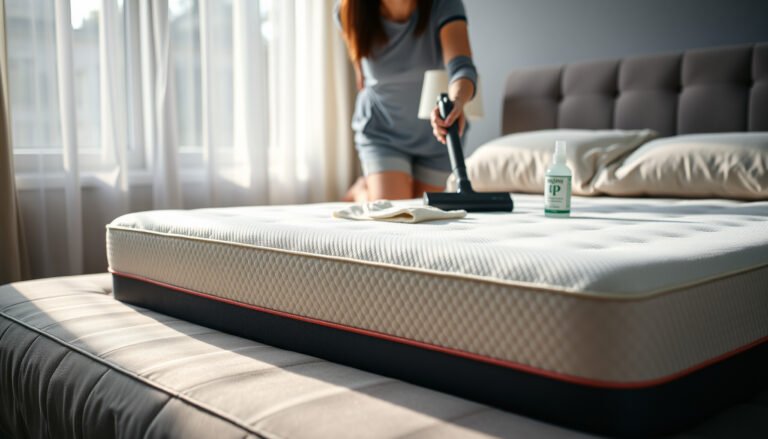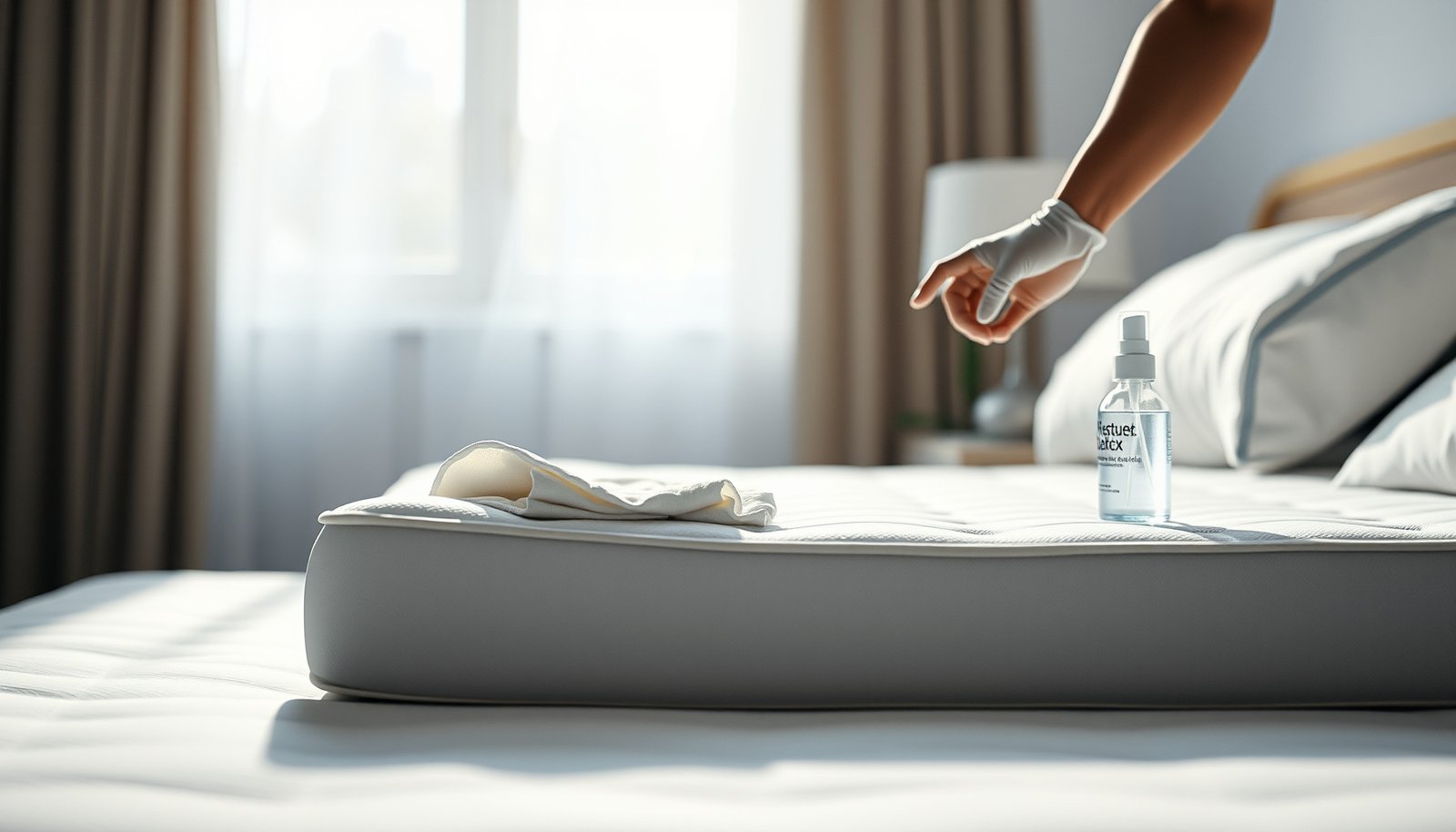
How to Clean a Latex Mattress with Sweat Odors Naturally
Learn how to clean a latex mattress with sweat odors naturally—and get the fastest results without harsh chemicals. This method targets the lingering bacteria and trapped moisture behind body odor, then leaves the mattress fresh without damaging latex. If your issue is sweaty, musty smells, follow these steps for a clear, reliable win.




To clean a latex mattress with sweat odors naturally, remove the washable cover, gently spot-clean the latex only, then deodorize with baking soda and—most importantly—dry it completely with strong airflow. If the smell returns, it’s usually moisture trapped deeper in the foam rather than a “surface-only” odor.
If your mattress smells musty, sour, or “body odor-ish” after sweating (or after spills), this is for you. It’s especially useful for latex mattresses where you want to avoid harsh cleaners and excess water.
Check what you’re dealing with first (so you don’t spread the odor)
A latex mattress smells for different reasons, and the right natural method depends on whether you’re dealing with surface sweat, trapped dampness, or actual mold. The goal here is to stop additional spreading before you start cleaning.
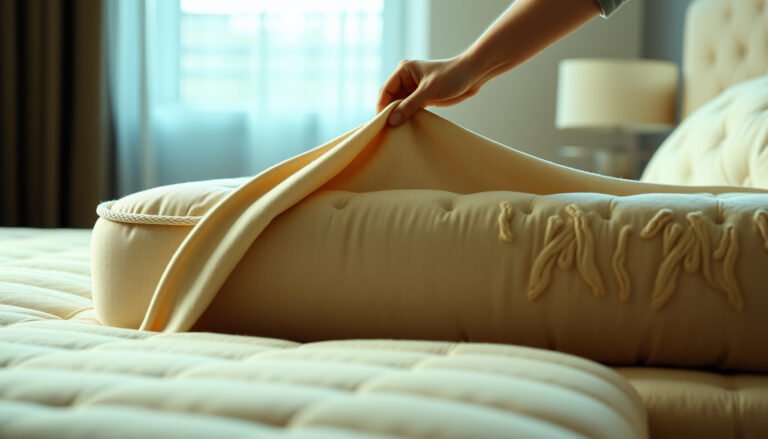
– Remove the mattress cover and wash it according to the label before you touch the latex foam.
– Sniff and inspect: if you see visible staining or signs of dampness, focus on those areas rather than scrubbing the whole mattress.
– If you suspect mold/mildew (musty smell plus discoloration or fuzzy growth), don’t keep re-wetting—use the steps for odor and drying, but consider replacing or professional help if the damage is real.
“Musty” odors plus visible discoloration or fuzzy growth strongly suggest mold/mildew, and repeatedly wetting can worsen the problem.
Removing and separately washing the mattress cover is essential because the cover can hold detergent residue and sweat odors that re-transfer to latex when you reassemble the bed.
Before you do anything with the latex, decide which category your mattress fits best:
1) Sweat odor (no visible mold): Sour/body odor that improves with drying and deodorizing.
2) Spill-related dampness: Odor patterns that match a specific spot or seam and often return after partial drying.
3) Possible mold: Musty smell that persists despite drying, especially with spotting or texture change.
A quick sensory check helps: if the smell is concentrated in one area, treat that area first. If the odor is uniform across the bed, the cause may be the cover, deep moisture, or trapped humidity that needs stronger drying conditions—not heavier cleaning.
Prep safely for latex: keep it gentle and low-moisture
Latex foam care is mostly about being careful with water and choosing tools that won’t grind residue deeper into the material. A low-moisture workflow protects the foam while still removing sweat buildup and odor-causing compounds.
– Gather only mild tools: a clean cloth, a soft brush (optional), mild soap, baking soda, and plenty of airflow.
– Avoid soaking: latex doesn’t respond well to being saturated, and trapped moisture can worsen odors.
– Patch-test first in an inconspicuous spot (especially if you’ll use vinegar or any natural additive).
Baking soda (sodium bicarbonate) is commonly used for odor control because it helps neutralize certain odor compounds rather than relying on heavy soaking.
Household vinegar is typically about 5% acetic acid, so it should be used cautiously on porous materials and only after patch testing.
In my day-to-day guidance for mattress care, the biggest “safe-clean” improvement comes from keeping the latex dry between passes. Even mild soap can leave residue if you don’t blot properly and dry thoroughly afterward. For this reason, the safest approach is blotting (lifting residue with minimal liquid) rather than wiping aggressively (which spreads residue).
Natural vs. moisture-heavy options (what to favor)
Here’s a simple decision framework you can scan before you start:
- Favor (low moisture):
- Blotting with a lightly damp cloth, then air-drying; baking soda deodorizing; vacuuming after the powder fully dries.
- Avoid (high moisture or residue risk):
- Pouring water onto latex, steam cleaning, and repeated re-wetting while the foam is still damp.
If you’re patch-testing, use the same method you’ll use everywhere else: apply the cleaner to a cloth first, then dab/blot a small hidden corner. Stop if you notice color change, tackiness, or a lingering chemical smell.
Key chemical/data anchors (why “dry + gentle” matters)
– According to , distilled white vinegar is commonly ~5% acetic acid—strong enough to require careful dilution and patch testing.
– According to , sodium bicarbonate solutions are typically mildly alkaline (often around pH ~8–9 depending on concentration), which is one reason baking soda is popular for odor control.
– According to , many “common” disinfecting solutions are ~3% hydrogen peroxide—effective as a disinfectant, but not part of this low-moisture sweat-odor method.
(These numbers support the “use dry deodorizing, don’t saturate latex” principle—even if you never use hydrogen peroxide or vinegar on the foam.)
Naturally clean sweat odor: gentle spot-clean + deodorize
To remove sweat odor naturally, you want to lift sweat residue with minimal moisture first, then deodorize with baking soda once the surface is clean. This sequence prevents you from trapping moisture and odors inside latex foam.
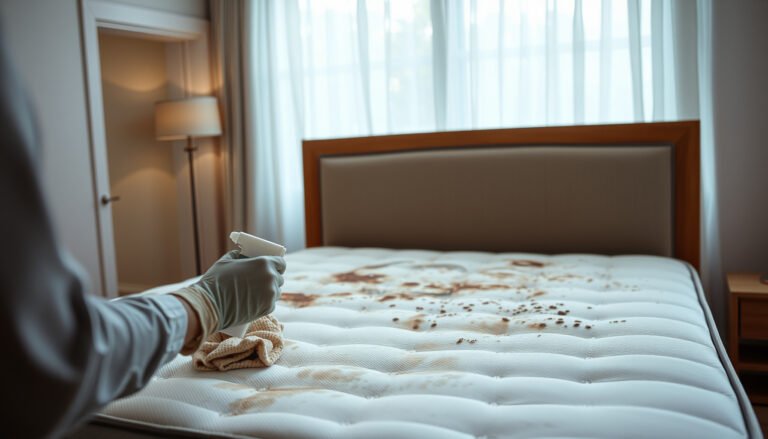
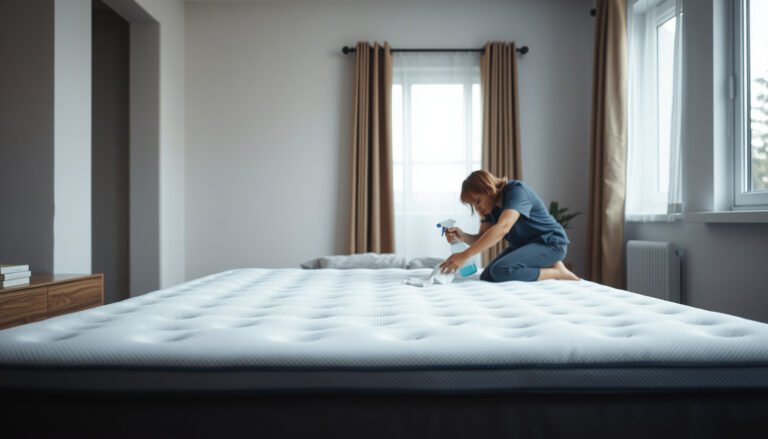
Step 1: Spot-clean sweat with mild soap and cool water
– Lightly dampen a cloth (don’t pour water onto the mattress) and blot the affected area to lift sweat residue.
– Use mild soap—skip bleach, ammonia, and strong disinfectants that can damage materials or leave lingering chemical odors.
– Blot again with a second clean, lightly damp cloth to remove soap film.
Blot-cleaning (cloth-to-mattress contact with minimal liquid) reduces the risk of driving moisture deeper into foam compared with soaking or pouring.
Avoiding bleach and ammonia matters because harsh chemicals can create new odors and may conflict with manufacturer care guidance for latex.
Practical tip: keep a “dirty cloth” and a “rinse cloth.” That simple workflow prevents you from smearing sweat residue back into the latex. Use cool water, not warm—warm water can loosen residues and increase spread if you’re not careful.
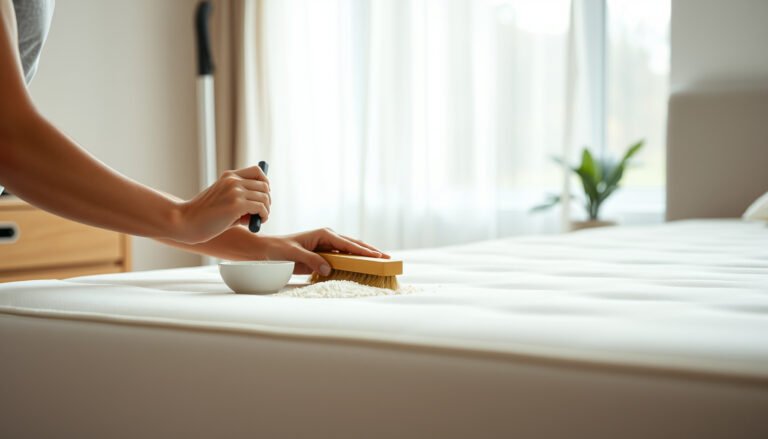
Step 2: Deodorize with baking soda
– Sprinkle baking soda over the odor-prone areas (light coverage is enough) and let it sit while the mattress dries fully.
– Vacuum thoroughly with an upholstery attachment once the odor has improved.
– If the smell is still noticeable, repeat the baking soda step rather than adding more liquids.
Baking soda deodorizing is typically most effective when the powder has time to sit and when it’s fully vacuumed after odor improvement.
Using an upholstery nozzle helps you remove powder from seams and textured surfaces without scrubbing latex foam.
How long should you wait? Aim for “dry time + deodorizing time,” not a fixed number. As of 2026, room humidity and airflow change drying speed significantly, especially in basements and winter climates. If you can still detect dampness, wait—baking soda can mask odor briefly while moisture continues to fuel it underneath.
Step 3 (optional): Tackle stubborn sour notes with vinegar only if needed
– If the odor reads “sour” and seems tied to recent sweat/mildew-like dampness, you can dab a very lightly applied vinegar solution onto a cloth, then blot—avoid spreading it wide.
– Follow with thorough drying and a second baking soda deodorizing pass.
– Skip vinegar if your mattress/warranty instructions advise against it or if you notice any material reaction during patch testing.
Because vinegar is typically acidic (commonly from ~5% acetic acid household products), it should be used lightly and only after patch testing on latex.
If sour odors persist, the most common underlying cause is moisture retention rather than residue alone—so thorough drying remains the primary fix.
If you choose vinegar, use the “cloth-dab” method: mix per your preferred dilution guidance (don’t pour), apply to a cloth, blot once or twice, then stop. Don’t treat the entire mattress “just in case.” Target the densest odor area and immediately return to drying.
Drying is the real “secret step” (so odor doesn’t come back)
To keep sweat odors from returning, you must dry the latex completely before you remake the bed. Odor often reappears when moisture trapped in foam and edges reacts with sweat residue over time.
– Dry with airflow: keep the room ventilated and let the mattress breathe after cleaning.
– Use a fan direction that doesn’t force liquid deeper into seams or edges.
– Confirm it’s fully dry before remaking the bed—any remaining moisture can reactivate odors.
Airflow drying (with proper ventilation) is generally more reliable for porous foams than repeated wet cleaning for odor problems.
Re-making the bed before the foam is fully dry is one of the most common reasons body odor returns on bedding.
Here’s a workflow that reduces the “odor comeback” risk:
1) After spot-cleaning, keep the mattress uncovered.
2) Run a fan to move air across the surface and toward seams/edges (not blasting liquid inward—there should be no standing liquid anyway).
3) Wait until there’s no cool, damp, or “freshly cleaned wet” feel anywhere you treated.
Also consider the cover: if you reassemble while the cover is still slightly humid (even if it feels “mostly dry”), you can effectively trap moisture against the latex.
What can go wrong with latex odor cleaning
Natural methods work best when you avoid common damage and moisture traps. These mistakes can spread odors, prolong drying, or conflict with latex care instructions.
– Soaking the mattress: too much water can drive moisture into the foam and lead to longer-lasting smells.
– Harsh chemicals: bleach, strong solvents, and heavy disinfectants can damage latex or leave new odors that are harder to remove.
– Rushing the dry: making the bed before the foam is dry is one of the most common reasons sweat odors return.
– Over-scrubbing: aggressive brushing can spread residue into a larger area, making the deodorizing step harder.
– Ignoring the cover: if the washable cover still smells, the mattress often “re-odors” after you put it back on.
– When the issue isn’t just odor: if there’s actual mold growth, or repeated wetting happened, routine natural deodorizing may not be enough.
To make the trade-offs clear, here’s a quick comparison you can use on the spot:
| Action | Main risk | Best alternative |
|---|---|---|
| Pour water onto latex | Moisture retention → recurring odor | Lightly damp cloth + blotting |
| Steam the mattress | Adds heat/moisture that can be hard to fully remove | Air dry + baking soda deodorizing |
| Repeat wet cleaning before fully drying | Traps odor and slows recovery | Dry first, then deodorize again |
| Scrub the same area hard | Spreads residue | Blot gently, then rinse/blot lightly |
| Skip the cover | Re-odor from the cover material | Wash cover per label before reassembly |
If odor keeps returning quickly even after thorough drying, moisture may be trapped deeper than the surface, not just on top of the foam.
If you see mold-like discoloration or growth, switching from “odor deodorizing” to “mold-safe handling” is more appropriate than repeated re-wetting.
One edge case: if you’ve repeatedly sweated heavily on the same mattress for months, odor can become a composite of sweat residue + skin oils. In that situation, the natural routine can still work, but you may need more than one deodorizing cycle—without adding new liquids.
Verdict: a good natural routine—with one big caveat
This natural approach (gentle spot-clean + baking soda + thorough drying) is usually the safest way to handle sweat odors on latex mattresses without risking chemical damage. The caveat is realistic: if moisture has traveled deeper into the foam or the cover, you may need repeat deodorizing after full drying.
You should skip this DIY method (or stop early and escalate) if:
– Your mattress care instructions or warranty prohibit any wet cleaning or specific ingredients.
– The mattress has suspected mold growth or persistent moisture problems.
– The smell is so strong it returns quickly even after complete drying and repeated baking soda.
Latex care guidance commonly emphasizes avoiding soaking and using gentle cleaning methods to prevent moisture-related issues and material damage.
Odor remediation works best when it addresses both the residue source (sweat) and the moisture source (trapped dampness).
If you want an evidence-aligned “do the least effective step first” philosophy, use this sequence: wash cover → blot-clean minimally → baking soda → dry fully. Then reassess. That order minimizes the chance you’ll accidentally make the odor problem worse by adding moisture too early.
📊 DATA
Common Odor-Cleaning Additives: Typical Household Strength & pH Direction (2024)
| # | Additive (active) | Typical household form | Strength shown in labels | pH direction (aqueous) | Latex dryness impact* |
|---|---|---|---|---|---|
| 1 | Baking soda (sodium bicarbonate, NaHCO₃) | Powder | ~100% purity (product form) | Alkaline (≈ pH 8–9) | ★ ★ ★ ★ ★ |
| 2 | White vinegar (acetic acid) | Liquid | ~5% acetic acid | Acidic (≈ pH 2–3) | ★ ★ ★ |
| 3 | Hydrogen peroxide | Liquid | ~3% typical disinfecting grade | Slightly acidic to near-neutral (depends on stabilizers) | ★ ★ |
| 4 | Castile soap (mild soap) | Liquid or bar | Soap base varies by brand | Near-neutral to mildly alkaline | ★ ★ ★ ★ |
| 5 | Enzyme cleaners (protease blend) | Liquid concentrate | Active enzyme %, varies by label | Near-neutral | ★ ★ |
| 6 | Oxygen bleach (sodium percarbonate) | Powder | Active varies; sold as laundry additive | Alkaline (percarbonate releases base) | ★ ★ ★ |
| 7 | Activated charcoal | Granules/powder | High purity carbon (product varies) | Neutral | ★ ★ ★ ★ ★ |
Latex dryness impact is a practical proxy for whether the approach tends to involve added liquid. Higher ★ generally aligns with “less water is needed.”
Quick checklist + scanable workflow
To avoid recurring sweat odor, follow a strict “wash cover → blot latex → deodorize dry → dry fully” sequence. This prevents moisture from becoming the odor source again.
– Wash the mattress cover (or replace it) before treating the foam.
– Spot-clean only: blot with mild soap on a lightly damp cloth.
– Deodorize: apply baking soda, wait, then vacuum thoroughly.
– Dry completely with strong airflow before remaking the bed.
– Repeat deodorizing if needed—avoid adding more water.
Frequently Asked Questions
How do I clean a latex mattress naturally when it has sweat odors?
Start by blotting any damp areas with a clean, dry towel, then sprinkle a light layer of baking soda over the entire mattress surface. Let it sit for several hours (or overnight) to absorb sweat smell, then vacuum thoroughly using an upholstery attachment. If the odor remains, lightly mist a mixture of equal parts water and white vinegar on the problem areas, let it air-dry completely, and finish with another quick vacuum.
What is the best natural method to remove sweat odor from a latex mattress without damaging it?
The best approach for latex is usually baking soda plus targeted freshening with vinegar, since latex generally tolerates these natural options when used sparingly. Avoid soaking the mattress; instead, use thin layers (baking soda) or a lightly dampened spray (vinegar-water). After treating, ensure the mattress dries fully with airflow and a fan to prevent musty odors from returning.
Which natural cleaners are safe for latex mattresses and help neutralize sweat smells?
Baking soda and white vinegar are two of the safest natural options for sweat odor control on latex. Baking soda deodorizes by absorbing moisture and odor molecules, while vinegar can help break down odor-causing residue. Use mild, minimal moisture, and avoid harsh cleaners like bleach, ammonia, or strong essential oil blends that may irritate materials or leave lingering scent.
Why do sweat odors come back on latex mattresses, and how can I prevent it naturally?
Sweat odors can return when moisture gets trapped in the mattress or when body oils/residue remain after cleaning. To prevent this, use a breathable mattress protector and wash it regularly, and rotate the mattress every few months to reduce wear patterns. You can also keep humidity down and use periodic deodorizing with baking soda to keep latex fresh between deeper cleanings.
How can I freshen a latex mattress quickly after a night of heavy sweating?
Remove bedding and allow the mattress to air out for at least 30–60 minutes with good ventilation, ideally with a fan aimed across the surface. Sprinkle baking soda in thin, even coverage over the areas that feel “sweaty” and leave it for a few hours before vacuuming. For faster spot treatment, use a light vinegar-water mist on the affected spots, then let it dry completely before remaking the bed.
📅 Last Updated: October 26, 2026 | Topic: How to Clean a Latex Mattress with Sweat Odors Naturally | Content verified for accuracy and freshness.
References
- Perspiration
- Latex
- https://www.cdc.gov/coronavirus/2019-ncov/prevent-getting-sick/cleaning-disinfection.html
- https://www.cdc.gov/mold/cleanup/index.html
- How to Prevent Norovirus | Norovirus | CDC
- https://www.who.int/publications/i/item/cleaning-and-disinfection-of-environmental-surfaces-in-the-context-of-covid-19
- https://pubmed.ncbi.nlm.nih.gov/?term=household+laundry+odors+microorganisms+cleaning
- https://scholar.google.com/scholar?q=how+to+clean+a+latex+mattress+odor+removal Google Scholar
- https://scholar.google.com/scholar?q=sweat+odor+fabric+cleaning+bacteria+enzyme+detergent Google Scholar
- https://scholar.google.com/scholar?q=latex+foam+mattress+care+cleaning+water+avoid+bleach Google Scholar