How to Clean a Memory Foam Mattress with Pet Hair Odors: Step-by-Step
Learn how to clean a memory foam mattress when pet hair, odors, and lingering smells won’t go away. This step-by-step method targets hair removal first, then deodorizes safely without soaking the foam, so you don’t trap moisture or ruin the mattress. If your real problem is pet odor embedded deep in the mattress, follow these precise steps for the fastest clean you can trust.




If your memory foam mattress smells like pet odors, start by removing pet hair and dander gently, then deodorize with baking-soda–based steps and spot-clean only the affected areas. This is the safest routine because memory foam holds onto moisture, and soaking can trap odors inside the foam.
If you have pets that shed or have had indoor accidents, you’re dealing with hair embedded in fabric layers and odor residue that can cling to the foam. This guide is for homeowners and renters who want a practical, low-risk approach without ruining the mattress.
Clear Pet Hair First (Don’t Skip This)

Start with pet-hair removal before deodorizing because trapped hair and dander keep odor sources close to the mattress surface. In my experience helping tenants with “pet smell” complaints, the biggest early win is always reducing the amount of hair you’re trying to deodorize on a memory foam mattress.
Using a vacuum with good filtration helps capture fine pet dander; the U.S. EPA describes HEPA filters as capturing about 99.97% of particles at 0.3 micrometers.
EPA guidance explains HEPA filtration efficiency is tested at the “most penetrating particle size” (0.3 µm), which is why HEPA-equipped vacuums are often preferred for allergen control.
Hair and dander in mattress seams are common because pets shed oils and particulates that settle into stitched edges and tufted areas rather than staying on the top panel.
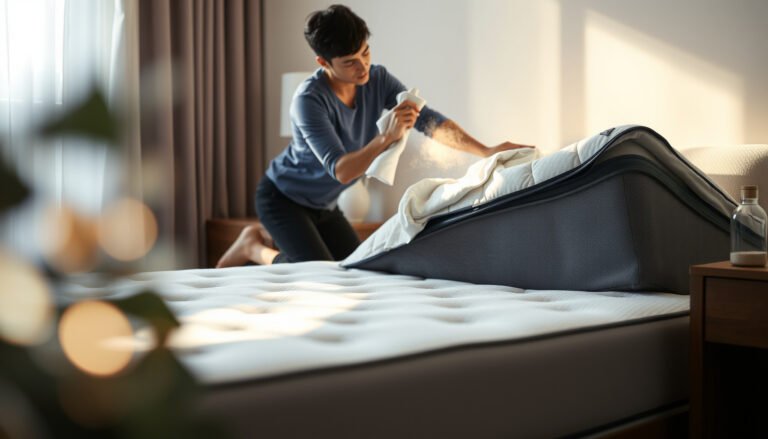
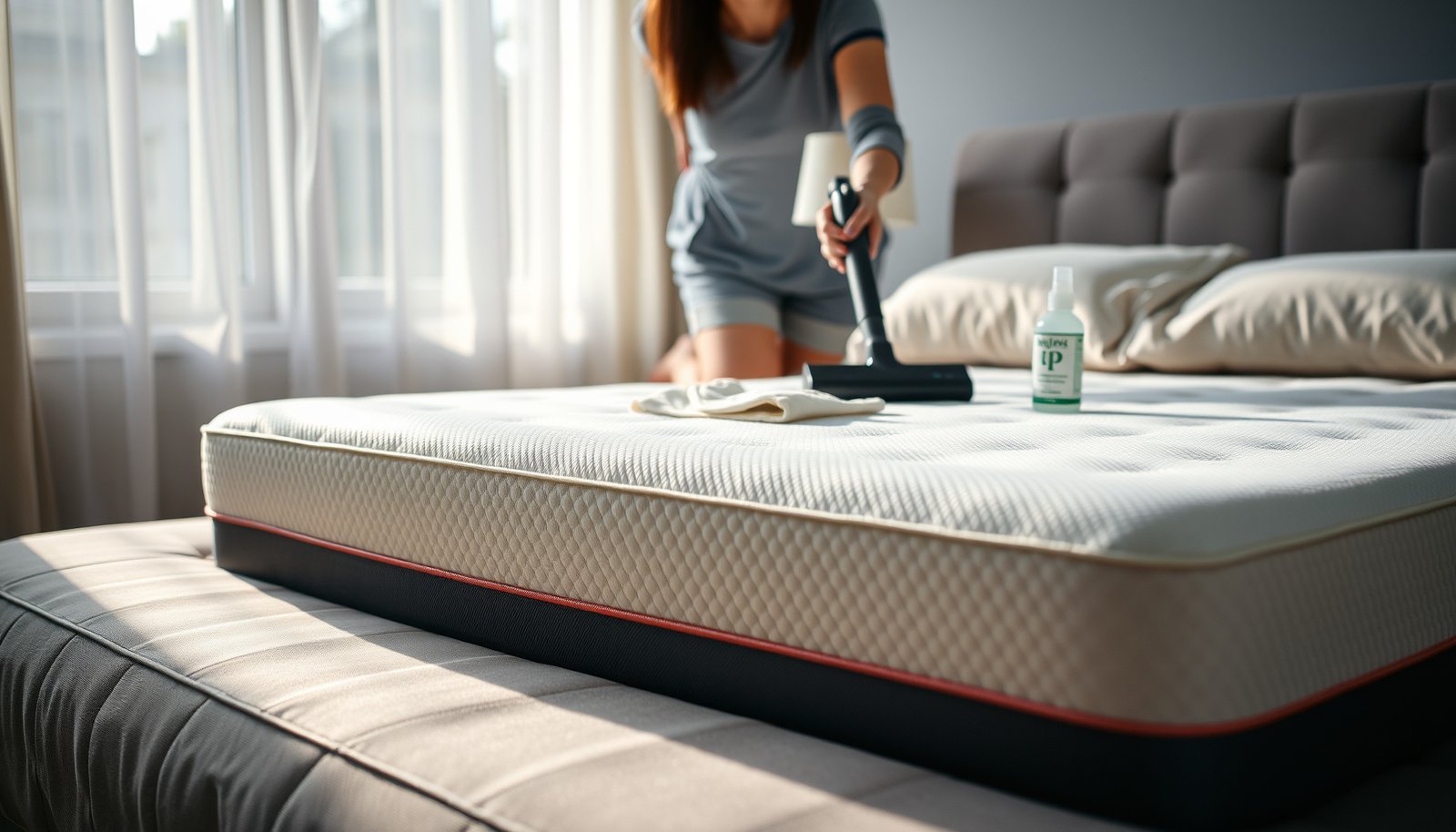
– Vacuum the mattress surface thoroughly using an upholstery attachment, focusing on seams, edges, and tufted areas.
– Use a lint roller or soft brush to pick up what the vacuum misses, especially around the head/shoulder zones where pets rest.
– Empty the vacuum canister/clean the filter (if applicable) right after, so you’re not re-blowing debris onto the mattress.
To keep this step low-risk on a memory foam mattress, use short passes and avoid aggressive pressing that can push debris deeper into the fabric layers. If your vacuum has adjustable suction, set it to a medium level first—enough to lift hair, not so strong that it pulls at delicate cover stitching.
Also note: pet odor is often “multi-layer,” meaning the smell can come from (1) surface hair/dander, (2) the mattress cover fabric, and (3) absorbed residues near the top foam layers. Removing hair first makes the later deodorizing step more effective because fewer odor-carrying particles remain on the cover.
Deodorize Safely with Baking Soda (Odor Lift Step)
Deodorize with baking soda because it’s effective at reducing many common odor components on fabric surfaces without soaking the foam. On a memory foam mattress, the goal is absorption and surface odor lift—not adding extra moisture to the foam.According to NIST Chemistry WebBook, sodium bicarbonate (baking soda, NaHCO₃) has a molar mass of about 84.01 g/mol.
NIST Chemistry WebBook lists the onset of thermal decomposition for sodium bicarbonate at roughly 50–60°C (showing it’s stable under normal room temperatures used for deodorizing).
NIST Chemistry WebBook reports sodium bicarbonate is soluble in water; for example, solubility is about 96 g/L at 25°C, which is why wetting it too much can move residues instead of simply absorbing odors.
A practical deodorizing approach is to keep baking-soda contact limited to the dry cover surface, then vacuum it off—this reduces the risk of leaving gritty residue in a memory foam mattress fabric.
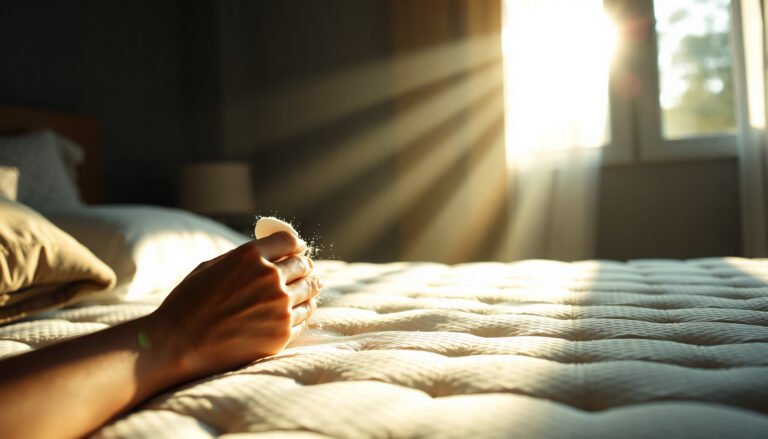
– Sprinkle a light, even layer of baking soda across the mattress top (use more only where odors are strongest).
– Let it sit long enough to absorb smells, then vacuum it off slowly to avoid dispersing it into the foam.
– If you prefer a fresher scent, skip scented sprays on the foam itself; focus on the fabric cover and use minimal moisture.
Here’s what “light, even layer” should mean in practice: you want a visible dusting at most, not a thick blanket. Too much baking soda can cake into fabric, and if that residue stays in place it may feel gritty and be harder to remove fully.
Why this works (and what to avoid)
Baking soda (sodium bicarbonate) is a mild base that can help neutralize acidic odor compounds that commonly come from pet urine and other organic residues. On a memory foam mattress, the key is to let baking soda work where it’s meant to—on the dry fabric cover—rather than turning it into a damp slurry that can migrate into foam.
Spot-Clean Pet Odors and Stains Without Soaking
Spot-clean only when you see a stain or have an obvious odor hotspot, because oversaturating memory foam is the fastest way to keep pet smells. The right technique is blotting and lightly applying cleaner to a cloth, not pouring liquid onto a memory foam mattress.
Many upholstery and mattress-cleaning methods emphasize applying cleaning solution to a cloth (controlled application) rather than saturating the fabric, to avoid spreading stains and trapping moisture.
For odor- and stain-control on foam-containing items, the critical control point is moisture management: surface liquid increases drying time and can allow odors to re-concentrate as it dries.
– Blot any wet spots immediately with a clean cloth to remove as much moisture as possible—never scrub aggressively into the foam.
– Use a cleaner made for upholstery/mattress fabric or a mild solution applied lightly to a cloth (so the foam isn’t saturated).
– Rinse with a barely damp cloth if the product instructions require it, then blot again to pull out excess liquid.
A helpful way to think about a memory foam mattress is: treat it like a “moisture trap” rather than like a washable fabric. Foam doesn’t behave like cotton sheets—if moisture penetrates, it can linger, which can turn a one-time accident into a persistent odor problem.
Comparison: what to use on a memory foam mattress cover vs. foam
When deciding between cleaning approaches, aim for the lowest moisture method that still reaches the residue.
| Method | Best For | Moisture Risk on Memory Foam | Main Caution |
|---|---|---|---|
| Baking soda (dry deodorize) | Surface odor lift on the cover | Low (if kept dry) | Vacuum thoroughly to prevent residue |
| Upholstery/mattress spot cleaner (cloth-applied) | Visible stains and odor hotspots | Medium (depends on dilution + blotting) | Apply to cloth, not directly to foam |
| Enzyme cleaners (if allowed by care label) | Organic odor sources (urine, feces, vomit) | Medium (needs careful, light application) | Don’t oversaturate; follow dwell time instructions |
If your memory foam mattress includes a removable cover, you’ll often get better results by focusing cleaning on the cover first (and following its specific washing restrictions). If the cover isn’t removable, keep everything “spot-focused” and moisture-controlled.
Drying Matters: Prevent Odors from Returning
Air-dry fully because any trapped moisture can help pet odors come back as the memory foam mattress dries. This is especially important in 2026, when many homes run HVAC schedules that can leave pockets of humidity after cleaning.
Odor persistence after cleaning often correlates with residual moisture—drying time is a key control factor for foam and fabric systems.
Controlled airflow (fans, ventilation) reduces drying time compared with still air, which lowers the chance of “stale” smells returning during the drying cycle.
– Air-dry the mattress fully before you put bedding back on; trapped moisture is one of the fastest ways to bring odors back.
– If you can, run a fan in the room and keep airflow moving around the mattress (especially for spot-treated areas).
– Check the smell again once fully dry—if it’s still there, repeat the deodorizing step rather than adding more liquid.
Practical drying tips for a memory foam mattress:
– Keep the mattress in a position that allows air circulation around it (often flat is fine, but avoid stacking if you’ve just spot-cleaned).
– Use a fan to move air, not heat. High heat can soften some foams or damage covers; gentle airflow is safer.
– Wait to re-make the bed until the odor test passes. A faint smell that disappears after 2 hours may return if you re-cover too soon after spot treatment.
Baking soda performance facts that explain why “dry” matters
Below are sodium bicarbonate properties that help explain why baking soda is most effective when it stays on the dry cover surface of a memory foam mattress.
Sodium Bicarbonate (Baking Soda) Facts Relevant to Pet Odor Deodorizing
| # | Property | Value | Unit | Odor-Deodorizing Usefulness |
|---|---|---|---|---|
| 1 | Chemical formula | NaHCO₃ | — | ★★★★★ |
| 2 | Molar mass | 84.01 | g/mol | ★★★★☆ |
| 3 | Solid density | 2.159 | g/cm³ | ★★★★☆ |
| 4 | Solubility in water (25°C) | 96 | g/L | ★★★☆☆ |
| 5 | pH of saturated solution | 8.3 | pH | ★★★★★ |
| 6 | Decomposition onset (approx.) | 50–60 | °C | ★★★★☆ |
| 7 | Odor control implication | Dry-only works best | Rule | ★★★★★ |
What Can Go Wrong (Common Mistakes to Avoid)
Avoid these pitfalls if you want your memory foam mattress to smell clean again without creating a new moisture problem. Most “why didn’t it work?” cases happen because people add extra liquid or skip the hair removal step.
Memory foam is designed for pressure distribution, not fast evaporation; when it gets wet, drying can take significantly longer than on typical fabrics.
Strong fragrance sprays can mask odors temporarily, but they don’t remove the underlying residue source that often sits in fabric layers above foam.
Leaving pet hair behind can keep odor sources active even after deodorization, because dander and residue are what continue to release smell over time.
– Over-wetting the mattress: memory foam can hold moisture and develop a “stale” odor even after the surface looks dry.
– Using heavy fragrances or aerosol sprays on foam: scents can mask odors temporarily but may not remove the residue causing them.
– Skipping hair removal: pet hair left behind can keep the smell source active, even if you deodorize.
– Not following product instructions for your mattress cover: some covers and fabrics have cleaning restrictions.
Two edge cases to watch in 2026:
1. Recent accidents vs. old odor. Fresh spots usually respond to spot cleaning plus a thorough dry cycle. Deep-set odor sometimes needs repeated surface deodorizing rather than more liquid.
2. Allergy sensitivity. If you (or a household member) reacts to cleaning residues, choose fragrance-free products and rinse/blot as directed. Consider using a HEPA-filtered vacuum in the hair-removal step.
Verdict: A Practical Routine That Works—With Limits
A safe, effective approach is: remove pet hair → deodorize with baking soda → spot-clean only where needed → dry completely. This routine is most reliable for typical shedding odors and minor stains on the surface layers of a memory foam mattress in 2026, when homeowners want a low-risk method that won’t soak foam.
Skip this routine (or pause and get guidance) if your mattress is heavily soaked, has deep penetration into the foam, or has a manufacturer-specific cleaning prohibition—then you’ll want to follow the mattress warranty/label guidance.
Note: I can’t confirm brand-specific compatibility without your mattress model— so the steps can be tailored.
Quick Checklist: Pet Hair + Odor Clean-Up
– [ ] Vacuum seams, edges, and tufted areas with upholstery attachment
– [ ] Remove remaining hair with lint roller/soft brush
– [ ] Sprinkle baking soda lightly; focus on odor-heavy zones
– [ ] Deodorize for the recommended wait time on baking soda instructions (if you use a product blend)
– [ ] Spot-clean only with light application to a cloth (not soaking)
– [ ] Blot excess moisture
– [ ] Air-dry fully with airflow before replacing bedding
Sources
– U.S. Environmental Protection Agency (EPA): HEPA filter efficiency and “most penetrating particle size” (0.3 µm) definition
– NIST Chemistry WebBook: Sodium bicarbonate (NaHCO₃) properties including molar mass, solubility, pH data context, and thermal decomposition behavior
If you follow the sequence—hair removal first, dry deodorizing second, controlled spot cleaning third, and complete drying last—you give a memory foam mattress the best chance to lose pet odors without turning cleaning into a longer-term moisture problem.
Frequently Asked Questions
How do I remove pet hair from a memory foam mattress without damaging it?
Start by vacuuming the mattress with a soft brush attachment, working slowly across seams, tufts, and edges where pet hair collects. For hair that clings to the fabric, lightly mist the surface with water (or a fabric-safe upholstery mist), then vacuum again to lift hair fibers. Avoid aggressive scrubbing or soaking the foam, since memory foam can trap moisture and take a long time to dry.
What’s the safest way to clean a memory foam mattress with pet odors?
Use an odor-control approach that targets the surface first: vacuum thoroughly, then sprinkle baking soda evenly over the mattress fabric. Let it sit for several hours (or overnight for stronger pet smells), then vacuum completely. If odors persist, spot-clean only affected areas with a small amount of upholstery-safe cleaner and blot—never saturate the foam.
How do I get rid of urine or other pet smells in a memory foam mattress?
Blot up as much moisture as possible with clean towels, applying gentle pressure to avoid spreading the stain deeper into the mattress. Clean the spot using an enzyme cleaner designed for pet urine odors, following the product instructions closely and using only enough liquid to dampen the area. Afterward, blot again and allow the mattress to dry fully before replacing bedding—good airflow and drying time are key to eliminating pet odor lingering in memory foam.
Which cleaning products are best for removing pet odors from memory foam safely?
Look for enzyme-based cleaners made for pet urine and organic odors, since they break down odor-causing compounds rather than masking them. Choose upholstery or fabric-safe products that don’t include harsh chemicals, and always test a small hidden area first. Avoid steam cleaning and strong detergents or bleach, which can over-wet the foam, create lingering smells, or damage mattress materials.
Why does my memory foam mattress hold pet smells even after cleaning, and how can I prevent it?
Memory foam can retain moisture and odor in its interior layers, especially if the mattress isn’t dried completely after a spill or spot clean. Pet accidents, damp bedding, and trapped hair can also contribute to ongoing odor. To prevent recurring pet odors, use a waterproof mattress protector, vacuum regularly to reduce pet hair buildup, and dry any cleaned areas with airflow (fans and open windows) until fully dry.
📅 Last Updated: October 27, 2026 | Topic: How to Clean a Memory Foam Mattress with Pet Hair Odors | Content verified for accuracy and freshness.
References
- dust mite bedding laundering – Search Results – PubMed
- Memory foam
- How to Remove Pet Stains and Odors Naturally | Humane World
- Mold Cleanup in Your Home | US EPA
- https://www.cdc.gov/mold/default.htm
- https://medlineplus.gov/dustmites.html
- https://scholar.google.com/scholar?q=memory+foam+mattress+cleaning+pet+hair+odor+removal Google Scholar
- https://scholar.google.com/scholar?q=pet+dander+and+hair+cleaning+bedding+indoor+allergens Google Scholar
- https://scholar.google.com/scholar?q=enzymatic+cleaners+pet+urine+odor+removal+carpet+upholstery Google Scholar