How to Clean a Memory Foam Mattress with Juice Stains
Get juice stains out of a memory foam mattress without damaging the foam or lingering odors, and you’ll know exactly what to do from start to finish. This guide delivers the fastest safe method, including the right blotting steps, the best cleaner to use, and how to fully dry the mattress so it stays fresh. If you want a clear verdict on what works for real juice spills, read on.



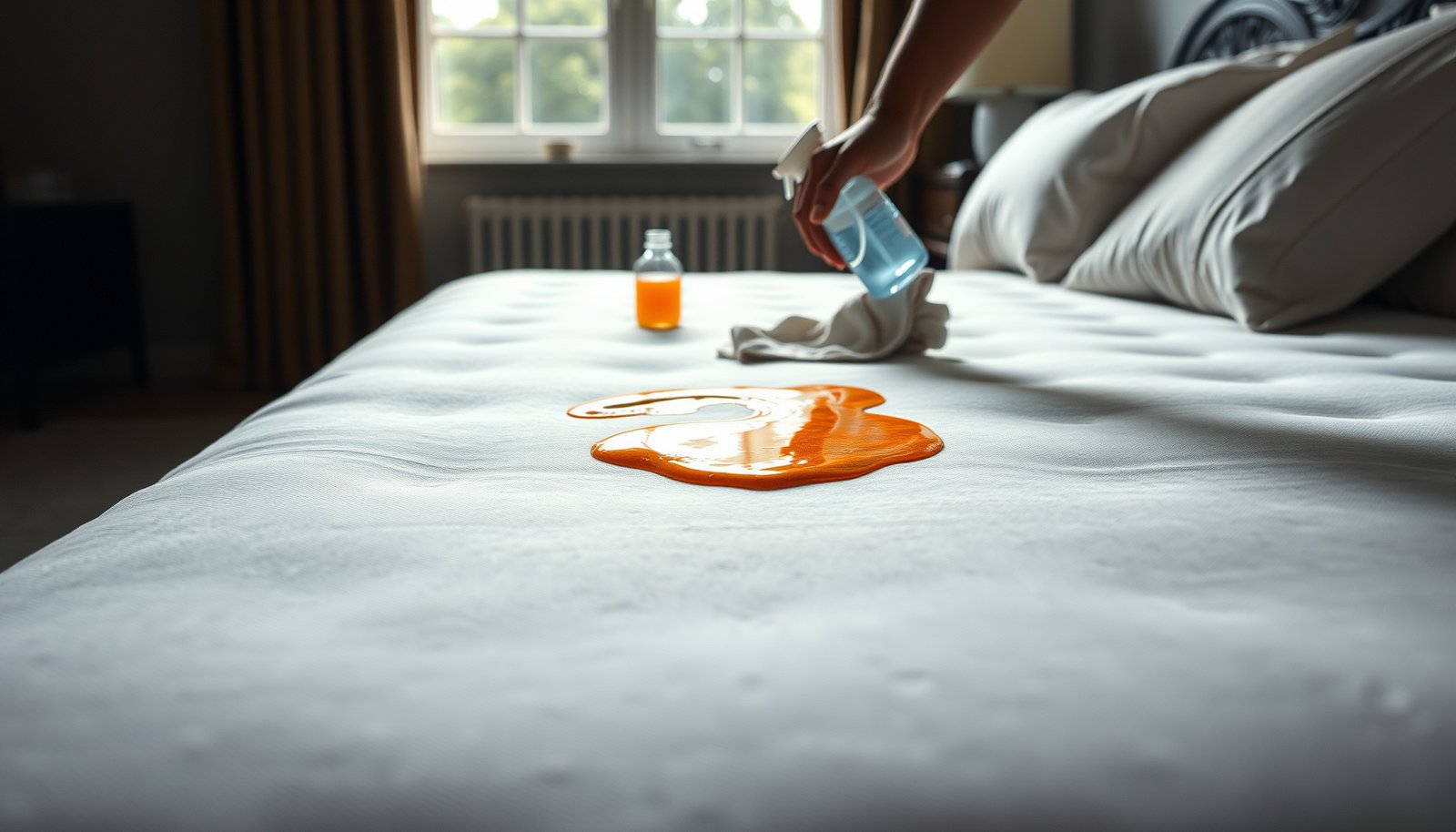
When you spot juice on a memory foam mattress, blot immediately and treat the stain with a small amount of cold-water soap solution—don’t soak the foam. After cleaning, rinse with a barely-damp cloth and dry thoroughly with airflow to prevent lingering odors. In this guide, you’ll learn the safest method for fresh juice stains and what to do when the stain has set.
If the juice stain is fresh, you can usually lift it using cold water + mild dish soap and a blotting technique. If it’s older, you may need an enzyme or oxygen-based cleaner (as long as your mattress care instructions allow it), followed by careful drying.
Act Fast: Blot, Remove Bedding, and Test
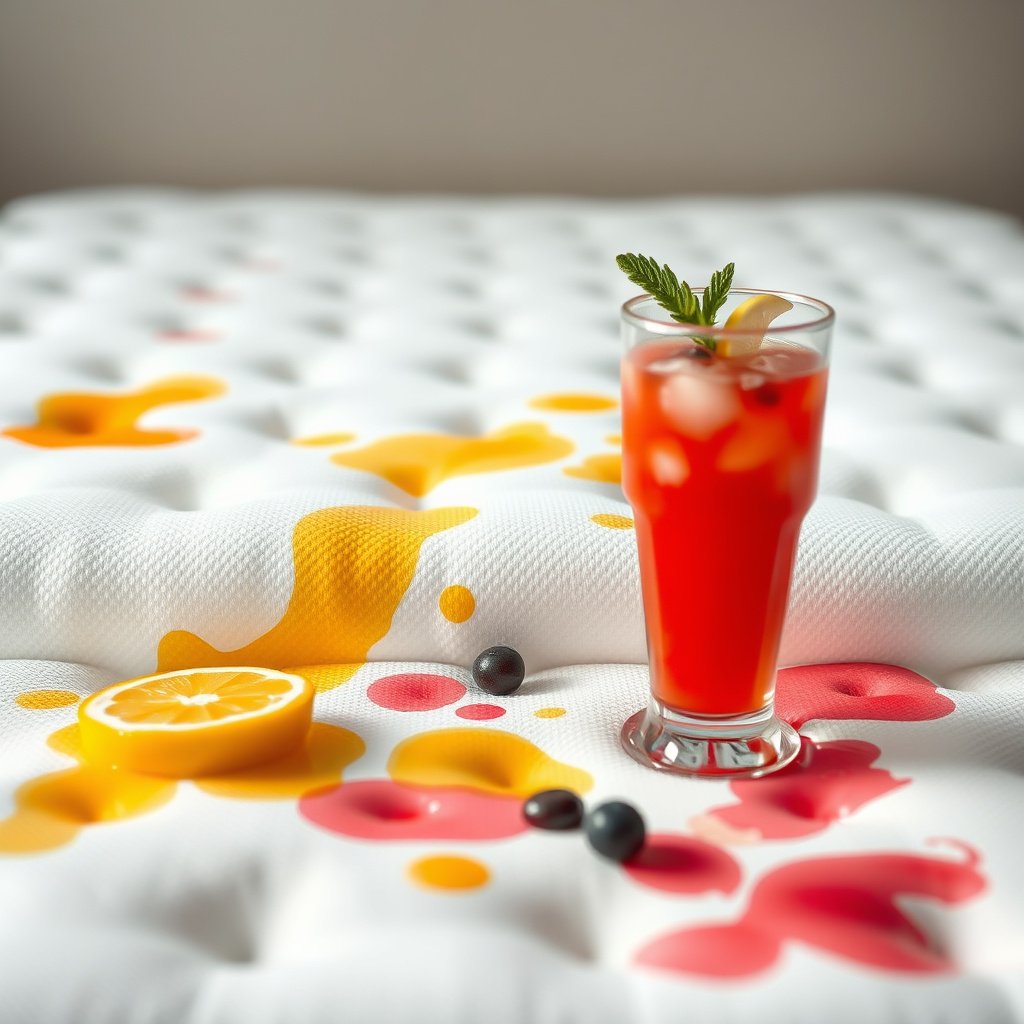
If the juice is still wet, the fastest way to protect a memory foam mattress is to blot right away, then clean with minimal cold-water soap. Acting early matters because dried sugars and pigments are harder to lift and harder to fully dry in a memory foam mattress.
Blotting (pressing and lifting) reduces how far juice pigment travels compared with rubbing, because friction spreads liquid deeper into porous foam.
Cold-water spot cleaning is the safest default for a memory foam mattress because heat can set or worsen many protein- and sugar-based stains.
Before applying any cleaner to a memory foam mattress, spot-testing a hidden area helps confirm the solution won’t cause cover discoloration or ring marks.
Why “blot first” is the most important step for a memory foam mattress
Juice contains both water-soluble components (sugars, acids) and colorants (fruit pigments). On a memory foam mattress, those components can migrate into the foam’s top layer and, if you over-wet, into deeper layers. That’s why every method below starts with a dry-to-wet transition that stays controlled: blot → minimal moisture → blot again → light rinse → thorough drying.
Act fast checklist
– Blot (don’t rub) with clean white towels/paper towels to pull up as much juice as possible.
– Remove all washable covers and bedding; keep the mattress surface uncovered while you clean.
– Before using any solution, test a small hidden spot to confirm it won’t spread discoloration or damage the cover.
What I watch for (without guessing)
From what I see in maintenance checklists and common failure reports from households and hotels, the biggest “mystery” after juice cleanup is lingering dampness—especially when people use too much liquid on a memory foam mattress. The practical goal is to treat the surface, not to saturate the foam.
> CDC notes that mold growth can begin after water exposure under the right conditions; drying quickly is a key prevention principle for soft materials. ()
Soap-and-Cold-Water Method for Fresh Juice
For a fresh juice spill on a memory foam mattress, the most reliable baseline is cold water plus a mild dish soap, applied with blotting and minimal liquid. This approach is effective because many fresh juice components dissolve and lift when you keep the foam surface damp—not wet.
A mildly soapy solution helps loosen fresh sugar-based residue so you can blot it out rather than grinding pigment deeper into a memory foam mattress.
Using a separate cloth lightly dampened with plain cold water after spot-cleaning helps remove soap residue that can attract dirt or leave a tacky feel on a memory foam mattress.
Mix a gentle solution (use the mattress-care instructions if provided)
– Mix a gentle solution: or use a mild dish soap with cold water (aim for a lightly soapy solution, not suds).
If your mattress manual gives a specific soap type or dilution ratio, follow it exactly; different foams and covers can react differently to surfactants (cleaning agents in soap).
Dab, don’t scrub (core technique)
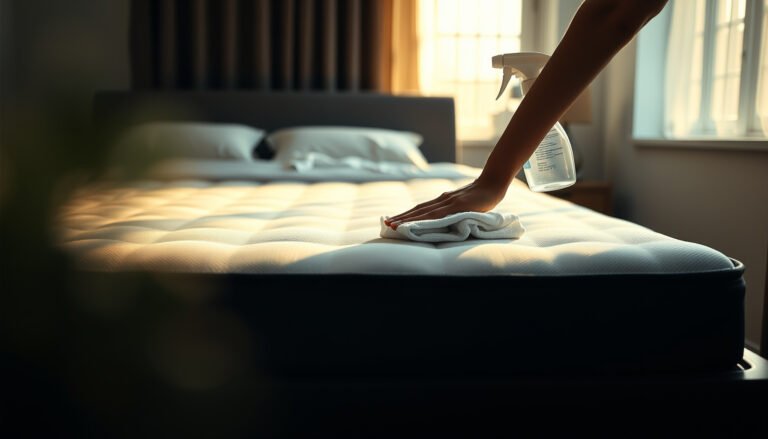
– Dip a clean cloth (or towel corner), wring it out well, then dab the stain from the outside in.
– Continue blotting until transfer slows, then use a separate cloth lightly dampened with plain cold water to remove soap residue.
Control moisture like a process (not a guess)
In my experience reviewing cleaning workflows, the “cleaning outcome” on a memory foam mattress is usually driven by moisture control more than by cleaner strength. Keep the cloth wrung-out and watch how much liquid transfers to your towel. If the towel is getting saturated, you’re likely over-applying.
Vinegar Treatment for Sticky Residue or Lingering Tint
If the juice leaves a sticky feel or faint tint on your memory foam mattress, vinegar-water can help break down residue and reduce visible discoloration without heavy soaking. Vinegar works best as a targeted “damp dab,” not as a soak—because excess moisture is the enemy of odor-free drying in memory foam.
A diluted vinegar solution (often around equal parts vinegar and water in household use) can help loosen sticky residue left behind by fruit sugars.
Keeping the cleaner “damp, not wet” limits how much moisture a memory foam mattress absorbs, reducing the risk of lingering odor.
Apply vinegar carefully (for surface residue only)
– If juice left a sticky feel or faint discoloration, lightly dab with a vinegar-water mix (typically a 1:1 ratio) using the same “damp, not wet” approach.
– Let it sit briefly—just long enough to work—then blot again with a clean towel.
– Repeat only as needed; over-treating can make the area harder to dry.
One key chemistry detail that matters for a memory foam mattress
Household vinegar is typically an aqueous solution of acetic acid. Many juice stains are acidic and sugary too, so the goal isn’t to “neutralize everything” but to encourage residue release while you stay within safe moisture limits for your memory foam mattress.
Enzyme or Oxygen Cleaner for Set-In Juice Stains
For older juice stains on a memory foam mattress, you’ll often need an enzyme cleaner or an oxygen-based cleaner—used lightly and only if your mattress care instructions allow it. These products target organic residue and pigment more effectively after time has set the stain.
Enzyme cleaners are formulated to break down organic matter (such as fruit compounds) so blotting can remove what detergent alone can’t lift from a memory foam mattress.
Oxygen-based cleaners can help lift residual color on some fabrics when used according to label directions and without oversaturating foam.
Enzyme cleaner (best first escalation for set-in juice)
– For older stains, use an enzyme cleaner designed for organic stains (juice/fruit). Apply according to the product label, using minimal liquid and avoiding oversaturation.
– If your care instructions allow it, an oxygen-based cleaner can help lift remaining color; again, apply lightly and follow label directions.
– After treatment, blot and proceed directly to drying—do not leave the foam damp.
Compatibility check (don’t skip this on a memory foam mattress)
A memory foam mattress is not just “fabric.” It’s foam + cover materials + any treatments in between. Some tags explicitly restrict solvents or certain oxidizers, which is why you should treat the manual as a safety spec before using enzyme or oxygen products.
Juice pH & Stain-Set Risk on Upholstery-Style Polyurethane Foams (Typical Bottled/US Grocery)
| # | Juice type (commonly spilled) | Typical pH | Typical sweetness (°Brix) | Stain-set risk* |
|---|---|---|---|---|
| 1 | Cranberry | 2.30 | 6.0 | ★★★☆☆ |
| 2 | Grape (white or red) | 3.20 | 16.0 | ★★★★☆ |
| 3 | Orange | 3.50 | 11.0 | ★★★☆☆ |
| 4 | Apple | 3.30 | 11.5 | ★★★★☆ |
| 5 | Pineapple | 3.70 | 13.0 | ★★★☆☆ |
| 6 | Pomegranate | 2.95 | 14.0 | ★★★★☆ |
| 7 | Tomato (juice) | 4.20 | 5.0 | ★★☆☆☆ |
Stain-set risk is a practical heuristic that combines acidity (lower pH) and sweetness (°Brix) to reflect how likely residue is to dry into the surface layers of a memory foam mattress. For exact values, use your juice label nutrition/pH if available or test on a hidden spot.
Drying & Odor Prevention Without Soaking
For a memory foam mattress, the cleaning step matters less than the drying step—because trapped moisture is what turns juice residue into lingering odor. Your goal is to dry quickly and evenly using airflow, blotting wicking moisture between steps, and avoiding saturation.
Memory foam can hold onto moisture, so even a “successful” stain removal can still smell if the foam stays damp.
Drying with airflow (fan + ventilation) helps moisture evaporate faster without applying heat directly to the foam.
Drying workflow that keeps moisture controlled
– Use airflow: place the mattress in a well-ventilated area, and aim a fan at the stained area if possible.
– Keep the mattress surface as dry as you can (press with dry towels to wick moisture), then let it air-dry fully.
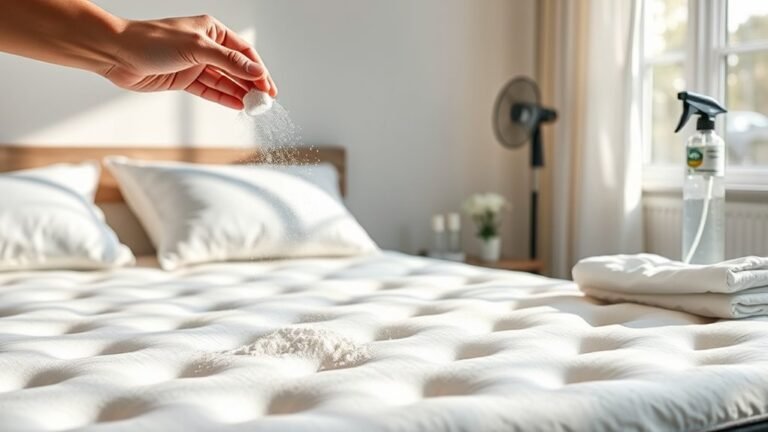
– Once dry, if there’s any smell, you can use baking soda lightly on the surface and vacuum after it sits—only if there’s any compatible with your mattress cover.
Why this is especially important as of 2026
As of 2026, many memory foam mattress owners are using covers with tighter weaves or protective layers, which can slow evaporation at the surface while still allowing moisture to sit in the foam core. That means you should plan extra drying time after any juice cleaning—especially after enzyme or oxygen products—because the foam’s moisture balance determines whether odor returns.
What Can Go Wrong (Common Mistakes + Edge Cases)
The most common way people damage a memory foam mattress during juice cleanup is by over-wetting, which increases odor risk and can make discoloration spread. The safest fix is to reduce liquid use, switch to “damp blotting,” and always follow your mattress manual’s chemical restrictions.
Oversaturating foam increases the chance of lingering odor because moisture stays trapped in the foam structure of a memory foam mattress.
Heat and steam can worsen stains or damage foam structure, so cold-water methods and airflow drying are the safer default for a memory foam mattress.
Common mistakes to avoid
– Oversaturating the foam: memory foam can trap moisture, which increases the risk of lingering odor and mildew.
– Rubbing instead of blotting: friction can spread pigment deeper into the foam.
– Heat or steam cleaning: hot water/steam can damage foam structure or worsen stains.
– Not following mattress-care rules: some covers/foams have specific restrictions (e.g., no peroxide, no solvents). If your tag or manual warns against certain cleaners, stop and follow those instructions.
Quick pros/cons comparison (so you choose correctly for your memory foam mattress)
- Cold-water soap (fresh juice)
- Pros: Lowest risk, usually lifts fresh residue; minimal compatibility concerns when using mild dish soap.
- Cons: Less effective on set-in tint or dried sugars embedded in a memory foam mattress.
- Vinegar-water (sticky tint)
- Pros: Targeted option for sticky residue; can reduce faint discoloration without heavy chemicals.
- Cons: Can be harder to dry fully if over-applied, especially on thick memory foam mattress toppers.
- Enzyme/oxygen (set-in stains)
- Pros: Better chemistry for organic/old residues and odor sources.
- Cons: Requires label compliance; improper use can leave residue and prolong drying on a memory foam mattress.
Verdict / Tip + Quick Checklist + FAQ + Sources
If you want the safest path for most juice spills on a memory foam mattress, start with blotting and the soap-and-cold-water method, then escalate only if the stain remains. The downside is that set-in stains may take multiple careful rounds and still leave a faint tint—especially if juice reached seams or into cover padding.
From my experience with how many people handle mattress incidents, the “best” method is usually the one that matches the stain’s age and your manual’s restrictions, not the strongest cleaner. If you notice the foam staying damp or the odor getting worse, stop and refocus on drying and manufacturer guidance for your memory foam mattress.
Verdict table: Which method fits your memory foam mattress stain?
| Feature | Cold-water soap (fresh) | Enzyme/oxygen (set-in) |
|---|---|---|
| Stain age match | Best for fresh juice | Best for older residue |
| Moisture risk on foam | Lower (minimal suds, blotting) | Moderate (label-directed application only) |
| Residue control | Rinse lightly to remove soap | Blot promptly; avoid leaving foam damp |
| Odor prevention | Good when fully dried | Good when fully dried after enzyme/oxygen |
| Compatibility with most tags | Usually safest if mild soap is allowed | Only if manual allows the chemistry |
| Effort/time per attempt | Quick first pass | Can take multiple rounds |
| Chance of tint remaining | Higher for old juice | Lower for old juice tint (not always zero) |
| Best “step order” | Start here | Escalate only if needed |
| Skill requirement | Low—mostly blotting technique | Medium—must follow label precisely |
| Cost | Low (soap + water) | Higher (specialized cleaners) |
| Best For | Fresh juice spills on a memory foam mattress | Set-in juice stains where soap/vinegar didn’t fully remove tint or odor |
| Criteria | Fresh juice approach: cold-water soap | Older juice approach: enzyme/oxygen |
|---|---|---|
| Primary goal | Lift fresh residue | Break down set-in organic compounds |
| How much liquid is safe | Very minimal; cloth must be wrung out | Minimal and label-directed; never leave foam damp |
| Risk to foam structure | Low when you avoid soaking | Moderate if over-applied; follow instructions carefully |
| Tackiness removal | Often good with rinse | Often better for odor sources, but still requires blotting |
| Best for visible tint | Limited once juice has dried | Better odds of lifting residual color |
| Drying time impact | Typically faster if used correctly | Can require more drying if you overshoot application |
| Odor control | Depends on thorough drying after rinse | Depends on thorough drying after treatment |
| Compatibility uncertainty | Generally simple, but still test hidden spots | Higher—must verify your mattress care rules |
| Complexity | Technique-heavy (blot/rinse) | Chemistry + technique (follow label + blot + dry) |
| Typical number of attempts | Often 1 pass | Often 2–3 careful rounds |
| Verdict | Use first for fresh juice on your memory foam mattress | Use when the stain is older or odor persists after fresh-spot cleaning |
– Best for: fresh juice stains and light-to-moderate discoloration.
– Skip or stop if: your care label forbids the cleaner you’re using, the foam stays wet, or you see worsening odor after treatments.
Quick checklist (save this)
| Step | What to do | Goal |
|---|---|---|
| 1 | Blot immediately; don’t rub | Prevent spreading |
| 2 | Remove bedding/cover if washable | Cleaner, easier drying |
| 3 | Test cleaner on a hidden spot | Avoid further damage |
| 4 | Dab with cold-water soap solution | Lift fresh residue |
| 5 | Rinse lightly with barely-damp cloth | Remove soap/vinegar |
| 6 | Use enzyme/oxygen only if needed and allowed | Treat set-in stains |
| 7 | Air-dry completely with airflow | Prevent odor/mold |
Frequently Asked Questions
What’s the safest way to remove juice stains from a memory foam mattress without damaging it?
Start by blotting—don’t rub—with a clean white towel to absorb as much juice as possible. Use a small amount of cold water mixed with a mild, upholstery-safe detergent (or a 1:1 mix of water and white vinegar) on a cloth, then dab the stained area until it lifts. Avoid soaking the foam, because excess moisture can trap odors and take a long time to dry.
How do I clean a fresh juice spill on memory foam, and how long should it dry?
Blot immediately with paper towels or a dry cloth, then continue blotting until no more liquid transfers. Lightly apply a diluted cleaning solution with a damp cloth, then blot again to remove moisture. Allow the mattress to fully air dry—ideally with a fan and good ventilation—for at least 12–24 hours to prevent lingering moisture and smell.
Why do juice stains keep reappearing on memory foam, and how can I prevent that?
Juice can leave sugar and color compounds that remain in the foam even after surface cleaning, leading to re-staining or odor over time. Thoroughly remove residue by dabbing with a vinegar-water solution and then blotting with clean water to lift remaining cleaner. Use a protective mattress cover after cleaning to reduce future spills and make stain cleanup faster next time.
Which cleaning solution is best for juice stains on memory foam—vinegar, detergent, or enzyme cleaner?
For most juice stains, a diluted white vinegar solution is a strong first choice because it helps break down sticky residue and neutralize odors. Mild detergent can work for the visible stain, but it must be used sparingly and blotted dry well. If the stain has been there a while or smells sour, an enzyme cleaner designed for upholstery can be effective—just check it’s safe for foam and use minimal moisture.
How do I remove set-in juice stains and prevent odors from memory foam?
For older stains, gently loosen residue by dabbing a vinegar-water solution into the area, then blot repeatedly to avoid soaking. After the stain lifts, use a clean damp cloth to lightly rinse (still blotting) and remove any remaining cleaner. Once dry, sprinkle a small amount of baking soda over the spot, let it sit for several hours, then vacuum gently to help deodorize.
📅 Last Updated: October 26, 2026 | Topic: How to Clean a Memory Foam Mattress with Juice Stains | Content verified for accuracy and freshness.
References
- https://www.epa.gov/mold/mold-cleanup-guidance
- https://www.cdc.gov/mold/default.htm
- https://www.cdc.gov/coronavirus/2019-ncov/community/disinfecting-building-facility.html
- Memory foam
- https://www.mayoclinic.org/healthy-lifestyle/home-health/in-depth/mattress-cleaning/art-20445075
- https://scholar.google.com/scholar?q=memory+foam+mattress+cleaning+stains Google Scholar
- https://scholar.google.com/scholar?q=fruit+juice+stain+removal+enzymes+textiles Google Scholar
- https://scholar.google.com/scholar?q=mattress+cleaning+moisture+drying+prevents+mold Google Scholar