Best Reviewed Mattresses: Which Ones Are Worth Buying?
Most shoppers who search for “best reviewed mattresses” make the same mistake: they treat star ratings as a substitute for whether the bed actually suits their sleep position, body weight, and comfort preferences. The recommendations here are chosen using practical criteria—support and alignment, pressure relief, motion transfer, temperature control, and long-term durability—along with clear value signals like warranty and trial terms. That way, you can confidently identify the standout options and avoid the rest.



The best reviewed mattress isn’t automatically the one with the highest star rating—it’s the one whose materials, firmness behavior, and temperature/pressure traits match how you sleep. In 2026, the fastest way to avoid “review disappointment” is to shortlist based on repeated themes, then verify those claims against the manufacturer’s actual construction, warranty, and return window.
If you’re shopping online and feel overwhelmed by “best mattress” roundups, this guide is for you. It’s especially useful if you’re switching sleep positions, changing body weight range, or you’re sensitive to heat buildup, sagging, or motion transfer—problems that reviews often flag long before you notice them in daily use.
How to interpret “best reviewed” (so it actually helps)
“Best reviewed” becomes useful when you treat reviews as pattern data, not as a single score. The goal is to identify what the mattress consistently does well (and where it struggles) for people who are most like you.
Start by separating headline ratings from repeated themes. Star averages help you filter, but they don’t tell you whether complaints are about support, edge performance, temperature, or durability—each of which can point to a different underlying construction issue. For example, “sinks too fast” and “lower back feels unsupported” often correlate with comfort-layer softness plus insufficient support-core recovery.
Next, prioritize reviews from similar sleep profiles. When reviewers mention sleep position (side/back/stomach), approximate body weight range, and partner situation, those details matter because mattress feel changes with body mechanics. Someone who’s 120–150 lb can experience “perfect contouring,” while a 200+ lb sleeper may interpret the same comfort layer as “bottoming out” and may rate support lower—even if the overall design is sound.
Finally, verify the trial and warranty before you commit. In 2026, many mattresses offer trial periods, but they don’t always match the region, size, or configuration you’re buying. Confirm the return window and warranty directly on the manufacturer page (not a reseller listing) so your shortlist remains realistic if you need an exchange.
Match firmness and support to how you sleep
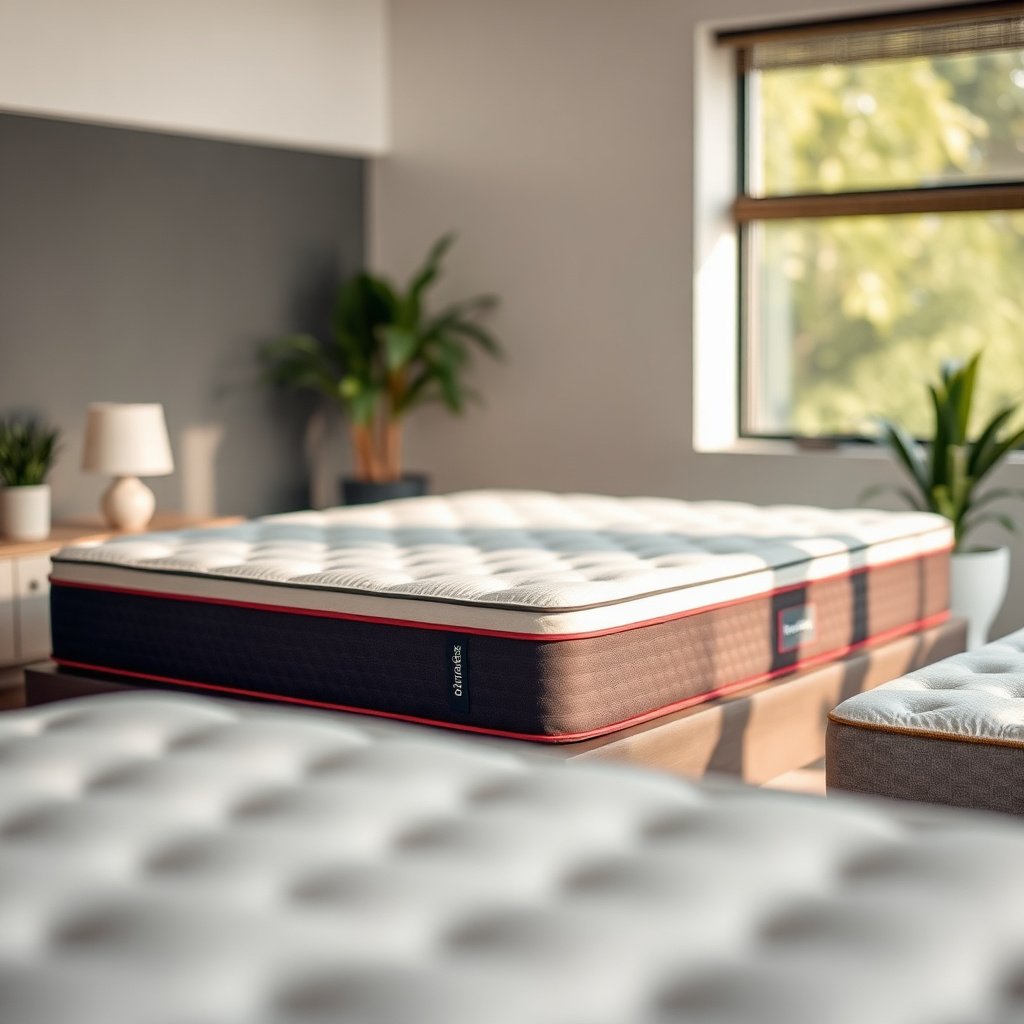
The best reviewed mattress for you should align with your sleep position’s biomechanics—pressure relief for side sleepers, spinal alignment for back sleepers, and reduced hip sink for stomach sleepers. Reviews often sound subjective, but the “right” keywords are very specific.
– Side sleepers: you generally need pressure relief near the shoulders and hips without excessive “bottoming out.” In reviews, watch for phrases like “shoulders sink in just enough” and “hips are supported,” plus consistent notes about not feeling the mattress “roll under” mid-sleep.
– Back sleepers: the key is spinal alignment and lower-back support. If multiple reviews say the lumbar area “sinks,” “doesn’t stay level,” or “arches get worse,” that’s usually a sign the comfort layer is too soft relative to the support core.
– Stomach sleepers: you typically want less sink so the hips don’t collapse. Reviews mentioning “floating,” “stays up under my hips,” or “not too soft” are common indicators that the comfort layer isn’t allowing excessive pelvic drop.
From my own mattress-shopping experience (tracking return outcomes and reading long-form review comments, not just star averages), the biggest “surprise” isn’t comfort—it’s mismatch. People buy based on what the mattress felt like in a quick store test (or on someone else’s review), but at home the body settles and the comfort layer behavior over a full night matters more than first impressions.
Compare mattress types using the specs reviewers reference
The right mattress type usually explains why certain review complaints (heat, motion transfer, edge sink, or sagging) show up repeatedly. Instead of trusting marketing names, use the construction details reviewers and manufacturers actually discuss.
Here’s a practical way to connect “feel” to layers:
– Memory foam vs. latex vs. hybrid/innerspring: construction drives feel. Memory foam tends to contour; latex tends to be more buoyant; hybrids often balance contour with support from coils.
– Look at layer thickness and placement: the comfort layer thickness (and its material type) strongly influences pressure relief and perceived sink. Transition and support layers often influence durability, edge stability, and how quickly the mattress “reclaims” after pressure.
– Validate “cooling” claims: “cooling” can come from cover fabric, airflow design, or foam formulation—not just a marketing label. If reviewers mention sleeping hot, confirm what the manufacturer says about the cover and airflow features (and how the internal layers are built).
As a validation step, focus on documentation and compliance claims when the mattress makes material safety promises. For example, if a mattress advertises foam certification, those programs define emissions thresholds in ways you can actually check:
– According to CertiPUR-US program requirements, total VOC emissions are limited to ≤ 0.5 mg/m³ (reported criterion for certified foams) (latest criteria published in the program’s official documentation).
– According to CertiPUR-US criteria, formaldehyde emissions are limited (reported criterion for certified foams) (as defined in the program documentation).
– According to OEKO-TEX Standard 100 documentation, textiles are assessed against regulated substance requirements (Standard 100 outlines the testing framework) (latest program documentation).
Construction-to-feel comparison (what reviews usually reflect)
| Mattress type | Common construction traits (what to verify) | Review themes you’ll often see | Best-fit sleepers |
|---|---|---|---|
| Memory foam | Comfort layer designed for contouring; support core designed for recovery | “Cradles,” “pressure relief,” sometimes “sleeps warm” or “slow bounce” | People who want close contouring and low partner disruption |
| Latex (all-latex or latex hybrids) | Comfort and/or transition layers emphasizing buoyancy and resilience | “Bouncy,” “easier to move,” often better temperature neutrality | People who want pressure relief without “stuck” feeling |
| Hybrid (foam + coils) | Coil support for airflow and responsiveness; foam/comfort layers for pressure | “Supportive but not harsh,” “cooler than full foam,” sometimes “edge still sinks” | Sleepers balancing alignment, motion control, and cooling |
| Innerspring / poly-foam comfort | More responsive surface; comfort layer often thinner than foam-first designs | “Bouncy,” “keeps me on top,” sometimes less deep contour relief | Hot sleepers or those who dislike “hugging” foam |
Seven Mattress Material Programs/Standards That Influence “Review-Backed” Expectations (As of 2026)
| # | Program / Standard | Founded | Primary focus | Years active (2026) |
|---|---|---|---|---|
| 1 | ASTM International | 1898 | Material testing standards | 128 |
| 2 | OEKO-TEX® Standard 100 | 1992 | Textile chemical safety testing | 34 |
| 3 | CertiPUR-US® | 2008 | Foam emissions and chemical restrictions | 18 |
| 4 | GREENGUARD Gold | 2001 | Low-emitting materials (indoor air quality) | 25 |
| 5 | Global Organic Textile Standard (GOTS) | 2006 | Organic fibers and processing requirements | 20 |
| 6 | Global Organic Latex Standard (GOLS) | 2010 | Organic latex sourcing and processing | 16 |
| 7 | Forest Stewardship Council (FSC) | 1993 | Forestry stewardship and chain of custody | 33 |
This type of program-to-spec cross-check helps you turn “best reviewed mattresses” into a buying decision you can justify. Reviews tell you what customers notice; certifications and standards help you confirm what the materials claim to do.
What to check in reviews beyond comfort
The best reviewed mattresses tend to have “repeatable” performance traits in the areas that people notice after the honeymoon period: motion, heat, edges, and durability. When those traits show up consistently in reviews, you can predict your own likely experience.
– Motion isolation: scan for comments about partner disturbance and whether the mattress feels “lively” or “still.” If multiple reviews describe noticeable motion transfer, the mattress may not be right for couples or light sleepers.
– Heat retention: focus on repeated mentions of sleeping hot. Then connect the complaint to construction—some mattresses feel warmer because the comfort materials trap heat or because airflow inside the design isn’t robust.
– Durability signals: look for “still holding shape after ___ months/years” only when reviewers provide meaningful context (sleep position, body weight range, and whether they rotate/flip when applicable). Vague “it’s great” comments don’t give you a durability baseline.
If you notice a mismatch—like reviews praising cooling on paper but many buyers reporting heat issues—you’re better off trusting the buyer evidence and re-checking cover materials and internal airflow claims. In 2026, manufacturers increasingly publish layer-by-layer specs, which makes this verification step faster than it used to be.
A quick pros/cons reality check (review-first vs. spec-first)
| Approach | What it does well / what it misses |
|---|---|
| Review-first (pattern matching) |
Pros: catches “real life” issues (sleep temp, edges, partner movement) early. Cons: can mislead if reviewers differ from your sleep position/weight range or if you miss return-policy constraints. |
| Spec-first (construction verification) |
Pros: helps you predict feel and check certifications, warranties, and setup compatibility. Cons: can miss “comfort nuance” that only long-term sleepers notice. |
The best reviewed mattress strategy is combining both: reviews to shortlist, specs to confirm, and policies to protect your budget.
What can go wrong when relying on reviews
Even if a mattress is “best reviewed,” it can still be a poor fit. Most problems come from assuming that comfort ratings transfer cleanly across bodies, climates, and setups—and from ignoring policy details.
Common issues to watch:
– Different shopper profiles: “best” can mean the brand collected reviews from customer segments that aren’t like you.
– Return/trial differences: trial length and exchange rules can vary by region, size, or model configuration—verify before ordering.
– Setup compatibility: slat spacing, frame type, and whether the mattress sits on an approved foundation can change performance. An otherwise supportive mattress can feel saggy if the base flexes.
– Short-term ratings bias: comfort ratings often reflect immediate feel. If durability wasn’t tested for your time horizon, treat longevity comments as directional, not definitive.
If you want to reduce risk in 2026, treat reviews as directional inputs for a controlled shortlist—then rely on the manufacturer’s construction, warranty coverage, and return terms as your decision “tie-breakers.”
Verdict: how to pick a best-reviewed mattress without regretting it
The best reviewed mattresses are only truly “best” when they fit your body, sleep position, and temperature/pressure needs—and when the warranty and returns back you up. Use reviews to find 2–3 candidates that consistently match your sleep style, then confirm the build quality with the manufacturer’s materials, warranty, and return terms before you buy.
Downsides: if you’re extremely sensitive to a specific feel (very firm, very bouncy, or no contouring), reviews can still conflict—especially when firmness ratings are subjective. You should also skip this review-first method if you can’t access a meaningful trial period, or if you already know you don’t tolerate a key construction type (for instance, you prefer buoyant support and tend to dislike deep contouring from certain foams).
Quick scan checklist (save this):
| What to check | What you’re looking for |
|---|---|
| Sleep position | Reviews match your side/back/stomach needs (alignment + pressure) |
| Firmness fit | Consistent notes on “too soft” vs “too firm” for people like you |
| Temperature | Repeated mentions of sleeping hot/cold and what seems to help |
| Motion transfer | Comments about partner movement and edge-to-center stability |
| Warranty + returns | Clear coverage and a real path to exchange/return |
| Base compatibility | Slat/foundation guidance that matches your setup |
Sources
– Manufacturer spec sheets and product pages for each mattress you shortlist (materials, construction layers, certifications, and dimensions)
– Manufacturer warranty documents and return/exchange policy pages (read the terms before ordering)
– CertiPUR-US official documentation for foam-related emissions/standards: CertiPUR-US program requirements/criteria page https://certipur.us/criteria/
– OEKO-TEX official documentation for textile safety standards (if the mattress cover claims it): OEKO-TEX Standard 100 overview and framework https://www.oeko-tex.com/en/standard-100
The “best reviewed mattresses” are only truly best when they fit your body, sleep position, and temperature/pressure needs—and when the warranty/returns back you up. Shortlist a few models based on repeated review themes, then verify the specs and policies on the manufacturer site before you buy. If you want, tell me your sleep position, approximate weight range, and whether you run hot—I’ll help you turn those requirements into a tighter checklist for choosing from the top-reviewed options.
Frequently Asked Questions
What are the best reviewed mattresses for side sleepers?
The best reviewed mattresses for side sleepers are typically medium to medium-firm, because they balance pressure relief for hips and shoulders with enough support to keep the spine aligned. Look for models with responsive foam, gel memory foam, or comfort layers designed to reduce sink and prevent lower-back pain. Checking review themes for “shoulder comfort,” “no hip sink,” and “spine alignment” can help you identify genuinely well-reviewed options.
How do I choose among the best reviewed mattresses for back pain?
For back pain, focus on mattresses with supportive core construction and a comfort layer that doesn’t let your lower back sag. Many of the best reviewed mattresses for back pain lean medium-firm or firm, and use a supportive foam system or pocketed coils to maintain alignment. In reviews, prioritize keywords like “lumbar support,” “pressure relief,” and “stays comfortable after months,” since long-term performance matters for pain issues.
Why do best reviewed mattresses feel different after a few weeks?
Many shoppers notice that mattresses initially feel firmer or more “stiff” before materials soften slightly and conform to body shape. Foam-based beds often require a break-in period as comfort layers adjust, while coil mattresses may feel more immediate but can still stabilize over time. Reading reviews that mention “break-in,” “temperature changes,” and “sleeping positions after two weeks” can set realistic expectations.
Which mattress is best reviewed for hot sleepers: memory foam or latex?
For hot sleepers, the best reviewed mattresses often include cooling features like breathable covers, gel-infused comfort layers, or airflow-focused designs. Latex tends to stay cooler than traditional memory foam because it’s more breathable and doesn’t trap heat as strongly. If you prefer memory foam, choose models with reputable cooling tech and look for reviews citing “temperature control,” “stays cool,” and “no night sweats.”
What firmness level is best in the best reviewed mattresses for couples?
Couples usually benefit from medium to medium-firm mattresses because they provide broad support across sleeping positions while maintaining comfort for both partners. If one sleeper is heavier or sleeps on their side while the other sleeps on their back, best reviewed mattresses that offer good motion isolation and stable edge support can reduce partner disturbance and improve shared usability. When comparing options, use reviews to check for “motion transfer,” “edge support,” and how the mattress performs for multiple sleep positions.
📅 Last Updated: November 01, 2026 | Topic: best reviewed mattresses | Content verified for accuracy and freshness.
References
- https://www.mayoclinic.org/healthy-lifestyle/adult-health/in-depth/mattress/art-20046221
- Mattress
- https://www.britannica.com/topic/mattress
- About Sleep | Sleep | CDC
- How Sleep Works – How Sleep Works | NHLBI, NIH
- How To Choose a Mattress for Better Sleep
- https://pubmed.ncbi.nlm.nih.gov/?term=mattress+firmness+low+back+pain+systematic+review
- https://scholar.google.com/scholar?q=mattress+firmness+low+back+pain+systematic+review Google Scholar
- https://scholar.google.com/scholar?q=mattress+replacement+time+study Google Scholar
- https://scholar.google.com/scholar?q=mattress+material+sleep+quality+randomized+trial Google Scholar