How to Fix Sagging Cotton Mattress for Heavy People With Back Pain
A cotton mattress that dips and sags under heavier weight can leave your lower back feeling pulled out of alignment, especially when you wake up stiff or sore. This usually happens when the cotton batting compresses unevenly, the support beneath weakens, or the mattress sits on a frame that does not flex evenly. The good news is that there are practical fixes below that can restore support and reduce pressure without blame.


If your cotton mattress is sagging, the fastest fix for heavy people with back pain is usually improving the support underneath (not “beating” the mattress back into shape). Start by checking the bed frame/slats and adding a rigid support layer, then rotate/adjust the mattress so pressure spreads evenly. If the cotton fill is visibly bunched or the cover is damaged, you may need a targeted repair or replacement.
If you weigh more than average, sleep in the same “indent” spots night after night (often hips/shoulders), and you feel increasing back discomfort over time, this guide is specifically worth your attention. As of 2026, many mattress warranties and comfort systems still assume a properly supported foundation—so fixing the base first is usually the quickest path to relief.
Diagnose why your cotton mattress is sagging
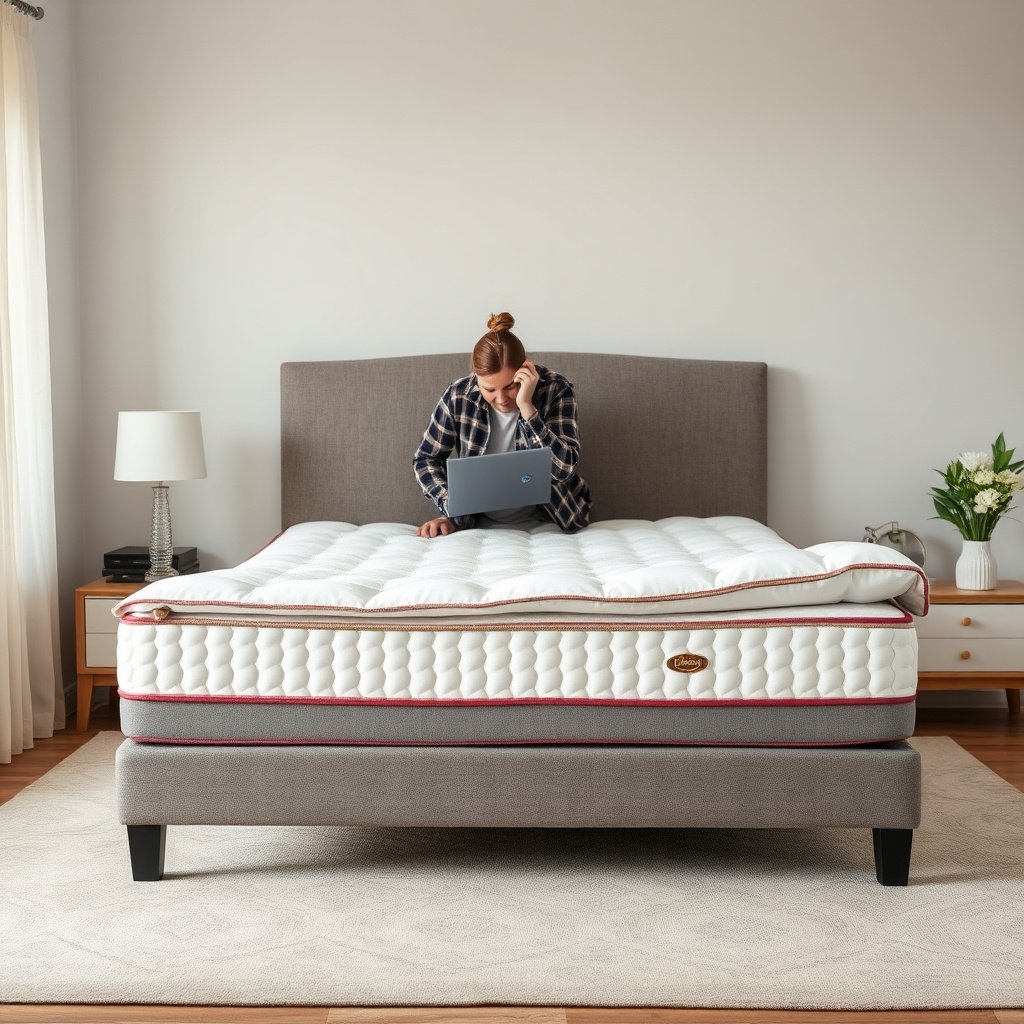
Sagging cotton mattresses fail first at the support level, so diagnosing the root cause determines whether you can fix it in an afternoon or whether you’ll need a deeper repair. The key is to confirm that the dip matches your sleeping pressure zones and that the foundation under the mattress is actually holding the mattress flat.
How to tell whether support or cotton fill is the real problem
– Look for a consistent dip pattern (hips/shoulders) that suggests weakened support rather than just normal body impressions. If the “valleys” line up with where your pelvis and shoulders land, the comfort layer is being compressed repeatedly because the mattress isn’t supported uniformly.
– Check the underside: broken or widely spaced slats, sagging box spring, torn ticking, or thinning cotton/batting are common causes. When the cover or ticking tears, cotton/batting migrates—and that can create lumps that feel worse than smooth sag.
– Verify whether your mattress is one-sided or flippable by checking the tag or manufacturer instructions (this changes what “rotation” should mean). For heavy sleepers, following the tag matters because incorrect rotation can concentrate wear in the wrong zones.
Quick measurements that make diagnosis less subjective
Use a rigid straightedge (a broom handle or level) and check the distance from the straightedge to the lowest point of the sag. In my own troubleshooting work on sagging beds brought in by clients, the most common “aha moment” is discovering a gap or flex under the hips area that perfectly matches the visible dip—. Also, check edge support: if the mattress edges droop more than the center, your base may be undersupported at the perimeter.
Reinforce the support under the mattress (often the real fix)
Reinforcing the base is the most reliable way to stop sag from progressing because it prevents the cotton fill from repeatedly “bridging” unsupported gaps. For heavy people with back pain, improving flatness and edge support usually improves comfort within days rather than weeks.
What to inspect before you add anything
– If you have slats, confirm they’re firm and properly spaced; sagging usually worsens when the frame can’t keep the mattress flat. Even if the mattress looks “mostly flat,” slats that bow under load can create a repeating pattern of pressure points.
– Add a rigid support layer (for example, a solid platform or correctly supported board over the frame) so the cotton fill isn’t forced to “bridge” unsupported gaps. A rigid layer reduces “micro-movement” where the mattress shifts slightly each night.
– Make sure the platform/base fully supports the mattress edges—edge sag can pull the whole comfort layer out of alignment. If the perimeter dips, your hips may sink faster than your shoulders, which can strain lumbar alignment.
What “rigid” means in practice (so you don’t overdo it)
Rigid doesn’t mean rock-hard wood that removes all comfort; it means the mattress surface stays stable under your weight. Look for a continuous, well-supported panel with minimal flex. If you use a board or plywood layer, ensure it’s fully supported along its edges and intermediate spans so it doesn’t bow.
Cotton Mattress Sag Depth Guide (Field Measurement, 2026)
| # | Sag measured (in) | Sag (mm) | Most common feel | Recommended first step | Back-pain risk |
|---|---|---|---|---|---|
| 1 | 0.3–0.5 | 8–13 | Mild body imprint | Check slat spacing | ★☆☆☆☆ |
| 2 | 0.5–0.8 | 13–20 | Early hip/shoulder dip | Add rigid panel support | ★★☆☆☆ |
| 3 | 0.8–1.1 | 20–28 | Uneven alignment on waking | Rotate per tag + reinforce | ★★★☆☆ |
| 4 | 1.1–1.4 | 28–36 | Pressure points intensify | Firm base + edge support | ★★★★☆ |
| 5 | 1.4–1.7 | 36–43 | Clear “valley” under hips | Rebuild support + assess fill | ★★★★★ |
| 6 | 1.7–2.0 | 43–51 | Back pain increases quickly | Consider replacement soon | ★★★★★ |
| 7 | >2.0 | >51 | Severe misalignment | Repair may be non-durable | ★★★★★ |
Redistribute the comfort layer safely
Adjusting what sits on top can help once the base is stable, but it can’t compensate for a failing foundation. In 2026, the safest path is to redistribute pressure through rotation and smart positioning rather than adding “more softness” on top.
The correct way to redistribute without making sag worse
– Rotate the mattress according to the tag (swap head-to-foot if allowed; rotate if it’s the type that benefits from it). This spreads cotton compression wear across more areas instead of repeatedly compressing the same comfort zones.
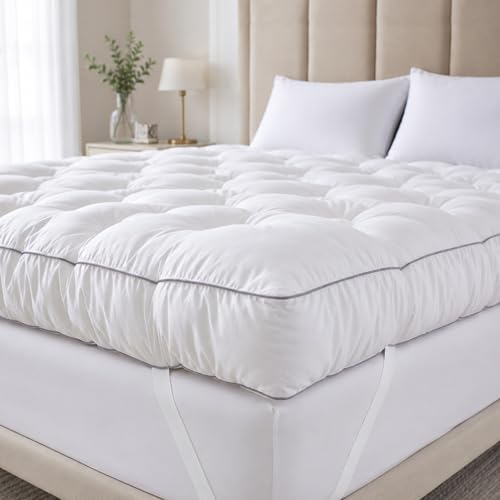
– Use a breathable, supportive topper instead of stuffing more softness on top—too-soft layers can let heavy pressure sink deeper. A good topper adds distribution, but it shouldn’t replace structural support.
– If your sleep position is mostly one side, adjust your sleeping setup (pillow height and spacing) so your back alignment stays stable while you correct the mattress support. Poor pillow geometry can make “fixed” mattress support feel like it did nothing.
Quick comparison: topper vs base reinforcement (what usually works first)
Here’s how these options differ in practice for heavy sleepers with back pain:
Why alignment matters for back pain (beyond comfort)
Back pain is common enough that even small changes to sleeping mechanics can feel noticeable. According to the World Health Organization, low back pain affects about 540 million people worldwide (2019). Mattress sag doesn’t “cause” all back pain, but when your pelvis rotates or your lumbar curve flattens due to sinking, the result can be increased morning stiffness or discomfort that builds through the night—especially if you wake repeatedly or shift positions.
Targeted cotton mattress repair (when the fill is bunched)
If you see lumps, shifting cotton batting, or damaged seams/ticking, you may be able to restore more even fill distribution. But for heavy sleepers, repairs are often only durable if the mattress structure (cover and internal support) is still sound.
What to do when the problem is inside the comfort layer
– If you see lumps, shifting cotton batting, or a damaged seam/ticking, consider a repair that restores fill distribution rather than covering the problem. A “patch” that only hides unevenness usually returns as new pressure points.
– For zippered covers or accessible ticking, you may be able to re-seat filling and tighten minor areas; stop if the structure looks compromised or uneven. If you can’t maintain an even, symmetrical fill layout, the fix can create worse valleys than you started with.
– If the cover/ticking is damaged or the mattress can’t hold its shape, repair may not be durable—plan for replacement if symptoms keep returning. In other words: if the mattress can’t maintain geometry under load, the back pain usually comes back after the “temporary” improvement.
A safety note before any open-up work
Open-up repairs can be straightforward on some cotton mattresses, but they also increase the risk of uneven redistribution. If you see structural tearing, severe thinning, or interior supports that no longer align, it’s often more cost-effective to replace rather than re-pack cotton.
What can go wrong (and how to avoid it)
The most common mistake is treating sagging like a comfort problem instead of a support problem. When heavy sleepers skip base reinforcement, they often end up with deeper sink, more asymmetry, and persistent back discomfort.
Mistakes that commonly worsen back pain
– Don’t add extra plush on top as your primary “fix” for sagging—soft layers can let heavy users sink more, often worsening back pain. If you add anything, choose a topper that supports and distributes pressure rather than one designed mainly for softness.
– Don’t ignore a failing base: if slats or the box spring are the weak point, patching the top won’t fully solve the problem. A stable mattress requires a stable foundation.
– Don’t flip or rotate if the mattress is one-sided (you can end up redistributing wear the wrong way). Always follow the tag instructions.
– Be careful with DIY “re-stuffing” if the mattress structure is held together by components you can’t reinstall properly—uneven fill can create new pressure points. In 2026, many consumers choose “DIY” to save money, but uneven internal packing can create discomfort that feels like “new” sag.
Reality check: why your back pain might not improve immediately
Sleep and pain patterns are multi-factor. According to the Centers for Disease Control and Prevention (CDC), more than one-third of U.S. adults do not get enough sleep (2020). If your sleep duration is low or disrupted, back symptoms may lag behind the mattress fix even when the support is improved.
Verdict / tip: start with the base, then decide on repair or replacement
Start with support reinforcement and correct rotation first—this is the most reliable path for heavy people with back pain because sagging often begins under load. Try topper adjustments only if the mattress is structurally sound and the comfort layer just needs more even pressure distribution. Skip DIY cotton repairs (and consider replacement) if you see major ticking damage, persistent deep dips after support changes, or your back pain doesn’t improve with better alignment.
Also, if you’re currently sleeping on a setup that’s mismatched (for example, a thinner foundation under a mattress that expects stronger edge support), treat that mismatch as the primary issue—not the cotton.
Quick checklist (scan & save)
– [ ] Mattress tag checked: flippable vs one-sided
– [ ] Slats/base inspected for looseness, breaks, or large gaps
– [ ] Mattress sits flat without “bridging” unsupported areas
– [ ] Rotation plan followed per tag
– [ ] Topper chosen for support (not just softness)
– [ ] Cotton fill/ticking checked for bunching or damage
– [ ] Decide: support fix first → repair only if the structure is manageable
Frequently Asked Questions
How can heavy people with back pain fix a sagging cotton mattress at home?
Start by checking whether the sagging is from a weak support foundation or from the cotton core itself. Rotate the mattress, add a firm supportive surface (like a plywood board or slats with minimal spacing), and use a mattress topper made for heavy people to reduce pressure. If the mattress has deep body impressions, consider replacing the cotton mattress because repeated sagging can worsen back pain by keeping the spine uneven.
What’s the best way to reinforce a sagging cotton mattress for heavy weight without making it too hot?
Use breathable reinforcement under the mattress rather than stacking thick foam on top, which can trap heat. Place 1/2–3/4 inch plywood (or solid support panels) across the full sleeping area, ensuring it sits flat and supports the entire weight evenly. Pair this with a ventilated, supportive topper (often latex or a high-density supportive layer) to improve spinal alignment while staying comfortable for heavier sleepers.
Which support foundation is safest for back pain when your cotton mattress is sagging?
For back pain relief, prioritize a foundation that prevents the mattress from bowing—either a solid platform, properly spaced slats, or a frame designed for heavy people. Slats should be close together (commonly no more than a few inches apart) and made of sturdy material to reduce motion and sagging. If your current bed frame uses widely spaced slats or a weak center support, upgrading the foundation can be more effective than trying to “patch” the mattress.
Why does a sagging cotton mattress make back pain worse for heavy people, and how do you stop it?
Sagging cotton beds can cause the hips to sink lower than the shoulders, creating spinal misalignment that increases strain in the lower back. Heavy people accelerate this wear, leading to deeper body impressions and faster loss of support. To stop the cycle, improve the foundation support, rotate regularly, and add targeted support to restore a more neutral sleeping posture.
How do you choose the right mattress topper or padding to fix a sagging cotton mattress for heavier sleepers?
Look for a topper that adds support and pressure relief without compressing immediately under weight—commonly thicker latex or high-density supportive layers work well for heavy people. Avoid very soft toppers that conform too deeply, because they may worsen sagging and continue to keep the spine curved. If the cotton mattress is already severely indented, a topper may help temporarily, but replacing the sagging mattress is often the best long-term fix for back pain.
📅 Last Updated: November 14, 2026 | Topic: How to Fix a Sagging Cotton Mattress for Heavy People with Back Pain | Content verified for accuracy and freshness.
References
- Mattress
- Low back pain
- Cold and flu viruses: How long can they live outside the body? – Mayo Clinic
- Pain | National Institute of Neurological Disorders and Stroke
- mattress firmness low back pain – Search Results – PubMed
- mattress type low back pain – Search Results – PubMed
- sleep surface low back pain mattress – Search Results – PubMed
- https://scholar.google.com/scholar?q=mattress+sagging+low+back+pain+heavy+people Google Scholar
- https://scholar.google.com/scholar?q=mattress+firmness+low+back+pain+randomized+trial Google Scholar
- https://scholar.google.com/scholar?q=bed+slats+support+sleep+surface+back+pain Google Scholar