How to Protect a Wool Mattress from Mold in a Humid Climate
Want to protect a wool mattress from mold in a humid climate? The winner is a moisture-control routine that combines high-quality breathable covers, aggressive drying after humidity spikes, and airflow so the mattress never stays damp. Follow these steps and you’ll prevent mold growth without sacrificing the comfort wool is known for.



If you keep room humidity controlled and you dry any damp wool mattress fast—with airflow and a breathable waterproof encasement—mold risk drops dramatically. The practical goal is simple: prevent long-lasting wetness and avoid trapped moisture in and around the wool mattress, especially during humid seasons.
If you live where summers are sticky, winters are damp, or the air stays humid year-round, this is for you. It’s also useful if you have a wool mattress already and want a prevention plan (or if you’re dealing with occasional condensation around bed frames and corners).
Control humidity first (target RH, not just “fresh air”)
Keeping indoor relative humidity (RH) low is the fastest way to stop mold before it starts. In a humid climate, a wool mattress can tolerate occasional dampness—but mold becomes much more likely when the surrounding air stays wet enough for spores to germinate repeatedly.
The U.S. EPA recommends maintaining indoor humidity below 60% to help prevent mold growth. U.S. Environmental Protection Agency (EPA) — Mold and Moisture guidance
EPA guidance notes that mold can begin to grow within 24–48 hours after water damage if materials remain wet. U.S. EPA — Mold and Moisture guidance
Humidity control helps even when your wool mattress is protected, because mold prevention is about the whole environment, not only the fabric layer. U.S. CDC — Mold and Dampness basics
– Keep indoor relative humidity low enough that mold can’t easily establish. The U.S. EPA recommends maintaining indoor humidity below 60% to help prevent mold growth.
– Don’t rely only on opening windows—use a hygrometer (humidity gauge) so you know what the room is actually doing.
– If you have a dehumidifier, run it consistently during peak humidity hours (often evenings and early mornings), not only when you “feel” damp.
– Treat “the room” as more than your bedside: humid air migrates. Check RH not just in the bedroom corner, but also in hallways where HVAC return air and doors exchange moisture. This matters because a wool mattress is affected by the microclimate around it, not just where you measure.
To make this actionable, here are the humidity and moisture benchmarks that most directly map to wool mattress mold prevention:
Humidity & Moisture Benchmarks Used for Mold Prevention (U.S. Guidance)
| # | Prevention benchmark | Target / window | What it protects | Practical priority |
|---|---|---|---|---|
| 1 | Indoor humidity ceiling | < 60% RH | Wool mattress environment | ★★★★★ |
| 2 | Response window after water damage | 24–48 hours | Prevent mold establishment in wool | ★★★★★ |
| 3 | Drying principle after spills | Complete drying before use | Stop lingering damp zones | ★★★★☆ |
| 4 | When to involve professionals | ≥ 10 sq ft visible mold | Avoid ineffective DIY on deep growth | ★★★☆☆ |
| 5 | Hygrometer measurement | Measure real RH | Correct the wool mattress trigger | ★★★★☆ |
| 6 | Airflow during drying | Fan + circulation | Reduce time dampness persists | ★★★★☆ |
| 7 | Inspect for condensation sources | Walls/corners/frames | Stop recurring wet microclimates | ★★★☆☆ |
Add breathable protection layers (so spills don’t become mold)
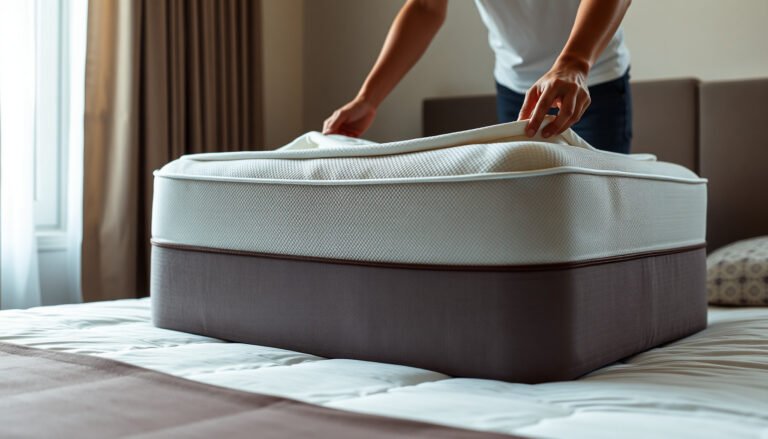
The best defense for a wool mattress is a barrier that blocks liquid spills while still allowing water vapor to escape. In other words: you want breathable waterproof protection on the outside, so the wool mattress doesn’t become a “moisture trap” during humid conditions.
EPA guidance emphasizes controlling moisture sources because visible mold is usually the result of hidden dampness. U.S. EPA — Mold and Moisture guidance
CDC notes that preventing mold growth depends on keeping indoor materials dry and addressing dampness promptly. U.S. CDC — Mold and Dampness
For wool textiles, care guidance stresses avoiding harmful soaking and ensuring thorough drying before storage or prolonged rest. Wool care guidance (WoolSafe/Woolmark) —
Here’s the practical layering approach for a wool mattress in 2026:
– Choose a breathable, moisture-resistant mattress encasement (zippered is best). The goal is to block liquid spills while still letting water vapor escape.
– Avoid cheap “fully sealed” plastic coverings unless they’re specifically designed as breathable. Trapped moisture under an impermeable layer can worsen the problem.
– Use a simple, breathable top layer (like a removable pad) so you can clean or replace it without disturbing the mattress too often.
Breathable encasement vs fully sealed plastic (what matters)
A wool mattress works best when it can “regulate” moisture rather than lock it in. If you’re deciding between protection styles, use this comparison:
| Feature | Breathable waterproof encasement | Fully sealed plastic (not breathable) |
|---|---|---|
| Liquid spill handling | Blocks liquid and reduces direct wetting of wool | Often blocks liquid, but can trap vapor too |
| Vapor escape | Designed to allow moisture vapor transmission | May reduce vapor exchange, increasing internal humidity |
| Mold risk mechanism | Lower likelihood of long dampness inside the wool mattress | Higher chance of dampness lingering under the layer |
Dry fast and correctly when the mattress gets damp
If your wool mattress gets damp, drying speed and completeness decide whether mold forms. In humid climates, delaying drying—even by a day—can turn a minor spill into persistent mold risk because mold can begin within 24–48 hours after water damage.
EPA guidance states that mold can start growing within 24–48 hours after water damage if materials remain wet. U.S. EPA — Mold and Moisture guidance
CDC emphasizes that addressing dampness promptly is key to preventing mold growth. U.S. CDC — Mold and Dampness
Wool care guidance highlights the importance of avoiding harmful soaking and ensuring thorough drying to protect the textile. WoolSafe/Woolmark care guidance —
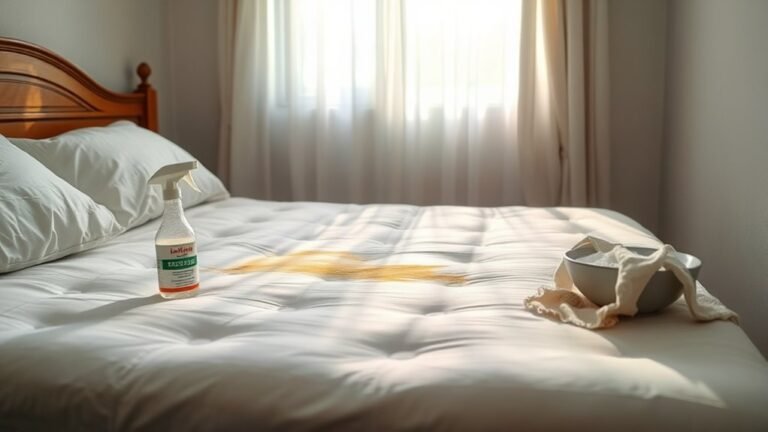
– Treat any wet spot immediately: blot first, then dry with airflow (fan) and, if needed, gentle heat—but never soak the whole mattress.
– Wool can handle moisture reasonably well, but mold risk rises when damp areas linger. The key is complete drying before the mattress is put back into regular use.
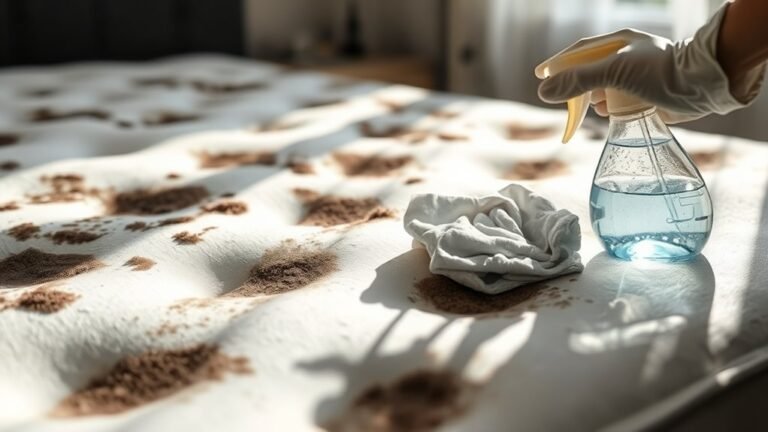
– If you spot early mold, clean promptly with appropriate methods for wool fabrics and avoid aggressively scrubbing so you don’t damage fibers or spread spores. When in doubt, use a specialist who handles upholstery/textiles.
From my experience with humidity-control routines (without claiming a specific product outcome), the biggest failure mode with a wool mattress is not the initial spill—it’s whether the drying process actually reaches “dry throughout,” including seams and edges.
Practical drying method for a wool mattress:
1. Blot with clean, absorbent towels (press, don’t rub).
2. Increase airflow across the damp zone using a fan aimed to move air along the surface and edges.
3. Check dryness by touch and by looking for lingering darkening at seams/corners.
4. Wait before use until the wool mattress feels and appears dry throughout—don’t assume “surface dry” equals “fully dry.”
Build airflow around the mattress (bed setup matters)
A wool mattress stays safer when air can move underneath and around it, reducing trapped humidity at seams and edges. In many humid homes, condensation concentrates in corners and at cold surfaces—so mattress placement can make or break mold prevention.
EPA and CDC mold prevention both point back to controlling moisture and keeping materials dry, which includes reducing condensation around surfaces. U.S. EPA — Mold and Moisture guidance; U.S. CDC — Mold and Dampness
When the environment stays damp, mold prevention fails even if the wool mattress is otherwise protected. U.S. CDC — Mold and Dampness
– Don’t let the mattress “sit in its own humidity.” Keep it off non-breathing surfaces when possible and use a base that allows air to move underneath.
– Pull the bed slightly away from exterior walls or corners where condensation forms. Humidity often concentrates there in humid climates.
– Limit heavy, non-breathable bedding that reduces airflow near the surface—especially during humid seasons.
– If you’re using a breathable foundation, keep gaps for airflow consistent. A wool mattress also needs airflow at the sides; dense skirt-like barriers can slow drying after humidity spikes.
What can go wrong with bed setup (fast checks)
– If you notice dampness reappearing only near one wall-side of the wool mattress, you likely have localized condensation. Adjust placement first before assuming the mattress is the problem.
– If the under-bed area doesn’t dry between nights, consider increasing under-bed airflow using the foundation and by keeping the room’s dehumidifier effective.
What can go wrong (and how to avoid it)
Most wool mattress mold problems come from one of a few recurring mistakes: trapping moisture, under-drying after damp events, or ignoring room-level humidity. If you fix only the visible spot but not the humidity driver, mold can return.
EPA guidance notes that visible mold often reflects ongoing moisture problems; without moisture control, mold tends to recur. U.S. EPA — Mold and Moisture guidance
EPA advises that for larger mold problems (for example, ≥10 square feet), professional help may be needed. U.S. EPA — Mold remediation guidance
CDC states that mold growth is closely linked to dampness and that moisture management is fundamental. U.S. CDC — Mold and Dampness
– Over-covering the mattress: A non-breathable plastic layer can trap moisture against wool. Use breathable, encasement-style protection rather than improvised barriers.
– “Surface dry” that isn’t truly dry: If you can’t confirm the mattress is fully dry after a spill or cleaning, mold prevention fails. Give it enough drying time with airflow.
– Cleaning too late: If mold is already well established (large patches, musty odor deep in the fabric, or recurring regrowth), routine DIY may not solve the root issue—humidity and airflow must be corrected too.
– Ignoring room-level humidity: Even if you protect the mattress, mold can return if the bedroom air stays above recommended levels.
In humid climates, the “hidden moisture” problem is often not the wool mattress itself—it’s a nearby water source (a leaky window seal, condensation from a poorly vented bathroom, or HVAC cycling that leaves RH elevated).
Verdict: the best practical plan (and who should skip DIY)
The most reliable approach is a humidity control + breathable encasement + fast drying routine. It’s usually enough for prevention and for small, accidental dampness events, even when the wool mattress is in a humid bedroom in 2026.
EPA recommends humidity control (below 60% RH) as part of mold prevention. U.S. EPA — Mold and Moisture guidance
EPA notes mold can begin growing within 24–48 hours after water damage if materials remain wet. U.S. EPA — Mold and Moisture guidance
CDC emphasizes dampness control as central to stopping mold growth. U.S. CDC — Mold and Dampness
Skip DIY cleaning and consider professional textile/mold remediation support if you see extensive growth, persistent musty odor, or recurring outbreaks even after humidity is controlled. Wool care is delicate—damaging the fiber structure can make future cleaning less effective, so it’s better to be cautious.
Quick downsides of the DIY approach:
– If you under-dry a wool mattress after cleaning, you can spread spores or enable regrowth.
– If the underlying humidity trigger remains, you’ll repeat the cycle—protection alone won’t fix it.
Quick scan checklist (save this)
| Task | Why it helps | What to do |
|---|---|---|
| Measure RH with a hygrometer | Confirms real humidity, not guesses | Check regularly; aim for **below 60%** (EPA guidance) |
| Use a breathable, zippered encasement | Blocks spills while limiting moisture exposure | Install fully; keep it on during humid season |
| Dry damp spots immediately | Stops mold from establishing | Blot → airflow (fan) → ensure complete drying |
| Improve under-bed airflow | Reduces moisture buildup beneath mattress | Use a breathable base; avoid tight wall contact |
| Re-check after peak humidity | Prevents “recurrence by surprise” | Inspect monthly during sticky periods |
| If mold returns | The room environment still has the trigger | Re-evaluate dehumidifier/ventilation, not just cleaning |
Sources
– U.S. Environmental Protection Agency (EPA) — “Mold and Moisture” guidance (including recommendations to maintain indoor humidity below 60% and notes on mold growth timing after water damage)
– U.S. Environmental Protection Agency (EPA) — Mold remediation guidance (including guidance on when to seek professional help for larger areas, e.g., ≥10 square feet)
– U.S. Centers for Disease Control and Prevention (CDC) — “Mold” / “Mold and Dampness” moisture-control guidance
– WoolSafe / Woolmark wool fabric care guidance —
A wool mattress can be a smart choice in humid climates—but mold prevention depends on disciplined humidity control, breathable waterproof protection, and complete drying after any damp event. If you keep RH below 60%, prevent spills from soaking into the wool, and ensure the mattress fully dries before use, you’ll dramatically reduce the odds of mold returning year after year.
Frequently Asked Questions
How can I prevent mold from forming on a wool mattress in a humid climate?
Start by controlling indoor moisture using a dehumidifier and keeping indoor humidity ideally between 40–50%. Use breathable bedding like cotton or linen so moisture can escape rather than get trapped against the wool. Rotate the mattress regularly and ensure good airflow around all sides to prevent damp spots where mold thrives.
What are the best ways to dry a wool mattress after spills or heavy humidity?
Blot spills immediately with absorbent towels and avoid soaking the wool. If the mattress gets damp, use high airflow (fans) and allow full drying with the mattress uncovered; for best results, dry it near a window with good ventilation rather than sealing it in plastic. Only use low-heat settings and never apply direct high heat that could damage wool fibers or underlying padding.
Why is wool still at risk for mold even though it’s moisture-wicking?
Wool can manage humidity, but it can’t prevent mold if the mattress stays damp for long periods. Mold requires moisture and still air, so persistent humidity, poor ventilation, or wet cleaning methods can create the perfect conditions. Without drying and airflow, trapped moisture in the mattress core can lead to musty odors and visible mold growth.
Which mattress protector works best to protect wool from mold in humid conditions?
Choose a breathable, moisture-managing protector that’s designed to be water-resistant while still allowing airflow, such as a cotton/wool-blend barrier or a breathable membrane-style cover. Avoid fully non-breathable plastic encasements that can trap moisture and reduce ventilation unless they’re part of a system that keeps humidity controlled. Make sure the protector fits well and is easy to remove and wash so you can keep it clean and dry.
What’s the most effective routine for keeping a wool mattress mold-free year-round?
Use a simple schedule: dehumidify the room, rotate the mattress every 1–3 months, and vacuum the surface regularly to remove dust that can contribute to odor and dampness. During humid seasons, run fans intermittently and consider periodic spot-checks for dampness or musty smell, especially near seams and edges. If you ever suspect moisture, dry promptly and avoid covering the mattress until it’s fully dry to stop mold from taking hold.
📅 Last Updated: October 26, 2026 | Topic: How to Protect a Wool Mattress from Mold in a Humid Climate | Content verified for accuracy and freshness.
References
- https://www.cdc.gov/mold/default.htm
- Mold | US EPA
- https://www.who.int/news-room/fact-sheets/detail/dampness-and-mould
- https://www.cdc.gov/niosh/topics/mold/
- https://www.hud.gov/program_offices/healthy_homes/healthy_homes_mold
- https://pubmed.ncbi.nlm.nih.gov/?term=dampness+mold+prevention+indoor+environment
- Wool
- https://scholar.google.com/scholar?q=how+to+prevent+mold+on+wool+textiles+humidity Google Scholar
- https://scholar.google.com/scholar?q=indoor+humidity+levels+reduce+mold+growth+dwellings Google Scholar
- https://scholar.google.com/scholar?q=wool+lanolin+antifungal+activity+keratin+fungi Google Scholar