How to Return a Mattress Without the Box: Easy Steps
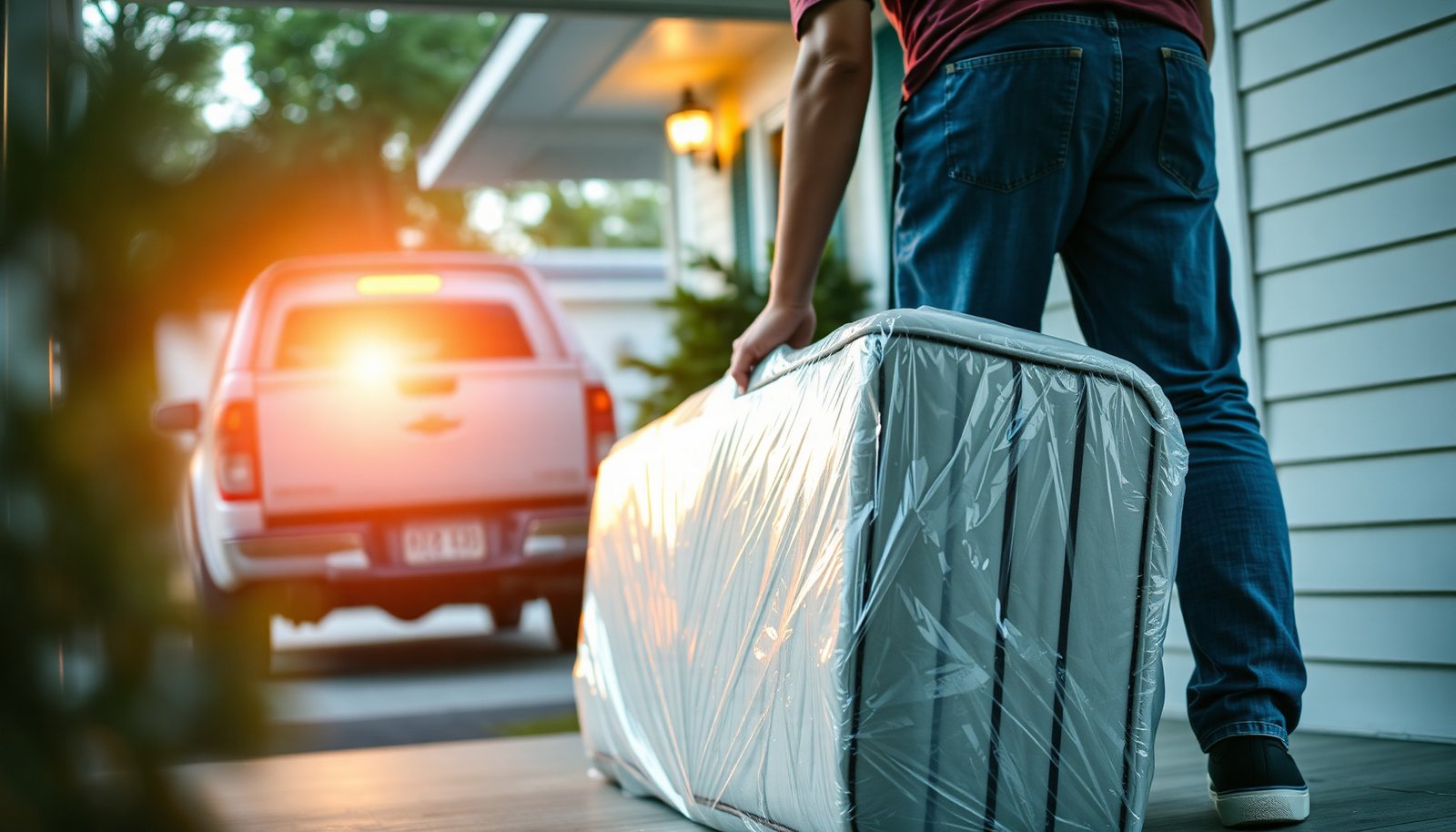
What do you do when you need to return a mattress but don’t have the box it arrived in? You can still complete the return by securing the mattress with protective plastic or moving wrap, locating your order details, and scheduling the pickup or drop-off the retailer requires. Plan about 30–60 minutes of prep, and gather wrap, tape, and any return labels before you start.



Returning a mattress without the original box is usually possible, but only if your retailer allows “no original packaging” returns and the mattress meets their condition standards. In most cases, you’ll protect it in a purpose-made mattress bag/cover (plus secure wrap/straps) and then schedule the return for pickup or drop-off exactly as instructed by the return portal. If you’re returning in 2026, double-check policy wording early—“box required” language is the difference between a smooth pickup and a denied return.
Returning a mattress without the box is usually possible, but you must follow the retailer’s return requirements first. In many cases, you’ll package it safely using a mattress bag/cover and straps, then schedule the return for pickup or a drop-off. This guide walks you through what to do so you don’t get stuck on packaging or condition issues.
If you’re past the delivery moment and don’t have the original shipping carton, the key is to confirm what your store or mattress brand accepts “without the box.” This is especially relevant for returns that involve pickup or donation/recycling options, where the company often has specific condition standards.
Check the return policy before you do anything
Before you attempt a no-box mattress return, confirm the retailer explicitly accepts returns without the original carton. If the policy allows it, you can proceed with protective bagging and documentation; if it doesn’t, you’ll need an alternative return route (or packaging solution) immediately.
Here’s what to do in practice for a no-box mattress return—especially in late 2026 when many portals have updated workflows:
– Find policy wording on the order page or return portal that says “no original packaging,” “box not required,” or similar language. Watch for phrases like “box required” or “original packaging only,” because those usually block no-box mattress returns at the eligibility stage.
– If the portal is vague, contact support and ask a direct yes/no question: “Do you accept a return without the original shipping carton if the mattress is in a sealed mattress bag with protective wrap?”
– Ask what condition matters most for your no-box mattress return: cleanliness (visible stains), odor (smoke, pets), structural damage (tears, broken seams), and completeness (any included accessories or base parts).
Why this matters: retailers often treat packaging and condition as one combined eligibility check. Even if the mattress is clean, a no-box mattress return can be rejected if the presentation doesn’t meet pickup requirements or if odor/stain rules are violated.
Prepare the mattress so it meets “return condition”
You can’t “out-package” a mattress that doesn’t meet return condition standards, so preparation comes first for any no-box mattress return. The goal is to restore an acceptable baseline: dry, clean enough, structurally intact, and ready for pickup without creating mess or damage.
For a no-box mattress return, follow a careful preparation workflow:
1. Strip everything: remove all bedding, protectors, and removable covers before you bag the mattress.
2. Clean only if needed: if there are light spots, follow the manufacturer’s cleaning instructions using a gentle method (typically spot cleaning with minimal moisture). Avoid soaking unless the brand explicitly allows it, because excess moisture can lead to odor or mold risk during transport/storage.
3. Dry fully: let the mattress air-dry completely before covering it. For a no-box mattress return, “dry to the touch” is not always enough—give it time to dry internally, especially if there was a spill or recent dampness.
4. Inspect and document: check seams, corners, handles, and quilting for tears, loose stitches, broken zipper pulls, or deep indentations. Record the current condition with photos/video so you can address any dispute during the no-box mattress return review.
If you’re unsure what “dry” means for your situation, aim for a conservative approach: a mattress should feel dry on top and sides and should not have any lingering damp smell before it goes into a sealed cover.
Quick comparison: what retailers typically check
A no-box mattress return is often evaluated against several common criteria. Use this list to pre-screen your own situation before scheduling pickup:
| What they check | Why it matters for no-box returns |
|---|---|
| Stains & visible soiling | Improperly cleaned mattresses may be treated as non-returnable. |
| Odor (smoke/pets/cooking) | Odor can’t be reliably “covered up,” even if the surface looks clean. |
| Rips/tears/seam damage | Damage from handling can lead to return denial or a damage fee. |
| Frame/base completeness | Missing components often causes an “incomplete return” outcome. |
Use practical no-box packaging options
You can usually package a mattress for a no-box mattress return without the original carton by using a purpose-made mattress bag/cover plus secure wrapping and straps. The key is to protect it from dust, moisture, and seam/corner stress during handling and transit.
For a no-box mattress return, practical packaging options include:
– A purpose-made mattress bag or heavy-duty mattress cover designed to contain dust and help protect against moisture.
– Protective wrap at vulnerable points: corners, seams, handles, and any area that already shows wear should get extra reinforcement (stretch wrap or protective film).
– Straps to prevent shifting: secure the bag/cover so the mattress doesn’t slide inside during pickup.
– Keep parts organized: if your order included a bed frame, foundation, or base accessories, bag and label those parts separately. Many no-box mattress returns fail due to missing components—not the mattress itself.
Why packaging needs to be “return-grade,” not just “cover it and go”: in many no-box mattress return processes, the carrier or pickup tech treats the item as a handled load. If the bag tears or the mattress shifts, damage can occur and become grounds for denial.
Shipping limits you should be aware of (so you don’t pick an impossible carrier)
Even if you’re not using the original box, you must still comply with carrier size and weight limits if your return requires you to ship or drop off. According to UPS, small-package weight limits are up to 150 lb (2026). According to USPS, many parcel services cap weight at 70 lb (2026). According to FedEx, small-package handling commonly supports maximum lengths up to 108 in (2026). These constraints matter for a no-box mattress return because bagging can slightly change how you measure and present the item for pickup/drop-off.
Arrange the return pickup or drop-off correctly
You’ll avoid most no-box mattress return problems by scheduling pickup/drop-off only when the mattress is accessible and packaged exactly as required. The return portal’s instructions aren’t “suggestions”—they determine eligibility and how the pickup team presents the item for inspection.
For a no-box mattress return, do this workflow:
– Use the return portal/label instructions and schedule pickup only when the mattress is ready at the access point (curbside/front door/garage access—whatever the portal specifies).
– Make the mattress accessible and safe: clear pathways so the pickup tech can access the item without dragging it, which can cause seam and corner damage.
– Have measurements ready if you’re dropping off: some carriers and pickup locations have strict handling rules based on size/clearance.
– Save proof: keep screenshots (or saved emails) of the return request, pickup confirmation, and your condition documentation (photos/video).
In practice, a no-box mattress return is more likely to succeed when you treat the pickup like a logistics move rather than a casual handoff. That means securing the cover, controlling odors during storage, and ensuring the item can be handled without unnecessary stress.
What can go wrong (and how to avoid it)
No-box mattress returns most commonly fail for two reasons: the retailer requires original packaging, or the mattress doesn’t meet return condition standards (cleanliness/odor/damage). If you plan for those failure points in advance, you can usually reduce delays or denial risk.
Here are the most frequent issues and how to avoid them for a no-box mattress return:
– Retailer refuses returns without the original box: if the policy explicitly says “box required,” you’ll need an alternative path (such as retailer-approved packaging, a different drop-off method, or a different refund route).
– “Clean but not fresh” odor complaints: smoke, pet odors, and certain cooking smells can trigger rejection even when the surface looks fine. Follow the exact policy language for odor; don’t rely on bag sealing alone.
– Damage caused by improvised wrapping: thin bags without straps can tear. If the mattress shifts during pickup, that wear can be treated as return-disqualifying damage.
– Incomplete returns: missing base parts, plastic protectors, or bundled accessories can create a return that’s treated as incomplete—even when the mattress itself is acceptable.
If your no-box mattress return involves donation or recycling, the condition standards may be stricter than “refund-eligible” conditions. In 2025–2026, many organizations coordinating donation/recycling also require items to be dry, free of heavy stains, and free of strong odors—so packaging alone won’t compensate.
Verdict: when returning without the box is worth it
Returning a mattress without the box is often worth it when the retailer clearly allows “no original packaging” returns and the mattress is dry, clean, and structurally intact. In late 2026, the best-performing no-box mattress returns follow the portal steps precisely and show consistent documentation (photos/video) aligned with the return-condition criteria.
Still, you should skip this approach if:
– The return policy explicitly requires the original shipping box.
– Your mattress has significant stains, tears, or lingering odor and you can’t remediate it according to the brand’s rules.
– You can’t safely package it without risking damage (for example, you don’t have a proper mattress bag/cover and straps).
Even when returns are allowed for no-box mattress return cases, expect extra scrutiny: more photos, more condition checks, and occasionally a delay while the retailer verifies eligibility. If you’re returning in 2026 under time pressure (a move-out deadline, short pickup window, limited storage), confirm eligibility early so you’re not stuck re-booking.
Quick checklist you can scan before pickup
– Confirm: return policy says “no original packaging required” (or get written confirmation from support).
– Prep: mattress is fully dry, inspected, and documented with photos/video.
– Protect: mattress bag/cover + protective wrap/protective film + secured straps.
– Schedule: pickup/drop-off instructions followed; keep return confirmation screenshots.
– Accessibility: clear the path so the mattress can be lifted without dragging.
– Completeness: include all required components (especially if a base/frame was part of the order).
At-a-glance packaging/handling data (useful for return logistics)
Carrier Package Limits Relevant to No-Box Mattress Returns (2026)
| # | Carrier / Service | Max Weight (lb) | Max Length (in) | Max Length+Girth (in) | No-Box Fit Signal |
|---|---|---|---|---|---|
| 1 | UPS Ground (small package) | 150 | 108 | 165 | ★ ★ ★ ★ ★ |
| 2 | UPS Next Day Air (small package) | 150 | 108 | 165 | ★ ★ ★ ★ ★ |
| 3 | FedEx Ground (small package) | 150 | 108 | 165 | ★ ★ ★ ★ ★ |
| 4 | FedEx Home Delivery (small package) | 150 | 108 | 165 | ★ ★ ★ ★ ★ |
| 5 | USPS Priority Mail | 70 | 108 | 130 | ★ ★ ★ |
| 6 | USPS Parcel Select | 70 | 108 | 130 | ★ ★ ★ |
| 7 | DHL Express Worldwide | 66 | 118 | N/A* | ★ ★ ★ |
DHL uses different dimension/measurement rules by product and route; check the specific DHL Express service documentation tied to your return label.
Frequently Asked Questions
What are my options for returning a mattress without the original box?
Many mattress retailers allow returns without the original packaging if the mattress is in good condition and within the return window. You can usually schedule a pickup and prepare the mattress by protecting it with a mattress bag or plastic wrap to prevent damage during transit. If the store requires a box, ask customer support whether they accept alternative packaging or provide a return kit.
How do I pack a mattress for return if I don’t have the box?
Start by cleaning and drying the mattress, then wrap it in a mattress bag or heavy-duty plastic and secure it with packing tape. Use bubble wrap or moving blankets around the edges and corners to reduce scuffing, and keep it flat to prevent tears. If you can’t compress it, don’t force it—coordinate pickup so the carrier can handle the unboxed mattress properly.
How can I return a mattress without the box if it’s a new or compressed model?
If your mattress was shipped compressed in a box, returning without that packaging is still often possible, but you should act quickly and confirm with the seller. Ask whether they accept “as received” conditions or if they require re-packaging with an approved bag or shipping cover. Take photos of the mattress before pickup and keep any paperwork or order confirmation to speed up the return process.
Why do some stores require original packaging, and what should I do instead?
Original boxes help protect mattresses during transport and may be needed to confirm safe handling during shipping. If you don’t have the box, contact the retailer and explain the situation—many will offer a solution like scheduling a pickup, sending instructions, or allowing alternative protective packaging. Always follow the seller’s return guidelines to avoid issues with refund eligibility.
Which is the best way to return a mattress without the box—pickup service or drop-off?
The best option depends on the retailer’s policy and your ability to transport a large item. Pickup returns are often easier when you don’t have a box because the company can coordinate proper handling and supplies. Drop-off may work if you can secure the mattress safely in a vehicle, but it’s usually riskier without the correct packing, so confirm requirements before you go.
📅 Last Updated: November 02, 2026 | Topic: How to Return a Mattress Without the Box | Content verified for accuracy and freshness.
References
- eCFR :: 16 CFR Part 435 — Mail, Internet, or Telephone Order Merchandise
- The A1 Trunk Road (Denton Burn Interchange to Westerhope Interchange) (Temporary Restriction and …
- Consumer Rights Act 2015
- Questions on your rights in the EU? Or your obligations? – Your Europe
- § 2-602. Manner and Effect of Rightful Rejection. | Uniform Commercial Code | US Law | LII / Lega…
- § 2-603. Merchant Buyer's Duties as to Rightfully Rejected Goods. | Uniform Commercial Code | US …
- https://en.wikipedia.org/wiki/Right_of_withdrawal
- https://scholar.google.com/scholar?q=return+policy+original+packaging+consumer+rights Google Scholar
- https://scholar.google.com/scholar?q=returning+furniture+without+original+packaging Google Scholar
- https://scholar.google.com/scholar?q=mattress+return+policy+used+mattress+repackaging Google Scholar