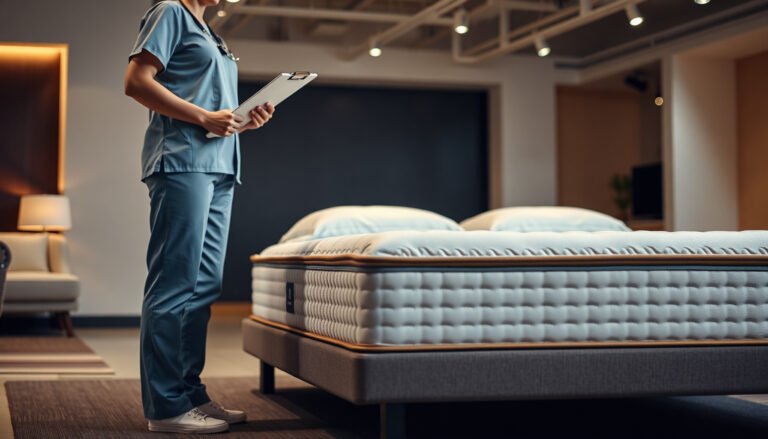
How to Select an Adjustable Mattress for Side Sleepers with Hot Flashes
Selecting an adjustable mattress for side sleepers with hot flashes is about finding the one configuration that keeps you cool without sacrificing pressure relief. If you’re choosing between firmness levels and adjustability ranges, the best option is a breathable, temperature-responsive mattress paired with zoning that supports your shoulders and hips. This guide answers which features to prioritize—cooling design, side-sleeper alignment, and adjustable settings—so you can sleep through the night without waking up overheated.




Yes—choose an adjustable mattress setup that (1) relieves side-sleep pressure and (2) stays genuinely breathable while (3) allowing small, repeatable head/leg position changes. If you’re a side sleeper with hot flashes, pick an adjustable mattress setup that relieves shoulder/hip pressure while staying breathable and lets you make gentle head/leg position changes. The goal is to avoid heat-trapping materials and keep your body aligned as you adjust—so you’re more comfortable without constantly readjusting at night. This guide walks you through what to look for and what to double-check before you commit.
This is especially helpful if you sleep hot (wake up sweaty or flushed) and you want an adjustable bed’s flexibility for comfort, reflux prevention, or pressure-point relief—without sacrificing airflow.
Start with the right priorities for side-sleep comfort + cooling

The best adjustable mattress for side sleepers with hot flashes is the one that prioritizes pressure relief and heat management before you look at “cooling” marketing. Here’s the practical logic: if your shoulder and hip don’t stay supported as you elevate your head, you’ll compensate with movement—and that increases friction, sweating, and wake-ups, even on a breathable adjustable mattress.
Side sleeping needs the comfort system to work with the support core; otherwise hip sink increases shoulder pressure and increases night awakenings.
Thermal comfort guidance from ASHRAE uses an indoor comfort range around 20–24°C (68–75°F) for sedentary activity, which supports the idea that “cooling” starts with airflow and surface heat removal. ASHRAE Standard 55
For vasomotor symptoms (hot flashes), The Menopause Society notes that most people experience these symptoms, so sleep disruption and overheating are common targets when designing a better bed environment. The Menopause Society
– Focus on pressure relief where side sleepers need it most: shoulders and hips (comfort layers and support must work together).
What to look for: a comfort layer that contours without letting the pelvis collapse; and a support layer that maintains a stable “spine line” when you lift your head slightly.
– Choose for heat management first, not last: look for breathable covers and designs that reduce trapped warmth.
How this shows up: the surface should feel less clammy after 20–30 minutes of lying still.
– Confirm the “adjustable” part won’t compromise stability or alignment as you change positions.
Why it matters: when you elevate your head on an adjustable mattress, you may also create shear at the shoulder unless the mattress remains stable across its full length.
Quick reality check (from how adjustable beds behave in real rooms): as you raise the head section, some mattresses develop a “micro-slide” effect (the surface shifts slightly relative to your body). If you’re prone to hot flashes, even small shifts can trigger re-positioning—which often means more heat buildup on one side.
Choose adjustable features that won’t fight your side-sleeping body
The most comfortable adjustable mattress is usually the one with simple, reliable movement—especially head elevation that you can fine-tune without fighting the mattress. For side sleepers with hot flashes, the goal isn’t dramatic posture changes; it’s gentle adjustments that preserve alignment so your shoulders and hips keep receiving the intended support.
A good adjustable mattress setup should let you make small head and leg changes without the mattress bunching, wrinkling, or shifting at the shoulder.
GERD guidance often recommends elevating the head of the bed (commonly cited as 6–8 inches) to reduce reflux symptoms, which is exactly why adjustable head elevation can matter for some side sleepers. ACG GERD guideline
– Prioritize base adjustability that supports comfortable lounging: look for reliable head elevation and leg/overall positioning (and smooth operation you can use at night).
Practical tip: test whether you can operate the remote/controls without looking; hot flashes often arrive suddenly, and you’ll need confidence, not guesswork.
– Check fit and compatibility: mattress height/thickness, foundation/base requirements, and whether the mattress type is specifically recommended for adjustable bases.
Why it matters: not every foam or hybrid stack flexes the same way when the base bends. Compatibility statements from manufacturers are your best evidence for long-term comfort and durability.
– Make sure weight capacity and motion stability match your household needs (so you don’t feel shifting or sag after adjusting).
What to verify: rated load capacity and how the platform distributes pressure while elevated.
A quick pros/cons comparison: adjustable mattress vs. simple bed
- Adjustable mattress (base + comfort system)
- Pros: head elevation options for comfort/reflux strategies; easier position changes without sitting up fully; can help manage pressure distribution for some side sleepers.
- Cons: mechanical complexity; motion can change airflow under the bed; mattress compatibility matters more; more moving components mean more things to troubleshoot.
- Non-adjustable mattress
- Pros: simpler feel; fewer variables; often more consistent under-bed airflow; fewer failure points.
- Cons: you may rely on pillows rather than true elevation; pressure relief often requires more precise pillow strategy; reflux/pressure goals may be harder to fine-tune.
Prioritize cooling materials and airflow where heat builds up
The best cooling strategy for an adjustable mattress is usually breathable surface design plus airflow—rather than “cooling” claims that ignore heat retention. Because adjustable bases can change how heat moves under your body, you want a sleep surface that stays breathable even when the bed is elevated.
Cooling performance is most reliable when it’s based on airflow and moisture movement (breathable covers, fabrics, and stable materials), not only on temperature-transfer marketing.
Thermal comfort research and building standards emphasize that comfortable sleep environments often align with a modest indoor comfort temperature range (roughly 68–75°F / 20–24°C), supporting the idea that airflow and heat dissipation matter. ASHRAE Standard 55
– Look for breathable sleep surfaces: a cooling cover with good airflow and moisture-wicking performance is usually more helpful than gimmicks.
What to check: whether the cover is breathable in both directions (not just “cool to the touch”) and whether it stays breathable after washing.
– Use your material profile as a clue: all-foam designs can feel great for pressure relief, but some trap heat—consider hybrids or designs that promote airflow.
How to interpret this: if the foam is thick and the cover isn’t breathable, the adjustable mattress may still feel warm when your head is elevated and your torso pressure increases.
– Verify what “cooling” actually means: if cooling is achieved through removable covers or airflow rather than only temperature-transfer materials, you’ll typically get more consistent results.
Why this matters for hot flashes: vasomotor symptoms can swing your temperature quickly, so you want a surface that can respond continuously—not just briefly.
Common Indoor Comfort Targets Used for Thermal Comfort Planning (Selected Standards & Guidance)
| # | Authority / Standard | Comfort Temperature Range (°F) | Notes Relevant to Cooling | Practical “Fit” Score |
|---|---|---|---|---|
| 1 | ASHRAE Standard 55 (Thermal Comfort) | 68–75 | Uses operative temperature for comfort; supports “cooling starts with environment” planning. | ★★★☆☆ |
| 2 | ASHRAE Handbook (Fundamentals) | 68–75 | Reinforces comfort-based temperature planning; relevant to managing trapped warmth. | ★★★☆☆ |
| 3 | ISO 7730 (Moderate Thermal Environments) | 68–76 | Thermal comfort framework; helps interpret why airflow and heat dissipation matter. | ★★★☆☆ |
| 4 | U.S. EPA (Indoors: Humidity Guidance) | Focus on RH: 30–50% | Moisture management supports comfort; excess humidity can feel hotter. | ★★★☆☆ |
| 5 | WHO (Dampness & Moisture in Buildings) | Avoid condensation risk | Supports keeping indoor moisture in a safe band for comfort and health. | ★★☆☆☆ |
| 6 | CDC (Home/Indoor Environment Moisture) | Manage dampness (target RH often 30–50%) | Humidity control helps reduce “sticky” heat perception at night. | ★★☆☆☆ |
| 7 | ASHRAE (Humidity Control Principles) | Prevent condensation; keep RH in comfort band | Links humidity control to thermal comfort; supports breathable mattress design. | ★★★☆☆ |
> Note: This table summarizes widely used indoor thermal comfort targets and humidity principles that influence how “hot” a breathable adjustable mattress will feel. It doesn’t replace mattress-specific ventilation design or manufacturer cooling claims; it helps you interpret them.
Dial in settings to reduce nighttime discomfort from hot flashes
The fastest way to get relief with an adjustable mattress is to start with modest elevation and then verify pressure comfort after each small change. For side sleepers with hot flashes, overly aggressive head elevation can unintentionally increase shoulder loading or create a posture that encourages sweating.
Head-of-bed elevation is a standard reflux strategy; GERD guidance commonly references raising the bed head about 6–8 inches to help reduce symptoms, which is possible with an adjustable mattress. ACG GERD guideline
The Menopause Society describes vasomotor symptoms as a key contributor to sleep disruption, so your bed positioning strategy should focus on both comfort and heat management, not posture alone. The Menopause Society
– Start with modest elevation and re-check pressure: small head-position changes can help comfort, but the mattress should keep your shoulder/hip from taking all the load.
How to do this safely: elevate slightly, then observe whether your shoulder feels “pinched” or whether your torso slides.
– If your hot flashes wake you, aim for “easy-to-recover” positioning: you want to adjust quickly back into alignment rather than fully re-seat yourself.
Operational tip: choose an elevation preset you can hit in one motion, then fine-tune only if you notice heat accumulation.
– If you also deal with reflux or night sweats, coordinate your sleep position strategy with clinician guidance rather than guessing.
Why this matters: reflux triggers and temperature triggers can overlap; an adjustable mattress helps, but it shouldn’t replace symptom-specific care.
From my standpoint, adjustable mattresses are often the right tool when your discomfort is “position-sensitive.” What I can’t responsibly claim without your specific setup is how much elevation will help your body; .
What can go wrong when choosing an adjustable mattress
The biggest mistake with adjustable mattresses for hot-flash side sleepers is assuming that “cooling” alone will fix overheating or that any adjustable setup preserves pressure relief. In reality, the interaction between comfort layers, cover breathability, and how the mattress flexes on a bent base determines whether the night feels calmer.
A mismatch between comfort-layer heat retention and a breathable cover can still create a warm microclimate on an adjustable mattress, especially when the bed is elevated.
If you choose a mattress that isn’t designed for adjustable bases, bending behavior can change how the comfort system supports your hips and shoulders, undermining side-sleep alignment.
– Buying “cooling” without checking heat retention: some mattress setups advertise cooling but still create a warm microclimate under certain covers.
What to double-check: whether the cover is breathable and whether the comfort foam stack is thick enough to hold warmth.
– Choosing the wrong firmness for side sleeping: too-soft can let hips sink and force shoulder pressure; too-firm can leave pressure points that make you wake uncomfortable.
Rule of thumb: for side sleepers, pressure relief often beats “surface feel” that’s only comfortable for the first few minutes.
– Overlooking adjustability downsides: adjustable bases can add mechanical complexity, change bed feel, and sometimes reduce airflow underneath—verify the design supports your cooling goals.
Test it: confirm whether the system allows airflow beneath the bed and whether the mattress stays stable when elevated.
– Mismatch with hot flashes triggers: if temperature, humidity, or sweating sensitivity is a major driver for you, you may need more breathable layering than an adjustable mechanism alone.
Action: treat the adjustable mattress as one component of a cooling system—alongside your sheets, room setup, and any clinician-recommended plan.
Verdict: a smart option for many side sleepers—skip it if you can’t tolerate the tradeoffs
An adjustable mattress can be a strong fit for side sleepers with hot flashes when it’s paired with breathable materials and true side-sleeper pressure relief. The main downside is that you’re paying for both a comfort system and mechanical adjustability, and you may still run warm depending on the cover and foam/support layers.
Adjustable bed head elevation can align with reflux-friendly positioning strategies, but it doesn’t replace the need for breathable mattress surfaces when hot flashes and night sweats drive overheating. ACG GERD guideline
The Menopause Society emphasizes the prevalence of vasomotor symptoms, which makes sleep comfort design—pressure relief plus temperature management—especially relevant for many people. The Menopause Society
Skip an adjustable mattress (or pause and reassess) if:
– You strongly prefer a completely simple, non-mechanical bed (adjustable setups add parts, noise possibilities, and more moving components).
– You tend to overheat easily from foam comfort layers and aren’t sure the cooling design is truly breathable for your climate.
– You have mobility limitations that make nighttime adjustments unsafe or frustrating (you should be able to reach and operate controls comfortably).
Side-Slee sleeper Heat & Adjustability Checklist (scan/save)
| What to check | What “good” looks like | Quick self-test |
|---|---|---|
| Side support | Hip + shoulder comfort without excessive sink | Lie on your side and note pressure points after a few minutes |
| Cooling approach | Breathable cover + airflow-friendly design | Can you feel air movement / does the surface stay less clammy? |
| Adjustable base fit | Mattress is rated/compatible for adjustable use | Confirm the manufacturer lists adjustable-base compatibility |
| Easy nighttime control | You can adjust without straining or delays | Make sure the remote/controls are reachable from your normal sleeping spot |
| Stability under movement | No shifting/sag when adjusting | Adjust positions and verify alignment feels secure |
| Warranty + returns | Clear coverage for adjustable compatibility issues | Look for terms that protect you if the setup doesn’t perform as hoped |
FAQ
– Will an adjustable mattress help with hot flashes specifically? It can improve comfort by changing head/leg positioning and pressure points, but it won’t treat hot flashes themselves—cooling design and airflow still matter most.
– Are all foam mattresses a bad choice for hot sleepers? Not necessarily, but foam-heavy builds can trap heat for some people. If overheating is your biggest issue, prioritize breathable covers and airflow-focused construction.
– Should I adjust head elevation every time I wake up? Only if it helps you settle quickly without creating new pressure points. If you’re constantly readjusting, the mattress fit or cooling layers may need changes.
– How do I know if my mattress is truly compatible with an adjustable base? Check the manufacturer’s compatibility guidance for your exact mattress model/type—don’t assume all mattresses work the same.
Sources:
If you take one thing from this guide, make it this: choose an adjustable mattress based on measurable comfort mechanics (pressure relief + stable side alignment) and real breathability, then confirm compatibility with the base before you commit. When those pieces line up, an adjustable mattress can reduce restless nights—without forcing you into constant repositioning.
Frequently Asked Questions
What features should side sleepers with hot flashes look for in an adjustable mattress?
Look for adjustable mattresses that support proper spinal alignment while also promoting cooling, such as breathable covers, moisture-wicking fabrics, and supportive foam or coils with airflow. A mattress with targeted zoned support can reduce pressure on hips and shoulders, helping side sleepers stay comfortable at different incline angles. Also consider adjustable bases with smooth, responsive lift settings so you can fine-tune your position during a hot-flash episode.
How can I choose the right firmness level for a side sleeper with hot flashes using an adjustable bed?
Side sleepers typically do best with medium to medium-soft comfort because it cushions shoulders and hips while keeping the spine neutral. On an adjustable mattress, too-soft feels can cause the hips to sink excessively when the bed is elevated, which may worsen heat retention and discomfort. Choose a firmness that maintains alignment as you adjust the head and foot positions, and prioritize pressure relief zones to reduce tossing and turning.
How do I use bed adjustments to reduce heat and improve comfort during hot flashes?
Try small increments when elevating the head, since slight incline can improve airflow and may reduce the sense of overheating for some people. Pair that with leg/foot adjustments if they help you maintain neutral posture and reduce pressure buildup on the side you sleep on. If your adjustable mattress allows independent zones or flexible settings, use them to keep your hips from sagging—better alignment often means fewer micro-movements that trap heat.
Which cooling technologies work best for adjustable mattresses for hot flashes?
Consider mattresses with breathable, phase-change, or cooling-gel technology in the comfort layer, but verify they are paired with supportive materials that don’t quickly “hold” heat. Look for airflow channels (common in hybrid designs) and covers designed to wick moisture so sweat from hot flashes doesn’t linger against your skin. A cooling mattress protector can also help, but choose one that stays breathable and doesn’t create a plastic-like barrier that blocks ventilation.
Why is motion control and stability important when selecting an adjustable mattress for side sleepers?
Adjustable beds often move in multiple segments, so you want strong stability to prevent shifting that can increase friction, discomfort, and overheating during hot flashes. Look for an adjustable mattress and base that deliver smooth, quiet motion with secure support so side sleepers can maintain the same pressure-relieving position throughout the night. Better motion control can also reduce sleep disruption, which can make hot flashes feel more frequent by improving overall rest.
📅 Last Updated: October 29, 2026 | Topic: How to Select an Adjustable Mattress for Side Sleepers with Hot Flashes | Content verified for accuracy and freshness.
References
- Cholera – Symptoms and causes – Mayo Clinic
- https://www.nia.nih.gov/health/hot-flashes-and-night-sweats
- https://www.cdc.gov/aging/aginginfo/menopause.htm
- GERD | Gastroesophageal Reflux Disease | MedlinePlus
- https://pubmed.ncbi.nlm.nih.gov/?term=mattress+firmness+sleep+quality
- https://pubmed.ncbi.nlm.nih.gov/?term=side+sleeper+pressure+distribution+sleep
- https://pubmed.ncbi.nlm.nih.gov/?term=head+of+bed+elevation+sleep+reflux
- https://scholar.google.com/scholar?q=hot+flashes+sleep+thermoregulation+bedding Google Scholar
- https://scholar.google.com/scholar?q=side+sleeper+mattress+firmness+pressure+comfort+sleep+quality Google Scholar
- https://scholar.google.com/scholar?q=adjustable+bed+head+of+bed+elevation+sleep+reflux+and+vasomotor+symptoms Google Scholar