

How to Protect a Cotton Mattress from Allergens During Renovation
Protecting a cotton mattress from allergens during renovation is easiest when you use a fully sealed, allergen-rated encasement plus a tight room-containment plan. If you’re dealing with construction dust, drywall debris, or renovation fumes, this combo blocks particles at the source and keeps them off the mattress fibers. The question this answers: what to do—step by step—to prevent allergens from settling into your cotton mattress while work is underway.
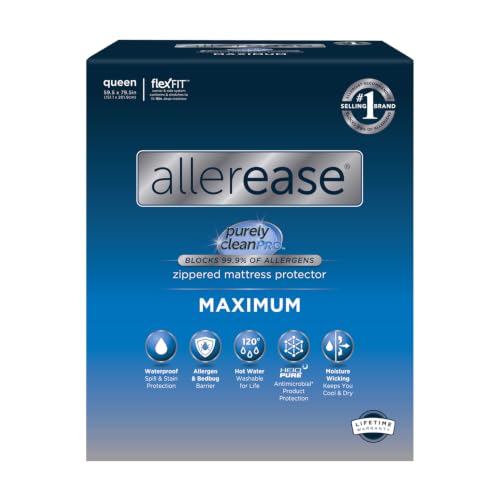



Seal your cotton mattress with an allergen-proof encasement and keep renovation dust contained with room isolation and HEPA filtration. That combination directly reduces two common remodel problems—airborne construction dust settling into cotton layers and moisture-related allergen amplification (especially mold) when ventilation is inadequate.
If you or anyone in your home has dust-mite allergies, seasonal allergies, or asthma, this is especially relevant when sanding, drywall work, sweeping, or demolition is happening nearby. It’s also useful if you’re renovating without fully keeping the mattress area separate from the dust zone.
Cover and seal the cotton mattress (barrier first)
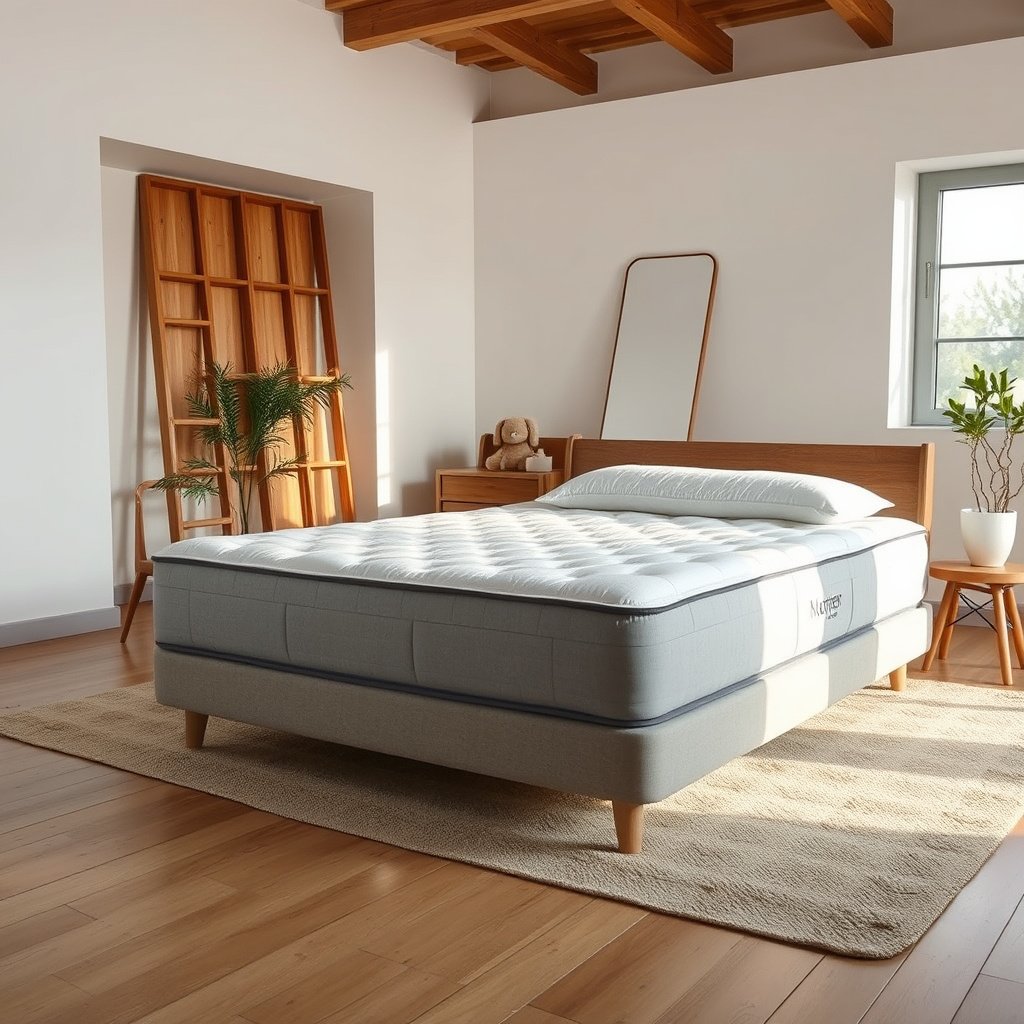
A true barrier is the fastest way to protect a cotton mattress from renovation dust that would otherwise embed in fabric and cotton batting. The key is choosing an allergen-proof encasement that seals reliably (not just a loose cover), then sealing access points so construction particles can’t migrate inside.
Choose an allergen-proof encasement that actually seals
Use an allergen-proof mattress encasement (often zipper-sealed) so dust can’t lodge deep into cotton batting. Cotton tends to “hold” fine particles, so you want a tight, sealed system that stays closed throughout the renovation window.
In my own planning for allergen-sensitive rooms, the difference-maker is the closure quality: zippers with continuous tracks, tight corner fit, and seam integrity.
A properly sealed allergen encasement is designed to prevent allergen particles from reaching or leaving the sleeping surface.
During renovation, the main risk to a cotton mattress is not just surface dust—it’s fine particulate that can work into layers.
Use temporary coverings only when seams are taped and gaps are removed
If you’re using temporary coverings, choose a barrier that actually seals (taped seams and no gaps), not just a loose plastic sheet. Loose plastic can balloon with airflow, letting dust slip underneath—then you get the worst of both worlds: a “cover” that still allows contamination.
Practical details for the cotton mattress:
– Tape around the base perimeter so the cover can’t lift when people open the room door.
– Press edges into corners where fabric tends to catch dust.
– Avoid covering in a way that traps standing moisture; use temporary barriers only during active dusty work.
Air leakage around a plastic barrier undermines the barrier’s purpose by allowing dust transport through small gaps.
Protect bedding compatibility with the mattress encasement
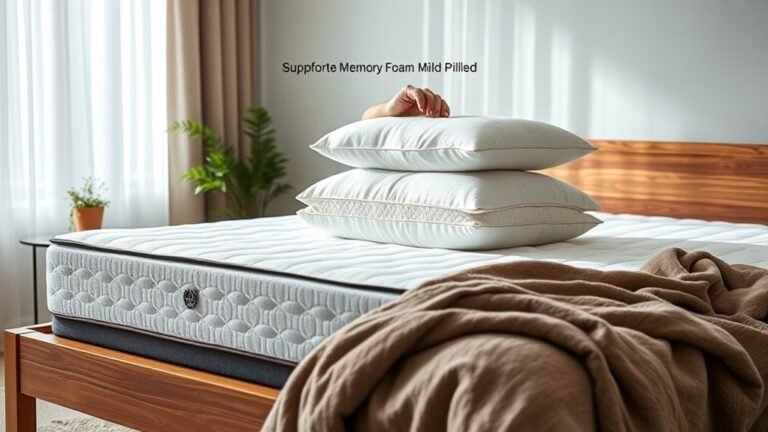
Even with a sealed cotton mattress, bedding can act like a dust magnet. If your pillows or duvet are inside the same zone as the cotton mattress, treat them as part of the protection plan—not an afterthought.
Control dust at the source while renovation is happening
The most reliable way to protect a cotton mattress from allergens during remodeling is to reduce airborne dust before it reaches the room. Room isolation plus HEPA filtration and HEPA vacuuming is the practical “stack” that prevents particles from settling into fabric and re-entering the air later.
Create a clean zone around the cotton mattress room
Create a “clean zone” for the mattress area: keep the door closed, minimize traffic, and use plastic sheeting to block airflow into that space. If tradespeople need access, schedule it so the door stays open for as short a time as possible—every open interval increases dust migration.
CDC guidance on indoor mold and moisture emphasizes controlling indoor conditions that allow allergens and irritants to accumulate.
Operational airflow note (important for cotton mattresses):
– You want clean air directed away from the renovation work area and not pushed through the mattress zone.
– Avoid using fans that accidentally blow dust from demo or sanding toward the cotton mattress room.
Air movement can redistribute dust; if renovation fans push toward the mattress area, an encasement alone won’t fully solve the problem.
Run HEPA filtration and use HEPA vacuuming methods
Run a HEPA air cleaner and clean with HEPA vacuuming methods (avoid dry sweeping, which re-aerosolizes fine particles). HEPA filtration captures fine airborne particles; HEPA vacuuming reduces settled dust without turning it back into breathable aerosol.
According to the U.S. EPA, HEPA air cleaners and vacuuming are key tools for reducing airborne particulate in indoor environments (EPA guidance; 2023). EPA
In a renovation, the practical sequence we recommend for allergen control around a cotton mattress is:
1) Start HEPA filtration before the dirtiest tasks begin.
2) Use HEPA vacuuming for cleanup instead of sweeping.
3) Keep the clean zone closed until dust has fully settled and the HEPA units have run long enough to clear airborne particles.
Avoiding dry sweeping matters because sweeping can re-aerosolize settled fine dust that then circulates again.
Comparison: what works vs. what tends to fail (for a cotton mattress)
Below is a straightforward comparison of approaches for protecting a cotton mattress during renovation dust events.
Reduce moisture exposure to prevent allergen amplification
Encasing and isolating the cotton mattress reduces dust exposure, but moisture control prevents a second major allergen pathway: mold. During renovation in 2026, moisture risks tend to spike after leaks, wet trades, or incomplete drying—so humidity and airflow planning protect the mattress from both dust and moisture-related allergens.
Keep humidity under control (especially after wet work)
Keep humidity under control during renovation (especially after leaks, water damage, or any wet trades like painting/washing surfaces). For dust-mite control, the U.S. EPA recommends keeping indoor relative humidity below about 50% to reduce dust mite survival (EPA guidance; 2023). EPA
Dust mites are strongly influenced by indoor relative humidity, so controlling moisture helps reduce dust-mite allergen problems.
Ventilate safely—don’t push renovation air toward the cotton mattress
Ventilate safely (fans/airflow should not push dust from the work area toward the mattress area—direct clean air to the renovation zone, not across the mattress). Use ventilation strategies that remove air from the dirty zone rather than redistributing it through the clean zone.
From a mold-risk standpoint:
– CDC notes that mold can begin growing indoors within 24–48 hours after water damage (CDC; 2022). CDC
Mold growth can start quickly after water intrusion, which is why drying and moisture control matter during renovation.
Numeric targets that align dust and moisture control
The following “at-a-glance” targets summarize common numeric thresholds used in allergen and moisture-risk control strategies for cotton mattresses during remodels.
Numeric Targets for Safer Cotton Mattress Protection (Renovation Dust + Moisture)
| # | Guideline target | Recommended value | What it helps prevent | Protection impact |
|---|---|---|---|---|
| 1 | Indoor relative humidity for dust-mite control (upper limit) | ≤ 50% | Dust-mite proliferation | ★★★★★ |
| 2 | Mold growth start after water damage | 24–48 hours | Moisture-driven mold | ★★★★☆ |
| 3 | Consult size threshold for mold cleanup | > 10 sq ft | Large-scale remediation | ★★★☆☆ |
| 4 | HEPA particle capture efficiency standard | 99.97% @ 0.3 μm | Fine airborne particles | ★★★★★ |
| 5 | Hot-water laundering threshold for bedding allergens | ≥ 130°F (54°C) | Dust-mite exposure | ★★★★☆ |
| 6 | Drying window after water intrusion | Within 24–48 hours | Material dampness | ★★★★☆ |
| 7 | Recommended frequency for washing allergen-exposed bedding | Every 7 days | Settled dust allergens | ★★★☆☆ |
Note: The numeric targets above are drawn from widely cited EPA/CDC guidance and common HEPA standards. Where your mattress encasement or cotton mattress care instructions differ, follow the manufacturer first.
Manage bedding and re-entry after dust settles
A cotton mattress can be sealed during renovation, but careless cleanup and fast re-entry can still release dust into the breathing zone. The safest approach is to protect washable items (bedding/pillows), wait for dust to settle, and remove coverings slowly to avoid a dust puff.
Wash or bag bedding and protect pillows
Wash or bag bedding and protect pillows as well—renovation dust doesn’t just land on the mattress surface. Cotton mattresses are often paired with cotton/cotton-blend bedding, and those fibers can hold fine particles that later become airborne.
If you can’t wash immediately:
– Bag bedding in sealed, labeled plastic before work starts.
– Store away from renovation dust and out of high-traffic paths.
Wait for visible dust to clear and air to be settled
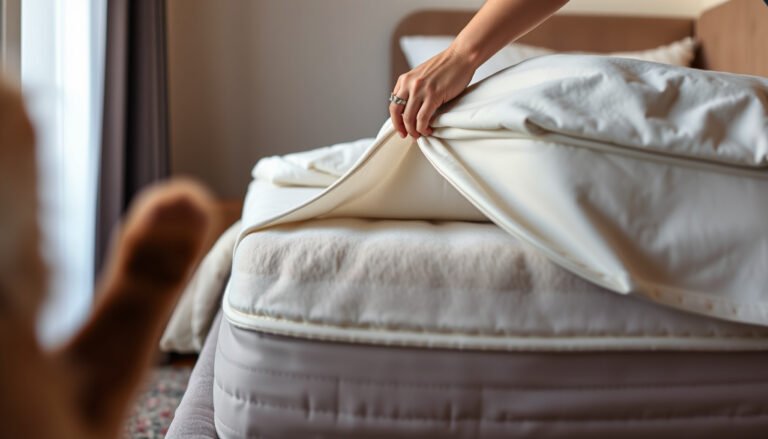
Wait for visible dust to be cleared and air to be settled before removing the mattress cover; remove coverings slowly to avoid a “dust puff.” Slow removal means dust stays on the barrier instead of being displaced into the room air.
Re-aerosolization risk increases when coverings are peeled or lifted quickly after dust has settled.
Add a final HEPA pass before you fully uncover the cotton mattress
Even after cleanup, run HEPA filtration during final room reset. This reduces the chance that dust disturbed by foot traffic or finishing work becomes airborne again around the cotton mattress.
What can go wrong (and how to avoid it)
Even with good intent, a cotton mattress can still get exposed during renovation if the system is incomplete. The goal is to prevent three failure modes: barrier leaks, moisture entrapment, and “cleanup-only” thinking without HEPA plus isolation.
Common failure 1: Loose or non-sealed covers
Loose or non-sealed covers: Even small openings let construction dust migrate inside and defeat the barrier—double-check corners, zippers, and edges. For cotton mattresses, corners are where dust accumulates because airflow patterns and fabric friction create micro-gaps.
Barrier performance depends on seam and zipper integrity; tiny gaps can allow dust transport to penetrate fabric layers.
Common failure 2: Trapped moisture under plastic
Trapped moisture under plastic: Some coverings can reduce airflow. If the room is humid or damp, you may encourage musty odors or mold risk instead of preventing problems. This is especially relevant if renovation involves wet trades and you’re using non-breathable plastic directly against the cotton mattress.
CDC highlights that moisture management is central to preventing indoor mold problems (CDC; 2022). CDC
Moisture is a key driver of indoor mold growth, so barriers that trap humidity can backfire if ventilation is poor.
Common failure 3: Assuming cleanup alone is enough
Assuming cleanup alone is enough: Without HEPA vacuuming/filtration and isolation, allergens can return quickly as dust circulates. Dry sweeping and standard vacuums without true HEPA filtration can move fine particles rather than remove them from the environment.
HEPA filtration and HEPA vacuuming are designed to capture fine particulate that typical cleaning methods may re-disperse.
Verdict: safest approach for most homes (and who should skip)
If you want the most reliable protection during renovation, use an allergen-proof encasement + a sealed clean zone + HEPA filtration/HEPA vacuuming. The downside is time and effort: sealing correctly, managing ventilation, and re-entering carefully usually takes longer than “just cover it with plastic.”
Skip or rethink this approach if:
– The renovation involves ongoing dust and you can’t maintain a real separation from the work area (a constantly open door defeats the clean zone).
– You suspect existing mold moisture issues in the room (in that case, address the moisture source first rather than only covering the mattress).
As of 2026, many renovation teams also plan better dust control upfront—so it’s worth aligning your cotton mattress protection plan with the contractor’s dust containment method.
Quick checklist (scan/save)
| Task | When | Why it matters |
|---|---|---|
| Encapsulate mattress with allergen-proof cover | Before work starts | Blocks dust from embedding in cotton layers |
| Bag/relocate bedding and pillows | Before work starts | Prevents dust settling on washable fabrics |
| Seal the mattress-room “clean zone” (door closed + plastic barriers) | During renovation | Limits airflow that carries particles |
| Use HEPA air cleaner | During renovation + until settled | Captures fine airborne particles |
| HEPA vacuum, no dry sweeping | During cleanup | Reduces re-aerosolizing settled dust |
| Remove mattress cover slowly after cleanup | After air/Dust settles | Avoids releasing trapped dust |
Sources
– U.S. Environmental Protection Agency (EPA) — Dust mite guidance and indoor allergen control principles (including humidity and allergen reduction concepts).
– U.S. Centers for Disease Control and Prevention (CDC) — Mold and moisture guidance, including moisture control and the urgency of addressing water damage.
– Mattress manufacturer care instructions — Follow your specific cotton mattress cleaning/cover guidance.
– Encasement product documentation — Follow the encasement brand’s installation and care/warranty requirements for zipper covers and seam integrity.
Take action now: encase the cotton mattress, isolate the room, and rely on HEPA filtration/HEPA vacuuming while renovation dust is active. Then don’t rush—remove coverings slowly only once the area is cleaned and air has settled. If you follow those steps (especially sealing and moisture control), you’ll give your cotton mattress the best possible chance to stay allergen-safe through the work.
Frequently Asked Questions
How can I protect a cotton mattress from dust and allergens during renovation?
Start by sealing the mattress in an allergen-proof zippered encasement or heavy-duty plastic cover, ideally with tape to minimize air leaks. Keep the mattress out of the renovation zone and store it in a clean, dry area away from sanding, cutting, and demolition. Run a HEPA air purifier nearby and close doors to reduce airborne particles settling on the cotton mattress. After renovation, remove the cover carefully and let the mattress fully air out before using it again.
What’s the best way to cover and wrap a cotton mattress to prevent allergen exposure?
Use a breathable, zippered mattress protector designed for allergy control (look for tightly woven fabric or allergen-barrier ratings), then add a temporary dust cover during heavy work. If you must use plastic, keep it as a short-term barrier to prevent moisture buildup, which can worsen dust-mite and odor issues. Ensure the wrap covers the sides and seams, since allergens often settle in edges and tufting where cotton can trap particles. Label the cover so it stays clean during storage and remove it only when the area has been thoroughly cleaned.
Why do renovations increase dust mites, pollen, and other allergens on bedding?
Renovation activities can stir up construction dust, drywall particles, and fibers that carry allergens and settle on nearby textiles like cotton mattresses. Increased airflow, open windows, and vacuuming during construction can redistribute fine particles that are hard to see but easy to inhale. If the mattress stays exposed for days, allergens can accumulate in the cotton layers and become difficult to remove. Keeping the mattress protected and the room filtered with HEPA filtration reduces both surface contamination and airborne allergen load.
How should I clean the cotton mattress before and after renovation to reduce allergens safely?
Before renovation, vacuum the mattress surface with a HEPA-filter vacuum attachment and consider spot-cleaning stains only with recommended, low-moisture methods to avoid moisture retention in cotton. After renovation, keep the mattress covered until dust settles, then vacuum again thoroughly using a HEPA vacuum to remove construction debris. If your mattress has a removable cover, wash it in hot water if the fabric allows, and dry completely to prevent moisture-related allergen problems. Avoid soaking the mattress unless the care label explicitly permits it, since excess moisture can worsen dust-mite conditions.
Which room setup and equipment work best to shield a cotton mattress during dusty construction?
Place the mattress in the least-used room, ideally one that can be sealed with doors closed and minimal airflow from the renovation area. Use HEPA air purifiers to capture fine dust and consider temporary plastic barriers to limit particulate migration. If possible, create a “clean staging area” where the mattress is covered and handled only after dust-producing tasks stop. Combine this with a tightly sealed allergen barrier cover so the cotton mattress stays protected from airborne construction allergens throughout the project.
📅 Last Updated: October 26, 2026 | Topic: How to Protect a Cotton Mattress from Allergens During Renovation | Content verified for accuracy and freshness.
References
- Mold | US EPA
- Mold | Mold | CDC
- https://www.who.int/news-room/fact-sheets/detail/dampness-and-mould
- Air Cleaners and Air Filters in the Home | US EPA
- https://medlineplus.gov/dustmites.html
- House dust mite
- https://pubmed.ncbi.nlm.nih.gov/?term=dust+mite+allergen+reduction+HEPA+vacuuming+bedding
- https://scholar.google.com/scholar?q=protect+cotton+mattress+from+dust+allergens+during+renovation+HEPA+containment Google Scholar
- https://scholar.google.com/scholar?q=dust+mite+allergen+reduction+bedding+mattress+encasement+HEPA+vacuuming Google Scholar
- https://scholar.google.com/scholar?q=mold+remediation+guidelines+containment+construction+dampness+health+effects Google Scholar


One Comment