

How to Select a Firm Mattress for Combination Sleepers with Joint Pain
Selecting a firm mattress for combination sleepers with joint pain hinges on one question: which model type keeps your hips and shoulders supported without triggering pressure at night. Choose a firm-enough mattress with targeted lumbar support and pressure-relieving surface comfort (often from responsive foam or a latex comfort layer) to prevent painful sink and misalignment. If you’re a side-and-back sleeper with stiff joints, the clear winner is a “firm support, softer top” build—supportive where it matters, cushioning where your body bears weight.


Don’t pick “firm” by feel alone—choose a firm mattress that still gives pressure relief where your joints land (hips/shoulders/knees), especially as you switch positions. You want a supportive core plus a comfort layer that cushions joints without letting your spine sink out of alignment, because the “right” firmness for a firm mattress is different for side vs. back sleeping.
If your pain is worse when you roll over, or you wake up with hips/shoulders sore, you’re exactly who this is for. These steps are also useful if you’re deciding between “firm” and “medium-firm” options but need joint-friendly support for different sleep positions.
Start with the “firm support + joint cushioning” goal
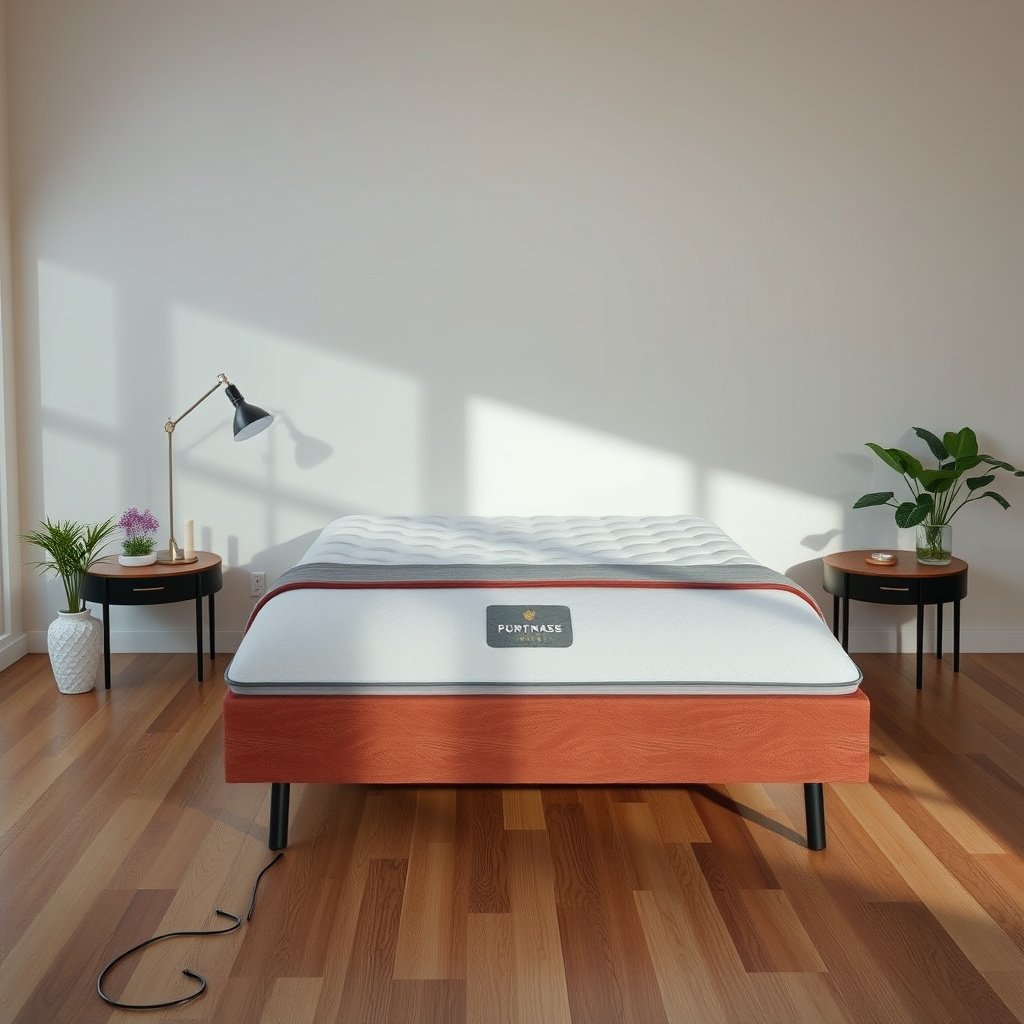
A firm mattress helps combination sleepers with joint pain only when it balances support and pressure relief at the same time. The simplest way to think about it: your mattress should feel stable overall, but it should not treat your hips, shoulders, or knees like “hard contact points.”
For joint pain, a mattress needs enough pressure relief to reduce concentrated load on the first contact points (hips/shoulders), especially during side sleeping.
Spine alignment depends on whether the mattress lets your hips drop (too soft) or creates uncomfortable “ridge pressure” (too firm or too thin in the comfort layer).
Combination sleepers stress-test a mattress because the pressure pattern changes when you roll from side to back.
– For joint pain, prioritize pressure relief on the first contact points (hips/shoulders) while keeping the rest of your body supported.
– Many “firm” beds still work well if they have a comfortable top layer over a stable, supportive base.
What “pressure relief” means in practice (not marketing)
Pressure relief is the mattress’s ability to spread your body weight across more surface area so your joints don’t bear peak pressure alone. In bedding terms, that usually comes from a comfort layer (often foam, latex, or a foam hybrid) that compresses appropriately under the shoulder/hip without collapsing under your midsection.
For joint pain, this matters because more than comfort matters—how the mattress responds to your body shape in side and back positions determines whether morning stiffness improves or worsens. Pressure-relief is also why people can feel “good” for 10 minutes in-store and still wake up sore at night.
Why this problem is common
Joint pain often clusters with musculoskeletal conditions. According to the CDC (Centers for Disease Control and Prevention), arthritis affects about 58.5 million U.S. adults (2013).
That’s a broad population statistic, but it explains why “joint-friendly firmness” is a real design challenge—not an edge case.
Choose the right firmness level for combo sleeping
The best firmness level for a combination sleeper with joint pain is usually “firm” or “medium-firm leaning firm,” as long as the mattress maintains pressure relief in each position you use. If the mattress only feels right in one sleep posture, it can quickly become painful when you roll.
Combination sleepers need a mattress that supports alignment and reduces pressure in multiple postures, not just the posture they prefer most.
If your hips or shoulders feel “punched” by the mattress on first contact, the firmness is likely too high or the comfort layer is too thin.
If your back feels like it “drops” when you roll onto it, the mattress may be too soft in the comfort system or too low-support in the transition layers.
– For combination sleepers, “one-sided firmness” can fail when you switch positions—aim for a firmness that supports your heaviest areas in each position.
– If your mattress is truly too firm, you’ll feel hard pressure on hips/shoulders; if it’s too soft, your spine may sag when you turn.
A practical way to pick between “firm” and “medium-firm”
Think of firmness as two things working together:
1) Support system stability (the base core that resists bottoming out)
2) Comfort layer behavior (how quickly the mattress yields where your joints land)
When you’re choosing between firm and medium-firm, you’re really asking: Can the comfort layer cushion the shoulder/hip while the core holds your pelvis level on your back? If you can’t get both, you’ll feel it on nights when you change positions.
Quick alignment check you can do in your room
Lie where you typically hurt (often side), then roll to your back and pay attention to two sensations:
– Side: Do your shoulder/hip feel “supported-but-not-bad,” or do they feel like they’re pressed into something hard?
– Back: Does your lower back feel cushioned and level, or does it sink and feel unsupported?
As of 2026, many manufacturers publish firmness labels but still differ greatly in comfort-layer thickness and foam/latex response—so position testing matters more than the word “firm.”
Pay attention to comfort layer thickness and materials
A firm mattress can still be joint-friendly if its comfort layer cushions shoulders/hips deeply enough without making you sink. If you focus only on firmness labels (without checking the comfort-layer design), you risk buying a “firm on top, unstable underneath” bed.
Pressure relief for joint pain generally depends on comfort-layer design—especially how much it can compress at your shoulder/hip without letting the torso drift out of alignment.
Comfort layers that are too thin may not reduce peak pressure on hips/shoulders, even if the support core feels stable.
Transition and comfort materials influence whether the mattress feels “even” across positions or creates hotspots when you roll.
– A comfort layer that’s thick enough to cushion joints helps reduce wake-ups from pressure, but it can’t be so deep that you sink on your back.
– Material matters: look for comfort layers designed for pressure relief (e.g., foam or foam hybrids) rather than a purely springier feel that may concentrate pressure on joints.
Comfort layer thickness: what you’re really trying to prevent
For a combination sleeper with joint pain, comfort-layer thickness often determines whether your weight is distributed or concentrated. Too little cushion can cause joint “hot spots.” Too much cushion can let your pelvis drop on your back (or cause uneven support when you shift to your side).
I’ve found that shoppers most often underestimate how much the transition between comfort and support matters. Even if the top feels cushy, a weak transition layer can still allow alignment issues when you roll.
Material choices and why they affect joint pain
– Memory foam / visco-foam: Often excels at pressure redistribution because it conforms to contour. The risk is bottoming out or excessive sink if the layers above the core are too deep or too soft.
– Latex (especially blended or responsive types): Can feel springier with lower “trapped heat” feel for some sleepers. The key is whether it provides enough depth for the hip/shoulder contact points.
– Foam hybrids: Frequently combine a stable support core with a comfort system that targets pressure relief—often the most practical category for joint-friendly “firm” options.
Match support to your main pain points and sleeping positions
The right firm mattress for combination sleepers is the one that protects your specific pain landmarks in each position you actually use. Side sleeping typically needs more localized cushioning at the shoulder/hip, while back sleeping needs stable pelvis support to prevent sag.
Side sleeping commonly requires more cushioning at the shoulder and hip to reduce peak pressure on joint surfaces.
Back sleeping benefits most from even support that helps keep the pelvis from dropping and the spine from curving downward.
If stomach sleeping is part of your routine, support under the torso helps reduce low-back strain caused by excessive softness.
– Side sleeping with hip/shoulder pain: you usually need more “give” at the shoulder/hip area so you don’t get concentrated pressure.
– Back sleeping: you need even support to help keep your hips from dropping; “firm support” is most important here.
– Stomach sleeping (if you do it): overly soft comfort layers can worsen low-back strain; a more supportive surface usually helps.
A position-by-position “what to feel” guide
When your goal is joint relief with alignment, the mattress should feel different in each position—but never “wrong.”
On your side (hips/shoulders are the priority):
– Your shoulder should not feel like it’s digging into a hard surface.
– Your hip shouldn’t feel like it’s sinking too far, causing your lower back to work harder.
On your back (pelvis is the priority):
– You should feel the mattress supporting you so your hips don’t drop.
– Your lumbar area should not feel like it’s hanging in space (which can happen on overly soft beds).
On your stomach (if you rotate there):
– The torso should be supported enough that your low back doesn’t over-arch.
Comparison: what each common mistake does to you
If you want a firm mattress that helps joint pain, avoid these typical failure modes:
Pros you’re aiming for
– Stable core that resists deep sagging
– Comfort layer that cushions hips/shoulders
– Better pressure distribution when you roll
Cons that show up when the mattress isn’t right
– “Hard pressure” sensations on hips/shoulders when you first lie down
– Lower-back discomfort after you switch onto your back
– Pain spikes specifically when you change positions
What can go wrong (and why “firm” sometimes backfires)
A firm mattress backfires when the support feels stable but the comfort system isn’t pressure-relieving (or isn’t balanced across positions). That’s when you get the classic pattern: you think it’s fine at first, then joints flare after a few hours—or as soon as you roll.
Firmness label alone can be misleading because comfort-layer thickness and material response often determine whether joints experience pressure relief.
A mattress can feel supportive initially but lose spinal alignment as internal layers break down or shift.
Foundation issues (like sagging slats or insufficient support) can change how “firm” a mattress actually feels over time.
– Buying a mattress that’s firm on the outside but has a soft/unstable interior: it can feel supportive at first, then lose alignment as it breaks down.
– Ignoring your actual joint landmarks: two people can both be “side sleepers,” but hip pain vs. shoulder pain may require different pressure relief.
– Choosing the wrong foundation: an unsupportive bed frame or missing slats can cause early sagging and height changes that affect how firm the mattress feels.
Foundation and setup can change the outcome
Even the best firm mattress for joint pain can fail if the base is wrong. If slats are too widely spaced, the support core may flex differently than intended, changing firmness and alignment cues.
As of 2026, many consumers shop for the mattress first and treat the foundation as secondary. For combination sleepers with joint pain, that’s a mistake—setup is part of how the mattress “acts.”
Verdict: what to look for—and who should skip “extra firm”
Pick a firm (or medium-firm leaning-firm) mattress only if it includes both: (1) a stable support core and (2) enough comfort-layer cushioning to reduce pressure on joints when you change positions. Skip “extra firm” options if you frequently wake with sharp hip/shoulder pressure, have severe arthritis flares that react quickly to pressure, or you can’t use a return/exchange window during the adjustment period.
The best joint-friendly firm mattresses combine stable support cores with comfort layers that cushion pressure points without causing midsection sag.
Extra firm mattresses are most likely to concentrate pressure on joints if the comfort layer is too thin or too rigid.
Because pressure relief often takes time to confirm, a trial period and return policy are especially important for joint-pain sleepers.
Who should skip extra firm specifically
– You wake with sharp hip or shoulder pressure rather than “deep support.”
– Your joint pain flares quickly when pressure increases.
– You don’t have time to test a mattress (or you’re not able to exchange/return it if the first weeks don’t match your needs).
Who should still consider a firmer feel
– You primarily need alignment support for back sleeping.
– Your joint pain improves with pressure relief as long as your pelvis doesn’t sink.
– You can confidently test comfort-layer behavior in multiple positions (side and back at minimum).
Quick scan checklist (save this)
| What to check | Why it matters for joint pain | Target outcome |
|---|---|---|
| Comfort layer cushions hips/shoulders | Reduces pressure points during side sleeping | Less “hard” contact, fewer sore wake-ups |
| Support core stays stable | Prevents spine sag when you roll | Body feels aligned when you switch positions |
| Firmness feels consistent across positions | Combo sleepers need multi-position comfort | Side + back both feel supported |
| Proper foundation/slats | Prevents premature sag and altered feel | Mattress maintains intended support |
| Return/exchange policy before committing | Joint-pain fit often takes time | You can adjust if it’s not right |
A joint-pain fit is rarely a single-number decision; comfort-layer cushioning and support stability are the two variables that most affect side-to-back sleepers.
A return/exchange policy acts like a “pressure-relief trial,” helping you validate alignment and hotspot reduction over time.
Sources
– CDC (Centers for Disease Control and Prevention) — Arthritis prevalence (“Arthritis at a Glance” / adult arthritis estimates) (2013)
– National Eczema? / —
– ASTM International — Indentation force/deflection method (firmness/foam testing standard)
A firm mattress can work wonders for combination sleepers with joint pain—but only when it’s firm in the right system components. Use the comfort-layer + support-core checklist, match what you feel on your side and back, and don’t assume “extra firm” will protect your hips and shoulders. If you can validate the mattress across position changes during a trial window, you’re far more likely to find the balance between stability and pressure relief that your joints actually need.
Frequently Asked Questions
How do combination sleepers with joint pain choose the right firm mattress feel?
Combination sleepers need a mattress that supports different sleep positions without creating pressure buildup at joints. Look for a “medium-firm” option with zoned support or targeted lumbar/hip support so your shoulders and hips feel cradled when you side sleep, while your spine stays aligned when you back or stomach sleep. If joint pain flares in one position, prioritize pressure relief in that position by choosing a mattress with adequate comfort foam and a supportive core rather than going overly hard.
What firmness level is best for joint pain in back, side, and stomach sleeping?
For many combination sleepers with joint pain, medium-firm (often around 6–7/10) is a good starting point because it balances pressure relief with spinal support. Side sleepers usually benefit from a comfort layer that cushions shoulders and hips, while back sleepers need consistent lumbar support to prevent sagging. Stomach sleeping is the hardest position for joint alignment, so choose a mattress with enough support to keep hips from sinking too far.
Which mattress features help reduce pressure on hips and shoulders for combination sleepers?
Focus on a comfort layer that offers pressure relief, such as memory foam or adaptive foam, with sufficient thickness to cushion major joints. Support layers should be stable and responsive—materials like pocketed coils or high-density foam can help maintain alignment when you move. Consider features like zoned support, stronger perimeter edge support, and motion isolation so you can change positions without the mattress shifting your body alignment.
Why does mattress support matter for joint pain, even if you prefer a firm bed?
Joint pain often comes from two issues: pressure on bony points and lack of spinal alignment that increases stress on hips, shoulders, and lower back. A firm mattress without proper pressure relief can increase discomfort on side-sleeping joints, while a soft mattress can cause your hips to sink and worsen back-related pain. The goal is firm support from the core plus targeted comfort on top, so your body stays level across positions.
Best way to select a firm mattress for combination sleepers with joint pain—what should you test?
Test the mattress in your most painful position first, then verify alignment in your other sleep positions for at least 10–15 minutes each. For side sleeping, check whether your shoulders and hips sink enough to feel supported but not “bottom out” against the base. For back sleeping, confirm your lower back doesn’t sag excessively; for stomach sleeping, make sure hips don’t sink so you don’t feel strain. If possible, choose a mattress with a sleep trial and warranty, since joint pain relief can take time to evaluate.
📅 Last Updated: October 29, 2026 | Topic: How to Select a Firm Mattress for Combination Sleepers with Joint Pain | Content verified for accuracy and freshness.
References
- Mattress
- Sleep position
- https://orthoinfo.aaos.org/en/treatment/sleep-and-back-pain/
- Back pain – NHS
- https://pubmed.ncbi.nlm.nih.gov/?term=mattress+firmness+low+back+pain
- https://pubmed.ncbi.nlm.nih.gov/?term=mattress+pressure+distribution+side+sleeping
- https://pubmed.ncbi.nlm.nih.gov/?term=joint+pain+sleeping+position+mattress
- https://scholar.google.com/scholar?q=combination+sleepers+mattress+selection+joint+pain Google Scholar
- https://scholar.google.com/scholar?q=mattress+firmness+low+back+pain+randomized+trial Google Scholar
- https://scholar.google.com/scholar?q=side+sleeping+pressure+relief+mattress+study Google Scholar






2 Comments