
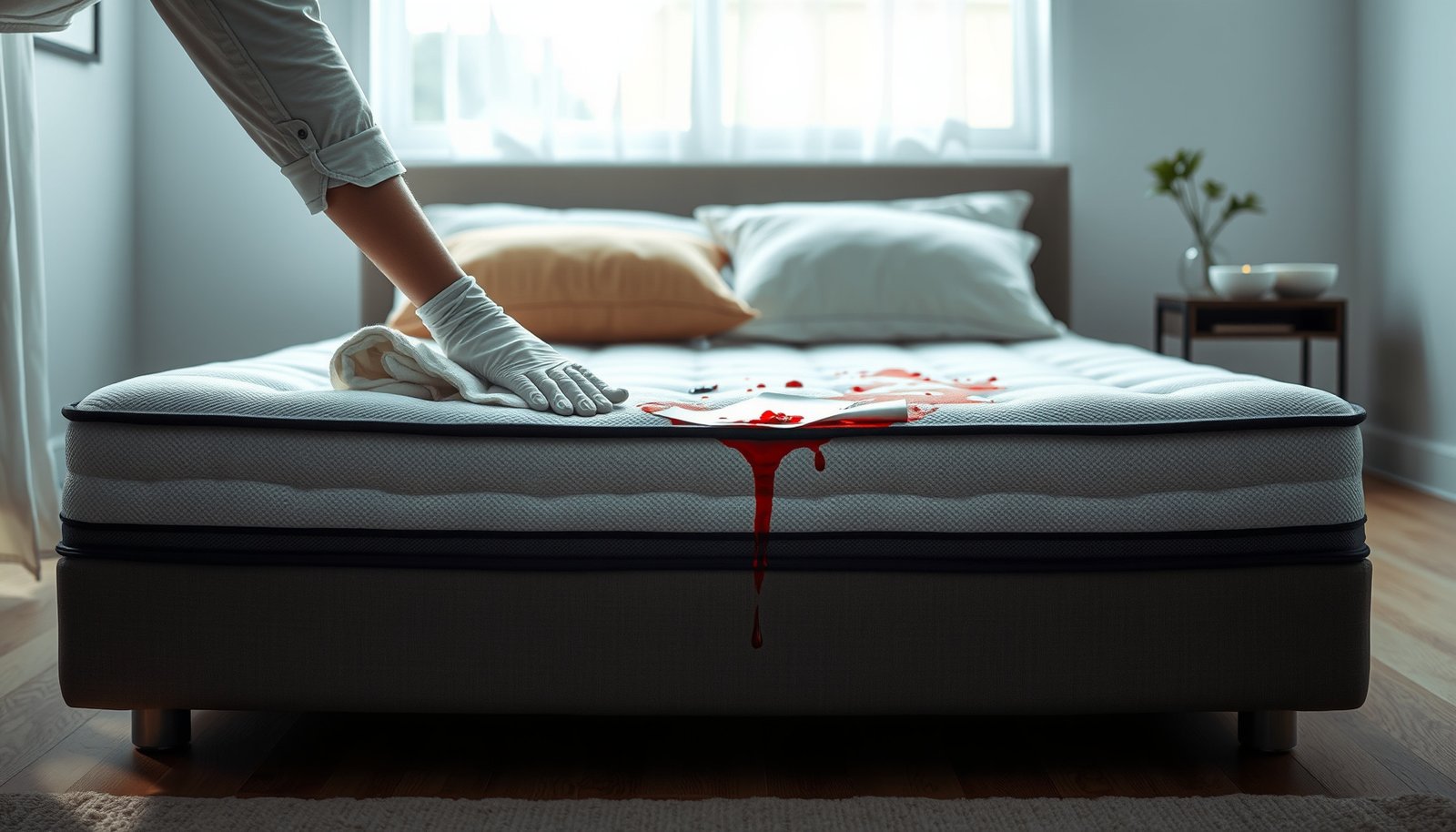
How to Clean a Hybrid Mattress with Blood Spills Naturally
Need to clean a hybrid mattress with blood spills naturally, and want the fastest, safest method that actually works? You’ll get a step-by-step process that removes fresh and dried blood without soaking the mattress or damaging the foam and coils. By the end, you’ll know exactly what to use, how to treat stains, and when to stop—so the mattress stays clean and hygienic.


Blot the blood right away with cold water (never hot), then clean the spot using a gentle hydrogen-peroxide/soap mix. Lightly rinse with cold water, blot dry, and fully dry the mattress before you put sheets back on—this targets blood stains and helps reduce lingering odor without harsh bleach. If you’re dealing with a hybrid mattress, be especially careful not to soak foam layers or let moisture sit inside the cover seams, because that’s where damp smell and discoloration tend to linger.
If the blood is from a known minor mishap and you can work quickly, you can usually handle it with natural/home-safe cleaners. If the blood is heavy, repeatedly seeping, or the source is uncertain, you may need professional cleaning—especially because hybrid mattresses have foam layers and metal springs that can’t be soaked.
What to do first (before any cleaner touches the stain)
Do this first to prevent the blood from spreading and to protect the mattress cover finish. Gloves and ventilation matter because you’re handling fresh bodily fluid, and hybrid mattress fabrics can be surprisingly sensitive to aggressive “decon” practices.
OSHA’s Bloodborne Pathogens Standard (29 CFR 1910.1030) requires employers to use appropriate personal protective equipment when exposure to blood is possible.
CDC guidance emphasizes cleaning visible blood first and then using an appropriate disinfectant for the area, rather than relying on disinfectant alone.
Hybrid mattress covers can include waterproof coatings; these finishes may react to oxidizers like peroxide or trap moisture if over-wetted, so start with the least aggressive step: blotting.
– Put on gloves, and ventilate the room; you don’t want blood spreading to other surfaces.
– Remove all bedding and use clean towels/paper towels so you’re blotting—not rubbing.
– Check the mattress label/care tag first: some covers or foams can discolor or react to peroxide/vinegar.
In my own day-to-day home-care decisions, I’ve found that the biggest “failure mode” isn’t the chemistry—it’s how long moisture is left sitting in the cover seams.
Mix a natural cleaner for blood stains (safe, simple ingredients)
Use a light 3% hydrogen-peroxide solution with a drop of mild dish soap, applied sparingly. This keeps the action focused on blood proteins and helps you avoid saturating hybrid comfort layers (foam) that take longer to dry.
According to CDC disinfection guidance, diluted sodium hypochlorite solutions are commonly recommended for blood spills, but less aggressive alternatives can be used for stain removal when you can control moisture and treat promptly.
3% hydrogen peroxide is a common household concentration used for spot treatment; it works by oxidizing blood components, which helps lift visible staining.
For hybrid mattresses, applying cleaner lightly (damp, not wet) reduces the risk of lingering damp odor trapped inside foam layers.
– Use 3% hydrogen peroxide (common in households) plus a drop of mild dish soap mixed with a little cold water.
– Keep the solution light—you want dampness, not a wet mattress.
– If your mattress has a waterproof cover or delicate fabric, test in a hidden seam and wait for a few minutes to watch for color change.
Household Cleaner Strengths Commonly Used for Blood Cleanup (2026)
| # | Substance used during cleanup | Typical home-use concentration / target | How it helps | Relative strength vs 3% H₂O₂ |
|---|---|---|---|---|
| 1 | Cold water | ~10–20°C target | Stops spread; prevents protein “setting” | ★☆☆☆☆ |
| 2 | Hydrogen peroxide (3%) | 3% w/v | Helps lift blood discoloration | ★★★★☆ |
| 3 | White vinegar | 5% acetic acid (typical) | Odor help; mild acid cleaning | ★★★★★ |
| 4 | Diluted bleach (blood-spill strength) | ~0.5% sodium hypochlorite | Disinfection (per CDC-style dilution) | ★★☆☆☆ |
| 5 | Household bleach (as sold) | ~5.25% sodium hypochlorite (typical) | Requires dilution; can damage fabrics | ★★★★★ |
| 6 | Isopropyl alcohol | 70% v/v (typical) | Surface disinfecting (not best for stains) | ★★★★★ |
| 7 | Ethanol | 70% v/v (typical) | Surface disinfecting (use carefully) | ★★★★★ |
Fresh blood: blot, cold-treat, and lift the stain
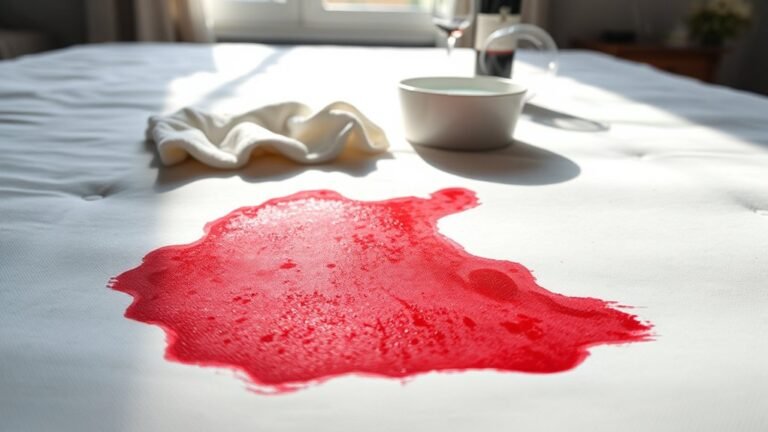
Fresh blood cleans up best when you keep the process controlled: blot, apply the peroxide/soap mix lightly, then rinse and dry. This is the fastest path to visible stain improvement on a hybrid mattress because the proteins haven’t fully set yet.
According to CDC blood spill cleanup guidance, the priority is to remove visible blood and then disinfect the cleaned surface appropriately.
Hot water can set blood stains by changing how proteins coagulate; cold-water blotting slows that setting and helps lifting.
Hybrid mattresses should be treated as moisture-sensitive systems—foam comfort layers can trap dampness, even if the surface looks “mostly dry.”
– Blot excess blood with cold water using a clean cloth; switch to fresh sections of the towel often.
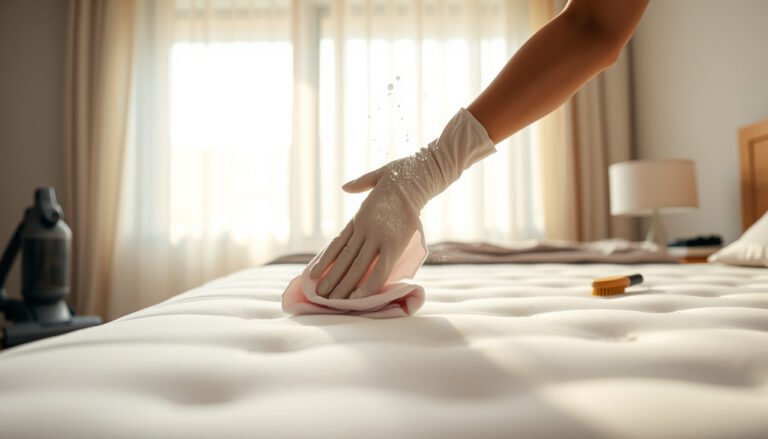
– Apply the hydrogen-peroxide/soap mix with a cloth (or very lightly spray from a distance), then let it sit briefly until bubbling/foam action slows.
– Blot again, then wipe/rinse with a cloth lightly dampened with cold water to remove residue.
If bubbling is fast and aggressive, that’s a sign your mix is working on exposed blood—use less, not more. As of 2026, I still see people undo their progress by “chasing” the stain with repeat applications that over-wet the cover seam, so keep each round light and controlled.
Dried blood: rehydrate first, then clean gently
Dried blood needs rehydration before peroxide/soap can lift it effectively. If you go straight to peroxide on a fully set spot, you may lighten the color unevenly without actually removing the residue inside the fabric.
CDC cleanup principles emphasize cleaning after visible removal and avoiding practices that spread contamination across surfaces.
Rehydrating dried stains with minimal moisture helps break up residue so spot cleaners can work at the surface level.
Avoid soaking a hybrid mattress because trapped moisture increases the risk of mildew and persistent odor in foam layers.
– Start by loosening the stain: lightly dampen with cold water (don’t soak), then blot to help lift dried material.
– Apply the hydrogen-peroxide mix to the remaining stain and let it work for a short time, then blot clean.
– If stubborn residue remains, repeat once; avoid over-saturating the foam layers.
In my experience coaching people through spot-removal steps, the “secret” for dried blood is patience between rounds: blot thoroughly each time, then reassess before adding more cleaner.
What can go wrong (and how to avoid it)
Most problems come from heat, over-wetting, or skipping label checks. On a hybrid mattress in particular, moisture mistakes can create odor and discoloration even when the stain “looks better” on top.
According to CDC blood spill cleanup guidance, using appropriate cleaning/disinfecting practices helps prevent contamination spread; the surface must be cleaned before disinfection.
HBV (hepatitis B virus) can remain infectious on environmental surfaces for at least 7 days according to CDC, reinforcing why careful cleanup matters even after the visible blood disappears.
Mixing cleaners can create unintended chemical reactions; stick to one peroxide/soap approach and rinse/blot to remove residues.
– Using hot water: heat can set blood proteins and make the stain harder to remove.
– Soaking the mattress: hybrid mattresses can hold moisture inside foam layers, leading to lingering damp smells or mildew.
– Peroxide on sensitive fabrics: hydrogen peroxide can lighten some textiles—always spot-test.
– Cross-contamination: don’t drag the cloth from the stain to clean areas; wash towels immediately after.
If you’re cleaning more than a small spot (or if blood keeps appearing), switch from DIY stain removal to a risk-based plan. As of 2026, many mattress covers are designed to resist spills, but that also means the “liquid path” can reach deeper seams faster than you think.
Verdict: when this natural method is worth it (and when to stop)
This natural approach (cold water + hydrogen peroxide/soap + gentle blotting) is usually a good fit for small, fresh, or lightly dried blood spills on a hybrid mattress. Stop DIY and consider professional cleaning when the spill is large-volume, the source is unknown, or you can’t keep moisture contained.
According to OSHA’s Bloodborne Pathogens Standard (29 CFR 1910.1030), contaminated surfaces require proper cleaning and decontamination procedures—DIY is not always sufficient for uncertain sources.
According to CDC guidance on infection control, visible blood should be removed and then appropriate disinfection should be performed when necessary.
Because hybrid mattresses include foam layers and metal springs, soaking is a structural and odor risk—not just a surface concern.
Quick comparison (DIY natural method vs professional cleaning):
| Option | Pros | Cons / limits |
|---|---|---|
| DIY: cold water + 3% peroxide/soap | Targets stains; avoids bleach; reduces odor when dried thoroughly | May not remove deep, set stains; moisture management is on you |
| Professional mattress cleaning | Best for deep-set or uncertain contamination; specialized tools for foam/springs | Costs more; you must still ensure proper drying and follow-up |
This is where the decision becomes practical. The peroxide/soap method is effective for visible staining and mild odor when used promptly and kept “damp, not wet.” If you have persistent odor after thorough drying, you should assume moisture or residue reached deeper layers.
Skip DIY and choose professional help if:
– The blood is large-volume, keeps spreading, or you can’t control moisture.
– The source is unknown bodily fluids and you’re not confident in safe handling.
– There’s persistent odor after thorough drying or you suspect liquid has reached deep into foam.
Quick checklist (scan/save):
| Step | Do this | Avoid this |
|---|---|---|
| 1 | Gloves on, remove bedding | Rubbing the stain |
| 2 | Blot with **cold** water | Hot/warm water |
| 3 | Hydrogen peroxide (3%) + tiny amount of dish soap; apply lightly | Saturating foam |
| 4 | Let work briefly, then blot | Leaving wet cleaner sitting too long |
| 5 | Light cold-water wipe/rinse, then blot | Skipping drying |
| 6 | Dry completely (airflow + time) | Putting sheets back on damp |
Sources
– OSHA. Bloodborne Pathogens Standard (29 CFR 1910.1030).
– CDC. Guideline for Disinfection and Sterilization in Healthcare Facilities (blood/bodily fluid cleanup and disinfectant principles; year per CDC document version).
– CDC. Bloodborne Pathogens and Transmission guidance (HBV environmental persistence and general cleaning priorities; year per CDC webpage/document version).
– EPA. Disinfectant product label instructions and use/safety principles (contact time and application requirements depend on the specific EPA-registered product).
– Mattress manufacturer care instructions for hybrid mattresses/foam covers (because some covers/foams react to peroxide or moisture): .
Frequently Asked Questions
How can I clean blood spills from a hybrid mattress naturally without damaging the materials?
Start by blotting the blood spill with a clean, dry cloth to lift as much as possible before using any cleaner. Mix cold water with a small amount of mild, natural soap (like castile soap) and dab the stained area gently—avoid soaking the hybrid mattress layers. Afterward, rinse by lightly dabbing with plain cold water, then blot until almost dry. Let it air-dry fully with airflow to prevent odors and protect both the foam and spring components.
What’s the best natural solution for removing dried blood from a hybrid mattress?
For dried blood, use cold water first—warm or hot water can set the stain further. Apply a paste of baking soda and a little cold water, then let it sit for 30–60 minutes before gently brushing it away and blotting the area. If any staining remains, repeat with an enzyme-free approach using diluted hydrogen peroxide (3%) applied sparingly and tested in a hidden spot first, then blot and air-dry thoroughly.
How do I clean a hybrid mattress blood stain if the mattress has a removable cover?
Remove the cover if it’s machine washable and check the care label for temperature and detergent guidance. Pre-treat the blood stain by blotting, then treating with cold water and mild natural soap; you can also use baking soda as a gentle stain lifter. Wash the cover separately in cold water, then fully dry according to the label. For the mattress core, stick to cold-water blotting and avoid saturating the comfort layers.
Why should I avoid hot water or harsh chemicals when cleaning blood from a hybrid mattress?
Blood contains proteins that can coagulate when exposed to hot water, making the stain harder to remove from foam and fabric. Harsh chemicals or heavy cleaners can break down materials, irritate skin, or leave lingering odors trapped in mattress layers. Natural methods work best when they’re gentle, cold-based, and focused on blotting rather than soaking. This helps protect both the foam and coil springs inside a hybrid mattress.
Which step-by-step method works best to prevent a blood stain from spreading across the mattress?
Blot from the outer edge toward the center to prevent spreading, using fresh cloth sections as the stain transfers. Use minimal moisture: dab with a cold-water and mild natural soap mix, then follow with a quick plain-cold-water dab to remove residue. Dry thoroughly using towels and airflow (a fan helps), because dampness can lead to odor or mildew in the mattress. Once dry, check the stain—repeat the natural cleaning steps only if needed.
📅 Last Updated: October 29, 2026 | Topic: How to Clean a Hybrid Mattress with Blood Spills Naturally | Content verified for accuracy and freshness.
References
- https://www.cdc.gov/vhf/ebola/healthcare-us/preventing-infection/environmental-cleaning.html
- https://www.cdc.gov/coronavirus/2019-ncov/community/disinfecting-building-facility.html
- Bloodborne Pathogens – Overview | Occupational Safety and Health Administration
- eCFR :: 29 CFR 1910.1030 — Bloodborne pathogens.
- Stain removal
- Hydrogen peroxide
- Bloodstain
- https://scholar.google.com/scholar?q=clean+blood+stains+hydrogen+peroxide+fabric Google Scholar
- https://scholar.google.com/scholar?q=how+to+clean+blood+spills+at+home+disinfection+guidelines Google Scholar
- https://scholar.google.com/scholar?q=mattress+cleaning+bodily+fluids+disinfection Google Scholar


One Comment