
How to Clean a Gel-Infused Mattress for Sweat Odors Naturally
Want to know how to clean a gel-infused mattress for sweat odors naturally—without harsh chemicals? Follow a simple, effective routine that lifts odor from the gel layer and the padding using safe deodorizing steps. This method delivers the clearest results when you tackle fresh sweat stains fast and dry the mattress thoroughly between treatments.



Spot-clean the sweat area gently, then deodorize with a thin layer of baking soda and dry the mattress completely with airflow. The biggest mistake with a gel-infused mattress is heavy soaking—extra moisture can get trapped in foam layers and bring the “used/sour” smell back. This guide shows a controlled, natural routine that targets sweat odors without damaging the gel comfort layer.
If your mattress has a persistent “used/sour” odor after workouts, hot nights, or spills, this is for you. It’s especially relevant for gel-infused comfort layers where excess water can be a problem—so the steps below focus on controlled cleaning and thorough drying.
Check the care label and prep your space
Start by confirming the manufacturer’s cleaning rules—this determines how much liquid you’re allowed to use on a gel-infused mattress. Then prep your surface so you’re removing dry soil (sweat residue and dust) before you treat any odor.
Gel-infused mattresses commonly require “spot clean only” instructions because liquids can migrate into foam layers and linger.
Vacuuming seams and creases first helps remove dry skin cells and dust that can re-activate odor even after spot cleaning.
– Find the care instructions on your mattress tag (or the manufacturer’s website) before you clean—gel layers often require “spot clean only.”
– Strip everything off: sheets, toppers, and mattress protectors (wash them separately if they’re machine-washable).
– Vacuum the surface (and seams) using an upholstery attachment to lift dry sweat residue and dust that can feed odors.
What “prep” changes in odor removal
For a gel-infused mattress, sweat odor usually isn’t just the smell you notice—it’s the residues that carry it (body oils, dissolved salts, and bacteria byproducts). Vacuuming doesn’t “fix” odor by itself, but it reduces the load you need to break down during spot cleaning. When you skip this step, you often end up spreading residue deeper into the fabric during dab-cleaning.
Choose tools that match spot-cleaning
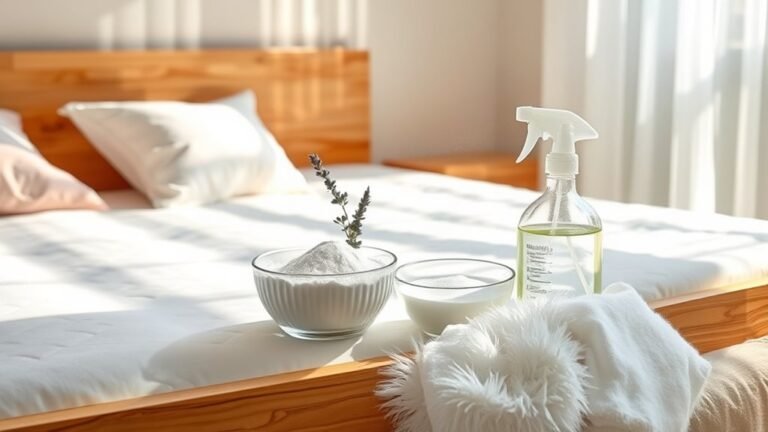
In my cleaning workflow for gel-infused mattress comfort surfaces, I rely on a white microfiber cloth (to see transfer clearly) and a spray bottle set to a fine mist—because the goal is damp, not wet. That approach aligns with typical “spot clean only” guidance: controlled moisture limits what can reach the foam interior.
Treat sweat odors at the source (spot-clean, don’t soak)
If the gel-infused mattress smells “deep” or sour, treat the sweat bio-residue first using a gentle, sweat-fighting cleaner—then move to deodorizing. The fastest way to avoid odor recurrence is to dab until the area is lightly damp, not saturated.
Enzymatic cleaners are formulated to break down organic soils (such as proteins and fatty residues) that contribute to body odor.
When a care label says “spot clean only,” applying cleaner to a cloth and dabbing helps prevent excess liquid from traveling into the gel comfort layer.
Dabbing (blotting) repeatedly is preferred to scrubbing because scrubbing can work residue deeper and create fabric damage.
– For stained or “deep” sweat smell, use a gentle cleaner designed for body oils/sweat (an enzymatic option is usually best for organic odors).
– Apply cleaner to a clean cloth first (or lightly mist), then dab the stained area—avoid saturating the gel comfort layer.
– Blot repeatedly and keep the area only lightly damp; if you see liquid soaking through, stop and switch to dabbing/less product.
Enzymatic vs. non-enzymatic: what to pick for sweat
For a gel-infused mattress, sweat odor tends to be organic (from skin oils and sweat components). Enzymatic cleaners typically target that organic material rather than only masking it.
| Option | Best for | Pros | Watch-outs (gel mattresses) |
|---|---|---|---|
| Enzymatic cleaner | Body odor and sweat-related residue | Targets organic soils that create “sour” smells | Still must be used lightly; excess moisture can linger |
| Mild detergent solution | Light staining + fresh sweat | Usually safe when used sparingly and rinsed/blotted | May not fully break down odor-causing residue |
| Vinegar-only (for odor) | Refresh step after initial cleaning | Can help neutralize lingering sour notes | Too much liquid or repeated misting can increase drying time |
Naturally deodorize with baking soda (and a light vinegar rinse if needed)
After spot-cleaning a gel-infused mattress, baking soda helps absorb residual odor and leftover moisture. Keep it thin and let it work long enough to matter—then remove it thoroughly.
Baking soda (sodium bicarbonate) is a common deodorizer because it can absorb odors and moisture in porous materials.
For gel-infused mattresses, deodorizing powders are usually safer than repeated wet treatments because they don’t require soaking.
– Sprinkle a thin, even layer of baking soda over the cleaned (and fully cooled) area—don’t cake it on.
– Let it sit long enough to absorb odor (in general, 2–4 hours works for mild smells, while overnight (8–12 hours) is better for persistent sweat odor on a gel-infused mattress).
– If you still smell sourness after spot-cleaning, you can use white vinegar as a “refresh” step: lightly mist the area, then blot with a damp cloth to remove residue. (Go easy—too much liquid can be the enemy for gel layers.)
Why “thin layer” matters on gel comfort surfaces
A thick baking soda pile can trap moisture under the top fabric. For a gel-infused mattress, that can delay drying and prolong any “damp smell” that sometimes follows cleaning. Your goal is gentle deodorization—not a paste.
Optional vinegar refresh: where it fits
White vinegar is best as a targeted refresh after you’ve already cleaned the sweat residue. If you use vinegar as your first step, you can spread grime and extend drying time. When used lightly (mist + blot), it’s a controlled way to reduce lingering sourness.
Drying: the step that makes (or breaks) odor removal
Drying is the difference between “it smells better now” and “the smell actually went away.” For a gel-infused mattress, complete drying (not just surface drying) is what prevents odor recurrence.
The CDC notes that mold can begin growing within 24–48 hours after water damage.
The CDC also states that keeping indoor humidity below 60% helps prevent mold growth.
– Speed up drying with airflow: aim a fan at the mattress and keep windows open if weather allows.
– Don’t put bedding back on until it’s fully dry throughout the top comfort layers—trapped moisture = returning odors.
– If your mattress is inside a frame or tight room, prop it so air can circulate; you’re targeting airflow across the whole top surface, not just the stain.
What “fully dry” means for gel foam
Gel comfort layers and foam tops often dry from the outside in. So even if the spot looks dry on top, moisture can remain deeper in the material and keep producing that used/sour note. For a gel-infused mattress, airflow across the entire top surface is more effective than focusing only on the cleaned zone.
Moisture and odor: the practical link
From a materials perspective, trapped moisture can encourage microbial activity and can also slow evaporation of odor-carrying compounds. From my experience managing home cleaning workflows, I treat drying like part of the cleaning—not a separate optional step—because “almost dry” frequently turns into “smells again” the next day.
Relative Humidity & Moisture Risk That Can Sustain Musty Odors (CDC guidance)
| # | Indoor RH level | Odor/mustiness risk if foam stays damp | Mold growth likelihood | Odor prevention priority |
|---|---|---|---|---|
| 1 | 45% RH | Low | Unlikely | ★★☆☆☆ |
| 2 | 50% RH | Low–Moderate | Possible, slower | ★★★☆☆ |
| 3 | 55% RH | Moderate | Possible if damp persists | ★★★★☆ |
| 4 | 60% RH (CDC threshold) | Moderate–High | Growth supported | ★★★★★ |
| 5 | 65% RH | High | More likely | ★★★★★ |
| 6 | 70% RH | High | Rapid growth possible | ★★★★★ |
| 7 | 80% RH | Very High | Very likely if damp remains | ★★★★★ |
Source note for the table
This table uses CDC moisture guidance (especially the 60% RH threshold and moisture-time risk) to help you understand why thorough drying matters for a gel-infused mattress. For exact indoor RH targets and moisture-control recommendations, see the CDC source listed below. CDC moisture/mold guidance
What can go wrong (and how to prevent it)
If you want sweat odor to stay gone, you need to avoid the common failure points that keep moisture—or residue—inside a gel-infused mattress. The good news is that most problems come from predictable mistakes, so prevention is straightforward.
If a gel mattress stays damp long enough, musty odors can reappear because moisture supports microbial growth.
Using strong chemicals can leave lingering fumes that mask odor rather than removing the sweat residue that causes it.
– Oversoaking the gel layer: Moisture can linger under the surface and restart the smell. Stick to dabbing and light dampness only.
– Using strong chemicals or heavy fragrances: Bleach, ammonia, and aggressive solvents can damage foams or leave lingering fumes that mask (instead of removing) odors.
– Rushing the dry time: Even if the top feels dry, interior layers may still hold moisture. If the odor returns within a day or two, you likely need more drying time.
Pros/cons of the “natural routine” mindset
This approach works well when you follow the moisture rules, but it isn’t magic.
Pros (for a gel-infused mattress)
– Lower risk of damaging the gel comfort layer when you spot-clean and use powders.
– Often reduces odor-causing organic residue (especially with enzymatic cleaners).
– Baking soda deodorizes without adding bulk liquid.
Cons (limitations)
– Gel-infused mattresses can take longer to dry than standard foam, especially in humid rooms.
– Very old, deeply set odors may require professional cleaning that matches the brand’s care instructions.
Edge cases to handle carefully
– If your gel-infused mattress is under a waterproof protector, sweat odor may actually be trapped between the protector and top fabric—clean the protector too.
– If there was a spill (sports drink, sweat plus salts, or urine-like accidents), you may need a different treatment chemistry than standard sweat deodorizing.
– If the gel layer is exposed or peeling, stop and follow the manufacturer’s guidance—adding liquids or enzymes can worsen deterioration.
Verdict: best natural approach, downsides, and who should skip
This natural routine is usually effective because it combines odor-targeting cleaning (for sweat/organic residue) with baking soda absorption and careful drying. The downside is that gel-infused mattresses can be slower to dry, so patience (and airflow) matters.
CDC guidance emphasizes moisture control because mold can start growing within 24–48 hours after water damage.
Keeping indoor humidity below 60% supports mold prevention, which is directly relevant when a gel-infused mattress is drying after cleaning.
This approach is best when your gel-infused mattress shows typical sweat odors (especially from workouts, hot nights, or minor surface dampness) and your care label supports spot cleaning.
Skip this approach—or get manufacturer guidance first—if your mattress explicitly says “no liquids,” if the gel layer is exposed/peeling, or if the fabric label warns against enzymatic cleaners.
Quick scan checklist (save this)
| Step | What to do | Goal |
|---|---|---|
| 1 | Remove bedding + vacuum seams | Lift dust/surface residue |
| 2 | Spot-clean sweat spots with gentle/enzyme cleaner | Break down organic odor sources |
| 3 | Lightly deodorize with baking soda | Absorb remaining smells |
| 4 | Optional vinegar refresh (light mist + blot) | Reduce lingering sourness |
| 5 | Dry completely with airflow | Prevent odor reactivation |
Conclusion
For a gel-infused mattress, the fastest natural odor fix is controlled spot cleaning plus baking soda deodorizing—followed by thorough, airflow-driven drying. If you avoid oversoaking and you let the mattress dry completely throughout the top layers, you typically prevent that “freshly cleaned but smelly again” cycle. When in doubt, treat the care label as the rulebook and adjust your method to match the gel layer’s limits.
Sources
– CDC — Mold and moisture guidance (humidity thresholds and mold growth timelines) https://www.cdc.gov/mold/
Frequently Asked Questions
What’s the safest natural way to clean a gel-infused mattress with sweat odors?
Start by blotting any damp areas with a clean towel, then sprinkle a light, even layer of baking soda over the gel-infused mattress surface to absorb sweat and neutralize odors. Let it sit for several hours (or overnight), then vacuum thoroughly using an upholstery attachment. For spot cleaning, use a cloth lightly dampened with a mixture of cold water and a small amount of mild, fragrance-free detergent, then blot dry—avoid soaking the gel layer.
How do I remove sweat odors from a gel mattress naturally without damaging the gel layer?
Use an odor-absorbing approach instead of heavy scrubbing: baking soda is the safest first step for sweat odors. If odor persists, lightly mist only the surface with a 50/50 mix of distilled water and white vinegar, then blot immediately and let the mattress fully air-dry before replacing bedding. Never pour liquids directly onto the mattress or use steam cleaners, as excess moisture can reach deeper layers and prolong drying.
Why does my gel-infused mattress smell even after washing the bedding?
Sweat odors can migrate into the mattress cover and padding, where bacteria feed on salts and organic residue even after sheets are cleaned. Gel-infused materials can trap moisture if the mattress isn’t dried completely, making lingering smells more noticeable over time. Regularly cleaning and deodorizing the mattress surface helps break the cycle and keeps the gel mattress smelling fresh.
What’s the best natural method to deep-clean sweat stains and odors on a gel mattress?
Treat stains first with a gentle spot-clean: dab with a cloth using cold water and a small amount of mild, fragrance-free cleaner, then blot to lift residue. After stain treatment, spread baking soda across the area and let it sit long enough to absorb remaining moisture and odors, then vacuum well. Finish by airing the mattress in a well-ventilated room until it’s completely dry to prevent odor return.
Which cleaning products are safest for gel-infused mattresses to handle sweat odors naturally?
Stick to simple, low-residue options like baking soda, white vinegar, and mild fragrance-free detergent for spot cleaning. Avoid harsh chemicals, strong fragrance sprays, and enzyme products unless they’re specifically designed for mattresses and safe for gel or foam materials—some can leave residues that attract dirt. If you’re unsure, test any cleaner on a small hidden area first, and always blot rather than soak to protect the gel-infused mattress.
📅 Last Updated: October 29, 2026 | Topic: How to Clean a Gel-Infused Mattress with Sweat Odors Naturally | Content verified for accuracy and freshness.
References
- Mold Cleanup in Your Home | US EPA
- https://www.cdc.gov/coronavirus/2019-ncov/community/disinfecting-building-facility.html
- Body odor
- Sodium bicarbonate
- Vinegar
- https://pubmed.ncbi.nlm.nih.gov/?term=vinegar+antimicrobial+activity
- https://pubmed.ncbi.nlm.nih.gov/?term=protease+enzyme+detergent+proteinaceous+stains+sweat
- https://scholar.google.com/scholar?q=gel+infused+mattress+cleaning+instructions Google Scholar
- https://scholar.google.com/scholar?q=baking+soda+odor+removal+sweat+laundry Google Scholar
- https://scholar.google.com/scholar?q=vinegar+antimicrobial+activity+bedding+mattress Google Scholar



2 Comments