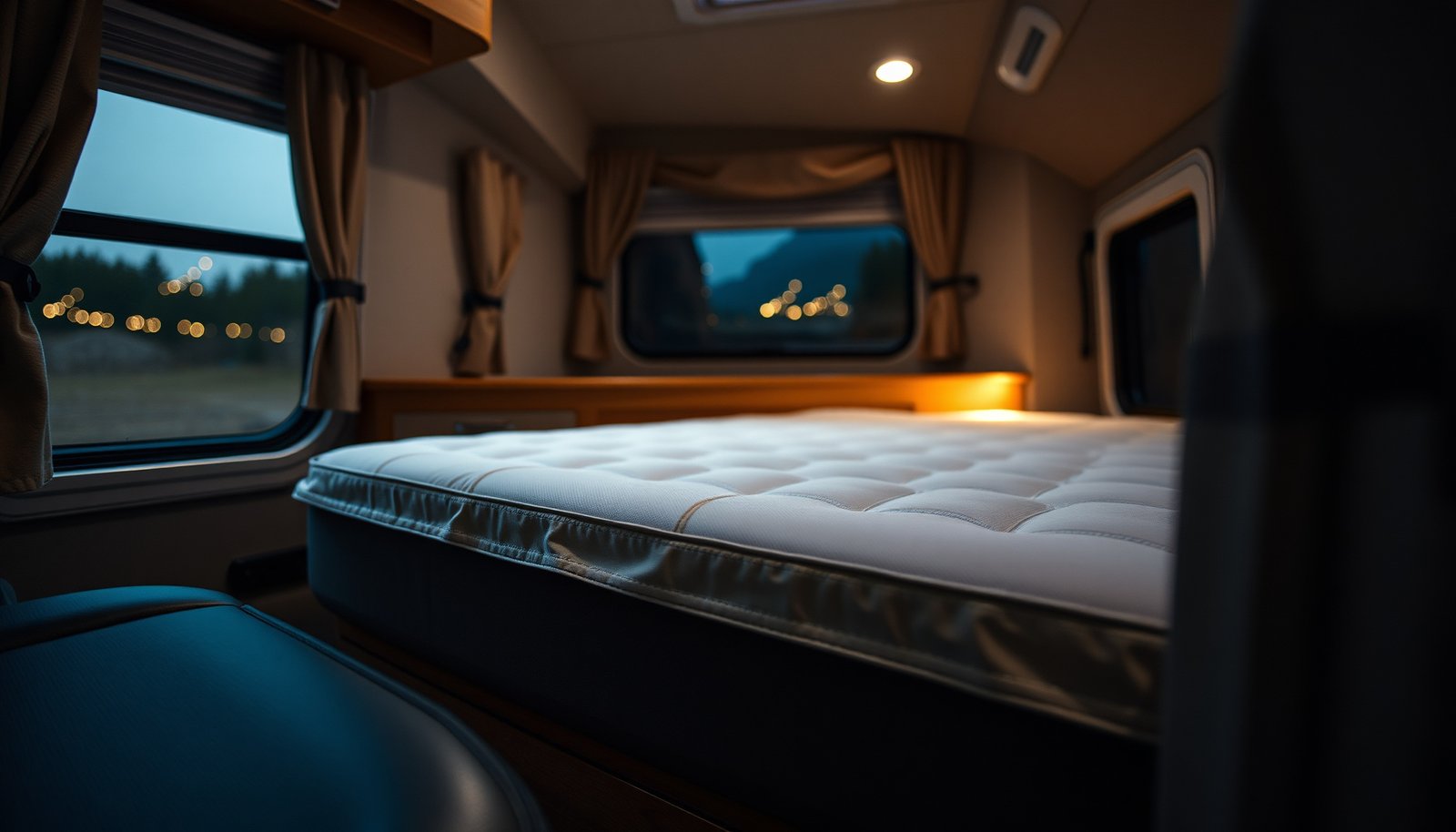
How to Choose a Cooling Mattress for Kids with Sensitive Skin (RV)
Hot, humid RV nights can quickly trigger itching or rashes on kids with sensitive skin—especially when you choose a “cooling” mattress based only on temperature claims. You can avoid that common mistake by selecting materials that stay breathable, limit irritants, and work with limited airflow in an RV. Plan on spending about 15–20 minutes learning what to look for so you can buy with confidence and get their sleep back on track.




A cooling mattress for kids with sensitive skin in an RV should balance breathable airflow, skin-friendly materials, and RV practicality (size, heat retention, and moisture management). Start by prioritizing breathable covers and low-irritant fillings, then match the mattress to your RV bed frame and ventilation setup—because “cooling” only works when sweat has somewhere safe to go.
If your child gets heat rash, sweats easily, or reacts to harsh fabrics/odors, choosing the right mattress matters even more in an RV—where airflow and humidity can be less consistent than at home. Use the steps below to narrow options without overbuying features you won’t actually benefit from on the road.
Start with the cooling basics (skin-first)
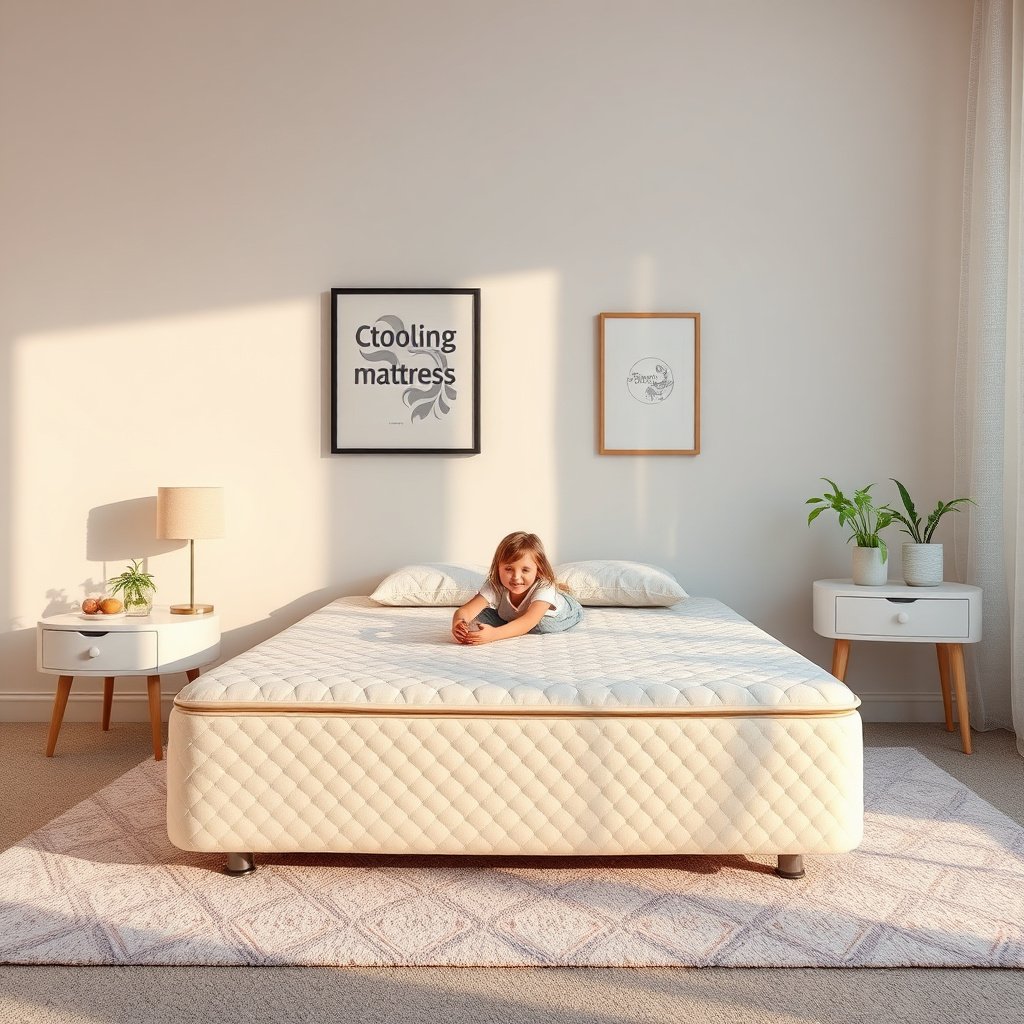
A cooling mattress for kids works best when it prevents heat buildup at the skin level, not just at the marketing level. Your first priority should be the top layers that contact your child’s body, because they determine whether moisture stays on the surface (irritation risk) or moves away from skin (comfort).
– Look for a breathable top layer (e.g., moisture-wicking fabric and an airflow-friendly design) rather than relying only on “cooling” branding. In RVs, heat often comes from two directions at once: warmer air inside the coach and radiant heat off nearby walls or bed decks. A kid cooling mattress with a truly breathable cover helps interrupt both.
– Prioritize skin-safe construction: smooth quilting, minimal scratchy edges, and materials that shouldn’t off-gas strongly when new. If your child reacts to smells, new-mattress odors can be as important as temperature—especially in small cabins where air movement is limited.
– If the mattress has a cooling feature (gel/phase-change/other tech), confirm it’s paired with a breathable cover—otherwise heat can still build up. Cooling gels and phase-change foams can reduce surface warmth, but they don’t automatically solve the bigger problem: trapped sweat and rising humidity near the skin.
To make this practical, here’s a quick “cooling tech vs. sensitive-skin risk” contrast you can use while comparing options:
| Cooling element | What it helps | Sensitive-skin risk in an RV |
|---|---|---|
| Gel-infused layer | May feel cooler on contact | Can still trap heat if the cover isn’t breathable |
| Phase-change material | Helps moderate temperature swings | May reduce cooling if moisture can’t evaporate |
| Airflow channels / open-cell comfort | Improves circulation through the comfort layer | Only helpful if the cover doesn’t block airflow |
| Breathable knit cover | Wicks and vents moisture away from skin | Lowest risk—best when layered with a washable protector |
From my own trip-planning notes (where we track humidity sources like rainy days, wet gear storage, and nighttime condensation), I’ve learned that the “cooling mattress” that performs best is often the one that dries and airs out quickly—not the one that feels coolest in the first 30 seconds.
Match the mattress to RV airflow and heat buildup
A kid cooling mattress should be matched to RV airflow patterns, not only to your child’s comfort preferences. In an RV, heat and moisture can pool faster because the space is smaller and ventilation may be intermittent.
– RV temperatures swing, so you’ll want a mattress that doesn’t trap heat—then pair it with a setup that lets air move (don’t fully seal it in plastic). Sealed covers can stop sweat from escaping, which is exactly the opposite of what sensitive skin needs.
– Consider how you’ll ventilate: mattress placement, clearance to the wall, and whether you’ll use a fan or keep vents unobstructed. If the mattress is flush to a warm or poorly ventilated surface, even a breathable cover can struggle.
– Plan for moisture control: RV humidity can contribute to odors and skin irritation, so choose designs that handle sweat/wetness better. Moisture is the hidden driver of discomfort—humid air and trapped sweat raise friction and clog sweat ducts, which increases heat rash likelihood.
Humidity guidance matters here because RVs can spend long stretches at uncomfortable relative humidity levels. According to the U.S. Environmental Protection Agency (EPA), indoor relative humidity should generally be kept between 30% and 50% to help reduce conditions that support mold growth. According to the Centers for Disease Control and Prevention (CDC), mold can grow when indoor humidity is consistently above 60%. While a mattress won’t “cause” mold by itself, elevated humidity increases the odds that sweat and bedding materials stay damp.
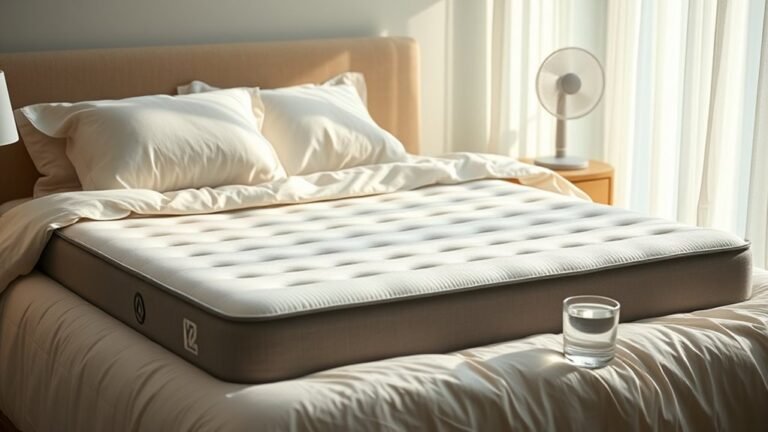
A simple mitigation step is air movement. ENERGY STAR notes that ceiling fans can let you raise thermostat settings by up to 4°F while maintaining comfort (ENERGY STAR). In an RV, a fan aimed to support airflow around the bed (without blowing directly onto your child’s skin all night) can help a breathable kid cooling mattress do its job.
Choose materials that are less likely to irritate sensitive skin
A cooling mattress for kids with sensitive skin should minimize irritation at every layer your child touches. That means breathable fabrics, low-irritant construction, and predictable new-mattress behavior (especially odor and residue during break-in).
– Focus on “kid-friendly” material choices: breathable, low-irritant covers and fillings that don’t feel rough or heat-retaining. For many sensitive-skin kids, the comfort layer’s feel matters as much as the temperature. A cover that’s smooth and consistently cool-to-neutral tends to reduce scratching and rubbing.
– Check for certification/standards when available (for example, low-emissions claims), and avoid anything that requires heavy chemical “conditioning” to be comfortable. If a product claims to need special sprays or treatments to perform, that’s a red flag for sensitive skin and RV air quality.
– If your child is sensitive to certain fibers, verify the fabric composition of the cover and any removable layers before committing. Many mattress covers are blends; you want the exact percentages or at least the named fibers (e.g., polyester knit with cotton content, rayon/viscose, etc.) so you can match them to your child’s known triggers.
When you’re shopping for a kid cooling mattress, look beyond “cooling” and read construction details like you would a skincare ingredient list. In practice, the lowest-irritation options usually have (1) a smooth knit top, (2) a comfort layer that doesn’t shed fine particles, and (3) a removable, washable surface you can keep clean even in travel conditions. RV life also means more laundry friction—quick wash cycles and dry times are part of “skin safety” on the road.
Don’t skip sizing, support, and RV-proof practicality
A cooling mattress must also fit the RV correctly to maintain pressure relief and stable support. Even the best breathable materials can’t compensate for poor fit, sagging, or a protector that traps heat.
– Measure your RV sleeping space carefully: length/width/height limits and whether the mattress must sit on a platform, rails, or slats. RV beds can be slightly nonstandard, and a small mismatch can create gaps that shift the mattress or stress edges—both increase discomfort for sensitive skin.
– Match firmness to your child’s comfort and support needs—cooling won’t help if the mattress is too soft and causes uncomfortable pressure. Sensitive skin often correlates with “restlessness,” and restless sleep can worsen heat rash by increasing sweating and friction.
– Use a mattress protector strategically: pick a breathable, wash-friendly protector rather than one that traps heat. A waterproof protector can be useful for spills, but only if it’s breathable enough for sweat to escape and dry. Otherwise, the protector becomes a moisture barrier that keeps the surface damp.
Because RV mattress sizes can vary by brand and coach layout, I recommend verifying dimensions and thinking about how the cooling surface will be protected during travel (covers, straps, storage, and laundry cadence).
Common RV and Standard Mattress Sizes (Width × Length, inches)
| # | Mattress size label | Width | Length | Fit note for RVs |
|---|---|---|---|---|
| 1 | Twin | 38 in | 75 in | Common for small RVs and bunks |
| 2 | Twin XL | 38 in | 80 in | Used when RV bed length supports extra reach |
| 3 | Full | 54 in | 75 in | Sometimes replaces RV “short full” in builds |
| 4 | RV Full (short) | 54 in | 75 in | Common in travel trailers; verify brand labels |
| 5 | Queen (standard) | 60 in | 80 in | Not “RV short”; may not fit RV bed frames |
| 6 | RV Queen (short) | 60 in | 75 in | Common in RVs; 5-inch shorter than standard queen |
| 7 | RV King (short) | 72 in | 75 in | Verify frame width/rail spacing before purchase |
What can go wrong (and how to avoid it)
A cooling mattress for kids can still overheat if the full system (cover, protector, placement, ventilation) is working against you. Here are the most common failure points we see in RV setups, plus the fixes.
– “Cooling” without breathability: Some products feel cool at first but don’t stay comfortable because the cover traps heat. Treat breathability as the priority, not a bonus.
– Over-sealing the mattress: Waterproof covers that are not breathable can increase warmth and make sweat linger—especially in small RV spaces. If you need liquid protection, choose a breathable protector designed for sweat moisture transfer.
– Wrong size causing poor support: A slightly oversized or undersized mattress can shift or create gaps, leading to uneven support and more discomfort. Gaps can also force children to “roll into” a softer edge where heat and moisture can concentrate.
– New-mattress odor reactions: If your child reacts to smells, give the mattress time to air out according to the manufacturer’s guidance before regular use.
– Ignoring ventilation/placement: Even the best mattress can get warm if it’s pressed against a hot surface or blocking RV airflow. Test your setup at the same temperature range you’ll camp in most.
In other words, if you buy a cooling mattress for kids but then trap the surface under a non-breathable protector and position it against a warm wall with blocked vents, you’ve built an overheating system. The corrective action is usually straightforward: loosen the barrier layers, restore clearance, and add controlled airflow.
Verdict: what we’d recommend (and who should skip this)
For most families shopping for a kid’s RV bed, the safest approach is to choose a cooling mattress where breathability and skin-friendly materials are built in—then back it up with a breathable protector and an RV setup that improves airflow. Skip “extra-tech” cooling claims if they don’t also come with a breathable cover, and don’t assume a mattress will stay cool if you cover it in non-breathable layers.
Avoid this mattress type (or pause and re-check materials) if your child has known sensitivities to specific fabrics/fillers, or if you can’t realistically air out a new mattress per the manufacturer’s instructions. If you’re unsure, look for clear material disclosures and removable covers so you can wash what touches skin. Also, if the RV’s ventilation is frequently blocked during sleep, you may need to solve airflow first—because even the best cooling mattress for kids cannot outperform a trapped-humidity environment.
Quick checklist (scan/save)
| What to check | Why it matters for sensitive skin in an RV | Pass if… |
|---|---|---|
| Breathable cover/top layer | Heat and sweat can worsen irritation | Fabric feels breathable and is designed to wick/move moisture |
| Low-irritant materials | Some kids react to rough fibers or strong odors | Clear fabric/filling composition; guidance for airing out |
| RV fit + support | Bad fit can cause discomfort and poor support | Exact measurements match your platform/rails |
| Ventilation plan | RVs can trap heat/humidity | Mattress placement allows airflow; vents aren’t blocked |
| Protector choice | Non-breathable protectors can trap warmth | Breathable, washable, easy to maintain |
| New-mattress conditioning steps | Odor or residue can trigger sensitivity | Follow manufacturer airing instructions before regular use |
Frequently Asked Questions
What cooling mattress features are safest for kids with sensitive skin in an RV?
Look for mattresses labeled hypoallergenic and made without common irritants like added fragrance, formaldehyde, or heavy chemical treatments. A breathable cover (such as cotton, bamboo, or breathable knit fabrics) helps reduce heat buildup and sweat that can trigger rashes. For cooling performance, prioritize moisture-wicking and ventilation channels rather than harsh, overly textured fabrics that may rub sensitive skin.
How do I choose a cooling mattress that stays comfortable despite RV movement and limited space?
Choose a mattress thickness and firmness that fit your RV bed frame while offering stable support—typically medium-firm for growing kids to reduce pressure points. Consider materials like gel-infused foam or responsive breathable foam that reduce heat while maintaining bounce for comfort during travel. If your RV has a shorter bed or uneven base, use a supportive topper designed for RV use to prevent slipping and maintain even pressure.
Why do cooling mattresses help with night sweats and allergy symptoms for kids on the road?
Cooling mattresses can lower surface temperature and wick moisture, which helps limit sweat that contributes to itchy skin and heat rash. Better airflow and humidity management can also make it harder for allergens to linger, especially in compact RV spaces where air circulation is limited. While cooling can’t replace allergy care, the right RV cooling mattress can reduce triggers that worsen eczema flare-ups and contact irritation.
Which cooling materials are best for eczema-prone kids traveling in an RV?
For eczema-prone kids, consider breathable latex, gel-infused memory foam with a soft cover, or open-cell foam designed for airflow. These options can improve temperature regulation while keeping the surface comfortable and less abrasive than some cooling fabrics. Always verify the mattress has a removable, washable cover and check for low-odor certifications so you minimize exposure to chemical smells that can irritate sensitive skin.
What’s the best way to check a cooling mattress for skin safety before buying for an RV?
Ask whether the mattress has an OEKO-TEX Standard 100 or similar certification and whether the cover is fragrance-free and machine washable. Look for a protective barrier or encasement that’s breathable and specifically designed for allergen control, but confirm it won’t trap heat. If possible, allow the mattress to air out in a ventilated area before the first RV trip, and start with a hypoallergenic sheet set to reduce additional friction and irritants.
📅 Last Updated: November 14, 2026 | Topic: How to Choose a Cooling Mattress for Kids with Sensitive Skin in an RV | Content verified for accuracy and freshness.
References
- https://www.cdc.gov/mold/default.htm
- https://www.epa.gov/asthma/dust-mites-and-asthma
- https://www.cdc.gov/parasites/dustmites/
- Eczema | Dermatitis | Atopic Dermatitis | MedlinePlus
- https://medlineplus.gov/contactdermatitis.html
- cooling bedding phase change material – Search Results – PubMed
- https://scholar.google.com/scholar?q=cooling+sleep+environment+children+skin+temperature Google Scholar
- https://scholar.google.com/scholar?q=child+eczema+overheating+sweating+bedroom+environment Google Scholar
- https://scholar.google.com/scholar?q=dust+mite+allergy+bedroom+encasings+children+mattress Google Scholar