
How to Choose a Latex Mattress for Back Sleepers with Joint Pain
Choosing the best latex mattress for back sleepers with joint pain comes down to one decision: how well the foam relieves pressure while keeping your spine neutrally aligned. If you want the clearest answer, prioritize medium-firm latex (often zoned) with strong pressure relief at the hips and shoulders. That combination reduces joint stress without the “sink” that can bend your lower back, so you wake up supported—not sore.


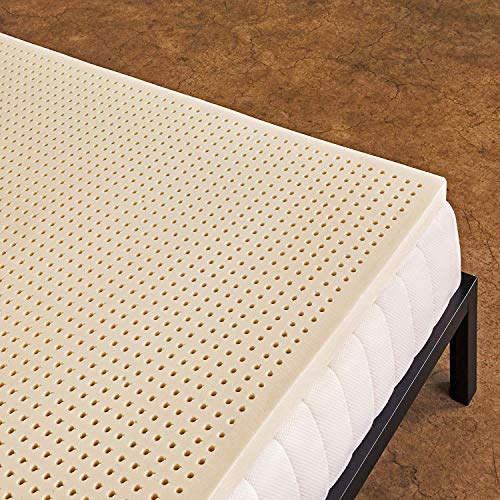

If you’re a back sleeper with joint pain, choose a latex mattress that keeps your hips supported while still relieving pressure under your shoulders and lower back. Look for a medium-firm latex feel (often) plus a comfort layer that contours without “bottoming out,” then confirm the mattress’s specs (ILD and layer construction) so it matches your body and sleep position. In this guide, we’ll walk through exactly what to check before you buy.
If your joints feel worse when you lie on your back, the goal isn’t just “soft” or “firm”—it’s keeping your spine aligned while reducing pressure on sensitive areas. Latex can help because it combines support and pressure relief, but the best choice depends on mattress construction and how your weight distributes in back-sleeping.
Pick the right latex type (Talalay vs Dunlop) for pressure relief
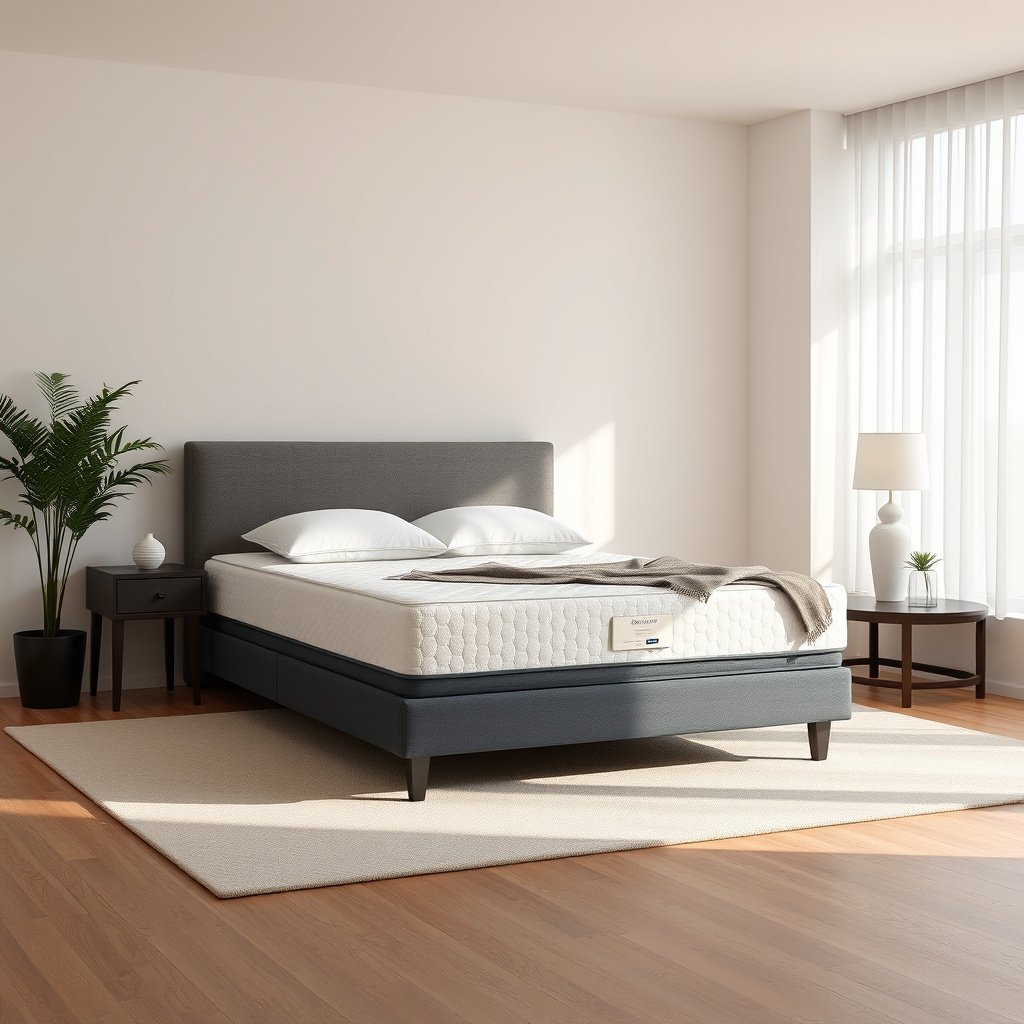
For joint-pain pressure relief, the latex type matters less than the mattress’s published ILD and the thickness of the comfort layer. That said, Talalay is often marketed as more evenly contouring, while Dunlop is often marketed as denser and more supportive—so you should use the specs to translate marketing into what your shoulders and hips will actually feel.
“ILD” (Indentation Load Deflection) describes how much force it takes to compress foam to a set indentation (commonly 25%), and it’s one of the most useful numbers to compare across latex models.
When shoulders and hips are painful in back-sleeping, you usually need targeted pressure relief from the comfort layer *and* enough support so the lower back doesn’t sag with hip sink.
Talalay and Dunlop can feel different, but the most decision-relevant information is still the comfort-layer ILD and the layer stack height in the manufacturer’s spec sheet.
Here’s how to interpret Talalay vs Dunlop without guessing: manufacturers often list each latex layer’s thickness and ILD (or “firmness” mapped to ILD). Your job is to find a comfort layer ILD that cradles your shoulders and reduces pressure under bony areas, while ensuring the support layers keep your pelvis level.
What I look for when translating Talalay/Dunlop labels into back-sleeper comfort: I review the layer breakdown first (how many latex layers, total comfort thickness, and each layer’s ILD), and only then consider the Talalay/Dunlop label as a secondary clue. That’s because two mattresses can both “feel medium,” yet one can bottom out sooner if the comfort layer is too thin or too soft.
Also, don’t overcorrect by going extremely firm. If your joint pain is primarily pressure-related (shoulders, hips, or SI joints), you generally want enough contouring for pressure redistribution—just not so much that the hips sink and your spine tilts.
Key specs to seek on the manufacturer page or spec PDF:
– Comfort-layer thickness (often the biggest driver of “bottoming out” vs “cradling”)
– Comfort-layer ILD (the number that tells you how the latex compresses under your weight)
– Support-layer ILD (the number that helps prevent hip sink)
– Whether the mattress uses multiple latex layers with different firmness zones
Cite-worthy ILD definition to ground your comparisons: According to , ILD is a standardized way to measure foam compression resistance at a defined indentation level.
> Source note (placeholders): Use the manufacturer’s own ILD explanation or spec page to interpret what their Talalay/Dunlop process means for firmness.
Match firmness to back-sleeping alignment (not just comfort)
For back sleepers with joint pain, the “right” latex firmness is the one that keeps your hips from sinking far enough to strain your lower back. A medium-firm starting point is common, but you should verify it against the ILD or firmness range published per layer.
Back-sleepers typically need a mattress that supports the hips enough to maintain spinal alignment, not just one that feels comfortable when you lie down.
If your hips sink below the shoulders, pressure relief can turn into back strain because the pelvis tips and the lumbar area loses its neutral position.
Manufacturers that publish ILD by layer let you compare mattresses more reliably than “feel” claims like medium/soft/firm.
A practical way to think about firmness is: pressure relief happens in the comfort layer; alignment happens when the support layers resist excessive compression. When back sleepers with joint pain choose “soft” latex, they sometimes get comfort at the shoulders but lose support at the hips—then the lower back takes the load.
A spec-based firmness workflow (fast and repeatable)
1. Start with medium-firm as a baseline if you’re unsure. Many latex models aimed at back sleepers land in the medium-firm range.
2. Check comfort-layer ILD first. This influences shoulder pressure and how quickly you feel the support underneath.
3. Check support-layer ILD next. This helps prevent hip sink and lumbar “hammocking.”
4. Confirm total comfort thickness. Too thin = “bottoming” pressure near joints; too thick + too soft = hip sink.
To keep comparisons grounded, remember a data point you can use across brands: ILD is measured as resistance to indentation, so lower ILD generally means softer compression and higher ILD means firmer compression—the mattress specs translate into how your pelvis will behave.
Below is a “how to read ILD bands” cheat sheet you can use when a brand lists layer ILD values. Treat it as a starting framework—always confirm using the mattress’s thickness and layer stack.
Common Comfort-Layer ILD Bands for Back Sleepers (Latex)
| # | Comfort-layer ILD band (approx.) | Typical feel | Pressure relief tendency | Hip-sink risk in back-sleep | Back-pain fit score |
|---|---|---|---|---|---|
| 1 | 14–18 ILD | Very soft | High cushioning | High | ★★☆☆☆ |
| 2 | 19–22 ILD | Soft | Good cushioning | Moderate | ★★★☆☆ |
| 3 | 23–26 ILD | Medium | Balanced | Low–moderate | ★★★★☆ |
| 4 | 27–30 ILD | Medium-firm | Targeted relief | Low | ★★★★★ |
| 5 | 31–34 ILD | Firm | Moderate cushioning | Very low | ★★★★☆ |
| 6 | 35–38 ILD | Very firm | Limited cushioning | Minimal | ★★★☆☆ |
| 7 | 39+ ILD | Hard | Low cushioning | Minimal | ★★☆☆☆ |
Important: This table focuses on *comfort-layer ILD only*. Back-sleeping alignment also depends on the support core ILD and the total comfort thickness.
Use layer construction to reduce joint stress
For back sleepers with joint pain, latex construction should create a “cushion zone” over joints without letting the spine sag. The most reliable way to ensure that is to verify the layer stack (how many latex layers and how thick the comfort layer is).
A comfort layer that’s too thin can make you feel the firmer support core under your shoulders or lower back, recreating pressure pain.
A supportive latex core helps preserve pelvic alignment so pressure relief doesn’t come at the cost of hip sink.
The fewer details a manufacturer provides about layer thickness and ILD, the harder it is to predict back-sleeper performance for joint pain.
Latex “feels” are shaped by the stack, not just the average firmness. In practice, the most common problem I see (based on spec-sheet review patterns) is a mismatch between comfort-layer softness and the support core’s ability to hold the hips. If the comfort layer is too soft or too thin, the joints either take direct load (pressure points) or the hips sink (alignment loss).
What to check in the layer construction
– Number of latex layers: More layers can allow more tuning (comfort vs support vs transition), but only if ILD and thickness are clearly stated.
– Comfort-layer thickness: As a general target, many people with shoulder/lower-back sensitivity do better with ~2 to 3 inches of comfort material, though your exact needs vary by body weight and the specific ILD.
– Transition layer behavior: If there’s a transition layer, confirm it isn’t so soft that it compresses under your pelvis.
– Total thickness of the comfort “zone”: The goal is cushioning joints without quickly exposing the support core.
Why “bottoming out” matters for joints
“Bottoming out” isn’t just discomfort—it can amplify inflammatory signals because joints are loaded more directly. When the latex compresses too far, your shoulder and hip areas contact firmer structures earlier than expected, increasing peak pressure.
> Where to find layer specs: look for a “mattress construction,” “specifications,” “layer breakdown,” or PDF that lists each latex layer’s thickness and ILD.
Don’t ignore zoning and edge support (common for back pain)
For back sleepers with hip or lower-back pain, zoning can help keep the pelvis supported while still cushioning shoulders. Edge support also affects whether you stay in a neutral position—weak edges make you “sink” when you move, which can shift spinal alignment repeatedly.
Zoning is most useful when it’s specified by region and backed by published ILD/thickness data, not just by marketing terms.
If your hips are supported by zoning but your shoulders still press too much, the mattress may still aggravate joint pain in the same way as a non-zoned model.
Edge support influences how often you change positions; collapsing edges often cause more movement during the night, which can worsen pain for sensitive sleepers.
Zoning: when it helps (and when it doesn’t)
If a mattress uses zoning, it should be tied to specific regions (e.g., lumbar/hip area vs shoulder area) and mapped to the actual layer ILD. Otherwise, zoning can feel like a vague “firmness change” rather than a predictable alignment tool.
– If you’re back sleeping with hip/SI joint pain, look for zones that keep the hip area from sinking.
– If your shoulder pain is dominant, ensure the shoulder area still has enough comfort ILD and thickness to reduce pressure.
> Zoning map/spec location: check for “zoning,” “support regions,” or a diagram in the brand’s specifications.
Edge support: the practical reason it matters
Edge weakness often shows up when:
– you sit on the edge to dress,
– you change positions frequently, or
– you share the bed and move near the perimeter.
Even if the center feels great, collapsing edges can cause repeated pelvic shift—small changes that can add up when you’re dealing with joint pain.
What can go wrong when choosing latex for joint pain
The biggest risk is choosing a latex mattress that relieves pressure but fails at support—especially at the hips—leading to spinal strain. Other common mistakes involve ignoring layer specs and cover comfort factors that affect sleep quality.
Pressure relief without sufficient support can still worsen back pain because spinal alignment changes when the pelvis sinks.
Latex firmness can vary by formulation and thickness, so “try it in-store” without ILD/layer specs often leads to unpleasant surprises at home.
Sleep temperature and moisture management affect pain perception; restless, overheated sleep can make joint discomfort feel worse.
Pros/cons comparison to keep you honest
| Option | Pros for joint pain | Cons / failure mode to watch |
|---|---|---|
| Latex that’s medium-firm + clearly defined comfort layer | Helps cushion shoulders/hips while resisting hip sink for better alignment. | May feel “responsive” (bouncy) if you prefer slow/contour foam. |
| Latex marketed as “soft” with limited layer details | Often feels comfortable at first when joints are tender. | Hip sink can strain your lower back; “bottoming” pressure can reappear over time. |
Other pitfalls to avoid
– Buying purely by feel: Latex can be deceptively comfortable during quick testing, but layer thickness decides whether you hit the support too early when your body weight settles.
– Skipping ILD verification: Two latex mattresses with similar comfort thickness can compress differently if ILD values differ.
– Ignoring cover material and breathability: If the cover retains heat, you may sleep lighter and shift more—bad news for achy joints.
Verdict / tip: a safe starting point, plus who should skip it
A safe starting point for back sleepers with joint pain is a medium-firm latex mattress with a clearly defined comfort layer (thickness + ILD) and a supportive core that resists hip sink. Shortlist models that publish layer-by-layer construction details—then choose based on specs, not just the in-store feel.
If a brand publishes layer thickness and ILD, you can choose latex for back-pain alignment with less guesswork.
For most back sleepers, the safest path is cushioning the shoulders/hips without allowing the pelvis to drop out of neutral alignment.
Return/exchange access matters because joint pain responses can differ even between mattresses that seem similar on paper.
My practical recommendation (spec-first, not “label-first”)
– Target medium-firm support behavior for hip stability.
– Ensure the comfort layer is thick enough to cushion joints—without compressing too far.
– Prefer mattresses that show the layer breakdown (latex layers, thicknesses, ILDs) and—if offered—zoning maps.
Downsides to be transparent about
– Latex is often responsive rather than “slow-moving,” which some people interpret as too “bouncy” for comfort.
– Latex mattresses can be heavy, making rotation and adjustment harder.
– If you have extremely specific pain triggers, a generalized medium-firm model may not be precise enough.
Who should skip this approach (or test carefully)
Skip this spec-first approach—or test with a strict return window—if:
– your pain requires a tightly prescribed medical setup, or
– you can’t exchange the mattress if alignment doesn’t improve after the break-in period.
Always verify the brand’s return policy and warranty terms before committing:
Quick checklist you can scan before buying
| What to check | Why it matters for back + joint pain | What to look for |
|---|---|---|
| Comfort layer thickness | Cushions shoulders/low back without “bottoming” | Often ~2–3 inches of comfort material (confirm via layer specs) |
| ILD/firmness specs | Ensures the mattress matches your alignment needs | Published ILD by layer; back sleepers often do best with medium-firm comfort/support behavior |
| Support for hips | Prevents lower-back strain | Support core that resists hip sink; published support-layer ILD |
| Zoning (if offered) | Maintains spinal alignment | Zoning diagram + ILD/thickness tied to lumbar/hip regions |
| Edge support | Helps you move without collapsing | Edge stability description; avoid “roll-off” feel on perimeter tests |
| Cover + breathability | Better sleep = pain feels more manageable | Cover material, airflow/moisture management notes, and care guidance from specs |
– Confirm you can exchange/return if it doesn’t relieve symptoms.
– Compare 2–3 finalists using their published specs, not just in-store feel.
Sources
– CertiPUR-US (program standards for foam emissions/chemical limitations):
– Global Organic Latex Standard (GOLS) / certification body documentation (if you’re considering certified organic latex):
– Manufacturer mattress spec sheets (layer construction, ILD/firmness, zoning maps, cover materials, and warranty/return terms):
– ASTM ILD testing definition (for ILD meaning):
If you focus on published firmness/ILD specs and a comfort layer that cushions without sacrificing hip support, you’ll be much more likely to wake up with less joint strain. Shortlist 2–3 latex mattresses, compare layer construction side-by-side, and make sure your purchase includes a workable return/exchange option—then adjust based on how your body responds over the first few nights.
Frequently Asked Questions
What firmness level should a latex mattress have for back sleepers with joint pain?
Back sleepers with joint pain usually sleep best on a medium-firm to firm latex mattress because it supports the spine while still allowing pressure relief. Medium-firm often helps cushion hips and lower back without letting them sink too deeply, which can aggravate pain. If you’re heavier or prefer a more “on top” feel, lean firmer; if you feel pressure at the shoulders or hips, try medium-firm for better comfort.
How can I choose latex mattress support that reduces pressure on shoulders, hips, and lower back?
Look for latex foam that balances responsive support with pressure relief, such as medium-firm Dunlop or Talalay latex with a supportive core. A top comfort layer of latex can help contour around joints, while a denser support layer helps keep the spine aligned for back sleepers. If you have common pain points (like shoulder stiffness or hip discomfort), prioritize responsiveness and gradual sink rather than a mattress that feels too “stiff” or too soft.
Why does latex foam work well for people with back pain and joint discomfort?
Latex mattresses are known for their pressure-relieving comfort and buoyant support, which can reduce strain where your body contacts the bed. Many latex foams conform enough to cushion joints, yet they recover quickly to keep your back supported throughout the night. This combination can help back sleepers maintain better spinal alignment, which is often a key factor in managing joint pain.
Which latex mattress features should I look for if I have sensitive joints or need motion-friendly comfort?
Choose a mattress with a removable or washable cover and low-odor certifications (like OEKO-TEX) if you’re sensitive to smells. For joint comfort and easier movement, consider latex that offers a balanced feel—responsive enough to change positions without dragging, but supportive enough to prevent sagging. If you share a bed, latex’s natural springiness can reduce “stuck in the mattress” discomfort and may help with motion transfer depending on the specific construction.
Best way to compare latex mattresses for back sleepers with joint pain: what specs matter most?
Focus on overall comfort + support, especially the thickness of the comfort layer and the firmness of the support core. A common approach is a comfort layer that contours at pressure points paired with a firmer latex base for spinal alignment. Also compare certifications, materials (100% natural latex vs blends), and edge support, then test for how your lower back feels in your typical sleep position—pressure relief and alignment are more important than marketing terms like “plush.”
📅 Last Updated: October 26, 2026 | Topic: How to Choose a Latex Mattress for Back Sleepers with Joint Pain | Content verified for accuracy and freshness.
References
- Latex foam
- Mattress
- https://www.mayoclinic.org/healthy-lifestyle/adult-health/in-depth/mattress/art-20046221
- https://medlineplus.gov/lowbackpain.html
- https://pubmed.ncbi.nlm.nih.gov/?term=mattress+firmness+low+back+pain
- https://pubmed.ncbi.nlm.nih.gov/?term=mattress+pressure+distribution+foam
- https://pubmed.ncbi.nlm.nih.gov/?term=latex+foam+pressure+relief+sleep
- https://scholar.google.com/scholar?q=latex+mattress+back+sleeper+joint+pain Google Scholar
- https://scholar.google.com/scholar?q=mattress+firmness+low+back+pain+randomized+trial+systematic+review Google Scholar
- https://scholar.google.com/scholar?q=latex+foam+pressure+relief+sleep+interface+pressure Google Scholar