
How to Choose an Organic Mattress for Back Sleepers: Key Tips
Choosing an organic mattress for back sleeping can feel overwhelming, because comfort depends on how well the bed supports your spine while meeting your clean-material standards. In the next 10–15 minutes, you’ll be able to narrow to the right firmness range and confirm what the organic labels actually mean, with less trial and error. All you need is a couple of personal fit checks and the key certification and material questions to ask before you buy.




Choosing an organic mattress for back sleepers comes down to one priority: keep your spine neutral by preventing hip “sink” while still cushioning your lumbar area. Look for a medium to medium-firm feel, supportive organic materials in the comfort/support layers, and certifications that clearly verify how much of the mattress is actually organic—because “organic” claims can vary a lot.
If you’re a back sleeper, choose an organic mattress that keeps your spine neutral—meaning your hips don’t sink too far and your shoulders don’t push up. Focus on firmness/feel (often medium-firm), supportive materials, and certifications that back up the “organic” claim. This guide walks you through what to look for, what can go wrong, and a quick checklist you can use while shopping.
If you have lower-back discomfort, want cleaner material standards, or you’ve noticed your current mattress makes your hips sag, this is for you. It’s especially useful when you’re comparing organic options and trying to match them to a back-sleep support needs.
Start with back-sleeper support: spine alignment first
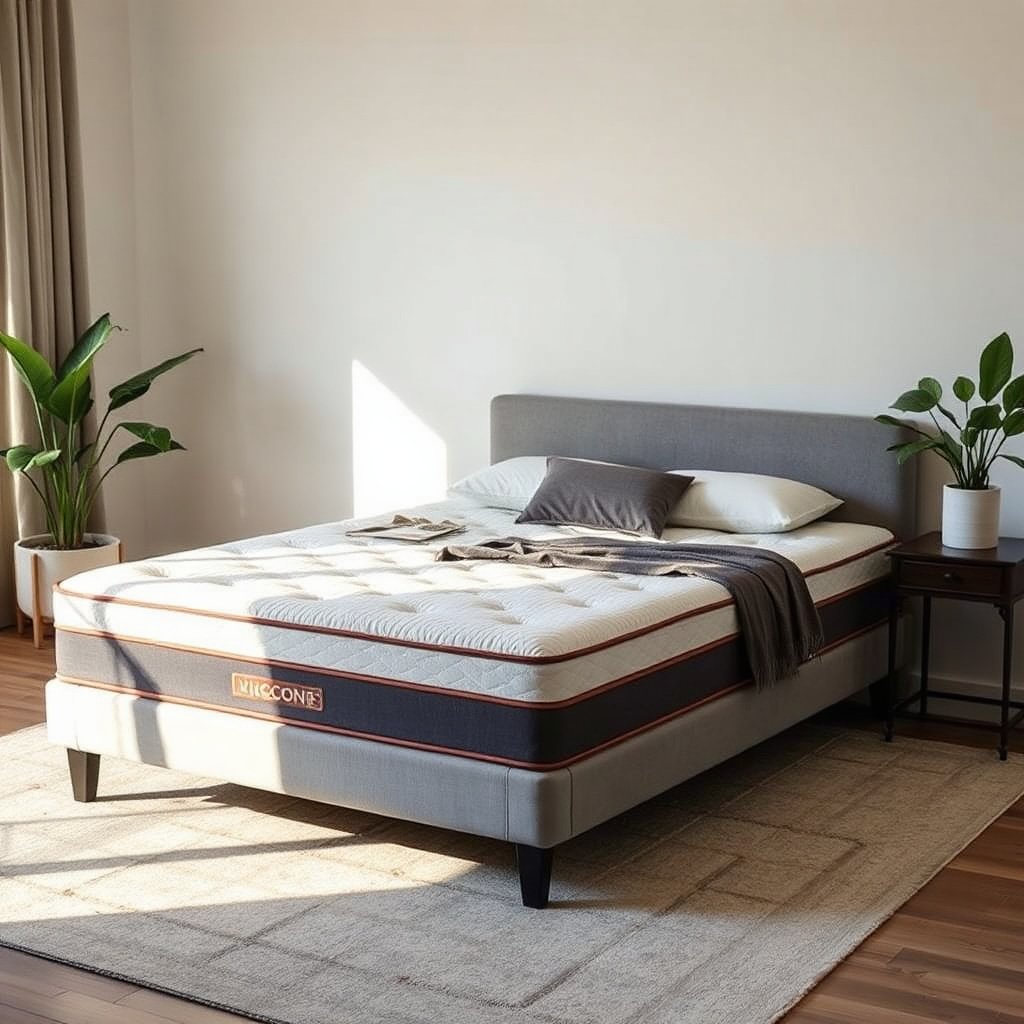
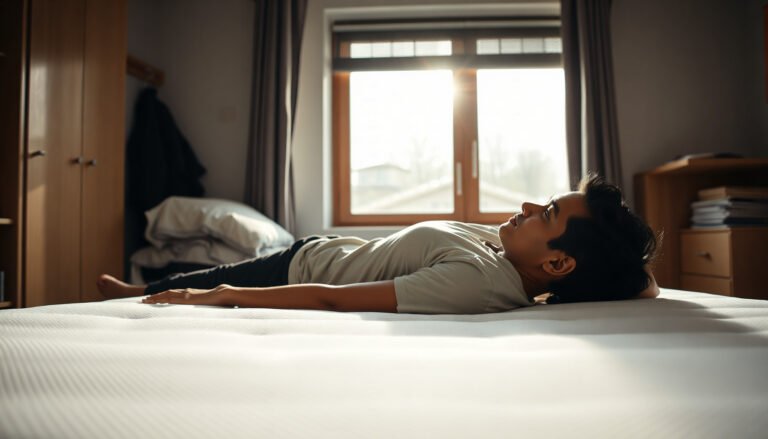
Back sleepers usually need a mattress that supports the pelvis so the lumbar spine doesn’t collapse into a “C” shape. In practice, that means preventing hammocking (too-soft sagging under the hips) while offering enough cushioning so the lower back isn’t left “bridged” and tense.
– Look for a mattress that maintains a neutral spine by supporting your hips and lower back without “hammocking.”
– Back sleepers usually do best with medium to medium-firm feels; too soft often causes hip sinking, while too firm can create pressure points.
– Pay attention to how the mattress performs at your “pressure zones” (hips, lower back, shoulders), not just overall comfort.
For back sleeping, the most useful test is how the mattress behaves under three connected areas: hips, lumbar (lower back), and shoulders. When the hips sink, the pelvis tilts and the lumbar area often over-arches, which can aggravate discomfort. When the shoulders “ride high,” the upper back may strain to compensate—especially on firmer beds or beds with less contouring in the shoulder region.
In my shopping routine, I don’t just “feel” a mattress—I lie on my back long enough to notice whether my hips drop or stay level. A mattress that keeps your lower back relaxed typically feels steady under the lumbar area rather than gradually yielding as you settle.
Understand “organic” claims: certifications and materials matter
The best way to choose an organic mattress is to verify certification, not marketing language. Organic certifications don’t just prove “cleaner materials”—they also clarify which parts are certified organic and what percentages are required, which matters for support and durability.
– Verify organic status through recognized certification labels rather than relying on marketing language alone.
– Check what’s actually organic: covers, foams, latex, or fibers—some products are partly organic and partly conventional.
– Confirm material types that tend to support back sleepers (commonly organic latex and/or supportive organic innerspring systems), and avoid assuming all comfort layers are equally supportive.
Many buyers assume “organic” automatically means the mattress is supportive. That’s not necessarily true. Some comfort layers (even if made from organic latex or organic fibers) can still be too plush or too thick, allowing hip sink and disrupting spinal alignment.
To decide whether an organic mattress is a good back-sleeper fit, you need both:
1) organic verification for the material you care about, and
2) a support design that maintains pelvic alignment.
Here’s a simple framework for what certifications generally help with (and what they typically don’t):
- Certifications verify:
- Whether specific components meet organic standards (often by ingredient percentage and chain-of-custody).
- Certifications usually don’t guarantee:
- That the mattress’s comfort layer thickness and support core will prevent hip sink for your body type.
- Back-sleeping fit is confirmed by:
- How the mattress holds your hips and lumbar area when you’re on your back, ideally during a trial period.
As of 2026, certification-aware labeling is still the most reliable approach because the phrase “natural” or “eco-friendly” does not always correspond to an enforceable organic threshold.
Organic label thresholds that affect what “organic mattress” can legally mean
| # | Program / standard | Label claim type | What the threshold reflects | Organic-content threshold |
|---|---|---|---|---|
| 1 | USDA National Organic Program (NOP) | “Organic” | % organic ingredients in product | ≥ 95% |
| 2 | USDA National Organic Program (NOP) | “Made with organic” | % organic ingredients in product | ≥ 70% to < 95% |
| 3 | EU Organic production & labeling rules | “Organic” | % organic ingredients in product | ≥ 95% |
| 4 | EU Organic production & labeling rules | “Made with organic” | % organic ingredients in product | ≥ 70% to < 95% |
| 5 | Global Organic Textile Standard (GOTS) | “Organic” textile label | % organic textile fibers | ≥ 95% |
| 6 | Global Organic Textile Standard (GOTS) | “Made with organic” textile label | % organic textile fibers | ≥ 70% to < 95% |
| 7 | Textile Exchange Organic Content Standard (OCS) | OCS “Organic” claim | % verified organic content | ≥ 95% |
These thresholds explain why two “organic mattresses” can differ substantially even when both use certification logos. For example, according to the USDA National Organic Program, an “organic” product label requires at least 95% organic ingredients (https://www.ams.usda.gov/rules-regulations/organic). Similarly, according to GOTS labeling guidance, “organic” textile fibers typically require at least 95% organic fiber content (https://www.global-standard.org/the-standard/). And according to OCS rules, an OCS “Organic” claim generally requires at least 95% verified organic content (https://textileexchange.org/standards/ocs/).
Choose the right comfort layer thickness and feel
The right comfort layer is the one that cushions your lumbar area without letting the pelvis drop. For back sleepers, “more cushioning” is not always better—plushness can be comfortable at first but still cause hip sink after you settle.
– Comfort layers that are too plush can reduce support and let your pelvis drop; too thin can feel harsh if you need gentle contouring.
– If you’re between feels (e.g., “medium” vs “medium-firm”), consider how you react to pressure: back sleepers often need enough cushioning to reduce lumbar discomfort.
– If you sleep warm, prioritize breathable organic cover materials and designs that encourage airflow (don’t assume “natural” equals “cool”).
Comfort layer design affects two things simultaneously: pressure relief and load distribution. Pressure relief is what reduces the “digging” feeling around the lower back and hips. Load distribution is what prevents the mattress from collapsing under those same areas.
Organic mattresses often use latex, latex blends, or natural-fiber comfort layers. Latex generally provides a more responsive, supportive feel than very slow-recovery foams, and that can help keep your hips from sinking. But thickness still matters. A thick comfort layer—whether organic or not—can create an overly soft “top cradle,” especially for people who like to sleep slightly heavier through the hips.
If you sleep warm, comfort layers can trap heat. Breathable organic covers and airflow-friendly constructions matter here, and as of 2026 many organic brands still rely on the same design principle: move air through the system rather than simply claiming “natural fibers are cool.”
Check firmness and zoning features (and use your body as the test)
A mattress that fits back sleeping aligns your spine while you’re lying fully supported on your back. Zoning can help some people, but zoning can’t replace the fundamentals of support stability and pressure control.
– Look for how the mattress responds under your weight when you’re on your back—support should feel steady through the lumbar area.
– “Zoned” designs can help some sleepers, but they’re not automatically better; match the zoning logic to your body type and pain pattern.
– If you share a bed, edge support and motion isolation still matter for back sleepers who get up at night.
Zoning usually changes firmness or support characteristics across regions—commonly to reduce shoulder pressure and increase support under hips. In a best-case scenario, your torso stays supported without the hips sinking too far. In a worst-case scenario, the zoning is tuned to someone else’s anatomy, and your pelvis ends up either unsupported or compressed.
This is why body-based testing matters. The fastest way to detect mismatch is to focus on how the lumbar region feels after you’ve settled: does it feel cushioned and relaxed, or strained and either “floating” or “pulled down”?
Also consider two practical issues that disproportionately affect back sleepers:
1) Getting up at night: edge support affects whether you can sit up without feeling like you’re sliding off the bed.
2) Partner movement: motion isolation can reduce disruptive rocking that can shift spinal alignment during sleep.
What can go wrong when buying organic mattresses
Organic mattresses can be a great choice, but several common issues lead to disappointing back-sleep results. The biggest problems usually involve comfort-layer softness, incomplete organic coverage, or skipping trial terms.
– Mistaking “organic” for “fully supportive”: comfort layers can still be overly soft, even in organic models.
– Overcorrecting firmness: too firm may reduce sinking but can create uncomfortable pressure, especially around the shoulders or upper back.
– Choosing based on certifications alone: a certified cover doesn’t guarantee the internal support system suits back sleeping.
– Buying without verifying “partial organic” vs “certified organic” coverage—some listings emphasize organic components that may not be the support core.
– Ignoring trial/return realities: if the mattress can’t be returned, you may be stuck with a setup that doesn’t keep your spine neutral.
Many shoppers discover the problem only after their body acclimates. If the mattress causes gradual hip sink, you might start compensating during sleep—tightening your lower back, changing posture, or waking more frequently. Low back discomfort is common enough that it’s worth taking mattress mechanics seriously. According to the National Institute of Arthritis and Musculoskeletal and Skin Diseases (NIAMS), up to 80% of people experience low back pain at some point in their lives (https://www.niams.nih.gov/health-topics/low-back-pain), which is why small support changes can matter.
Another common failure mode: over-trusting the word “organic.” Certifications verify organic thresholds for specific components, but they don’t automatically tell you how thick the comfort layer is or how the support core distributes pressure across your hips.
As of 2026, the “safer” approach is to treat certifications as eligibility filters (is it truly organic in the way you care about?) and treat construction/feel as the actual performance test (does it keep your spine neutral?).
Verdict: a practical approach (and who should skip this)
For back sleepers, the safest path is to shortlist mattresses where organic certifications are clear and the support system is built to prevent hip sink—typically medium to medium-firm feels with supportive comfort layers. The downside is that “organic” can mean different things across components, and many organic options cost more, so you need to avoid guessing.
The practical recipe is straightforward:
– Prioritize spinal neutrality first (no hammocking under hips, no “shoulder ride-up”).
– Confirm certification coverage and organic thresholds for the specific materials used.
– Use a trial period to verify lumbar comfort and pressure relief over several nights.
Skip (or be extra cautious with) an organic mattress if you’re highly sensitive to pressure and you only like very soft beds—organic comfort layers can still be plush, but you’ll need to ensure they don’t compromise lumbar support. Also consider avoiding a rushed purchase if you can’t test during your normal sleeping routine, even with a return window. If your back pain is severe, persistent, or accompanied by neurologic symptoms, talk with a qualified clinician first—mattress changes are supportive, not diagnostic.
Quick checklist for back sleepers (save this)
– [ ] Medium to medium-firm feel (to prevent hip sinking)
– [ ] Clear organic certifications and which components are certified (not just marketing)
– [ ] Comfort layer thickness supports lumbar alignment (not hammocking)
– [ ] Breathability/airflow addressed for your sleep temperature needs
– [ ] Support stability under hips/lower back when lying on your back
– [ ] Trial/return terms you can realistically use
– [ ] Budget fits ongoing mattress ownership costs (optional: replace schedule expectations)
Sources
– NIAMS (National Institute of Arthritis and Musculoskeletal and Skin Diseases) — Low Back Pain overview and prevalence context: https://www.niams.nih.gov/health-topics/low-back-pain
– USDA Agricultural Marketing Service — Organic labeling rules and National Organic Program guidance: https://www.ams.usda.gov/rules-regulations/organic
– European Commission — EU organic production and labeling framework (Regulation (EU) 2018/848 and related labeling guidance): https://agriculture.ec.europa.eu/farming/organic-farming/organic-production-and-labelling_en
– Global Organic Textile Standard (GOTS) — Standard and labeling framework: https://www.global-standard.org/the-standard/
– Global Organic Latex Standard (GOLS) — Standard and requirements for certified organic latex (official GOLS information hub): https://www.global-standard.org/gols
– Textile Exchange — Organic Content Standard (OCS) and organic content claim rules: https://textileexchange.org/standards/ocs/
A truly good organic mattress for back sleepers is one that pairs verifiable organic coverage with genuine spine-neutral support. Use certifications to confirm what’s actually organic, use construction details to predict support behavior, and use your body and trial period to confirm that your hips stay aligned instead of sinking as you settle.
Frequently Asked Questions
What firmness level should an organic mattress have for back sleepers?
Most back sleepers do best with a medium-firm organic mattress, typically around 5–7 on a 10-point scale, because it supports the lumbar spine without sinking too much. If you’re lighter, you may prefer slightly firmer for better back support, while heavier sleepers often need extra support to prevent hip sag. Look for materials that maintain pressure relief around the lower back while keeping your hips level with your shoulders.
How do I choose an organic latex mattress for back sleeping?
Start by checking the latex type and certifications—choose an organic latex mattress made with certified organic materials (like GOLS or similar) and confirm the mattress components are sourced from reputable producers. For back sleepers, prioritize responsive “buoyant” support that lets your lower back stay aligned, and look for zoned support if you commonly feel pressure in the waist area. Also verify how the mattress handles temperature, since latex often sleeps cooler than many all-foam options.
Why is lumbar support important when buying an organic mattress for back sleepers?
Lumbar support helps keep the natural curve of your spine from flattening or arching, which can reduce morning stiffness and back pain. A quality organic mattress should support your mid-to-lower back while preventing excessive sink at the hips. If you wake up with back discomfort, try testing models that maintain alignment and offer targeted support layers rather than relying on a thick comfort layer alone.
Which organic mattress materials are best for pressure relief and back sleeping?
For pressure relief, organic latex, organic wool, and organic cotton covers are popular choices because they balance comfort with structural support. Latex provides even weight distribution and helps reduce pressure points, while wool can add cushioning and help regulate temperature. When evaluating materials, choose a layered design that combines comfort and support—avoid overly soft top layers that can cause hip sink and spinal misalignment.
Best for back sleepers—organic latex, organic hybrid, or organic foam mattress?
The “best” option depends on how you like to feel and your support needs: organic latex is often ideal for back sleepers who want responsive pressure relief and cooler sleep. An organic hybrid (like latex or wool over pocketed coils) can be great if you want stronger edge support and airflow while still getting cushioning. All-foam organic mattresses can work well too, but back sleepers should choose ones with supportive high-density layers and sufficient firmness to prevent hip sag.
📅 Last Updated: November 02, 2026 | Topic: How to Choose an Organic Mattress for Back Sleepers | Content verified for accuracy and freshness.
References
- mattress firmness low back pain – Search Results – PubMed
- latex mattress volatile organic compounds indoor air – Search Results – PubMed
- https://www.epa.gov/indoor-air-quality-iaq/volatile-organic-compounds-vocs
- 404 – GOTS – Global Organic Textile Standard
- 404 – GOTS – Global Organic Textile Standard
- Sleep position
- https://scholar.google.com/scholar?q=mattress+firmness+low+back+pain+randomized+trial+back+sleepers Google Scholar
- https://scholar.google.com/scholar?q=organic+mattress+volatile+organic+compounds+VOC+off-gassing+latex+foam Google Scholar
- https://scholar.google.com/scholar?q=GOTS+GOLS+OEKO-TEX+Standard+100+mattress+certification+requirements Google Scholar


One Comment