How to Buy a Used Mattress Safely: Key Steps Today
You can bring home a used mattress that feels fresh and is safe to sleep on—while paying a fraction of the cost of new. You’ll only get that value if you verify the mattress’s condition, hygiene, and history before you commit your budget. Follow the key steps to inspect properly, confirm policies, and make sure the price you see aligns with what you’re buying.



Buy a used mattress safely by choosing a reliable seller with a clear return option, then inspecting it carefully for pests, damage, and odors before it ever enters your home. After delivery, protect your space with a mattress encasement and keep the mattress fully covered until you’ve handled it the right way.
If you’re shopping for a budget-friendly mattress, filling in a guest room, or replacing a bed quickly, used can make sense—but only if you treat it like a potential pest-and-allergen risk, not just a “clean secondhand item.”
Check the mattress source and return policy

A used mattress is safest when the seller can document its condition and offer a fast exit if you discover problems. In 2026 (and today), the difference between “reasonable used” and “high-risk” is usually the seller’s accountability.
Start by evaluating the source like you would a product recall risk: you want verifiable handling, transparent condition notes, and a return window that covers you if anything seems off.
– Prefer sellers who offer inspection/condition notes and a return window (so you can back out fast if something seems off).
– Avoid “final sale” situations unless you’re buying from a source that can clearly verify condition and origin.
– Ask how the mattress was stored and handled (especially whether it was kept covered and away from infestations).
To tighten your decision, request specifics in writing:
– Storage details: Was it kept in a sealed bag or covered area (garage/floor crawl spaces raise risk)?
– Transport handling: Was it wrapped for transport, and did it ride in a vehicle where it could pick up pests?
– Pest claim policy: If they say “no bed bugs,” ask whether they provide documentation or a standard inspection/claims process.
According to CDC—Bed bugs (identification and prevention guidance), bed bugs spread through human activity and can hitchhike via secondhand items when conditions allow. That’s why “where it came from” matters as much as “how it looks.”
Inspect for pests, damage, and odors
You reduce risk most by inspecting the mattress methodically for bed-bug indicators, moisture damage, and persistent smells. Visual checks—especially around seams and tags—are the most practical first line before the mattress ever touches your bedroom.
Below is a step-by-step inspection approach I recommend using every time:
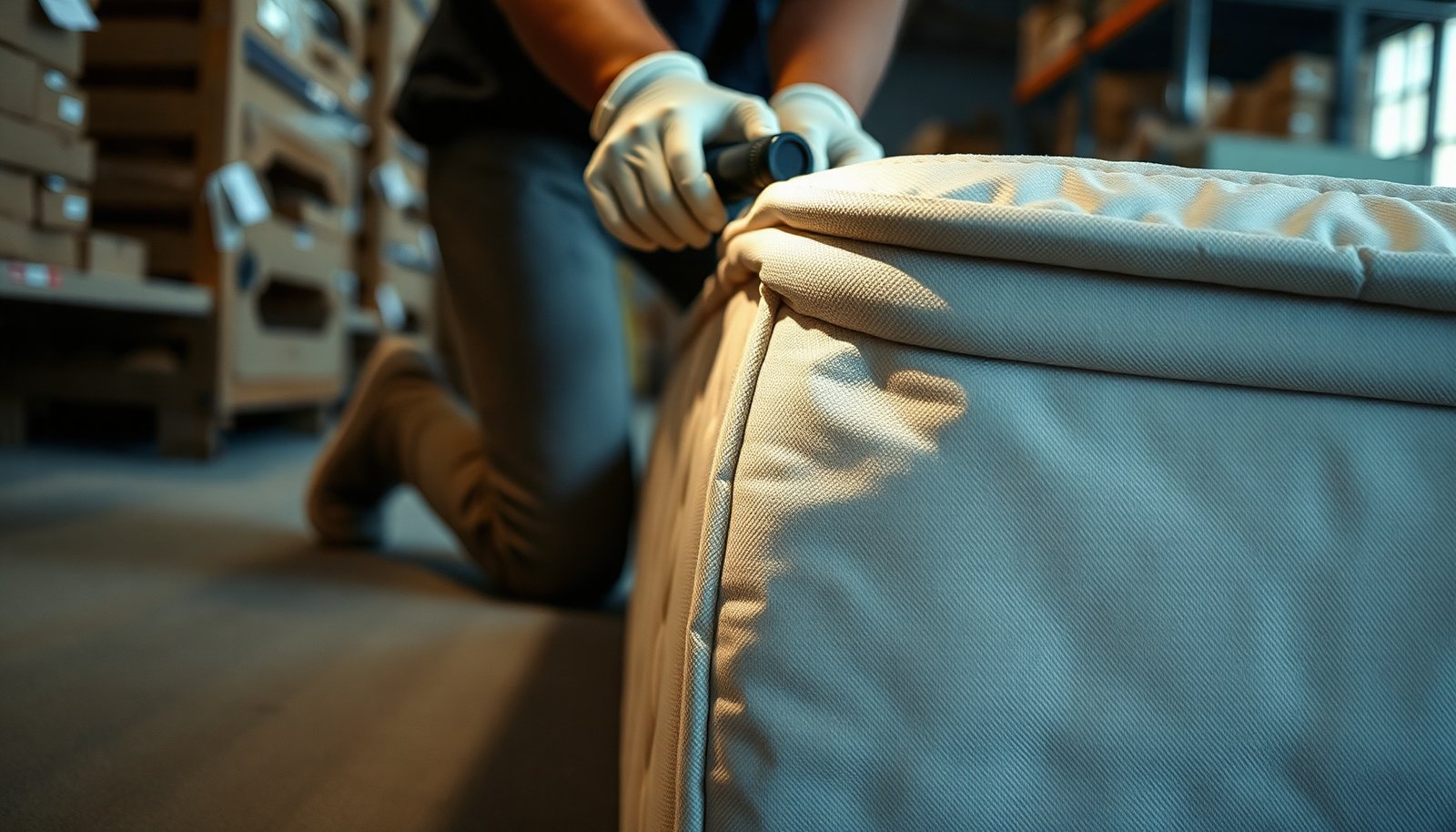
– Look at the mattress seams, piping, tags, and tufts first, because bed bugs commonly hide in small crevices.
– Then scan the entire sleep surface, including corners and edges.
– Finally, check for structural wear and odor/mildew cues.
– Look for bed-bug indicators: live bugs, shed skins, dark spots, or a musty “bug” smell—focus on seams, tags, stitching, and tufts.
– Check for physical damage: broken springs, heavy sagging, tears, or stains that may indicate moisture or long-term soiling.
– If the mattress has a strong persistent odor, visible mold-like staining, or multiple stains you can’t explain, treat that as a “don’t buy” signal.
Key anchor facts to keep in mind while you inspect:
– According to CDC—Bed bugs (identification guidance), adult bed bugs are roughly 4–7 millimeters long (about the size of an apple seed).
– According to CDC—Bed bugs (prevention and control guidance), bed bugs can survive for several months without feeding—meaning “it’s been out of use” doesn’t automatically make it safe.
– According to CDC—Bed bugs (laundering and heat guidance), washing/drying on high heat is recommended for washable items; CDC describes drying on high heat for 30 minutes as a killing approach for fabrics (when the items are suitable for laundering).
Quick data reference for inspection cues
Use this as a practical “what you’re seeing → what to do next” guide while you evaluate a used mattress.
High-Value Bed-Bug Inspection Outcomes (What to Treat as a Stop Signal)
| # | Inspection outcome | Where you’d notice it | Risk signal strength | Recommended action |
|---|---|---|---|---|
| 1 | No visible bed-bug signs during a full seam-and-corner inspection | Seams, tags, tufts, corners, edges | ★★★ ★ ★ | Proceed with protection steps |
| 2 | Only minor surface dust/debris, no spots or residues | Overall sleeping surface | ★★★ ★ ☆ | Proceed if seller/return is strong |
| 3 | Light discoloration you can trace to normal wear patterns | Single areas aligned with use | ★★★ ☆ ☆ | Proceed with high caution |
| 4 | Dark spots along seams/stitching consistent with potential fecal matter | Seams, stitching lines, tags | ★★ ☆ ☆ ☆ | Do not buy without expert confirmation |
| 5 | Shed skins found in seams/tufts (visible cast skins) | Tufts, piping seams, tag corners | ★ ☆ ☆ ☆ ☆ | Stop—return or walk away |
| 6 | Live bed bugs or active movement detected | Seams, edges, under label areas | ★ ☆ ☆ ☆ ☆ | Do not bring into your home |
| 7 | Persistent musty/chemical odor plus stains suggesting moisture or mold | Multiple zones, especially edges and bottoms | ★ ☆ ☆ ☆ ☆ | Do not buy—risk is not worth it |
A note on odors: strong musty smells are not “just old,” especially if they persist after unpacking. According to CDC—Bed bugs (prevention and control guidance), bed bugs and their environments can produce unpleasant odors, but odors can also come from moisture and mold. If you see both smell and staining, the mattress is a higher-risk item regardless of pest status.
Test comfort and set up hygienically
A used mattress can be uncomfortable in ways that signal deeper wear, so you should confirm support first—then protect yourself immediately during setup. The safer workflow is: inspect → encase → handle bedding separately → avoid letting the mattress roam inside your home.
– Sit/lie on it long enough to confirm basic support and alignment (if it feels lumpy or overly sagging immediately, skip it).
– Consider using a protective mattress encasement right away to reduce contact with dust mites and spills—and keep it on if you’re worried about cleanliness.
– Plan your unpacking: keep the mattress in a controlled area, remove packaging carefully, and wash/replace any washable bedding or covers you used during transport.
Here’s a hygienic setup process that reduces cross-contamination risk:
1. Use a dedicated room path. Carry the mattress straight into the room where it will live; avoid hallways/guest rooms if possible.
2. Keep packaging intact until you encase. If you remove plastic and then stop, you increase exposure time.
3. Encasement first, bedding second. A mattress encasement (zippered, sealed) acts as a physical barrier that supports cleaning routines and reduces surface contact.
4. Change and launder anything you touched. If you used a comforter, sheet, or cover during transport, treat it as potentially contaminated and launder per label care.
If you’re concerned about allergens (dust mites are a common one) or you’re moving into a space where pets or asthma are factors, keeping the mattress sealed longer is a prudent risk-management step—especially as you finish vacuuming nearby surfaces and laundering linens.
What can go wrong
Even careful buyers can get surprised, and the failure modes usually fall into three buckets: bad source, missed signs, or unsafe handling after delivery. If you avoid those three, your risk drops substantially.
– Buying from an unknown seller with no return option can trap you with a problem you can’t fix (especially if pests are involved).
– Relying only on smell or “looks clean” can miss bed bugs hiding in seams or hidden damage from moisture.
– Bringing it into your home before careful inspection increases the risk of spreading pests or allergens to other rooms—if you’re unsure, delay setup and reassess.
Common edge cases to watch in 2026:
– “Freshly cleaned” claims. Surface cleaning does not guarantee hidden infestation clearance in seams or tufts.
– Local pickup from shared storage. Storage units, apartment basements, or communal garages can raise exposure likelihood if the storage area has unknown pest history.
– Allergen sensitivity. If you have severe allergy triggers and can’t reliably encase/contain, used may still pose unacceptable risk even if you find no visible pests.
Pros/cons comparison: where to buy used
Use this comparison to choose the safest buying channel for your situation.
| Factor | Marketplace/Local classifieds | Retailer take-back / resale program |
|---|---|---|
| Return policy | Often limited or none | More likely to include a defined window |
| Condition transparency | Varies widely by seller | Typically includes condition notes and grading |
| Documentation of handling/storage | Usually unclear | Often documented through processes |
| Inspection opportunity | You may inspect only at pickup | You may inspect after delivery or via verified photos |
| Best for | Fast, low-cost options (with strong self-checks) | Buyers who need procedural reassurance |
Verdict: when buying used mattresses makes sense
Used mattresses can be a safe, cost-effective choice when you have a credible source, can inspect thoroughly, and can take quick action if something doesn’t check out. That said, skip used mattresses if you see any signs of pests, if there’s noticeable mold/moisture damage, or if you have high sensitivity to allergens and can’t use proper protective steps.
A practical rule I follow in decision-making is: the moment you find a credible bed-bug indicator, the buying process should end—because the upside (saving money) doesn’t outweigh the downside (spreading pests to your home). This aligns with guidance from CDC—Bed bugs (control approaches and prevention), which emphasizes early action and containment when bed bugs are suspected.
Who should reconsider used in 2026:
– Anyone who cannot reliably encase and contain the mattress immediately after delivery.
– Households with known past bed-bug exposure (your tolerance for risk should be lower).
– People with severe allergy/asthma triggers who cannot tolerate additional airborne allergens even after protective measures.
Used-mattress safety checklist
Use this quick scan before you buy and again on delivery. If you can’t confidently check every item, delay setup and reassess.
– [ ] Seller offers return option or clear condition/inspection info
– [ ] No visible bed-bug signs in seams, tags, and stitching
– [ ] No strong persistent musty/chemical odor that doesn’t dissipate
– [ ] No mold-like staining, tears, or heavy sagging
– [ ] Comfort check confirms support (no immediate lumps or bottoming out)
– [ ] Mattress encasement plan (or already sealed/protected)
– [ ] Careful unpacking plan to avoid contaminating other rooms
Frequently Asked Questions
How can I check the condition of a used mattress before buying?
Start by inspecting the mattress cover for stains, tears, and uneven sagging, since visible damage often indicates deeper wear. Press on the surface in multiple spots to test support—your body should feel evenly supported without strong dips. If possible, verify the mattress has minimal odors and that the bed frame and springs (if included) function properly. Asking the seller for photos of seams, corners, and any damaged areas can help you spot issues early.
What should I look for to avoid buying a used mattress infested with bed bugs?
Bed bugs are a major concern when you buy a second-hand mattress, so carefully check seams, piping, tufts, and the underside for tiny dark spots, shed skins, or live insects. Use a flashlight and consider using a magnifier on stitching and creases, since they hide in small folds. If the mattress has a strong musty smell, excessive spotting, or signs of insect activity, skip the purchase. For extra safety, keep the mattress sealed in plastic during transport and inspect it again when it arrives home.
Which brands or types of used mattresses are safest to buy?
Generally, “safer” options include mattresses with intact covers and clear condition disclosures, especially if they’ve been professionally cleaned and wrapped after removal. Innerspring or hybrid mattresses can be easier to evaluate because support and wear patterns are often more visible, but any type can be risky if the cover is compromised. Prioritize mattresses that come from reputable sources with return policies and a track record for sanitation. Avoid models with rips, missing zippers, or damaged ticking since they make contamination harder to assess.
What is the safest way to transport and set up a used mattress at home?
Transport the used mattress in protective plastic or a sealed mattress bag to reduce exposure to pests and dust, and keep it off shared surfaces when possible. Once delivered, inspect it outdoors or in an area you can clean easily, and check seams, tags, and edges before bringing it indoors. If you decide to use it, allow it to fully air out and consider using a high-quality, zippered mattress encasement to create a barrier. Clean surrounding floors and vacuum thoroughly to remove potential debris from the delivery process.
How can I sanitize a used mattress safely without damaging it?
Begin by vacuuming the entire mattress surface, including seams and edges, using a HEPA filter vacuum to capture allergens and debris. If the mattress is washable at all, follow the manufacturer’s instructions for spot cleaning or cover cleaning, and avoid soaking memory foam or latex unless the label explicitly allows it. For added hygiene, use a breathable mattress protector or encasement—this helps maintain cleanliness and reduces dust exposure going forward. Keep in mind that steam cleaning or harsh chemicals can sometimes damage foam materials or odors, so spot-test and verify compatibility first.
📅 Last Updated: November 02, 2026 | Topic: How to Buy an Used Mattress Safely | Content verified for accuracy and freshness.
References
- https://www.cdc.gov/parasites/bedbugs/index.html
- Bed Bugs: Get Them Out and Keep Them Out | US EPA
- https://www.mayoclinic.org/diseases-conditions/bed-bugs/symptoms-causes/syc-20370655
- Bed bug
- House dust mite
- https://pubmed.ncbi.nlm.nih.gov/?term=bed+bugs+secondhand+furniture
- Insect Pest Identification and Control | Penn State Extension
- https://scholar.google.com/scholar?q=buying+used+mattress+bed+bugs+prevention Google Scholar
- https://scholar.google.com/scholar?q=secondhand+furniture+bed+bug+risk+transportation+prevention Google Scholar
- https://scholar.google.com/scholar?q=dust+mites+in+bedrooms+mattress+allergens+used+furniture Google Scholar