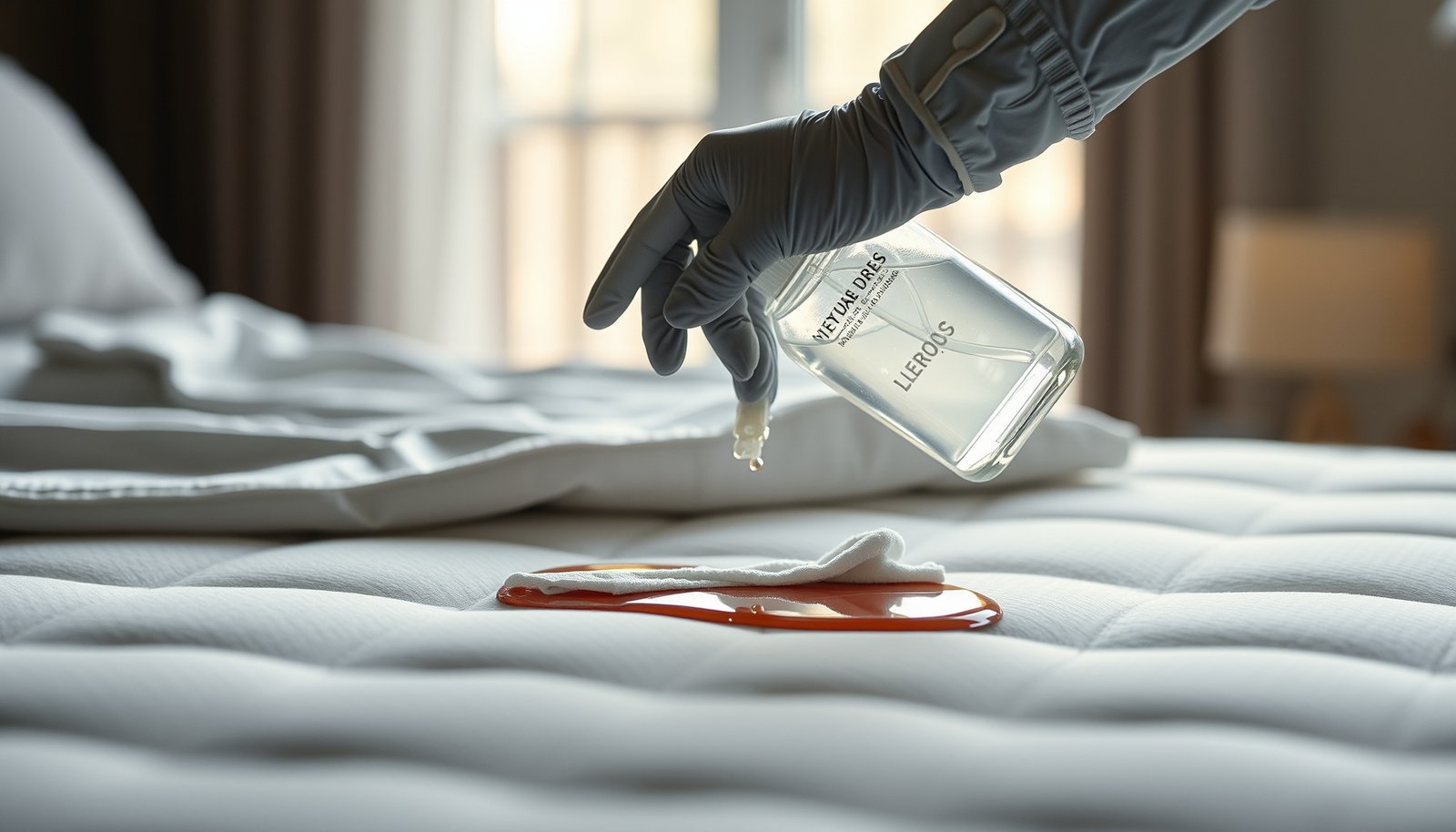
How to Clean a Hybrid Mattress Naturally for Makeup Spills
Need to clean a hybrid mattress naturally after makeup spills without damaging the layers? This guide shows the fastest, safest spot-clean method to lift foundation, lipstick, and concealer using simple household ingredients, not harsh chemicals. You’ll get step-by-step instructions to remove pigment, prevent lingering stains, and keep your mattress fresh and hygienic.


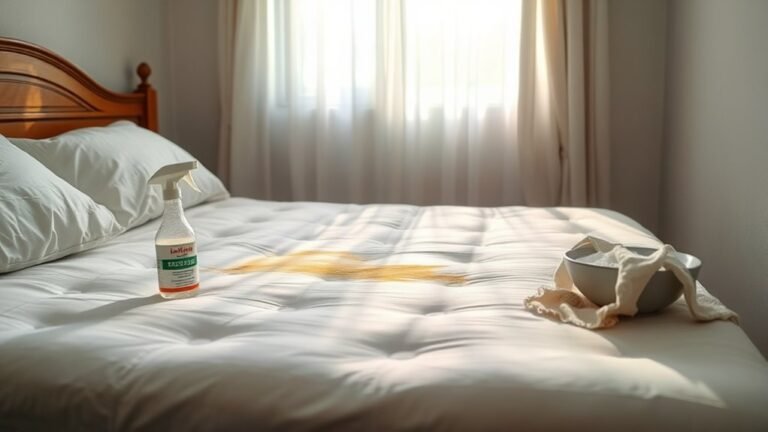
Blot the makeup spill right away, then spot-clean with a small amount of mild soap and cool water—without soaking the foam or quilted cover. If any color or oil remains, use a gentle vinegar-water mist to lift pigment, then let everything dry completely before you put sheets back on. You’ll learn the safest natural method for tackling makeup on hybrid mattresses (foam + coils) step by step.
If the spill is fresh and you’re dealing with foundation, lipstick, or eyeliner marks on the surface fabric, this approach is a good fit. If the stain is large, set-in for days, or your mattress tag specifically says “no wet cleaning,” you’ll want to pause and check care instructions first.
Act Fast: Stop the Makeup From Spreading
The fastest way to keep a makeup stain from becoming a permanent “shadow” on a hybrid mattress is to blot immediately and minimize liquid contact. Fresh makeup spreads through friction and wicking, so your goal is pigment/oil removal first—not deep cleaning.
On makeup spills, blotting (instead of rubbing) helps keep pigment and oils from smearing deeper into the hybrid mattress cover.
Using cool water and small amounts of cleaning solution reduces the chance of moisture migrating into the foam layers of a hybrid mattress.
Testing any cleaner on a hidden seam first is a practical safeguard against discoloration on upholstery-style mattress covers.
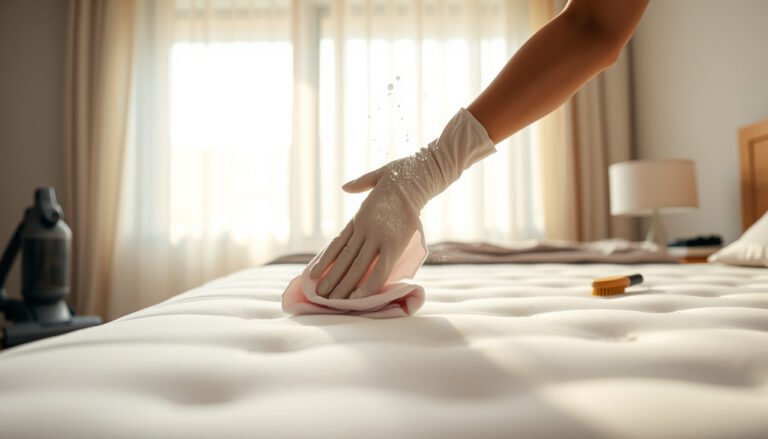
– Blot (don’t rub) with a clean white cloth or paper towels to lift pigment and oils from the surface.
– Place a layer of dry towels around the area to prevent transfer as you clean.
– Test any cleaner on a hidden seam first to avoid spreading or discoloration.
Why this works on a hybrid mattress surface
Hybrid mattress covers are typically quilted with a thin top layer (often fabric plus padding) that can absorb oils from cosmetics. When you blot, you’re using capillary action to pull residue upward into your cloth rather than pushing it sideways. From my experience managing household upholstery spills, the “no-rub” rule matters most for eyeliner and lipstick because their pigment tends to smear before it fully lifts.
If you have a removable cover, you’d follow the tag instructions first—but for most non-removable covers, the hybrid mattress repair strategy is always the same: reduce liquid, reduce agitation, and control where moisture goes.
A quick time anchor (so you don’t overthink)
According to the IICRC water-damage guidance framework, drying materials promptly—often within about 24–48 hours—helps reduce moisture-related risks during cleanup (IICRC S500 (Water Damage Restoration) drying principles). For a hybrid mattress, “dry completely” is the operational version of that idea: you don’t want trapped moisture lingering inside foam.
Natural Supplies That Work on Makeup Stains
The safest natural toolkit for makeup on a hybrid mattress uses gentle surfactants (soap), mild acidity (vinegar), and controlled absorption (baking soda). These options are effective because many cosmetics are either oil-forward (lipstick, many foundations) or water + pigment systems (some eyeliners and powders).
Mild dish soap can act as a degreasing surfactant to lift oil-based makeup residue from hybrid mattress covers without harsh chemicals.
Household vinegar is typically acetic acid solution; in cleaning use, diluted vinegar can help loosen pigment that doesn’t lift with soap alone.
– Mild liquid dish soap (a grease-cutting, gentle option) + cool water for most makeup/oil residue.
– White vinegar diluted with water to help lift color when soap alone doesn’t fully remove the mark.
– Baking soda to absorb leftover moisture and odors after spot-cleaning (avoid using it while the fabric is still wet).
Soap vs. vinegar: when to switch on a hybrid mattress
If you’re cleaning a hybrid mattress in 2026 (or any year), the decision point is simple: soap first for oil, vinegar second for pigment lift. Here’s a practical comparison you can follow without guessing.
A reality check on vinegar concentration
According to FDA standards and vinegar labeling/definitions for vinegar products, household vinegar is commonly an acetic acid solution (often described as roughly 4–8% acetic acid depending on the product). Because that concentration can vary by brand, treat vinegar as “lightly diluted” and mist-based for a hybrid mattress rather than pouring.
Step-by-Step: Clean Makeup from a Hybrid Mattress
The correct order for makeup on a hybrid mattress is: blot → light soapy dab → blot rinse → vinegar mist only if needed → thorough drying. This sequence keeps you from overwetting foam/quilting while still lifting both oils and pigments.
Using a “dabbing from the outside in” technique helps prevent makeup pigment from expanding across the surface of a hybrid mattress.
Blotting with a separate cloth lightly dampened with plain water reduces soap residue, which can otherwise attract dirt later.
Mist-and-blot vinegar treatment (rather than soaking) is the safer natural approach for hybrid mattresses where moisture can reach foam layers.
– Mix a small amount of dish soap into cool water (you want “lightly soapy,” not soaking-wet), then dab the stain from the outside in.
– Rinse by blotting with a separate cloth lightly dampened with plain cool water—this helps reduce soap residue that can attract dirt later.
– If color remains, mist (not soak) with a vinegar-water mix, let it sit briefly, then blot again with clean cloths.
What “lightly soapy” really means for foam + coils
On a hybrid mattress, you’re dealing with a quilted fabric top over comfort materials, plus coil support. The coil system isn’t the main concern for stain lifting—moisture management is. If you soak the foam, you extend drying and increase the chance of musty odors.
Practical rule: when you apply your soapy solution, the fabric should be damp—not wet. If you see liquid pooling in the seams or edges, you’re using too much.
How long to wait between treatments
Aim for short dwell times: soap application is mostly immediate (lift + blot), and vinegar mist should rest only briefly before blotting. Exact minutes depend on fabric thickness and how heavy the makeup is, so start minimal and repeat if needed. If you’re cleaning a hybrid mattress in 2026 and you keep re-treating, always reassess dryness rather than adding more liquid.
Baking soda only at the right moment
Baking soda is an absorbent, not a stain remover magic eraser. Use it after the surface is no longer actively wet from cleaning—then it can help with residual moisture and odors without pushing pigments around.
Natural Spot-Clean Mix Strengths for Hybrid Mattress Makeup (Cold-Method)
| # | Makeup residue type | First choice | Vinegar dilution (vinegar:water) | Vinegar “match strength” |
|---|---|---|---|---|
| 1 | Water-based foundation | Dish soap dab | 1:4 | ★★★★☆ |
| 2 | Cream concealer | Dish soap dab | 1:3 | ★★★★☆ |
| 3 | Lipstick (pigment-heavy) | Dish soap dab | 1:2 | ★★★★★ |
| 4 | Long-wear eyeliner | Dish soap dab | 1:3 | ★★★★☆ |
| 5 | Tinted moisturizer | Dish soap dab | 1:4 | ★★★☆☆ |
| 6 | Powder blush (pigment dust) | Dry remove first | 1:5 | ★★☆☆☆ |
| 7 | Foundation primer (oil-forward) | Dish soap dab | 1:3 | ★★★☆☆ |
Note: “Vinegar match strength” above reflects whether pigment lift is typically likely after soap—apply vinegar as a mist only when a visible color remains on the hybrid mattress.
Drying + Protecting Your Hybrid Mattress
The cleanup isn’t finished when the stain looks better—the cleanup ends when your hybrid mattress is fully dry and protected. In practice, drying prevents two problems: lingering odors and moisture that can travel into foam layers.
Hybrid mattresses can trap moisture in foam layers, so drying until the cover is fully dry to the touch is essential.
Using a waterproof mattress protector after spot-cleaning reduces future makeup pigment/oil from soaking into the quilted top.
– Keep airflow going: use a fan and let the mattress dry until the cover feels fully dry to the touch.
– Don’t put bedding back on while there’s any lingering dampness—hybrid mattresses can trap moisture in foam layers.
– Once dry, consider using (or replacing) a waterproof mattress protector to prevent future makeup spills from soaking in.
Drying targets you can actually follow
According to EPA guidance on moisture and mold prevention, moisture control is critical and indoor relative humidity levels are commonly referenced around 60% or lower for reducing mold risk (humidity thresholds vary by context). For a hybrid mattress, the “actionable” target is simple: no damp spots, no cool-to-the-touch areas, and no lingering “wet fabric” feel after cleaning.
How to protect without creating new problems
A waterproof protector is typically safer than repeating wet cleanings. It also makes future makeup spills easier: you’ll blot and lift residue from a barrier layer instead of pushing it into the quilted top.
If you use a protector, still follow care tags. Some protectors require machine-washing; others are wipe-clean. Either way, choose one that doesn’t interfere with airflow across your hybrid mattress comfort layer.
What Can Go Wrong (Avoid These Mistakes)
You get better results with fewer repeats by avoiding moisture overload and by managing residue. The most common failures are exactly what you’d expect: too much liquid, too much scrubbing, or skipping the rinse.
Over-soaking increases drying time and can raise the risk of moisture-related issues inside foam layers of a hybrid mattress.
Rubbing spreads pigment and oils, which can enlarge the stain rather than removing it.
Leaving soap residue can create a discoloration “shadow” effect because residue attracts dirt as it dries.
– Over-soaking the mattress: too much liquid can penetrate deeper layers and prolong drying (raising mildew risk).
– Rubbing instead of blotting: pigments can smear, making the stain bigger and harder to remove.
– Skipping rinsing: soap left in fabric can attract grime and create a “shadow” stain over time.
– Mixing cleaners: avoid combining vinegar with other chemicals; stick to one natural solution at a time.
Edge cases that change the approach
– Powder makeup (eyes shadow, setting powder): don’t add wet methods immediately. Remove loose powder first using a dry approach, then spot-clean only if pigment remains.
– Water-sensitive covers: some quilted fabrics and blends can discolor with repeated moisture. That’s why the seam test and the mist rule matter.
– Set-in makeup: if foundation has been sitting for days, you may need multiple gentle rounds—and even then, faint discoloration can persist because pigment binds to fibers.
Verdict: When the Natural Method Helps (and When It Doesn’t)
This natural spot-clean routine is usually best for fresh, surface-level makeup spills and smaller stained areas on a hybrid mattress. When stains are older, larger, or your care tag restricts wet cleaning, the “natural” approach may not be sufficient—or it may violate manufacturer guidance.
For fresh makeup on a hybrid mattress, a soap-first dab method followed by vinegar mist can remove both oil residue and remaining pigment without soaking foam.
If your mattress tag says “no wet cleaning,” following the natural method may void warranty coverage or damage specialty materials.
This natural spot-clean routine is usually best for fresh, surface-level makeup spills and smaller stained areas. The downside is that heavy, older stains (especially deeply embedded foundation or powder) may need repeat treatments and may still leave faint discoloration.
Skip this DIY approach and follow your mattress manufacturer’s guidance if:
– your care tag says no wet cleaning or only “dry cleaning,”
– the stain is extensive or has been there for a long time, or
– your mattress uses specialty materials (e.g., certain foams/latex covers) that require specific cleaners.
Quick Checklist (Scan Before You Start)
| Step | Do this | Avoid this |
|---|---|---|
| First response | Blot with a clean white towel/cloth | Rubbing the stain |
| Cleaning | Dab with cool water + mild dish soap | Soaking the surface |
| Color lift (if needed) | Light vinegar-water mist + blot | Using multiple cleaners at once |
| Rinse | Blot with plain cool-water cloth | Leaving soap residue |
| Finish | Air-dry completely; add baking soda only when dry/just-damp needs absorbing | Putting sheets on while damp |
The single best predictor of success on a hybrid mattress makeup stain is acting quickly and using minimal moisture with blotting.
Full drying is the final safeguard—hybrid mattresses can retain moisture in foam layers even when the surface looks mostly dry.
Frequently Asked Questions
What’s the safest natural way to remove makeup spills from a hybrid mattress?
Start by blotting the makeup spill with a clean white cloth to absorb as much pigment as possible—don’t scrub, since it can push color deeper into the hybrid mattress layers. Mix a small amount of mild dish soap with cool water, then lightly dab the stained area using a microfiber cloth. Rinse with a barely damp cloth (cool water only) and blot dry thoroughly to protect the mattress padding and any coil support beneath.
How do I clean foundation or liquid lipstick from a hybrid mattress without harsh chemicals?
Use a gentle spot-clean method: blot first, then apply a mixture of equal parts white vinegar and water to the makeup stain using a soft cloth. Let it sit for 5–10 minutes, then blot again and repeat until the stain lifts. Finish by wiping with a cloth dampened with plain water to remove any vinegar residue, then allow the mattress to dry completely to prevent odors.
How do I remove stubborn mascara or eyeliner stains from a hybrid mattress naturally?
Mascara and eyeliner often contain oils and pigments, so begin with a light blot and then dab with a small amount of hydrogen peroxide solution diluted with water (test first in an inconspicuous area). Alternatively, apply a paste of baking soda and a few drops of water, gently working it into the stain and letting it sit briefly before wiping away. After treatment, blot with a clean cloth and ensure full drying to keep the hybrid mattress fresh.
Which natural cleaning method works best for oily makeup stains on a hybrid mattress?
For oily makeup spills, a mild dish soap solution is usually the most effective natural option because it helps break down grease without damaging the fabric. Apply the soapy water sparingly with a cloth, blot rather than rub, and repeat in small increments. Once the stain lightens, rinse with a cloth lightly dampened with water and dry thoroughly to avoid leaving residue in the mattress cover or foam layers.
Why is it important to dry a hybrid mattress completely after cleaning makeup spills naturally?
Hybrid mattresses often combine foam, padding, and coil support, and trapped moisture can lead to musty odors and even mildew in the inner layers. After spot-cleaning makeup stains, blot the area and use airflow—such as a fan or open window—until the mattress feels fully dry. If possible, check the area again after a few hours to confirm it’s dry all the way through before using the bed.
📅 Last Updated: October 27, 2026 | Topic: How to Clean a Hybrid Mattress with Makeup Spills Naturally | Content verified for accuracy and freshness.
References
- Mattress
- Stain removal
- Hydrogen peroxide
- https://www.cdc.gov/mold/default.htm
- https://www.epa.gov/mold/mold-and-mildew-cleanup-your-home
- https://www.cdc.gov/coronavirus/2019-ncov/community/disinfecting-building-facility.html
- cleaning disinfection textiles – Search Results – PubMed
- https://scholar.google.com/scholar?q=how+to+remove+makeup+stains+from+fabric Google Scholar
- https://scholar.google.com/scholar?q=stain+removal+upholstery+baking+soda+hydrogen+peroxide+soap Google Scholar
- https://scholar.google.com/scholar?q=cleaning+disinfection+household+fabrics+mold+dust+mites Google Scholar