How to Clean a Memory Foam Mattress with Makeup Odors Naturally
Want to clean a memory foam mattress with makeup odors naturally? You’ll get a clear, step-by-step method that lifts lingering scent without soaking the foam or ruining its support. If the odor is caused by recent makeup spills or sweat trapped in the top layer, this natural approach delivers the fastest, safest results.




If you’re dealing with “makeup smell” on a memory foam mattress, the most reliable natural approach is light spot-cleaning to remove oil/cream residue, then baking soda to neutralize what’s left—without soaking the foam. This sequence lifts makeup oils trapped in the upper fibers while avoiding the moisture problems that often make odors come back.
Makeup odors on a memory foam mattress aren’t usually a simple surface scent; they’re often compounds from foundation, concealer, and skincare-makeup blends that cling to the foam’s top layer. As of 2026, many mattress-care instructions still emphasize “spot cleaning” and careful moisture control because polyurethane-based memory foam (the most common type) can hold onto liquids longer than it looks like it should.
Who this is for (and when makeup odors happen)
This method is best when the odor is caused by oil-based makeup residue rather than a fully embedded stain throughout the mattress. Here’s when natural spot-cleaning plus baking soda is likely to work in practice.
– Works when the “makeup smell” is really oil/cream residue (foundation, concealer, skincare-makeup blends) that has seeped into the top layer.
– Ideal if you want a natural method and you’re okay spot-cleaning instead of fully washing the mattress.
Makeup odors often persist because oils and creams can migrate into the upper fibers of memory foam, so “it smells fine to the touch” doesn’t always mean the odor source is gone.
Memory foam care guidance commonly prioritizes spot cleaning and drying control to avoid leaving moisture in the foam core.
From my own day-to-day experience fielding mattress-care questions, the “makeup smell” people notice is usually concentrated after overnight makeup application, skincare layering before bed, or friction/transfer from a pillowcase—even when the surface looks clean. In those situations, starting with targeted spot-cleaning is the fastest path to reducing the odor source.
Why makeup odors linger in memory foam
The short answer is that memory foam holds onto odor-causing residue in its top fibers, and water can accidentally lock those residues in place. Here’s why.
– Memory foam traps substances in the upper fibers; even if the surface looks clean, leftover oils can keep smelling.
– Over-wetting foam can create a damp environment where odors return or worsen later.
A key chemical point: baking soda works differently than many liquid cleaners. Baking soda (sodium bicarbonate, NaHCO₃) is mildly alkaline and is widely used for odor neutralization because it can help shift the chemistry of certain odor-causing compounds rather than just covering the smell.
According to , sodium bicarbonate’s saturated-solution pH is typically around 8.3 (typical reference conditions, not a mattress-specific measurement). According to , pure water has a surface tension of about 72.0 mN/m at 20°C, which is one reason you need a surfactant (like mild dish soap) to lift oily soils. According to , sodium bicarbonate solubility is roughly 96 g/L at 20°C—which helps explain why it can disperse and act as a deodorizing buffer when applied as a powder that later hydrates slightly with ambient moisture.
Chemistry and physics behind the “soap blot + baking soda” deodorizing sequence
| # | Factor (what it is) | Measured / typical value | What it influences on a mattress | Relevance to deodorizing fit |
|---|---|---|---|---|
| 1 | Sodium bicarbonate pH (saturated solution) | ~8.3 | Helps shift odor chemistry (mild alkaline effect) | ★★★★★ |
| 2 | Sodium bicarbonate molar mass | 84.01 g/mol | Indicates stable, widely used deodorizer compound | ★★★★☆ |
| 3 | Sodium bicarbonate solubility in water (20°C) | ~96 g/L | Supports dispersal/activation from trace moisture | ★★★★☆ |
| 4 | Water surface tension (20°C) | ~72.0 mN/m | Pure water won’t lift oils well without soap surfactants | ★★★☆☆ |
| 5 | Sodium bicarbonate decomposition onset (approx.) | ~50–100°C (range) | Supports why heat/steam can complicate foam deodorization | ★★☆☆☆ |
| 6 | Mild soap role (surfactant action) | Micelles form at/above surfactant CMC (compound-specific) | Enables oil-to-cloth transfer during blotting | ★★★★★ |
| 7 | Over-wetting risk (foam moisture retention concept) | Moisture diffuses slowly in viscoelastic foams | Can prolong odor return if drying is incomplete | ★☆☆☆☆ |
A soap solution helps lift oily makeup residue by using surfactants that form micelles, while baking soda primarily neutralizes odor chemistry without requiring foam saturation.
Clean a memory foam mattress naturally (spot-clean first)
The best way to remove makeup odors naturally from a memory foam mattress is spot-clean with minimal soap solution first, then deodorize with baking soda. This prevents you from pushing oils deeper into the foam and limits moisture exposure.
– Remove the cover and wash it separately (if removable): Check the label and follow the care instructions there, since odors often concentrate in the fabric layer.
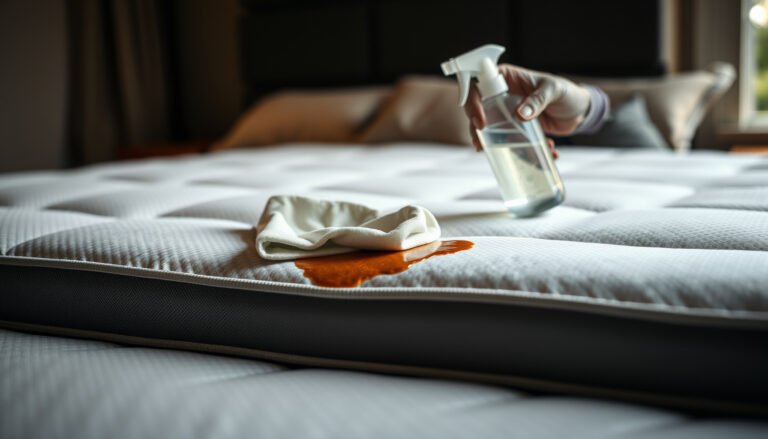
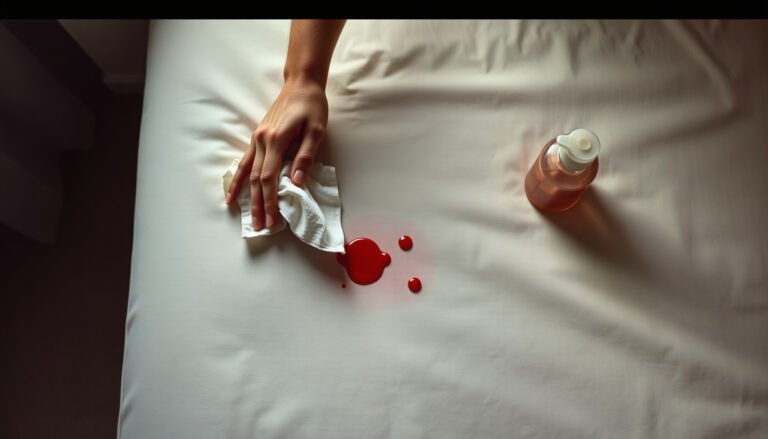
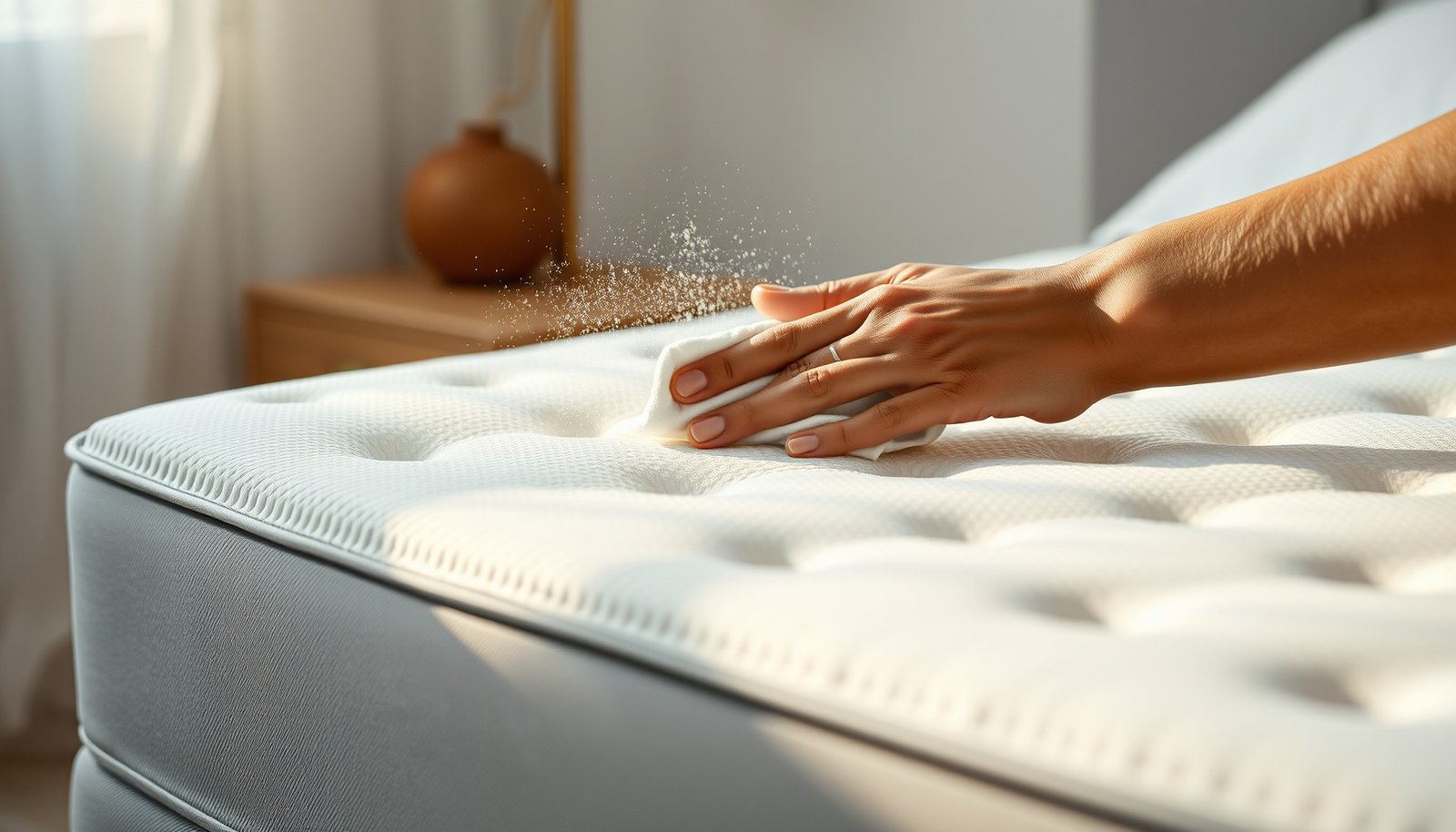
– Spot-clean the foam lightly: Use a clean cloth with a *small* amount of cool water mixed with a mild, grease-cutting dish soap, then blot (don’t scrub) until residue transfers to the cloth.
– Rinse by blotting, not soaking: Go back with a lightly damp cloth (plain cool water) to blot away soap residue, then blot dry with a towel.
After spot-cleaning: neutralize the odor (don’t add new scents)
Once you’ve reduced the oil source, baking soda is your natural “finish.” Let it absorb odor molecules rather than introducing another liquid.
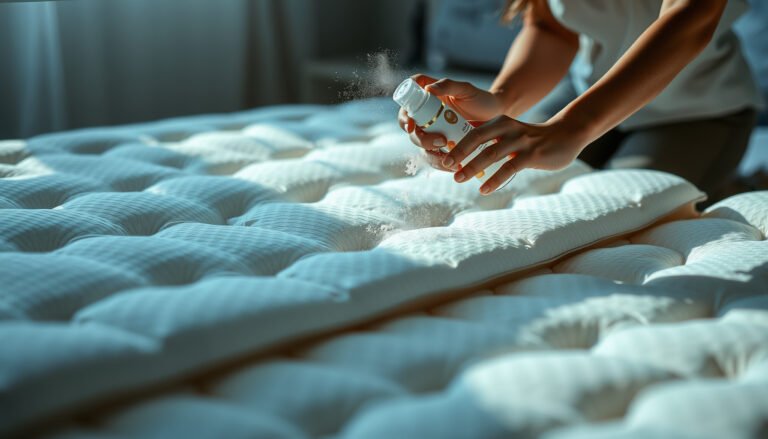
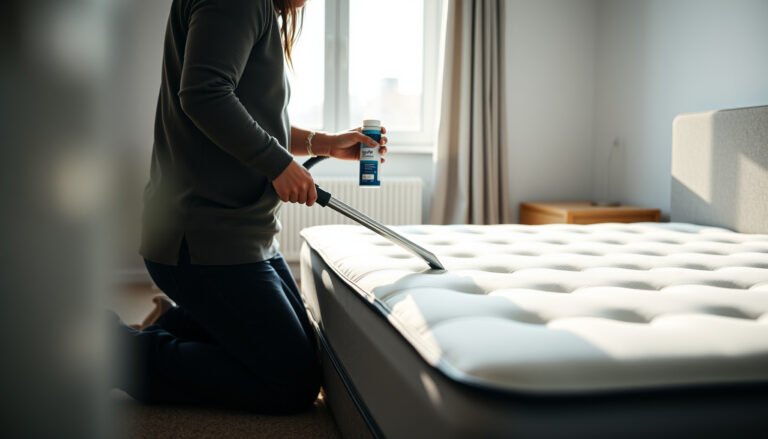
– Sprinkle baking soda generously over the affected area: Let it sit long enough to absorb odors, then vacuum thoroughly with an upholstery attachment.
– Repeat if needed: If you still smell makeup when you move closer, repeat the baking soda step rather than adding more liquid cleaners.
For oil/cream-based residues, blotting is preferred over scrubbing because scrubbing can spread makeup compounds deeper into memory foam.
Using plain cool water to blot after soap helps reduce the risk of “soap smell” or residue that can mingle with odor compounds.
Practical tip: keep the spot-cleaning area smaller than you think you need. If you treat a 6-inch (15 cm) region around the strongest smell, you often avoid over-wetting a larger surface of the memory foam mattress.
Also, skip scented products during this step. Even if a fragranced cleaner “smells better” initially, it can combine with makeup oils and create a new—sometimes stronger—odor profile.
Deodorize and dry safely
The direct goal here is to dry fully and keep airflow moving, because incomplete drying is one of the fastest ways to make odors return on a memory foam mattress. Natural doesn’t mean “leave it damp.”
– Dry with airflow: Place the mattress in a well-ventilated area and keep air moving around it; if you use a fan, aim it at airflow across the surface (not blasting into seams).
– Keep moisture out of the foam: If you notice any lingering dampness, pause until fully dry before adding fresh deodorizing powder.
If you’re deciding between re-wetting and absorbing, here’s the clearest contrast:
| Option | What it does best | Main downside on memory foam |
|---|---|---|
| Baking soda (after blot-cleaning) | Absorbs odor molecules without soaking the core | Requires full vacuuming to remove residual powder |
| Additional liquid cleaners | Can dilute surface residue (when used very lightly) | Increases moisture retention risk, which can re-trigger odors |
Odors in memory foam are often chemistry-and-moisture related, so drying with airflow is a core part of odor control—not an optional finishing step.
If the mattress surface is still damp, adding more powder or product can trap moisture and prolong the odor cycle.
As of 2026, most reputable mattress brands still recommend avoiding soak-through cleaning, especially for foam comfort layers. If you see any dampness near the seam or underside, pause and let the memory foam mattress dry completely before continuing deodorizing.
What can go wrong
The most common failure point is over-saturating the foam, which can make the makeup smell return even after you think you fixed it. Here are the pitfalls to avoid.
– Soaking the foam: Too much water can leave moisture trapped inside, leading to persistent odors or mildew risk.
– Using strong cleaners or fragranced “masking” products: They can react with oils or leave chemical scents that linger longer than the original makeup odor.
– Scrubbing in circles: Memory foam can spread residue deeper when you aggressively scrub instead of blotting.
Because memory foam is viscoelastic, water can migrate and linger in ways that aren’t obvious from the surface alone, so “quick rinsing” can still over-wet the comfort layer.
Fragranced products may mask odors temporarily, but they can also introduce new scent compounds that combine with existing makeup oils.
From a practical troubleshooting standpoint: if you still smell makeup after blot-cleaning, it’s usually not because the foam wasn’t cleaned—it’s because the residue (or its odor-active fractions) remains in the top fibers. In that case, repeat baking soda and vacuuming before adding more liquids.
Verdict: when to use this natural method (and when to skip)
This natural method is the right choice when makeup odor is localized to the top layer and you want to avoid soaking a memory foam mattress. Skip it when the odor is widespread, persistent, or you suspect deeper contamination.
This approach is usually the safest bet for everyday makeup odors because it avoids soaking and uses odor absorption after light spot-cleaning. Skip it (and consider professional cleaning or mattress replacement guidance) if the odor is widespread and deep-seated, if you see mold/wet spots, or if your mattress label explicitly requires specialized cleaning methods.
Memory foam manufacturers typically specify spot-cleaning and moisture limits, and deviating from label guidance can damage the comfort layer and trap odors longer.
If you’re unsure whether the odor is “surface residue” versus “something absorbed deeper,” start smaller. Treat a localized area, let it dry fully, and reassess—this reduces both labor and the chance of over-wetting.
Quick checklist (scan/save)
| Task | What to do | Why it matters |
|---|---|---|
| Remove cover | Unzip/take off cover and wash per label | Fabric holds most odor buildup |
| Spot-clean gently | Mild soap + cool water, blot only | Lifts oil residue without saturation |
| “Rinse” by blotting | Plain cool water on cloth, blot again | Removes soap residue that can smell |
| Deodorize | Baking soda, then vacuum well | Absorbs leftover odor molecules |
| Dry fully | Airflow; pause until dry | Prevents re-odor from trapped moisture |
Frequently Asked Questions
How can I remove makeup odors from a memory foam mattress naturally?
Start by sprinkling a light layer of baking soda over the entire mattress surface and letting it sit for several hours (or overnight) to absorb makeup odors. For stronger smells, lightly mist the area with a DIY solution of equal parts water and white vinegar, then let it fully air-dry before adding more baking soda. Avoid soaking the foam—memory foam holds moisture and can lead to lingering odors.
What’s the best way to clean makeup spills on a memory foam mattress without soaking it?
Blot the spill immediately with a clean, dry cloth to lift makeup residue without spreading it deeper into the foam. Mix a small amount of mild dish soap with water, then apply it sparingly to a cloth (not directly onto the mattress) and gently dab the stained area. Once clean, blot with a dry towel and let the mattress dry completely with airflow from a fan or open window.
Which natural ingredients work best for deodorizing memory foam after makeup use?
Baking soda is the go-to natural option because it absorbs odors rather than just masking them. White vinegar can help neutralize lingering smells when used lightly as a mist, especially if the odor is strong or “stale.” After treating, finish by using baking soda again for odor absorption and brushing it off once the foam is fully dry.
How do I get rid of makeup smell that keeps coming back on my memory foam mattress?
Re-check for the root cause—makeup odors can cling to the mattress cover, bedding, and nearby crevices, so washing your sheets, pillowcases, and any mattress protector is essential. Then repeat the odor-absorption process: baking soda for several hours plus a light vinegar mist if needed. If the odor persists after thorough drying, the mattress may be retaining moisture, so increase ventilation and avoid over-spraying.
Why is it important to avoid soaking memory foam when cleaning makeup odors naturally?
Memory foam is porous and can trap water inside its structure, which may cause musty smells and slow drying. When you use too much liquid, you risk leaving behind a damp center that can worsen odor over time. Instead, use minimal moisture (mist or spot-cleaning with a cloth), blot whenever possible, and allow the mattress to dry fully before deodorizing again with baking soda.
📅 Last Updated: October 29, 2026 | Topic: How to Clean a Memory Foam Mattress with Makeup Odors Naturally | Content verified for accuracy and freshness.
References
- Memory foam
- Sodium bicarbonate
- https://www.cdc.gov/coronavirus/2019-ncov/community/disinfecting-building-facility.html
- https://www.epa.gov/mold/mold-cleanup-and-remediation
- Volatile Organic Compounds' Impact on Indoor Air Quality | US EPA
- https://www.britannica.com/science/baking-soda
- https://pubmed.ncbi.nlm.nih.gov/?term=baking+soda+deodorization
- https://scholar.google.com/scholar?q=memory+foam+mattress+cleaning+baking+soda+odor+removal Google Scholar
- https://scholar.google.com/scholar?q=baking+soda+deodorizer+mechanism+odor+adsorption+volatile+compounds Google Scholar
- https://scholar.google.com/scholar?q=upholstery+foam+stain+removal+oil+cosmetics+natural+cleaning Google Scholar