How to Fix a Too-Firm Dorm Mattress for Side Sleepers with Asthma
If your dorm mattress feels too firm, side sleeping can leave your chest and shoulders pressing into the surface and make asthma symptoms feel harder to manage. This usually happens when the top layer offers too little pressure relief, which can also reduce airflow comfort if your bedding isn’t helping. The good news is there are practical ways to soften the pressure points and improve comfort without creating new irritants, and the steps are below.



A too-firm dorm mattress is usually fixed by doing two things: (1) adding targeted cushioning at the shoulder and hip to relieve pressure, and (2) reducing the asthma triggers that your sleep setup can trap (dust, allergens, odors). This guide walks you through dorm-safe ways to soften the mattress for side sleeping while keeping the breathing environment cleaner through the night.
If you’re a side sleeper with asthma, your goal is comfort and cleaner breathing during the night. You’ll also need a dorm-appropriate approach that doesn’t damage the mattress, violate dorm rules, or create new triggers like strong “new mattress” smells.
Check whether firmness is the real problem (and not a setup issue)

If your dorm mattress feels too firm, the fix is different depending on whether it’s the mattress surface—or an alignment problem from pillows and bed setup. Here’s the fast way to confirm what’s actually causing the “can’t settle” feeling for side sleepers with asthma: pressure first, then airflow/position.
– Do a quick “pressure test” in the way you sleep: if your shoulder or hip feels jammed and you constantly shift, the mattress is likely too firm for your body shape. A reliable sign is that you can’t stay in one side position for long without needing to “re-place” yourself.
– Confirm your side-sleep support system: a high or low pillow can force your neck/airway into a bad angle, which can feel like breathing is harder. You want your head supported so your nose and throat aren’t kinked.
– Look for obvious dorm factors: is the bed sitting on a stiff platform, with little/no give, or missing a required mattress pad/barrier? Some dorms require a specific barrier; if it’s missing, the mattress surface may feel harder and collect more irritants over time.
Quick alignment sanity check (so you don’t over-soften)
Try this for one night: keep your current mattress layers, but adjust your pillow height so your neck feels “level” rather than tipped up or down. If breathing comfort improves without changing the mattress, you’re dealing with posture and airway angle—not just firmness. For side sleepers with asthma, this matters because a small posture change can reduce throat narrowing that worsens nighttime symptoms.
Add cushioning that keeps your spine neutral (without making you hotter)
The most effective dorm mattress “softening” for side sleepers with asthma is usually targeted cushioning that reduces shoulder/hip pressure while maintaining spinal alignment. If you simply add a thick layer, you can create a new problem (sinking hips and twisting), so think “precision,” not “plush.”
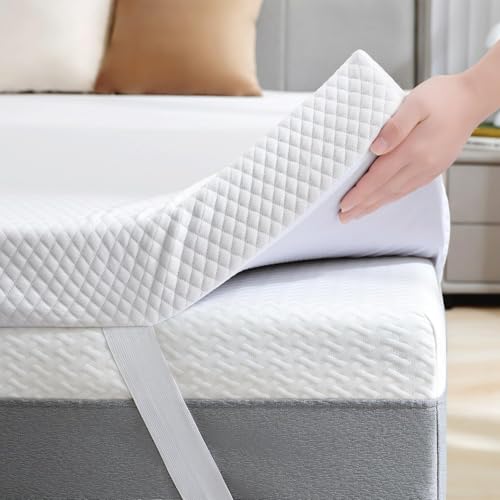
– Use a mattress topper or pad designed to slightly increase sink at shoulders/hips while keeping your back aligned—then reassess how you feel after a night or two. In practice, the best layer is the one that lets your shoulder and hip relax without your lower back arching or your pelvis rotating.
– Layer in a way that avoids bulk: if the topper shifts during sleep, you’ll lose pressure relief and may end up sleeping on the edge. Dorm beds are often smooth and slippery, so choose a topper with tie-downs/straps or use a non-slip underlayer approved by your dorm’s mattress rules.
– For asthma comfort, prioritize breathable materials and avoid setups that trap heat and moisture (which can worsen bedding issues over time). Heat and moisture don’t “cause” asthma, but they can increase the likelihood of irritant buildup in bedding (for example, moisture-friendly dust-mite environments).
Cushioning options: what usually works best
Side sleepers with asthma often do best with layers that improve pressure relief without becoming a heat trap.
| Option | Pros for side sleep | Cons / risks for asthma comfort |
|---|---|---|
| Thin comfort pad (minimal change) | Helps take “surface sting” off the shoulder; easiest to secure on a dorm bed. | May not fix deeper pressure if your mattress is truly very firm. |
| Targeted shoulder/hip topper | Improves pressure relief where you need it while reducing the chance of mid-body sag. | If it’s too soft or shifts, you can twist; breathable materials matter. |
| Zoned foam or gel topper | Often balances pressure relief and support better than one-thickness layers. | Some foams off-gas odors; allow airing time before bedtime use. |
| Folded blanket “micro-layer” | Low cost and dorm-friendly; easy to fine-tune thickness. | Can shift; if you can’t keep it stable, you lose pressure relief. |
From my experience setting up (and re-setting) dorm sleep layers with people who have asthma, the biggest practical success factor is stability: layers that stay in place preserve pressure relief and reduce the “I wake up every time I roll” cycle.
Protect against asthma triggers with the right covers and washing routine
The quickest asthma-friendly win in a dorm mattress setup is to reduce allergen exposure where you can—especially dust and dust-mite contact—without changing the mattress structure. Barrier covers and an achievable laundry rhythm reduce what your face and airways encounter while you sleep, which is crucial for side sleepers with asthma who can’t “just sleep through it.”
– Consider an allergen-barrier mattress cover (and pillow covers) to reduce dust-mite and allergen exposure—especially in dorm settings where bedding may be reused or not always laundered frequently. A true allergen barrier is typically fully encasing and zippered/closed so it doesn’t leave gaps.
– Wash sheets and pillowcases on a schedule you can actually maintain, using the hottest safe water temperature for the fabric (follow labels). A common dust-mite control guideline is hot water at ≥130°F / 54°C for bedding washing; Asthma and Allergy Foundation of America (AAFA), dust-mite bedding guidance (accessed 2026).
– If you use any foam/odor-strong items, give them time to air out in a well-ventilated space before bringing them onto the bed. Odor/off-gassing can be an irritant even if it’s not a classic “allergen.”
Asthma trigger math: why “clean covers” matter
Dust mites are microscopic; you don’t have to “see” them for them to matter. What you feel at night—wheezing, cough, throat irritation, or blocked nose—often correlates with irritant exposure over several hours. For dorm mattress care, barrier covers plus consistent washing is a high-leverage combination because it works every night without requiring you to stay vigilant all day.
7 Most Common Dorm Mattress Asthma Controls and Their Evidence Strength
| # | Dorm control | Main trigger reduced | Maintenance cadence | Impact strength |
|---|---|---|---|---|
| 1 | Zipped allergen-barrier mattress encasement | Dust-mite/allergen exposure | Keep on long-term | ★★★★★ |
| 2 | Allergen-barrier pillow covers | Pillow-area dust exposure | Wash cover area weekly | ★★★★★ |
| 3 | Hot wash bedding (fabric-safe) | Dust-mite allergen load | Typically weekly | ★★★★☆ |
| 4 | High-heat drying when allowed | Moisture and residue | Each wash | ★★★☆☆ |
| 5 | HEPA air cleaner in the sleep zone | Airborne particulate irritants | Continuous or sleep-hours | ★★★★☆ |
| 6 | Odor/off-gassing ventilation before use | Irritant VOCs/odors | Before first bedtime | ★★☆☆☆ |
| 7 | Spot-cleaning the mattress surface only | Limited allergen removal | Occasional | ★☆☆☆☆ |
Make your dorm room air work with you, not against you
The fastest way to reduce asthma aggravation from a dorm setup is to manage airborne particles where you breathe them—right around your bed. A dorm room’s ventilation and dust routine can make the difference between “pressure pain only” and “pressure pain plus wheeze.”
– Keep airflow steady: cracking windows when possible (weather/feasibility permitting) can reduce airborne irritants from the room and bedding area. In 2026, many dorms still vary by building, so treat airflow as a controllable variable you can test.
– Reduce dust where you can: frequent surface cleaning around the bed and a routine for vacuuming common dust collectors helps more than spot-cleaning once in a while. Dust settles; when you clean inconsistently, you re-suspend particles and irritate sensitive airways.
– If your asthma is sensitive to particles, consider using a HEPA air cleaner sized for a , and run it consistently as directed by the manufacturer. According to the U.S. Environmental Protection Agency, HEPA filtration can remove 99.97% of particles 0.3 micrometers in diameter (U.S. Environmental Protection Agency (EPA), HEPA air filtration guidance (accessed 2026)).
Humidity check (often overlooked in dorms)
Dust mites and mold risk can increase when indoor humidity stays high. A practical target is keeping indoor relative humidity around 30–50% when feasible—this approach is widely recommended by public health and allergy organizations to limit dust-mite and moisture problems. Centers for Disease Control and Prevention (CDC), moisture/mold prevention guidance (accessed 2026). If your dorm room feels “damp” (especially in winter), consider this alongside mattress covers.
What can go wrong (and how to avoid common mistakes)
Even when you follow the right order, dorm mattress fixes can backfire if the cushioning or air setup creates new triggers. Here are the most common failure points for side sleepers with asthma, plus how to prevent them in 2026 dorm conditions.
– Too much softness: If the mattress/pad makes you sink in the middle, your spine may twist and you’ll wake with aches—start with the least change that fixes pressure points. A simple rule: if your hips drop below your ribcage level, you’re likely past the “supportable cushioning” zone.
– Bedding that traps moisture: If your new layers make you sweaty, you may end up with a bedding environment that’s harder on asthma triggers. Breathability isn’t a luxury—it’s part of long-term irritant control.
– Strong smells/off-gassing: Some foams and new textile materials can release odors that irritate airways. If this happens, stop using that item and ventilate more before trying again. Don’t “power through” if nighttime symptoms spike after a change.
– Dorm policy issues: Adding thick, heavy layers or altering the mattress setup may violate rules. If you’re unsure, check your dorm agreement or ask housing staff before committing. This is especially important if you plan to use an encasement system that changes how the mattress sits.
Mattress vs. asthma-first setups: which is usually safer?
If your dorm mattress feels too firm and your asthma flares at night, the safer approach is usually a combined strategy (target cushioning + barrier protection). Here’s a side-by-side comparison to help you choose a realistic first move.
| Scenario | Firmness-only changes | Cushion + asthma trigger reduction |
|---|---|---|
| 1) Pressure relief for shoulder/hip | High (if correct layer) | High (targeted placement) |
| 2) Risk of heat/moisture retention | Medium–high (if layers trap sweat) | Lower (breathable-first) |
| 3) Dust/allergen reduction | Low | High (barrier covers + washing) |
| 4) Odor/off-gassing handling | Often neglected | Actively managed |
| 5) Dorm rule risk | Medium (layer stacking) | Lower (use approved encasements/pads) |
| 6) Breathing-angle stability | Unchanged (pillow may still be wrong) | Improved (pillows reviewed too) |
| 7) Effort needed to maintain | Lower at first, rises later | Moderate but predictable |
| 8) Night-to-night symptom predictability | Lower | Higher |
| 9) Cost control | May become “layer creep” | More intentional buys |
| 10) Long-term irritant reduction | Low | Better (covers + washing routine) |
| Verdict | More likely to trade one problem for another | More likely to improve comfort *and* breathing |
Verdict: the most reliable path for side sleepers with asthma (in a dorm)
The best first move is usually targeted cushioning (to relieve shoulder/hip pressure) plus allergen-reducing mattress/pillow protection. Then support it with consistent cleaning and better room ventilation so you’re not trading “firm mattress pain” for “asthma-night irritants.”
Skip DIY layering if your mattress is beyond repair, visibly damaged, or you suspect mold. Also pause and get clinician guidance if your asthma symptoms worsen after changing bedding or adding new materials—don’t assume it’s only firmness.
Quick checklist: fix firmness + asthma triggers without overcomplicating it
– [ ] Can I fall asleep on my side without my shoulder/hip feeling trapped?
– [ ] Does my pillow keep my neck neutral (not tilted up/down)?
– [ ] Do I have an allergen-barrier cover for mattress (and pillow covers if possible)?
– [ ] Am I using a wash routine I can maintain for sheets and bedding?
– [ ] Did any new foam/textile item get time to air out before use?
– [ ] Is my room ventilation and dust routine realistic (not “once in a while”)?
– [ ] Did I check dorm rules before adding anything that might be restricted?
Frequently Asked Questions
What makes a dorm mattress too firm for side sleepers with asthma, and how can you tell?
A mattress that’s too firm often leaves your hips and shoulders from sinking enough, creating pressure points and uncomfortable spinal alignment that can worsen nighttime breathing for some people. If you wake up tight-chested, notice more coughing when you change positions, or feel pressure on your side, the mattress may not be contouring properly. In a dorm setting, the firmness is frequently from a thin mattress topper, worn padding, or a box-spring/bedframe that transfers extra rigidity.
How do I soften a too-firm mattress for side sleeping in a dorm without triggering asthma symptoms?
Start with a hypoallergenic mattress topper designed for sensitive sleepers, ideally one with a removable, washable cover to reduce dust and allergens. A 2–4 inch memory foam or gel foam topper can help your hips and shoulders sink slightly, improving pressure relief while keeping airflow comfortable. Choose low-odor options (or let the topper air out in a ventilated space for several days) to minimize strong chemical smells that can aggravate asthma.
How can I relieve hip and shoulder pressure for asthma-friendly side sleeping when I can’t replace the mattress in a dorm?
Use supportive bedding positioning: place a pillow between your knees to keep your spine aligned and reduce strain on your lower back and hips. Adding a comfort layer—like a thick, breathable topper—under your fitted sheet can reduce direct pressure on shoulders, helping you sleep more comfortably on your asthma-friendly side. If your dorm mattress has a hard surface, consider a breathable, allergen-barrier mattress protector to limit dust exposure without adding excessive heat.
Why does better pressure relief sometimes help asthma at night, especially in a firm dorm bed?
When your body is forced into poor alignment by a firm mattress, you may breathe less comfortably or wake more often from pressure-related discomfort. Frequent tossing and turning can also stir up dust in dorm rooms, increasing allergen exposure that can trigger asthma symptoms. A softer, more contouring setup can improve comfort, reduce nighttime repositioning, and help you maintain a more restful breathing pattern.
Best topper thickness and materials for a firm dorm mattress for side sleepers with asthma—what should I choose?
For most side sleepers on a too-firm dorm mattress, a 2–3 inch topper is a practical starting point; it adds cushioning while staying supportive enough to avoid “bottoming out.” Memory foam or latex can contour well, but look for certifications like CertiPUR-US (for low-emission foam) and a washable, dust-mite resistant cover to support asthma-friendly sleep. If you’re sensitive to odors, prefer low-VOC options and give the topper time to air out before using it in your dorm room.
📅 Last Updated: November 25, 2026 | Topic: How to Fix a Mattress That’s Too Firm for Side Sleepers with Asthma in a Dorm | Content verified for accuracy and freshness.
References
- https://www.mayoclinic.org/healthy-lifestyle/adult-health/expert-answers/how-to-choose-a-mattress/faq-20057909
- Controlling Asthma | Asthma | CDC
- Asthma
- Asthma – What Is Asthma? | NHLBI, NIH
- mattress firmness pressure distribution side sleeping – Search Results – PubMed
- dust mite encasement asthma bedding – Search Results – PubMed
- https://medlineplus.gov/dustmiteallergy.html
- https://scholar.google.com/scholar?q=mattress+firmness+side+sleeping+pressure+relief Google Scholar
- https://scholar.google.com/scholar?q=dust+mite+encasements+asthma+bedding+dorm Google Scholar