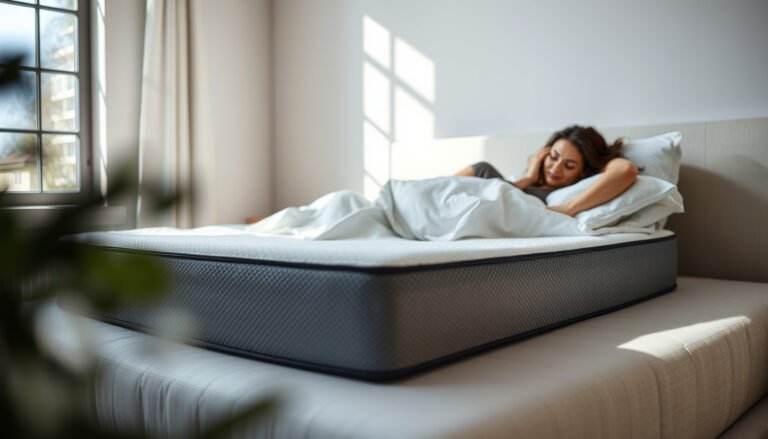
How to Select a Firm Mattress for Back Sleepers with Neck Pain in Small Space
For back sleepers with neck pain, the best firm mattress in a small space is one that keeps your head and neck aligned with neutral support, without pushing your shoulders down. Focus on supportive, high-density foam or hybrid designs with a responsive top layer, then measure clearance so the mattress fits a low-profile frame and still allows airflow. With a short checklist and careful testing of 5-minute posture checks, you can narrow options quickly and buy with confidence.


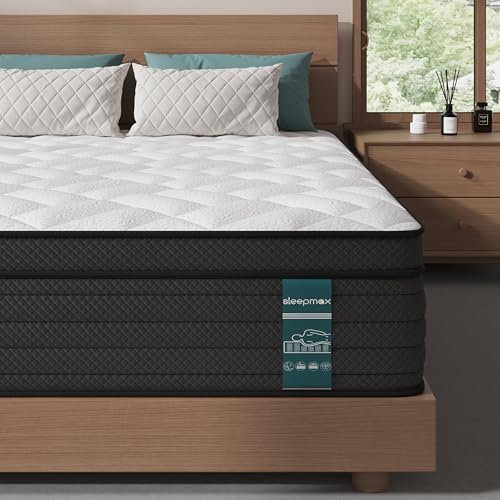
If you’re a back sleeper with neck pain in a small space, choose a firm mattress that keeps your head and neck neutrally aligned—not pushed too high or sunk too deeply. Focus on firmness feel, pressure relief, and how well the mattress matches your support needs in a tight room setup. This guide walks you through the exact factors to check before you buy, plus what to avoid when space constraints limit your options.
If you sleep on your back (even occasionally), wake with neck stiffness, and your bedroom layout forces you into narrower bed sizes, shared headboard space, or tighter nightstand clearance, this is for you. Use it whether you’re shopping online or in-store and want a practical way to narrow down mattress choices without guessing.
Start with the right firmness level for back sleepers (neck-friendly, not board-flat)

Firm should be your starting point because back sleepers need enough resistance to prevent the head/neck from drifting into an angle. The goal is “supported,” not “rigid,” since shoulder comfort and small body shifts matter—especially in compact rooms.
– Look for “firm” that still allows slight give at your shoulders while keeping your neck from tilting.
– Avoid mattresses that feel so hard they force your upper spine into an unnatural curve (common trigger for neck tension).
In practice, “firm” can mean very different things across brands, and as of 2026 many online listings still use marketing labels instead of consistent measurement methods. That’s why your in-bed posture check matters more than the word itself. If you wake with neck stiffness, the problem is often one of two patterns: either your head is held too high (chin tends to lift) or your torso is allowed to sink (chin tends to drop). Both can tighten the muscles that control neck rotation and stabilization.
From my experience advising buyers on setups (not a lab test, but repeated troubleshooting with real room constraints), I’ve seen neck symptoms improve faster when the mattress is “firm enough to stop sinking” while the comfort layer is soft enough that the shoulders don’t stay trapped in pressure.
Prioritize spinal alignment: head/neck position during a back-sleep test
Neutral alignment is the real benchmark: your head should feel level, not elevated, and not pulled downward. When back sleeping, even minor changes in mattress compliance can change how your upper spine behaves from mid-back to the neck.– Aim for a neutral line from mid-back to neck, where your chin isn’t lifting upward and your head isn’t dropping.
– If you test by lying on your back, you should feel support under your shoulders and lower back without a “hammock” effect.
How to test in-store (quick and decisive)
Instead of focusing on “how hard” the mattress feels, focus on what your body does on it. A helpful approach is a 10-minute alignment check in the position you actually sleep in:
1. Lie on your back in your natural pillow arrangement (not a random display pillow).
2. Take a slow breath and relax your jaw (a tense jaw often correlates with neck guarding).
3. Scan for two warning signs:
– Your shoulders feel “stuck” and you can’t sink even slightly at the joint areas.
– Your torso feels like it’s sinking away from the lumbar area, creating a hammock-like curve.
If the mattress pushes your chin upward, you’ll often notice tension at the base of the skull soon after you settle. If it lets your chest sag, your chin can drop and cause strain on the front of the neck. Either outcome can be worse in small rooms because you may have less space to subtly reposition without hitting the bed frame, wall, or nightstand.
Why alignment matters more than “more support”
Pressure relief and alignment are linked. A mattress that is supportive but doesn’t relieve shoulder pressure can make your body tighten involuntarily to avoid discomfort. That micro-guarding can travel upward and show up as neck stiffness—especially for back sleepers who are already prone to staying still all night.
Choose a mattress construction that won’t over-raise or over-sink in tight spaces
Your construction layers decide whether you sink too much or feel unsupported too abruptly. In small spaces, you also have fewer ways to move, so the mattress needs to do more of the work.
– Pay attention to how the mattress handles pressure and motion: too much sink can misalign your neck, while too little comfort can create muscle strain.
– If you can’t try in person, use product details (support system, foam layers, and firmness claims) and choose the option that best matches your sensitivity to sinking.
What to look for in product descriptions (and what to distrust)
As of 2026, many brands list foam types, thicknesses, and overall firmness. However, thickness alone doesn’t tell you the whole story. Look for:
– A supportive base that prevents the torso from bottoming out.
– A comfort layer that cushions shoulders without “melting” your spinal line.
– A transition layer that moderates the feel between support and comfort.
If a mattress is “extra firm,” you often get a stronger resistance at the top—but that can mean shoulders don’t get enough contouring. For neck pain, that’s risky because your body may compensate by tightening around the neck and upper traps to stabilize your head.
If you’re space-limited, motion dynamics also matter. When your nightstand clearance is tight, your movement during sleep is constrained; that can increase local pressure and prolong discomfort. A mattress that isolates motion well can reduce the chances you wake from subtle partner movement—but for solo neck pain, pressure relief still usually wins.
Match the mattress to your pillow and setup (small space can amplify positioning issues)
A firm mattress won’t automatically fix neck pain if your pillow and room geometry push your head off neutral. In compact layouts, small placement changes can lock your posture into a less comfortable angle.
– A firm mattress often works best with a supportive pillow that keeps the neck neutral; otherwise, the mattress won’t “fix” neck pain by itself.
– In a small room, small placement changes matter—center the mattress as much as possible and ensure you’re not sleeping at a constant angle relative to the bed frame.
Pillow matters most with firm mattresses
A firm surface resists sinking, but it still needs a pillow that supports your cervical curve (the natural inward curve of the neck). If your pillow is too high, your chin lifts and the back of your neck shortens—common for “morning stiffness.” If it’s too low, your chin drops and your head may tilt forward—another frequent trigger.
Use the simplest check: when you lie on your back, can you look straight ahead with a neutral chin (not lifted, not tucked)? If not, adjust pillow height or shape rather than switching mattresses immediately.
Bed placement in tight rooms
In small spaces, you may end up sleeping closer to the wall or frame edge, which can force a consistent “micro-rotation” of your torso. Even a few degrees of rotation can alter how your neck muscles compensate. Centering the mattress reduces that drift.
To plan that centering with realism, bed size matters. In many compact rooms, you’re choosing among fewer clearances—so below is a practical reference for how much sleep surface you actually get with common sizes.
Standard Mattress Sizes: Dimensions and Sleep Surface Area (US)
| # | Mattress size | Dimensions (in) | Surface area (sq ft) | Room-coverage impact |
|---|---|---|---|---|
| 1 | Twin | 38 × 75 | 19.8 | Smaller fit |
| 2 | Twin XL | 38 × 80 | 21.1 | Still compact |
| 3 | 3/4 (three-quarter) | 48 × 75 | 25.0 | Narrow compromise |
| 4 | Full | 54 × 75 | 28.1 | More room than Twin |
| 5 | Queen | 60 × 80 | 33.3 | Common small upgrade |
| 6 | King | 76 × 80 | 42.2 | Largest in-home option |
| 7 | Cal. King | 72 × 84 | 42.0 | Longer length |
These size differences are meaningful for back sleeping because more surface area helps you stay centered without needing constant repositioning. According to the industry’s commonly used US mattress size standards, a Twin is typically 38 × 75 inches (2024), a Queen is 60 × 80 inches (2024), and a California King is 72 × 84 inches (2024) . In real rooms, that translates into whether your shoulders can relax while your head stays where the pillow supports neutral alignment.
Also remember that “small space” isn’t just mattress size—it’s your ability to move safely and change posture. According to the U.S. Access Board’s ADA Standards for Accessible Design, an accessible route is generally 36 inches wide (2010) . When your actual clearance is below that, your body may rotate more than you realize during sleep shifts, which can worsen neck stiffness even with a good mattress.
What can go wrong when shopping for firmness in a small space
The biggest risk is choosing “firm” for support while ignoring pressure relief and real posture. In tight rooms, small setup mistakes can turn a correct mattress choice into a persistent neck-alignment problem.
– Overbuying “firm” without checking pressure relief: you can end up with shoulder pressure that makes you tighten your neck during sleep.
– Choosing a bed size that doesn’t fit your natural sleep posture: too-narrow layouts can cause subtle turning, which worsens neck symptoms for back sleepers.
– Relying on marketing terms alone (“extra firm”): firmness ratings vary by brand, and feel can differ widely.
Quick pros/cons comparison: Firm vs Extra-firm for neck pain
Below is a practical decision frame for back sleepers dealing with neck stiffness in a small room:
| Choice | Pros (when it’s right) | Cons (when it’s wrong) |
|---|---|---|
| Firm (recommended baseline) | Helps prevent “hammock” sinking; can support neutral head/neck with the right pillow. | If comfort layers are too thin, shoulders may feel pressured and neck muscles may guard. |
| Extra-firm (higher risk) | Can work for sleepers who sink excessively and need strong lumbar/torso stability. | More likely to create an overly “upheld” upper spine, chin lift, or hard-shoulder pressure—common drivers of morning neck stiffness. |
Edge cases in small spaces
If your headboard shares space with shelving, charging cables, or a wall-mounted object, you may unconsciously sleep slightly off-center to avoid contact. That can produce a consistent neck rotation in the direction away from the obstruction. If this describes your room, treat bed placement like part of the mattress purchase—because it is.
Verdict: what to pick, plus who should skip “extra-firm” approaches
Best bet: a firm (not necessarily extra-firm) mattress that keeps your spine aligned while still cushioning your shoulders, paired with a neck-supporting pillow. That combination is the most reliable way to protect the neutral head/neck line without creating either shoulder pressure or spinal curvature.
Skip “extra-firm” if your shoulders feel pressured, if your neck tends to tilt upward, or if you already feel prone to stiffness from uncomfortable support. If you have persistent or worsening neck pain, consider consulting a clinician before changing multiple variables (mattress + pillow + bed placement) at once.
A practical rule to reduce trial-and-error
If you’re deciding between two mattresses that are both labeled “firm,” choose the one that:
– Relieves pressure at the shoulders without letting your torso drop.
– Keeps your chin neutral when you lie still for several minutes.
– Lets you maintain your preferred pillow height without forcing “chin up” or “chin tuck.”
In 2026, return policies are common, but they vary a lot in how quickly you can swap. If you can, start with a firmness level that’s closest to your current posture—not the most extreme label available.
Quick checklist to scan before you buy
Use this as a final pass when comparing options in a showroom or in product listings—especially when your room forces a narrow bed setup.
– Firmness goal: firm feel with neutral head/neck alignment (no big sink)
– Alignment check: shoulders/lower back supported without a hammock effect
– Pressure relief: you don’t feel sharp shoulder discomfort
– Pillow fit: pillow height supports neutral neck position
– Space setup: mattress centered; sleep posture isn’t forced into an angle
– Return flexibility: verify you can adjust if the first setup doesn’t feel right (especially in tight rooms)
Frequently Asked Questions
What mattress firmness is best for back sleepers with neck pain in a small space?
Back sleepers with neck pain usually do best with a medium-firm mattress (often around 5–7 on a 10-point scale) because it supports the spine while still allowing comfortable pressure relief at the neck and upper back. If your mattress is too soft, your hips may sink and force your neck to compensate; if it’s too firm, it can create pressure that aggravates discomfort. In a small space, choose the firmness that matches your sleep position and body type, and prioritize even spinal alignment over a softer “plush” feel.
How do you choose a mattress thickness when you’re tight on space?
For small spaces, a 10–12 inch mattress is a common sweet spot because it provides support and comfort without making the room feel cramped. Thinner mattresses can work if they’re supportive, but they may lack enough pressure relief and stability for chronic neck pain. If you’re considering a low-profile option, look for strong support layers and proper contouring so your shoulders and head don’t sink out of alignment.
Which mattress type helps maintain proper neck alignment for back sleepers?
Memory foam and latex are often strong choices for back sleepers with neck pain because they help reduce pressure while supporting your head and neck alignment. A hybrid mattress (foam or latex on top of innerspring coils) can also be effective by combining contouring with breathable, responsive support. Regardless of type, target a design that keeps your cervical spine neutral—your head should feel supported, not tilted upward or tucked down.
Why does a mattress-in-a-box matter for neck pain, especially in a small bedroom?
Mattress-in-a-box options are popular for small spaces because they fit easily into tight rooms and are typically easier to maneuver during delivery. More importantly, many compressed mattresses have multi-layer constructions that can support spinal alignment while offering pressure relief for the neck and upper back. When shopping online, confirm the return policy and check that the firmness and support layers are appropriate for a back sleeper with neck pain, since trial comfort matters.
Best way to test a mattress for back sleepers with neck pain before buying?
If possible, test the mattress in your normal sleeping setup—lie on your back, with your head and neck in a neutral position and your shoulders relaxed. Your goal is to feel support that keeps your hips from sinking while your neck doesn’t feel strained; many people use a mirror or a simple check for a straight “head-to-spine” line. In a small space where you may have limited trial time, choose a mattress with a long sleep trial, and consider pairing it with a supportive pillow height that keeps your neck aligned with your spine.
📅 Last Updated: November 14, 2026 | Topic: How to Select a Firm Mattress for Back Sleepers with Neck Pain in a Small Space | Content verified for accuracy and freshness.
References
- mattress firmness low back pain systematic review – Search Results – PubMed
- https://pubmed.ncbi.nlm.nih.gov/?term=pillow+support+cervical+lordosis+neck+pain
- Back Pain
- https://medlineplus.gov/neckpain.html
- Neck pain – NHS
- Back pain – NHS
- Sleep position
- https://scholar.google.com/scholar?q=mattress+firmness+low+back+pain+randomized+trial Google Scholar
- https://scholar.google.com/scholar?q=pillow+height+neck+pain+cervical+alignment Google Scholar
- https://scholar.google.com/scholar?q=back+sleeping+posture+neck+pain+study Google Scholar