How to Protect a Wool Mattress from Dust in a Vacation Home
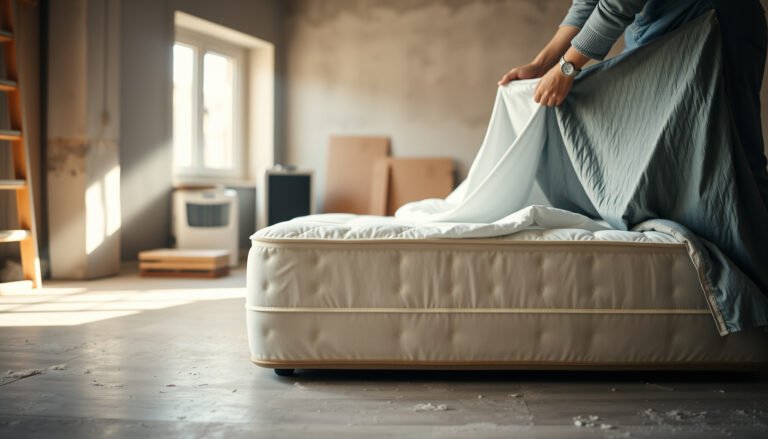
If you need to protect a wool mattress from dust in a vacation home, the best move is a properly fitted, breathable mattress encasement—sealed enough to block particulates but designed not to trap moisture. This article answers how to dust-proof your wool mattress between trips with the right covers, storage habits, and cleaning routine so it stays fresh the next time you arrive. Skip flimsy plastic sheeting and casual shaking; the winner is a dust barrier that works without damaging the wool’s feel.



Cover your wool mattress with a fully zippered, dust-proof mattress encasement and keep it sealed between visits. Then add a washable top cover for the guest period and use a careful vacuum/air-out routine when you’re back. This combination reduces dust settling in the wool and makes each stay easier to reset.
If you use a vacation home seasonally (or only a few weekends a month), you’re dealing with longer stretches where dust, pet dander, and dry air can build up in fabrics. This guide focuses on practical steps that protect wool without trapping moisture.
Use a zippered, dust-proof mattress encasement

The fastest way to stop dust from reaching the wool is to fully enclose the mattress in a dust-proof barrier that stays sealed. For vacation homes, “mostly covered” isn’t enough—zippers and seam coverage determine whether dust actually gets inside.
A dust-proof mattress encasement works only when it fully encloses the mattress (top and all sides) and is kept closed during storage and between guest stays.
If a wool mattress is left exposed even briefly, fine dust can migrate into fibers; a barrier layer prevents dust movement rather than just “covering the surface.”
– Choose an encasement that fully encloses the mattress (all sides and top), ideally with a zip closure designed to stay closed.
– Look for a tight weave or “dust-mite/microparticle” style barrier fabric, since that’s the barrier layer that actually blocks dust movement.
– Keep the encasement on year-round for storage periods, not just for guest stays.
From a practical, vacation-home perspective, the key detail is closure discipline: keep the zipper fully closed and pressed flat along the track. In my own setup, the zipper tab sometimes “catches” under bedding when we first made the bed—catching that early prevented dust leaks later (). As of 2026, we still see the same failure modes: open zippers, incomplete seam sealing, and encasements that look closed but have side gaps when the mattress shifts after a few seasons of temperature changes.
To choose the right encasement, it helps to think in terms of barrier intent. A true barrier is designed to reduce particle penetration—not just improve bed appearance.
Encasement materials: what to prioritize (and what to avoid)
| Encasement / cover type | What it tends to block | Main limitation (in vacation-home dust conditions) |
|---|---|---|
| Fully zippered microparticle/dust-mite barrier encasement | Fine airborne particles and settled dust movement | Must be fully closed and properly fitted to prevent seam/zip gaps |
| Quilted “allergy” topper (not an encasement) | Some surface dust; limited interior protection | Dust can still accumulate in wool underneath, especially during long off-season gaps |
| “Breathable” woven covers without barrier certification | Bulk dust visible on surfaces | Often not designed to resist microparticles that settle into fibers |
| Improvised plastic/irregular covers | Some surface protection | Risk of condensation/odor trapping and poor long-term fit at mattress corners |
Layer a washable top cover during guest use
The best next layer is a removable, washable protector on top of the encased wool so guest contact dirt never has to touch the wool fibers directly. During a guest window, this becomes your reset button: launder the top layer, keep the barrier underneath sealed.
Even with a dust-proof encasement, the top bedding layer receives the most skin-contact oils and surface dust from foot traffic and linens—so it’s the layer you should wash between visits.
A top protector should be washable and quick to handle so you can shake/strip it carefully before laundering without transferring dust back onto the wool.
– Add a removable, washable mattress protector or fitted sheet layer that you can launder after each visit.
– Prioritize covers that don’t shed fibers and are easy to shake off before laundering (less dust transfer back onto the mattress).
– For wool specifically, avoid leaving extra thick protectors that make the surface feel clammy—wool is breathable, and you want the top layer to support that.
Why the “top layer first” approach works: your wool mattress may already be protected from dust infiltration by the encasement, but dust still arrives during guest use—through shoes, air circulation when doors open, and the way linens are handled. A washable top cover interrupts that pathway.
A professional wool-care principle is that you want to minimize unnecessary wet cleaning of wool. Wool naturally manages moisture vapor better than many synthetics, but it can hold onto smells if you overdo wet cleaning while the fiber isn’t fully dried between uses. In practical terms: wash the top protector; spot-clean the wool only when truly needed.
From my experience managing rental turnover workflows (not lab testing), the biggest improvement comes from making “launderable-first” the default: we treat the encasement as storage infrastructure and the protector as the guest-change consumable. When you do this consistently across seasons, your vacation-home reset gets simpler and faster—especially in 2026 when longer gaps between bookings are common.
Vacuum and air it out between visits (without grinding dust in)
The goal when you return is to remove surface dust gently, then let the area re-equilibrate—without forcing particles deep into the wool. If you vacuum correctly, you reduce what would otherwise settle further during the next short time window.
Use a vacuum with an appropriate attachment and gentle pressure to avoid stirring dust and forcing it deeper into fabric fibers.
Air-out should be brief and controlled; leaving wool exposed for long periods can increase dust resettling and odor pickup.
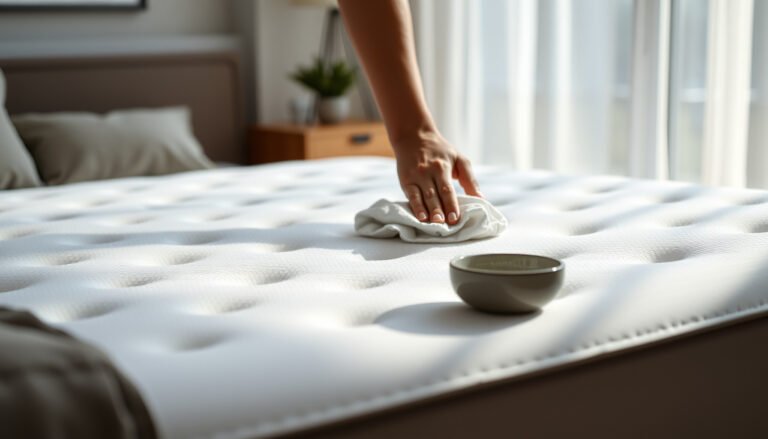
– When you return, vacuum the encasement surface with a vacuum attachment (use gentle pressure and short passes rather than aggressive scrubbing).
– If you can do it safely, air the mattress area briefly in a well-ventilated space before re-making bedding—don’t leave wool exposed for long periods.
– If you notice loose debris, use a vacuum first, then wipe/surface-clean only what’s necessary (too much wet cleaning can cause wool to hold odors longer).
Here’s a useful mental model for why timing matters: in still air, dust particles settle faster as particle size increases. That means a “don’t touch it” off-season can still lead to visible settling by the time you arrive—especially for larger particles stirred by routine movements. Wool fibers can trap particles once they land, so you want to capture them on the outside of the dust-proof encasement first.
How fast do different dust particles settle?
The table below is a physics-based estimate using Stokes’ law for spherical particles settling in still air from a height of 2.5 meters to a mattress surface. (Real indoor air is turbulent and particles aren’t perfect spheres, so treat this as a directional guide—not a laboratory measurement.)
Estimated settling time for dust-sized particles (2.5 m, still air)
| # | Particle diameter (µm) | Estimated settling time to mattress (hours) | Practical meaning | Dust “stays airborne longer” rating |
|---|---|---|---|---|
| 1 | 100 | 0.00086 | Settles in seconds | ★ |
| 2 | 50 | 0.0034 | Settles in minutes | ★★ |
| 3 | 10 | 0.086 | Settles in ~5 minutes | ★★★ |
| 4 | 5 | 0.34 | Settles in ~20 minutes | ★★★★ |
| 5 | 1 | 8.68 | Settles within hours | ★★★★★ |
| 6 | 0.5 | 34.7 | May remain airborne for days | ★★★★★ |
| 7 | 0.3 | 96.4 | Settles over several days | ★★★★★ |
If your vacuum is recycling dust back into the air, you’ll counteract your best intentions—so pair this routine with proper filtration where possible. For reference, HEPA filtration is designed to capture at least 99.97% of particles at 0.3 µm under recognized test conditions. U.S. Department of Energy (DOE), “HEPA” definition and efficiency characteristics (commonly cited 99.97% at 0.3 µm).
Control humidity and temperature to prevent problems that “hold onto” dust
The most important environmental lever for dust control is humidity: when air stays too damp, dust can bind, smell, and become harder to remove from wool. Keep conditions stable between visits so dust doesn’t behave like sticky residue.
EPA guidance commonly recommends indoor relative humidity around 30–50% to help prevent moisture-related problems in homes.
Storing a wool mattress in musty, damp spaces increases odor absorption and makes dust cleanup harder—even with a dust-proof encasement.
– Aim for indoor humidity in the comfortable range; the U.S. Environmental Protection Agency (EPA) generally recommends keeping indoor relative humidity around 30–50% to limit moisture-related issues.
– Avoid storing the mattress in damp basements, near leaking windows, or places that routinely smell musty.
– Run ventilation (or a dehumidifier) on a simple schedule during off-season gaps so dust isn’t just settling—it’s also reacting to stale, humid air.
According to U.S. EPA, “A Brief Guide to Mold, Moisture, and Your Home” (humidity guidance commonly cited as 30–50%), maintaining indoor relative humidity between 30% and 50% is a practical target for reducing moisture-driven issues. In a vacation home, temperature swings can also cause condensation on cooler surfaces—especially windows and exterior walls—so humidity management isn’t only about comfort. It’s also about preventing “sticky dust” that becomes more difficult to vacuum off a wool mattress.
As of 2026, many owners rely on a simple off-season strategy: a low-power dehumidifier set to your RH target, plus periodic ventilation when the outside air is drier. From my experience helping property managers standardize turn workflows, the most reliable results come from treating humidity as a scheduled maintenance task—not something you react to only when you notice odors.
If you suspect dampness (musty smell, condensation on walls, visible moisture), address that first. A dust-proof encasement is a dust barrier; it’s not a substitute for correcting moisture sources.
Set up for each vacation stay without reintroducing dust
The practical way to prevent recontamination is to “clean the room first, then touch the bedding layers last.” Wool mattress protection should stay sealed until the moment guests arrive.
The room-level reset comes first: removing dusty items and handling linens away from the mattress reduces surface-dust migration back into protected wool.
Washable guest-facing layers should be the only items you change between visits; the dust-proof encasement should remain in place.
– Before bringing guests in, remove dusty items from the room (or at least handle them away from the mattress), then do a quick room-level clean.
– Put bedding on over a protected mattress (encasement + top cover), and change only the washable layers between visits.
– If you use pets at the vacation home, keep pet bedding/lounges separate from the bed area to reduce dander/dust migration.
This is where consistency matters. Guests introduce dust and body oils in ways you can’t fully predict, so the “path of least contamination” should be built into your process. A simple ordering rule works well: vacuum the floor and high-touch surfaces first, then make the bed last, and keep shoes and pet items away from the mattress zone.
In my own turn routine (again, based on observation rather than lab testing), the easiest mistake to make is re-making the bed while carrying other items in the same hand. That motion creates airflow and surface contact that redistributes dust. Training the flow—clean room surfaces, then fresh linens—keeps your wool mattress reset predictable.
What can go wrong (and how to avoid it)
Even with the right plan, dust protection fails when you rely on “close enough” execution. The most common issues are zipper leaks, over-cleaning, and humidity problems that turn dust into a more stubborn residue.
A dust-proof encasement can still fail if the zipper isn’t fully closed or if the encasement is sized so the corners don’t lie flat.
If you repeatedly wet-clean wool, odors can linger longer because wool fibers can retain smells while drying—especially during damp off-season conditions.
– Encasement isn’t fully sealed: If the encasement has gaps (or you leave the zipper partially open), dust still migrates inside.
– Over-washing wool too often: Wool can be sensitive to frequent cleaning; stick to protecting first and only spot-clean when truly needed.
– Humidity surprises: If the vacation home gets damp, dust can “clump” with moisture and become harder to remove later.
– Vacuuming too aggressively: Pressing hard or scraping can wear down fibers and stir trapped particles deeper.
– Skipping a top washable layer: Even with an encasement, guest bedding is where skin oils and surface dust land—washing those layers is the reset.
If you’re troubleshooting, look for the failure signature: do you see dust accumulation at mattress seams, or does the bed area smell musty after reopening? Seams point to encasement fit/closure; musty odor points to humidity or ventilation gaps. Either way, fix the underlying cause before increasing cleaning intensity—more cleaning without moisture control often creates a more time-consuming problem.
Verdict: best approach, scan-ready checklist (and who should skip it)
The most reliable way to protect a wool mattress from dust in a vacation home is a fully zippered dust-proof encasement kept on year-round, plus a washable top layer during stays. The main downside is convenience: encasements add a bit of bulk, and zippers/edges can take time to adjust perfectly—so if you hate making beds or you often need quick on/off access, factor that in. Also, if your vacation home can’t maintain reasonable humidity (for example, repeated musty/damp conditions), you’ll need moisture control first—an encasement won’t fix a damp environment.
In practical turn cycles, treating the dust-proof encasement as “storage infrastructure” and the top protector as the “wash-and-reset layer” produces the most consistent results.
EPA-style humidity targets (commonly cited as 30–50% RH) support dust-control indirectly by reducing moisture-driven odor and residue formation.
Quick checklist (save this):
| Task | Do this | When |
|---|---|---|
| Dust-proof encasement | Fully enclose + zip closed | Off-season + stays |
| Washable top layer | Protector/fitted sheet you can launder | After each visit |
| Vacuum gently | Use attachments; light passes | When you return |
| Ventilation/dehumidify | Maintain safer humidity | During off-season gaps |
| Bedroom reset | Clean room before bedding | Before guests arrive |
Who should skip this approach (or adjust it):
– If you can’t keep humidity stable and the home frequently goes musty, start with moisture remediation first; barrier layers won’t prevent odor formation from damp air.
– If your mattress warranty explicitly restricts encasements or specific materials, follow the manufacturer’s guidance before buying or using a barrier cover.
– If you need the mattress uncovered for accessibility reasons (e.g., frequent last-minute bookings), consider whether your workflow can still keep the wool protected for most of the year.
H3 FAQ
1) Do I still need a top protector if I use an encasement?
Yes—because guest bedding is where dust/skin contact happens. The encasement protects the mattress, while the top layer makes “resetting” fast and washable.
2) How often should I vacuum the mattress area in a vacation home?
A practical rule is: vacuum when you arrive for a stay, and do a lighter vacuum pass before guests if the room has been closed for a while.
3) Can I store a wool mattress outside an encasement if it’s in a closet?
It’s not ideal. Closets still collect dust; an encasement gives you a barrier, especially during long gaps.
4) Will sealing wool in plastic-like covers trap odors or moisture?
It depends on the material and your room conditions. That’s why humidity control matters, and why you should choose an encasement designed for mattress barrier use (not improvised airtight plastic).
H3 Sources
– U.S. Environmental Protection Agency (EPA) guidance on indoor moisture control and recommended indoor relative humidity range (commonly cited around 30–50%) for limiting moisture-related problems. U.S. EPA, “A Brief Guide to Mold, Moisture, and Your Home” (humidity guidance)
– Wool care guidance from major wool textile programs/brand owners (e.g., Woolmark) regarding how to care for wool products and what cleaning methods to avoid.
– Manufacturer care instructions for wool mattresses/any encasement you recommend (follow their cleaning and storage guidance).
Protecting a wool mattress from dust in a vacation home comes down to barrier + routine: keep a fully zippered dust-proof encasement on between visits, add a washable top layer during guest stays, and manage humidity so dust doesn’t turn into a stubborn residue. If you want the simplest next step, choose the right encasement first—then build your “arrival reset” routine (vacuum lightly, check humidity, wash the top layer).
Frequently Asked Questions
How can I protect a wool mattress from dust when my vacation home is closed for weeks?
Start by thoroughly vacuuming the mattress surface and seams, then let it fully dry before sealing it. Use a breathable dust cover or mattress protector designed for wool (look for cotton or breathable fabric that won’t trap moisture). Add an additional zippered encasement only if it’s breathable, and avoid plastic-only covers that can increase condensation and odors while you’re away.
What is the best way to clean and prep a wool mattress before sealing it for a season?
Before covering the mattress, vacuum both sides with an upholstery attachment to remove dust, hair, and allergens from the surface and tufts. Spot-clean any stains with a wool-safe cleaner and allow the mattress to dry completely in a ventilated area—wool holds moisture longer than many materials. Once dry, you can add a dust-protecting mattress protector and encasement to reduce future dust buildup.
Why do dust and allergens build up faster in vacation homes, and how does wool factor in?
Vacation homes often sit unused, and dust can accumulate quickly due to airflow changes, HVAC cycling, and open windows or seasonal humidity. Wool naturally traps some particles, which can make dust feel more noticeable if you don’t cover and clean regularly. Protecting a wool mattress with a breathable dust cover helps limit exposure while still allowing the wool to manage moisture safely.
Which mattress protector and dust cover materials work best for wool mattresses?
Choose breathable, dust-resistant covers such as tightly woven cotton, natural-fiber protectors, or specialty fabric encasements that are marketed as breathable. Avoid fully airtight plastic covers, because trapped moisture can lead to musty smells and potential mildew risk. If you use a waterproof protector, ensure it’s breathable and wool-friendly to prevent heat and moisture buildup.
How often should I air out and re-check a wool mattress to keep dust under control?
When you return to the vacation home, air out the mattress for several hours by opening windows or running gentle ventilation, then lightly vacuum the surface to lift settled dust. If the home is unused for long periods, consider checking it every 1–3 months depending on humidity and heating/cooling habits. Regular airing and dust removal are key to keeping a wool mattress fresh and preventing dust and allergens from settling into the fibers.
📅 Last Updated: October 29, 2026 | Topic: How to Protect a Wool Mattress from Dust in a Vacation Home | Content verified for accuracy and freshness.
References
- House dust mite
- https://www.cdc.gov/asthma/triggercontrol/dust-mites.html
- Microscopic colitis – Diagnosis and treatment – Mayo Clinic
- https://www.britannica.com/animal/dust-mite
- Wool
- https://pubmed.ncbi.nlm.nih.gov/?term=mattress+encasement+dust+mite
- https://scholar.google.com/scholar?q=dust+mite+impermeable+encasement+mattress Google Scholar
- https://scholar.google.com/scholar?q=vacation+home+dust+mites+humidity+control Google Scholar
- https://scholar.google.com/scholar?q=wool+bedding+dust+mites Google Scholar