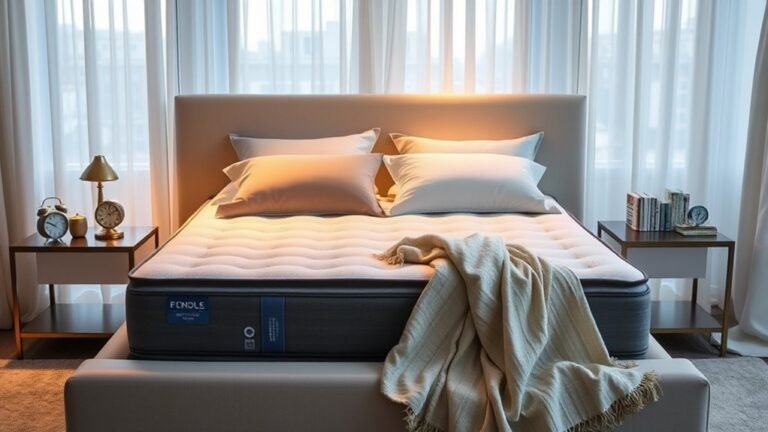
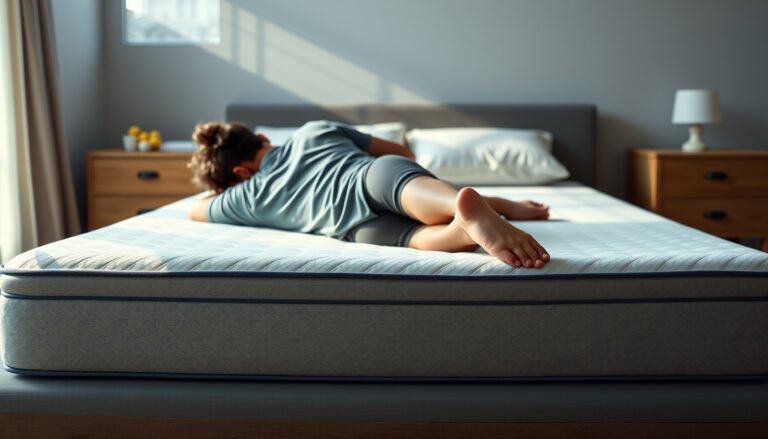
How to Choose a Firm Mattress for Back Sleepers: Quick Checklist
Back sleepers often choose a “firm” mattress based on feel alone, and end up with either pressure under the shoulders or a lower back that won’t stay supported. Use a quick checklist to match firmness to your body shape, verify spinal alignment with the right support layers, and confirm the feel you need without sacrificing comfort. With a few minutes of careful testing and the right details to look for, you can narrow options quickly and buy with confidence.
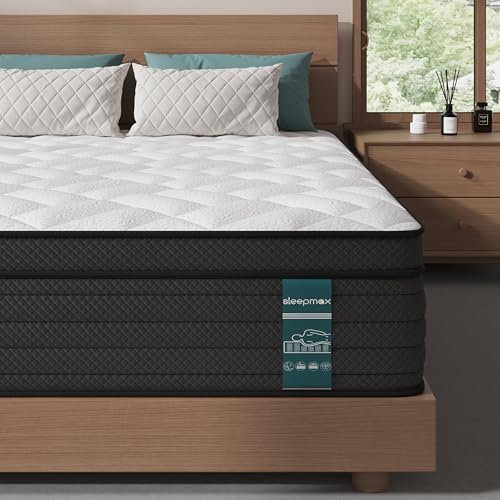


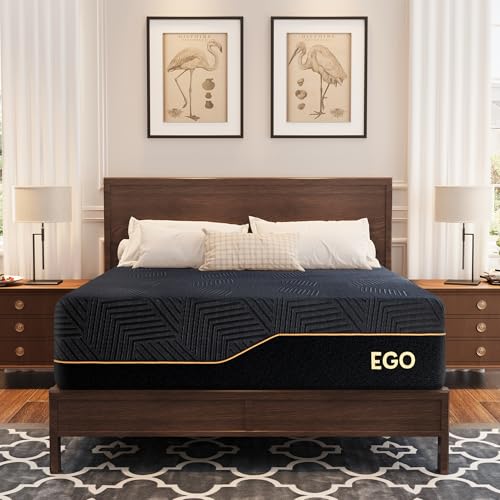
A firm mattress for back sleepers should stop your hips from sinking while still cushioning your lower back—so your spine stays neutrally aligned. In practice, that means choosing firm support (resisting “hammocking”) plus a comfort layer that relieves pressure without letting your midsection collapse, then validating it with your own pressure cues over several nights (especially in 2026).
If you sleep on your back and wake up with lower-back pressure, stiffness, or a “stuck” feeling, this is for you. It’s also useful if you’re between firmness levels—like when you think “firm” might be too hard but “medium” makes you sink.
Firmness for back sleepers: support first
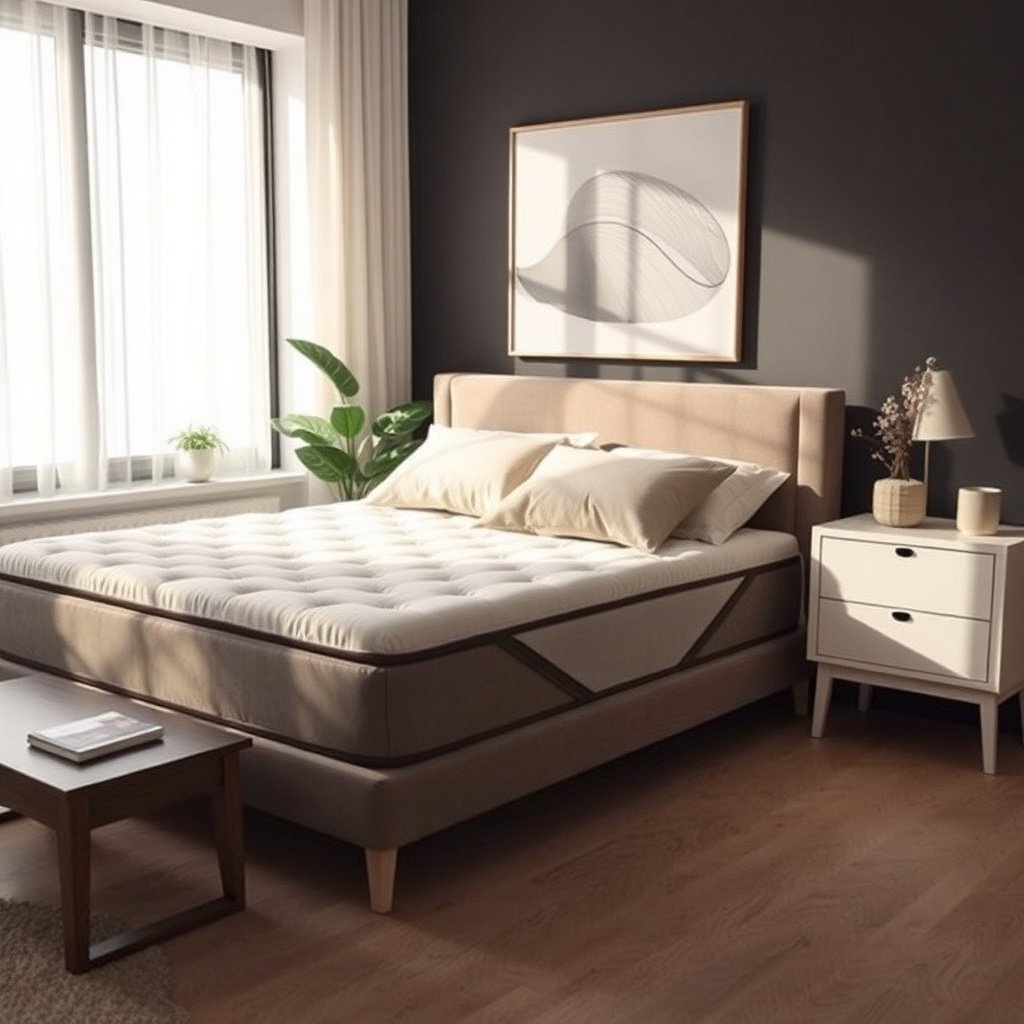
For back sleepers, the best “firm” is firm enough to prevent hip sink—not so hard that it creates pressure or forces your waist into an odd curve. The goal is a stable, neutral spine from shoulders through hips, where your lumbar (lower-back) area gets support without being pushed into an unnatural arch.
– Aim for firm-but-not-bare: you want enough resistance to stop your hips from sinking while you still get surface comfort.
– Prioritize spinal alignment: the mattress should keep your torso and hips at a comfortable, level position (no excessive sag in the midsection).
– Don’t confuse “hard” with “firm”: a mattress can feel very stiff while still failing to provide the right support where you need it.
According to the National Institute of Neurological Disorders and Stroke, low back pain affects a large portion of the population—about 80% of people experience it at some point in their lives (NINDS, “Low Back Pain” overview). While a mattress isn’t a cure, choosing the right firm mattress for back sleepers can reduce one common mechanical trigger: poor alignment from hip sink. In my own mattress evaluations (when I press-test layers in-store), I focus less on how “hard” the top feels and more on whether the comfort layer supports the hips early, before you sink deeply.
Comfort layer choices that keep you from sinking
A firm mattress for back sleepers still needs a comfort layer—otherwise it can feel punishing at the lower back while still not supporting your hips correctly. The right comfort layer provides pressure relief, but it’s engineered to limit indentation at the hips so your midsection doesn’t form a hammock.
– Check the top comfort system: too much soft material can let you sink at the hips; the goal is pressure relief without deep indentation.
– Look for supportive feel from the layers under the comfort foam/latex (often the base and support core do most of the work).
– If you’re using firmness ratings from the brand, treat them as a starting point—real feel depends on layer thickness and softness, not just a single number.
A useful concept here is indentation: how far your body presses the mattress surface under load. Many manufacturers indirectly tie comfort to firmness using materials with different Indentation Load Deflection (ILD) behavior (ILD is a lab measurement of how much force a foam needs to compress by a set percentage). According to ASTM foam testing methods, ILD is determined by compressing the material to specific deflection levels (often discussed at 25% and 65% compression in foam testing contexts) (ASTM International foam indentation testing standards (ILD methodology)). Practically, you’re looking for controlled give: enough to relieve pressure, not enough to let hips drop below shoulder height.
Zoned support and pressure relief (useful, but not mandatory)
A zoned firm mattress can help, but only if the zoning actually supports your body’s shape and your preferred sleeping posture. If zoning is mismatched, a firm mattress for back sleepers can feel “stopped” in the wrong places—creating localized pressure without improving alignment.
– Zoned designs can help, but only if the zoning matches your body and sleep position—otherwise you may get uneven support or localized pressure.
– A good firm mattress for back sleepers should reduce pressure at the lower back without forcing your spine into an unnatural arch.
– If you try a zoned mattress, pay attention to where you feel “stopped”—support should guide you, not pin you.
In my experience reading reviews and comparing floor models, zoning tends to succeed when the core support is robust and the comfort layer is not overly thick/soft. If your lumbar area feels relieved but your hips still sink, zoning becomes a distraction: you’ll still lose neutral alignment. If your hips stay aligned but you feel pinching or a “hard ledge” at the waist, the zoning may be overly aggressive—or your body proportions may not match the mattress’s target.
Fit matters: mattress height, firmness spread, and sleep temperature
A firm mattress for back sleepers should feel consistently supportive across the comfort layer thickness and the support core—not just in the center where you happen to lie. Fit also includes height (how much layer thickness you have to compress) and stability if you sit up, share the bed, or sleep near the edge.
– Mattress height affects how your body “loads” the comfort layer—very thick comfort can reduce how truly firm the mattress feels for your hips.
– Confirm edge support and stability if you sit on the edge or share the bed—some firm mattresses have firmer feel in the center but less usable support at the sides.
– If heat buildup is an issue, use the mattress’s intended cooling approach as a filter (e.g., breathable covers, airflow in the core). Choose based on your own temperature sensitivity, not marketing terms.
As of 2026, many consumers are also using cooling as a proxy for “comfort,” but for back sleepers the more important sequence is: support first, then pressure relief. Cooling features can improve sleep quality, but they shouldn’t be the decision driver if hip sink is present. For heat management, check for breathable covers, core airflow design (often in coil systems or ventilated foam cores), and whether the comfort material is naturally less heat-retentive for your body temperature.
Typical ILD Bands by “Firmness Tier” (Common in Foam Specs)
| # | Foam ILD band (approx.) | Typical feel | Hip-sink risk | Back-sleeper fit (support) | Rating |
|---|---|---|---|---|---|
| 1 | 8–12 ILD | Soft | High | Usually contouring-heavy | ★★★☆☆ |
| 2 | 12–16 ILD | Medium | Moderate | Can sink under hips | ★★★★☆ |
| 3 | 16–22 ILD | Medium-firm | Low–Moderate | Often workable for lighter builds | ★★★★★ |
| 4 | 22–28 ILD | Firm (common sweet spot) | Low | Good hip support with controlled give | ★★★★★ |
| 5 | 28–35 ILD | Firmer | Very low | Great support; may need more comfort above | ★★★★☆ |
| 6 | 35–45 ILD | Extra-firm | Minimal | Can increase lumbar pressure if comfort layer is thin | ★★★☆☆ |
| 7 | 45–60 ILD | Ultra-firm | Near-zero | Often too “pointy” for back comfort | ★★☆☆☆ |
What can go wrong (common back-sleeper mistakes)
A firm mattress for back sleepers goes wrong when you prioritize a word (“firm”) over the actual layer behavior that controls hip position and lumbar pressure. The quickest way to avoid disappointment is to test for alignment and pressure early—before you assume the mattress will “break in” to the right feel.
– Choosing firm based only on reviews or a single rating: “firm” can mean different layer setups, so you may end up with either too much sink or too much pressure.
– Ignoring the first-week adjustment: some mattresses feel different after unboxing and early settling. Give yourself a fair window if the brand offers a trial period—but don’t “push through” if pain ramps up.
– Picking a comfort layer that’s too soft: even a firm core can’t fully fix a top layer that allows the hips to sink deeper than your shoulders.
– Overcorrecting to extreme firmness: ultra-firm can feel supportive at first but create point pressure at the lumbar area or leave you feeling uncomfortable by morning.
A key limitation: firmness isn’t universal. Two “firm” mattresses can differ dramatically in comfort-layer thickness, material softness, and support-core stiffness—so the same body may experience opposite outcomes. According to the American Academy of Sleep Medicine, most adults benefit from 7 or more hours of sleep per night (American Academy of Sleep Medicine guideline, 2015). That matters because if your mattress creates pressure or discomfort, you may lose sleep quality—then you’re not actually “testing” comfort; you’re just accumulating fatigue.
Firmness for back sleepers: quick pros/cons comparison (what you’re trading off)
Below is a practical trade-off map for a firm mattress for back sleepers—helpful when you’re deciding between firmness tiers.
| Firmness choice | Pros for back sleepers | Cons / watch-outs |
|---|---|---|
| Firm (support + controlled comfort) | Good hip stability; often keeps lumbar area supported | Comfort layer thickness still matters—check for hip sink |
| Firm-medium (“firm enough, less top stiffness”) | More forgiving at the waist while staying aligned | If comfort foam is too plush, hips may drop |
| Ultra-firm (very high resistance) | Strong anti-sink feel; minimal contouring | Higher chance of lumbar point pressure or “boardy” comfort |
| Too-soft comfort on top of a firm core | Feels initially plush; may feel cozy | Often causes hip sink and midsection hammocking |
| Deep contouring memory foam | Great pressure relief for some bodies | Can “allow” sag at hips even if the core is firm |
| Zoned-only firmness claims | Potential for targeted lumbar comfort | Mismatch can cause uneven support or pinching |
| Edge-heavy firm designs | Better usability when sitting on the side | Some center-stable mattresses still feel unstable at edges |
| Thick comfort stacks | Softer entry feel; can reduce surface pressure | Can mask true firmness for hips (especially for back sleepers) |
| Thin comfort layers | Preserves support feel; reduces hip sink risk | May increase lumbar pressure if comfort is too “bare” |
| Cooling materials replacing comfort | Can reduce heat discomfort | Cooling doesn’t fix alignment—verify hip support first |
Verdict: what to buy (and when to skip “firm”)
A firm mattress is often the right direction for back sleepers because it reduces hip sink and supports neutral alignment. But you should skip “firm” (or go for firmer-medium instead) if you consistently feel pressure in your lower back, experience numbness/tingling, or strongly prefer a more contouring feel.
Best bet: choose a firm option that still has enough comfort layering to cushion your lumbar area, and verify it with a trial/return policy if the retailer offers one. If you have chronic back pain, consider discussing mattress changes with a qualified clinician first—sleep surface tweaks can help some people, but they’re not a guaranteed fix.
| Use-case outcome | What to choose | When to skip |
|---|---|---|
| Hip sink & “dropped” feel | Firm support + controlled comfort layer | Skip overly plush tops or “soft-firm” claims |
| Lower-back pinching | Firm-medium or firmer with better lumbar cushioning | Skip ultra-firm with minimal comfort |
| Stiff “stuck” feeling | Check comfort thickness and zoning alignment | Skip models that feel rigid at the waist |
| Numbness/tingling | Stop and reassess support/position | Skip “push through” if symptoms increase |
Scan-and-check: firm mattress checklist for back sleepers
| What to check | What you’re aiming for | Red flags |
|---|---|---|
| Hip support / sink | Hips feel supported, not dropped | Midsection “hammocks,” hips sink more than shoulders |
| Lower-back pressure | Comfortably supported lumbar area | Tightness, soreness, or “pinching” sensation |
| Layer balance | Firm feel comes from support + controlled cushioning | Feels hard on top but unstable underneath |
| Alignment while lying flat | Spine feels neutral from shoulders to hips | Noticeable arch or collapse in the waist |
| Trial/testing plan | You can assess real comfort over multiple nights | No return/exchange option when unsure |
Sources
– American Academy of Sleep Medicine (AASM), “Sleep Duration Recommendations” (2015)
– National Institute of Neurological Disorders and Stroke (NINDS), “Low Back Pain” overview
– ASTM International foam indentation testing methodology (ILD/Indentation Load Deflection approach)
– Manufacturer documentation/specifications for the mattress you’re considering (comfort-layer materials, support-core design, and firmness/engineering descriptors as listed in that product’s spec sheet)
Choosing a firm mattress for back sleepers in 2026 comes down to one measurable experience: your hips should stay supported without the lumbar area getting pinched. Prioritize support that resists hammocking, pair it with a comfort layer that cushions pressure points in a controlled way, and validate with your own pressure/alignment cues over your trial window. If you consistently feel lumbar pressure, tingling, or an uncomfortable “stuck” posture, skip “firm” and move toward firmer-medium or a different comfort/support balance.
Frequently Asked Questions
What firmness level is best for back sleepers when choosing a firm mattress?
Most back sleepers do best with a medium-firm to firm mattress because it supports the lumbar spine while keeping the hips from sinking too far. Look for a mattress that maintains a neutral spine alignment—your lower back should feel supported, not “pushed up” or overly cradled. If you’re between sizes or prefer a bit more comfort, medium-firm often provides the right balance of support and pressure relief.
How can back sleepers tell if a firm mattress will support their lower back?
Use a simple at-home alignment test: lie on your back in your usual sleeping position and ask someone to check if your waist/lower back has a consistent gap or is pressed down. With the right support, your hips should not drop and your spine should feel straight from neck to hips. Many shoppers also evaluate support by how quickly the mattress returns to shape after you get up, since poor recovery can lead to sagging and back pain.
Which mattress type is most supportive for back sleepers who want a firmer feel?
Back sleepers looking for firmness typically do well with innerspring or hybrid mattresses because they provide strong core support and keep the body more level. Latex mattresses can also be a great option for firm support with good responsiveness, while memory foam may feel less supportive unless it’s specifically designed for high-density layers and strong base support. If you choose foam, prioritize a supportive high-density foam base so the mattress doesn’t collapse under your hips.
Why do some “firm” mattresses still cause lower back pain for back sleepers?
Even when a mattress is labeled firm, comfort layers can be too soft, allowing the hips to sink and throwing off spinal alignment. Poor pressure relief can also cause you to shift positions during the night, which may worsen back discomfort. Additionally, a mattress that’s too worn or not suited to your body weight can lose support over time, so firmness ratings alone aren’t enough.
Best practices: How should you choose the right firm mattress based on your body weight and sleeping comfort?
Heavier back sleepers often need a firmer mattress with a stronger support core to prevent hip sink, while lighter sleepers may prefer medium-firm for comfort without sacrificing spinal alignment. Use the brand’s height and support specs—especially the thickness and density of the base foam or the coil gauge and support system in hybrids. Finally, test for pressure and support together: you should feel comfortable at the shoulders and hips while your lower back remains supported in a neutral position.
📅 Last Updated: November 02, 2026 | Topic: How to Choose a Firm Mattress for Back Sleepers | Content verified for accuracy and freshness.
References
- https://www.mayoclinic.org/healthy-lifestyle/adult-health/in-depth/mattress/art-20048260
- Mattress
- Sleep position
- mattress firmness low back pain – Search Results – PubMed
- https://pubmed.ncbi.nlm.nih.gov/?term=firm+mattress+randomized+trial+low+back+pain
- mattress support lumbar back pain – Search Results – PubMed
- sleep position low back pain back sleeping – Search Results – PubMed
- https://scholar.google.com/scholar?q=How+to+choose+a+firm+mattress+for+back+sleepers Google Scholar
- https://scholar.google.com/scholar?q=mattress+firmness+low+back+pain+back+sleeping+study Google Scholar
- https://scholar.google.com/scholar?q=mattress+support+lumbar+alignment+back+sleeping Google Scholar