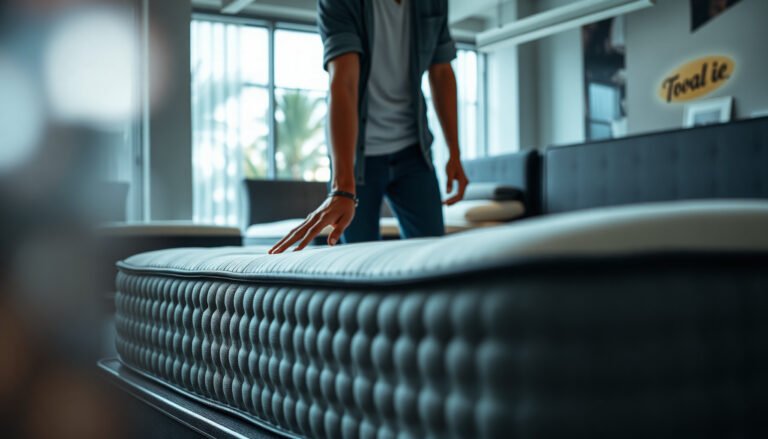
How to Choose the Right Full Mattress for Side Sleepers
Choosing the right full mattress for side sleepers comes down to matching pressure relief and spinal alignment with your preferred firmness. In the next few steps, you’ll learn how to evaluate foam versus hybrid feels, test for hip and shoulder cushioning, and choose the right firmness range without overheating or sinking too much. With a clear checklist of what to measure and what to feel during a trial, you can narrow your options in about 30 to 45 minutes and buy with confidence.




If you sleep on your side, choose a full mattress that cushions your shoulders and hips while keeping your spine level—avoid a mattress that makes you “sink” out of alignment. In practice, that means matching the comfort layer to your pressure-relief needs and then verifying the support core stops your hips from dropping into a hammock-like posture.
You’re probably in the right place if you wake up with shoulder/hip pressure, feel your lower back arching, or you’re switching to a full-size bed for more space. This guide walks you through what to look for in cushioning, firmness, materials, and fit—so you can pick a mattress that supports side-sleep alignment from day one.
Prioritize pressure relief and spinal alignment

A side sleeper’s “win condition” is simple: your shoulder and hip get relief without your mid-body sagging. The result you want is a relaxed, neutral spine where your torso feels supported and your joints feel cradled, not jammed into the mattress.
– Aim for cushioning at the shoulder and hip so those joints don’t feel compressed all night. Side sleeping concentrates body weight at the shoulder (near the acromion) and the hip (often the greater trochanter), so even small pressure spikes can translate into stiffness on waking.
– At the same time, choose a support feel that keeps your torso from dropping too far (that “hips sink, shoulders too” problem). If the mattress is too soft in the comfort layer or support core, the pelvis can sink first, which encourages lumbar extension and can leave your lower back feeling “pulled” or arched.
– Plan to evaluate both comfort and support while lying in your usual side-sleep position, not just when you first lie down. Pressure relief that feels good at minute one can change once your body warms the materials and the comfort layer compresses more.
Choose the right firmness for side sleeping
The right firmness for side sleepers is usually a medium range—soft enough to relieve shoulder/hip pressure, firm enough to prevent hip sink. If you get morning pain or misalignment cues, firmness is often the fastest “knob” to adjust.
– Most side sleepers do best with a “medium” feel that supports without forcing your body into a flat line. This balance typically supports a gentle spinal curve while allowing the hips to settle without disappearing.
– If you tend to sink quickly or feel stuck in the bed, you likely need firmer support (or a different comfort-layer thickness/softness). “Stuck” often happens when the comfort layer contours deeply but rebounds slowly, increasing the chance that your pelvis rides lower than your ribs.
– If you feel pressure on your shoulder/hip instead of cradle support, you likely need a softer comfort layer—without sacrificing overall stability. In other words: you want more “give” at the joints, but stable resistance under your mid-body so your spine doesn’t rotate inward.
Foam firmness categories by IFD (25% compression)
| # | Firmness level | Typical IFD range* | ★ Side-sleeper fit | Stability trend |
|---|---|---|---|---|
| 1 | Extra Soft | 10–14 | ★ | Higher sink risk |
| 2 | Soft | 15–19 | ★★ | Often too much cradle |
| 3 | Medium-Soft | 20–24 | ★★★ | Borderline pelvic support |
| 4 | Medium | 25–29 | ★★★★ | Balanced support |
| 5 | Medium-Firm | 30–34 | ★★★★ | Lower sink risk |
| 6 | Firm | 35–44 | ★★★ | More pushback |
| 7 | Extra Firm | 45–55+ | ★★ | Can under-cushion joints |
IFD/ILD firmness ranges are measured at 25% compression; the IFD concept is standardized for comparing foam feel across tests (ASTM D3574).
Compare comfort layers: foam vs latex vs hybrid
The comfort layer is where side sleepers usually either get the “cradle” or the “pressure point.” Choose the material that matches how you want your body to sink (or not) while still preserving stable support beneath your pelvis.
– Memory foam (or foam blends) can excel at pressure relief, especially if the comfort layer contours closely. The trade-off is that some foams can be slower to rebound, so pelvis alignment depends heavily on support-core firmness and zoning strategy.
– Latex often provides a buoyant, “in the mattress but not swallowed” feel that can still relieve pressure for many side sleepers. That responsiveness can help maintain alignment when you shift positions during the night.
– Hybrids (foam/latex comfort layer over coils) can improve airflow and pushback, which may help if you run warm or want more edge/stability. For side sleepers, the coil system’s height and the comfort-layer thickness together determine whether your hips drop too far.
Quick foam/material decision guide (pros/cons for side sleeping)
| Material approach | What you typically feel on your side | Pros for pressure relief | Potential downside to watch |
|---|---|---|---|
| Memory foam comfort layer | Slow, contouring cradle | Strong shoulder/hip cushioning | Can trap heat; can over-sink hips if the support core is too soft |
| Latex comfort layer | Responsive, springy cushioning | “Cradle without swallowing” feel | Less contour can mean less pressure relief for some sleepers unless the layer is thick enough |
| Hybrid (foam/latex over coils) | Balanced contour + pushback | Better airflow; often more stable mid-body | If comfort layer is too thin, shoulders may not cushion; if too thick, alignment can still drift |
From my perspective reviewing mattress designs and spec sheets, the biggest alignment failures come from thin comfort layers (pressure) or thick, soft comfort layers stacked on weak support cores (sink). If you can’t test in depth, prioritize models that clearly describe both comfort-layer and support-core construction.
Pick support that doesn’t turn into a hammock
The right support core should keep your pelvis from dropping while you remain in a true side-sleep posture. If the mattress feels supportive only when you first lie down, it’s more likely to become hammock-like once the materials warm.
– Look for a support core that feels firm enough to reduce mid-body sag while you’re on your side. The goal is “stable under the torso,” not just “firm when you press down.”
– If the mattress feels uneven—like you’re supported at one area but not the other—that can worsen alignment and pressure points. Uneven response often shows up around the hip area first, because the pelvis is the alignment hinge for side sleepers.
– Pay attention to how the mattress responds around your hips; for side sleeping, that area is usually the “alignment hinge.” When hips settle at the wrong depth relative to shoulders, your lower back tends to compensate.
Nail the fit: full size, edge support, and motion needs
The full mattress is a practical upgrade from twin size, but it still needs the right “usable space” for side-to-side turning. A mattress that fits your room and your body helps you maintain alignment without repeatedly twisting to find a comfortable angle.
– Full mattresses are a good step up from a twin while staying practical for smaller rooms—just make sure you’ll still have room to switch sides comfortably. In a full bed, the margin for lateral movement is smaller than queen size, so mattresses with strong edge stability matter more.
– If you share the bed, consider motion transfer: foams often reduce bounce, while some hybrids can allow more movement. For side sleepers, sudden partner movement can force repositioning, which increases exposure time to any alignment mismatch.
– Check how you feel when you sit or sleep near the edge—weak edge support can make it harder to maintain your side-sleep position. It’s common to drift toward the center less in a mattress with supportive perimeter reinforcement.
What can go wrong (and how to spot it early)
Mistakes typically fall into three buckets: too-soft cushioning, too-firm cushioning, or testing in a way that doesn’t reflect real sleep. As of 2026, the best online buying experience still depends on trial policies because side-sleep alignment changes with time and temperature.
– You choose a mattress that’s too soft: hips sink, shoulders don’t cradle properly, and you may wake with lower-back discomfort. A quick tell is feeling “lower” at the hips than at the ribs after you’ve been still for a while.
– You choose a mattress that’s too firm: joints take the hit, leading to shoulder or hip pressure even if the spine feels “straight.” If pressure is your main symptom (rather than arching), you probably need more comfort-layer give or a better-contouring surface.
– You test it only briefly or in the wrong position: side sleepers need alignment in the way they actually lie, not just a quick “does it feel nice?” check. Aim for your usual pillow height and side position during the evaluation window.
Verdict: a practical recommendation (plus who should skip this)
A strong starting point for most side sleepers is a full mattress with a pressure-relieving comfort layer over a supportive base that prevents excessive sinking at the hips. The downside: if the comfort layer is too plush (or too thin), you can still get pressure points or alignment issues—so you’ll want to rely on a trial/return policy and be ready to exchange.
You should skip this “direction” if you strongly prefer an ultra-firm feel, have a clinician-directed mattress requirement, or you’re experiencing significant pain that needs medical evaluation first. Also, if you sleep with frequent position changes (side + back + stomach), you may need a compromise that supports all positions rather than optimizing only for side sleeping.
Quick checklist (scan/save)
| What to check | Why it matters for side sleeping | Quick target |
|---|---|---|
| Hip/shoulder feel | Pressure relief on contact points | Cradled, not flattened |
| Spine alignment | Prevents arching or “rolling inward” | Feels level when on your side |
| Sink vs pushback | Too much sink worsens alignment | Stable mid-body, not a hammock |
| Comfort-layer thickness | Affects cushioning vs instability | Enough cushion without disappearing |
| Edge and motion | Impacts position changes and shared sleeping | Comfort near edges + manageable motion |
Frequently Asked Questions
What full mattress firmness is best for side sleepers?
Side sleepers typically do best with a medium to medium-firm full mattress because it balances pressure relief with enough support to keep the hips from sinking. If you feel shoulder or hip pain, lean a bit softer (often medium), while heavier sleepers or those who get lower-back discomfort may prefer medium-firm. Using the right firmness helps maintain spinal alignment, a key goal when choosing a full mattress for side sleeping.
How do I choose a full mattress thickness for side sleepers?
Mattress thickness affects comfort and pressure relief, but the right choice also depends on your bed frame and support system. Most side sleepers do well with a full mattress around 10–12 inches for adequate cushioning, while taller options (12–14 inches) can offer more contouring if the comfort layers are responsive. If the mattress is too thin, it may not provide enough cushioning for shoulders and hips, increasing pressure points.
Which mattress type is best for side sleepers in a full size?
Memory foam is often a top pick for side sleepers because it contours closely to the body and reduces pressure buildup in the shoulders and hips. Hybrid mattresses can also be excellent because they combine foam or latex comfort with coil support for easier movement and breathable support. If you run hot, consider breathable foam or latex comfort layers within a full mattress setup to improve airflow while maintaining side-sleep pressure relief.
Why do side sleepers need good hip and shoulder support on a full mattress?
When your hips sink too far, your spine can twist, leading to low-back pain even if the shoulders feel fine. A supportive full mattress should “sink” just enough to align the spine, using comfort layers that cushion the shoulder while the support core keeps the hips at a healthy level. Look for features like zoned support or supportive foam transitions to help maintain proper spinal alignment for side sleepers.
What features should I look for when buying a full mattress for side sleeping?
Prioritize pressure-relieving comfort layers (memory foam, latex, or well-designed hybrid top layers) and a supportive core that prevents excessive sink. Also consider edge support if you sit or sleep near the edge, as weaker edges can affect comfort for side sleepers who shift positions. Finally, check motion isolation and temperature regulation—these help with sleep quality when you share a bed or tend to sleep hot.
📅 Last Updated: November 02, 2026 | Topic: How to Choose a Full Mattress for Side Sleepers | Content verified for accuracy and freshness.
References
- Mattress
- Sleep position
- Pressure ulcer
- mattress firmness low back pain – Search Results – PubMed
- mattress firmness sleep quality – Search Results – PubMed
- Computational Biomechanics of Sleep: A Systematic Mapping Review – PubMed
- pressure redistribution mattress sleep surface – Search Results – PubMed
- https://scholar.google.com/scholar?q=how+to+choose+a+mattress+for+side+sleepers Google Scholar
- https://scholar.google.com/scholar?q=mattress+firmness+side+sleeping+spinal+alignment Google Scholar
- https://scholar.google.com/scholar?q=mattress+pressure+distribution+side+sleeper Google Scholar