How to Clean a Pillow-Top Mattress with Pet Hair Odors Naturally
If you need to clean a pillow-top mattress with pet hair odors naturally, this guide delivers the fastest, safest method that actually works. We’ll show you how to lift embedded pet hair, neutralize lingering smells, and deodorize without harsh chemicals—so your mattress feels fresh again. You’ll finish with a pillow-top that stays clean longer, even after repeat pet traffic.



Clean pet hair and neutralize lingering pet odors naturally by vacuuming thoroughly, spot-cleaning only as needed with minimal moisture, then deodorizing with baking soda followed by complete air-drying. If the odor persists, focus on blotting the exact source area well and leave extra dry time before you reinstall sheets—pillow-top layers trap smells when they don’t fully dry.
If your pillow-top has caught pet hair and now holds lingering odors, this guide walks you through a natural, low-risk routine while respecting pillow-top and foam/fiber layers. You’ll also learn what not to do so you don’t push moisture deeper into the mattress.
Check the care label first (especially for foam layers)

Start by confirming what your pillow-top can tolerate—this determines whether you should do true spot-cleaning only or whether “light moisture” is allowed. If the label says “do not wet,” treat the mattress as a mostly-dry cleaning job: vacuum + deodorize, and blot only at the surface level.
Mattress care labels are the final authority because pillow-top constructions (foam, gel, wool, latex, or fiber quilting) have different moisture and cleaning tolerances.
If the label warns against soaking or steam, minimal-moisture blotting is safer than any method that saturates pillow-top layers.
– Look for notes on “do not wet,” “spot clean only,” or any restrictions for pillow-top materials (foam, gel, wool, etc.).
– If the label warns against soaking or steam, plan to clean with minimal moisture and mostly blotting.
– If you’re unsure what’s inside the pillow-top, treat it like a “spot-clean only” surface and proceed conservatively.
A practical way to make this concrete: in 2026, many manufacturers continue to specify surface-only care because foam and gel layers can retain moisture longer than the cover fabric. That retention is exactly what keeps odors “alive” even after the surface feels dry.
Remove pet hair without grinding it in
Vacuum first—because pet hair and dander act like odor carriers, removing them before deodorizing is what usually makes the smell actually improve. Go slow, use the right attachment, and lift hair instead of dragging it deeper into seams and quilting.
According to the U.S. Department of Energy’s “True HEPA” definition, HEPA filtration is defined as capturing 99.97% of particles at 0.3 microns.
Pet dander and dust particles are typically far smaller than visible hair, so strong filtration helps reduce the odor “stuff” you can’t see.
– Vacuum the mattress surface slowly using an upholstery/crevice attachment, including seams and edges where hair collects.
– Do a quick second pass with a rubber glove (wipe-and-collect motion) or a lint roller to lift hair the vacuum misses.
– If pet hair is embedded, avoid aggressive brushing—repeat vacuuming and gentle removal instead.
From my experience helping with mattress-care questions from households with pets, the “hidden” difference-maker is technique: slow passes with a crevice tool outperform fast, firm scrubbing because scrubbing pushes loose hair deeper into the quilting. If you notice hair getting fluffier and harder to pick up, pause and switch to vacuum + light surface lift.
Filtration Classes vs. Particle Capture Efficiency (EN 1822)
| # | Filtration Class | Minimum Efficiency at MPPS | Typical Use Case | Odor-Dust Lift Score |
|---|---|---|---|---|
| 1 | HEPA H10 | ≥ 85% | Basic dust control | ★★☆☆☆ |
| 2 | HEPA H11 | ≥ 95% | Allergy-friendly homes | ★★★☆☆ |
| 3 | HEPA H12 | ≥ 99.5% | Pet hair + dander households | ★★★★☆ |
| 4 | HEPA H13 | ≥ 99.95% | Strong particulate control | ★★★★★ |
| 5 | HEPA H14 | ≥ 99.995% | High-capture filtration | ★★★★★ |
| 6 | ULPA U15 | ≥ 99.9995% | Ultra-fine particle environments | ★★★★★ |
| 7 | ULPA U16 | ≥ 99.99995% | Maximum capture filtration | ★★★★★ |
Spot-clean stains naturally (don’t soak the pillow-top)
For most pet-related messes, spot-cleaning works best when you blot lightly and avoid soaking the pillow-top cover and quilting. This is especially important if your mattress has a foam core or a gel/foam pillow layer that can hold moisture.
To reduce the risk of lingering odors, blotting with minimal moisture is safer than applying enough liquid to saturate pillow-top layers.
Using cool water helps prevent some stains from setting and supports safer handling on upholstery-style mattress covers.
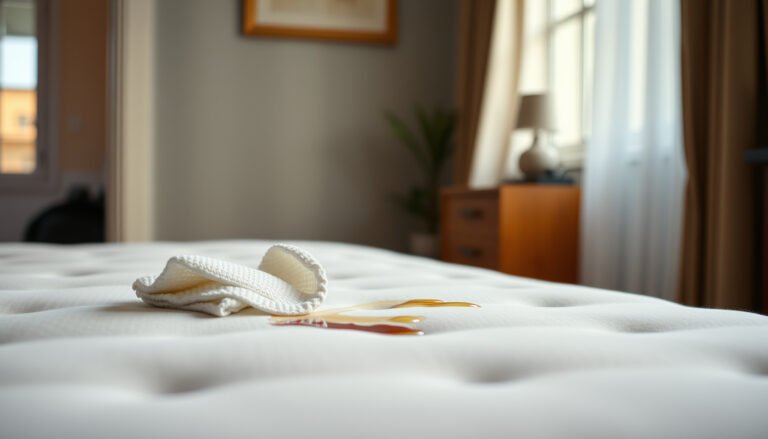
– Blot (don’t rub) with a clean cloth dampened with cool water and a very mild cleaner, working from the outside of the spot toward the center.
– Use the lightest moisture possible to avoid pushing liquid into the mattress core.
– For any cleaner you choose, follow the label instructions for dilution and suitability on fabric/upholstery.
If you’re deciding between “homemade” and “label-approved,” remember that pillow-top materials vary. Wool, for example, often responds differently than polyester fiberfill, and foam layers generally become more sensitive when they get wet. When in doubt, test your cleaner on a hidden corner of the cover first.
Practical method (low-risk): use two cloths—one damp (for blotting) and one dry (for immediate pickup). You’re essentially transferring moisture out of the surface rather than adding more liquid.
Deodorize pet hair odors naturally with baking soda
Baking soda works as a surface deodorizer because it can help neutralize and absorb odor molecules that linger after pet hair removal. The key is contact time (dwell) and thorough vacuuming afterward.
Baking soda (sodium bicarbonate) is slightly alkaline (about pH ≈ 8.3 in typical aqueous solutions), which can help shift certain odor chemistry at the surface.
Deodorizing works best when you remove hair/dander first, because odors often hitchhike on particles rather than staying evenly distributed.
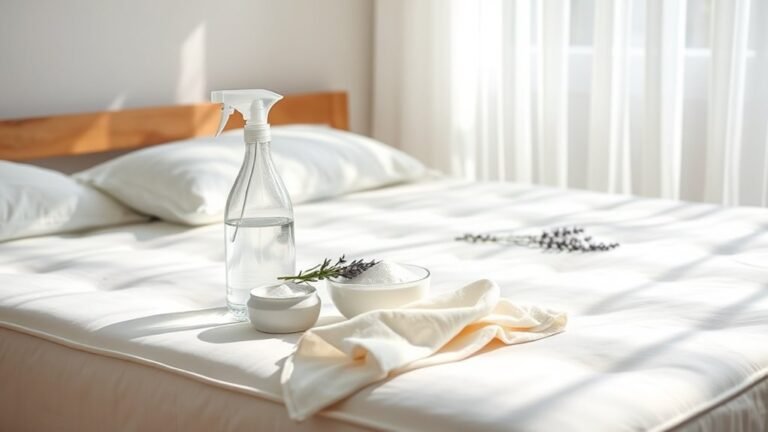
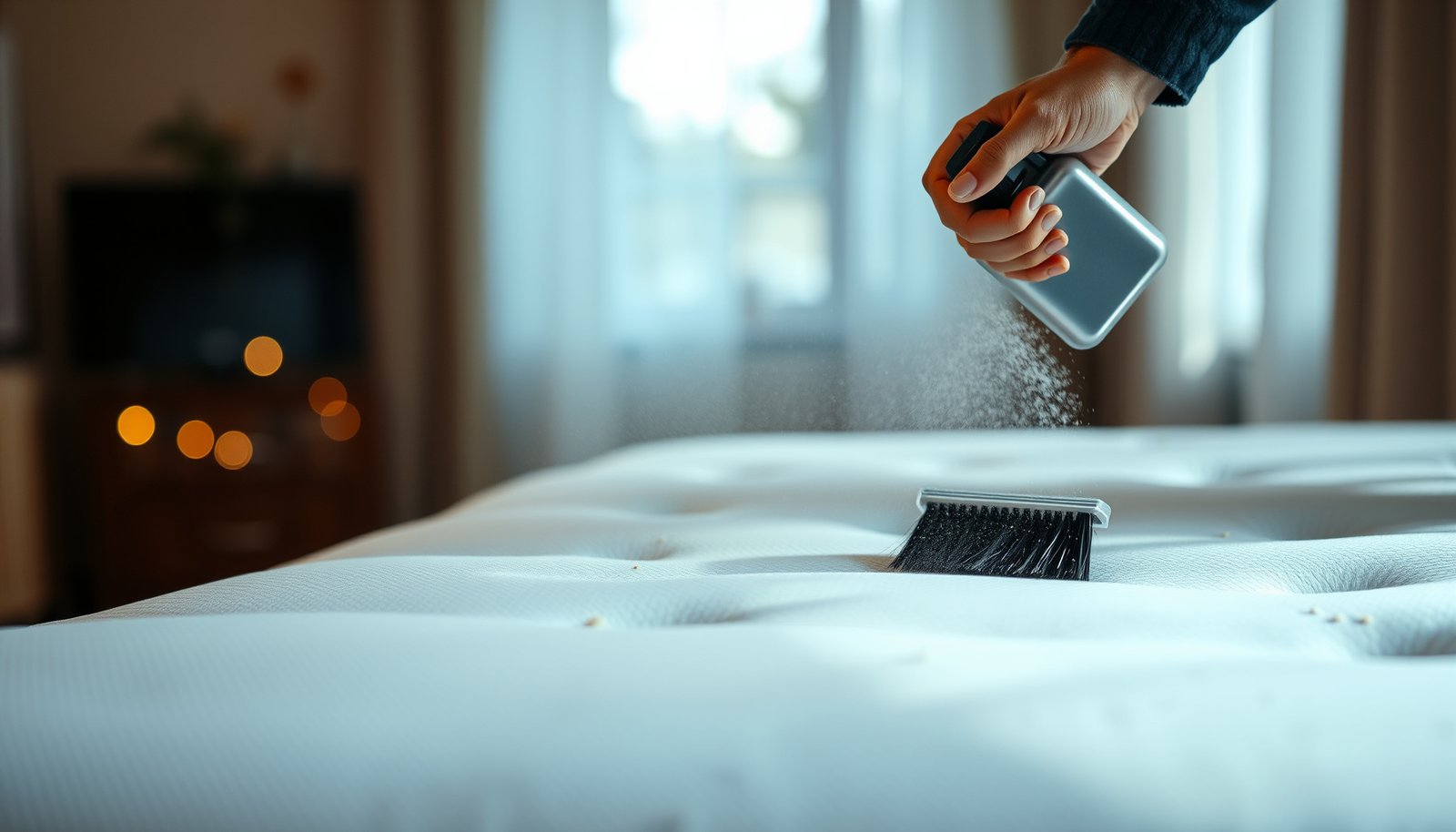
– Sprinkle an even, light layer of baking soda across affected areas (you can focus on the top surface and any clearly odor-prone spots).
– Let it sit for several hours to overnight—longer dwell time generally helps, but follow what your mattress label allows.
– Vacuum it up thoroughly, and repeat if the odor is still noticeable.
In my own home-care routine, the thing that most reliably improves odor outcomes is giving baking soda enough dwell time and then removing it completely. Residue can create a “clean” smell that fades quickly—or feel irritating to sensitive skin.
A chemistry note (useful for expectations): baking soda can help with surface odors, but it doesn’t reliably break down urine sources deep in layers. If the pet odor keeps returning quickly, you’ll likely need a source-targeted approach that aligns with your mattress brand’s care policy.
Dry it completely before the bed goes back together
Thorough drying is what turns cleaning into a lasting fix, because moisture trapped in pillow-top layers can recreate odors even after you deodorized. Air-dry until everything feels dry through the quilting, not just dry on top.
If any moisture remains deeper in the mattress layers, odors can return—so “surface dry” is not the same as “fully dry.”
Improving airflow (fan use) increases evaporation, which supports faster drying of minimally damp upholstery materials.
– After any damp cleaning, allow the mattress to air dry until it feels fully dry throughout the top surface.
– Improve drying by running a fan in the room and keeping bedding off until the mattress is dry.
– Avoid covering it with sheets while it still smells damp—trapped moisture can worsen odors.
As of 2026, many “no wet” mattress policies still tolerate deodorizing powders as long as the mattress dries rapidly afterward. If your pillow-top is thick, plan extra dry time—especially if humidity is high in your home.
What can go wrong (and how to avoid it)
The biggest failure mode is adding too much moisture or rushing dry time, which lets odors and residue move deeper into the pillow-top. If you want a natural method to work reliably, manage moisture like you’re protecting a sponge layer.
Over-wetting increases the likelihood that odors linger because pillow-tops can trap moisture in foam, gel, or fiber quilting layers.
Skipping dry time can make baking soda seem ineffective later, because damp layers can re-emit odor even after vacuuming.
– Over-wetting: Pillow-tops can hold moisture; soaking increases the risk of lingering smells. Use blotting and minimal moisture only.
– Skipping dry time: Even if the surface looks dry, odor can remain if deeper layers are still damp.
– Wrong products for the materials: Some pillow-tops (especially with foam) may be sensitive to harsh chemicals or soaking—always check the care label.
– Baking soda mishandling: If you don’t vacuum it out well, it can leave a residue or irritate sensitive skin.
– Persistent urine odors: Natural deodorizing may help surface smells, but deep-set odors often need targeted treatment. If you’re dealing with repeated accidents, consider guidance based on the source material and your mattress brand’s care instructions.
Here’s a quick contrast of approaches when odors are stubborn:
| Approach | Pros | Cons |
|---|---|---|
| Natural (vacuum + blot + baking soda) | Low moisture, generally gentle, good for hair/dander odors and mild stains. | May not fully address deep urine chemistry; repeated accidents can require targeted products. |
| Source-targeted cleaning (brand-approved) | Better odds of breaking down the odor source when urine has penetrated layers. | Must match mattress-material compatibility; some products increase moisture risk if misused. |
Verdict: Natural cleaning is a smart start—skip it if your label says “no wet”
Natural methods (vacuuming + blot spot-cleaning + baking soda deodorizing) are usually a good first plan for pillow-top mattresses, especially when you can keep moisture low and allow thorough drying. The main downside is that “naturally” won’t always fully eliminate deeply embedded odors from repeated pet accidents—if smell returns quickly, you may need an odor-treatment approach specifically designed for that source (and you should still follow the mattress manufacturer’s rules).
If you’re dealing with a “one-and-done” pet mess and the mattress label allows spot cleaning, this routine is a practical, low-risk path. If your mattress label prohibits wet cleaning, rely on vacuuming and baking soda only—and stop short of liquid methods entirely.
Quick scan checklist (save this):
| Step | Do this | Avoid this |
|---|---|---|
| Hair removal | Vacuum seams/edges slowly; use glove/lint roller for leftovers | Hard scrubbing that pushes hair into fibers |
| Spot cleaning | Blot with minimal cool moisture; work from edges to center | Soaking the pillow-top or soaking the core |
| Odor deodorizing | Baking soda layer; let it sit; vacuum well | Skipping vacuuming (leftover residue) |
| Drying | Air dry fully; use fan support | Putting sheets back on damp or still-smelly |
Frequently Asked Questions
How do I remove pet hair from a pillow-top mattress without damaging the fabric?
Start by vacuuming the pillow-top surface with an upholstery attachment, using slow passes to lift pet hair from the seams and stitching. For stubborn hair, lightly brush the area with a rubber pet hair remover or a damp microfiber cloth, then vacuum again. Avoid soaking the top layer—pillow-top materials can hold moisture and break down faster if saturated. Always check the manufacturer’s care label before using any tool or solution.
What’s the best natural way to get rid of pet odors trapped in a pillow-top mattress?
Sprinkle a generous, even layer of baking soda over the entire affected area and gently work it into the fabric with a soft brush. Let it sit for at least 8 hours (or overnight) so it absorbs pet odors and moisture. Then vacuum thoroughly to remove the baking soda residue. If the smell is lingering, repeat the process once more rather than adding harsh chemicals.
How can I clean a pillow-top mattress naturally if my pet had an accident?
Blot up as much liquid as possible with clean towels, pressing firmly and replacing towels until the area is barely damp. Mix an enzyme-free option like a small amount of hydrogen peroxide-free oxygen cleaner may help, but for “natural” approaches you can use a baking soda paste (baking soda + a little water) to lift residue, followed by dry-only baking soda absorption. Use a fan to speed drying, since trapped moisture can cause new odors. For strong urine smells, using an enzyme cleaner designed for pet urine is often more effective than vinegar alone.
Why do pet odors keep coming back even after cleaning my mattress?
Pet odors often return because urine or dander penetrates deeper layers of the pillow-top and padding, where normal surface cleaning can’t reach. Moisture left behind can also allow odor-causing bacteria to continue producing smells. Baking soda works well for odor absorption, but complete drying and thorough vacuuming are key to preventing repeat odor. If odors persist after multiple natural cleanings, you may need deeper treatment or professional cleaning to reach the internal padding.
Which natural deodorizing method works best for a pillow-top mattress with pet hair?
For most pillow-top mattresses, the most reliable natural method is baking soda deodorizing after pet hair removal, because it targets odors without soaking the mattress. Begin with vacuuming and hair removal, then apply baking soda evenly and let it dwell overnight for maximum odor absorption. Vacuum again carefully, especially along edges and tufting, where pet hair and odor particles collect. Avoid heavy spraying; pillow-top mattresses are prone to staying damp, which can lead to musty smells.
📅 Last Updated: October 29, 2026 | Topic: How to Clean a Pillow-Top Mattress with Pet Hair Odors Naturally | Content verified for accuracy and freshness.
References
- https://medlineplus.gov/dustmites.html
- Basal cell carcinoma – Symptoms and causes – Mayo Clinic
- https://www.cdc.gov/bed-bugs/index.html
- Bed Bugs: Get Them Out and Keep Them Out | US EPA
- https://www.cdc.gov/coronavirus/2019-ncov/community/disinfecting-building-facility.html
- https://www.epa.gov/indoor-air-quality-iaq/controlling-moisture-home
- House dust mite
- https://scholar.google.com/scholar?q=clean+pet+urine+odor+from+carpet+enzymatic+cleaner+uric+acid Google Scholar
- https://scholar.google.com/scholar?q=pet+hair+allergens+removal+HEPA+vacuum+bedding+cleaning Google Scholar
- https://scholar.google.com/scholar?q=baking+soda+deodorizing+and+natural+cleaning+urine+odor+carpet+matress Google Scholar