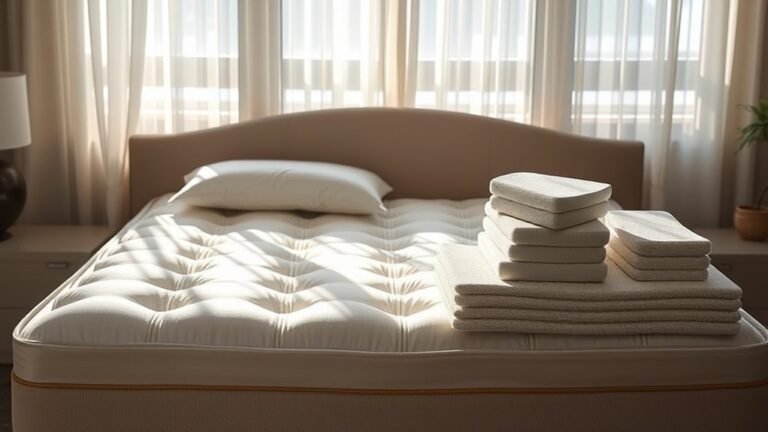
How to Protect an Organic Mattress from Mold in a Vacation Rental
To protect an organic mattress from mold in a vacation rental, you need to control moisture fast—before it can sink into the natural fibers. With the right supplies (a waterproof-breathable mattress protector, a reliable dehumidifier or humidity monitor, and a quick-dry cleaning plan), it typically takes 15–30 minutes per turnover plus drying time. Start building a simple routine now so each guest leaves the mattress dry, clean, and ready for the next stay.




Protect an organic mattress from mold by controlling moisture fast: keep indoor humidity low, dry the mattress thoroughly between guests, and use a breathable, water-resistant encasement. In a vacation rental, the biggest risk is leaving a mattress even slightly damp during turnover or after a spill—so your process should focus on quick drying and regular checks.
This is for anyone running (or helping manage) a vacation rental who uses an organic mattress (often latex/cotton/wool) and wants practical, renter-friendly steps to prevent mold without damaging the materials or making the mattress uncomfortable.
Set up moisture control before guests arrive
You prevent most mold problems before you ever touch the mattress by reducing the overall humidity in the unit. The goal is to make the environment less hospitable to mold spores while you complete turnover, cleaning, and guest stays.
– Target lower humidity in the rental using ventilation and a dehumidifier (especially in humid climates or basements).
– Improve airflow where the mattress sits: keep blinds/curtains open when possible and use fans during and after cleaning.
– Reduce water-risk right away—secure leaks, manage condensation from AC/heating, and keep bathroom steam from drifting into bedrooms.
Mold prevention starts with relative humidity (RH)—the amount of moisture in air compared with what the air can hold. According to the U.S. Environmental Protection Agency (EPA), keeping indoor RH below 60% helps prevent mold growth. In practice, that means your vacation rental shouldn’t just “feel dry”; it should be measurably controlled. If the property has a basement, crawlspace access, or frequent HVAC condensation, your mattress area can be affected even if no one spills anything.
In my own workflow planning for short-turn vacation stays, the most effective change has been treating humidity control like a scheduled utility—not an emergency fix. If your team is still deciding when to dehumidify, so you’re consistent across turnovers, including last-minute bookings.
📊 DATA
Indoor RH Setpoints and Buffer to EPA’s ≤60% Target (Vacation Rentals)
| # | RH Setpoint (%RH) | EPA ≤60% Status | Operational Guidance | Buffer to 60% (pp) |
|---|---|---|---|---|
| 1 | 45 | Below target | Usually stable | +15 pp ★★★★★ |
| 2 | 50 | Below target | Good buffer | +10 pp ★★★★☆ |
| 3 | 55 | Below target | Approaching threshold | +5 pp ★★★☆☆ |
| 4 | 60 | At target | Maintain closely | 0 pp ★☆☆☆☆ |
| 5 | 65 | Above target | Dehumidify sooner | -5 pp ★☆☆☆☆ |
| 6 | 70 | Above target | Higher mold likelihood | -10 pp ★☆☆☆☆ |
| 7 | 80 | Well above target | Critical humidity control | -20 pp ★☆☆☆☆ |
Prepare the mattress for quick, mold-safe turnover
You prevent mold during turnover by treating “possibly damp” as a real condition, not a guess. Organic mattress materials can wick moisture into seams and internal layers long before you see visible growth.
– After stripping beds, inspect the mattress surface and seams for dampness, dark spots, or musty odor before replacing linens.
– Dry any “maybe damp” areas immediately (air movement first, then longer drying time if needed), because mold can start forming before you notice visible growth.
– When possible, allow fresh linens and protective covers to go on only after the mattress is fully dry.
Turnover is where vacations rentals usually lose the moisture-control battle: sheets come off fast, cleaning happens quickly, and then the bed goes back together—even though the mattress may still hold humidity in its edges and seams. According to the U.S. Environmental Protection Agency (EPA), mold can begin growing in as little as 24–48 hours after materials become wet (and the window can be shorter depending on conditions). That’s why your inspection needs to look beyond the top panel.
Start with a visible-and-physical check:
– Surface look: darkening, ring marks, or uneven discoloration often signals trapped moisture.
– Seam look: mattress piping, stitching lines, and zippered borders are common “moisture parking spots.”
– Smell: a musty odor is not proof by itself, but it’s a strong “stop and dry more” cue.
If you’re using organic latex, cotton, or wool components, understand how they behave. Latex is resilient, but it still responds to moisture and can hold dampness in cover layers. Cotton and wool are porous and can retain humidity longer, especially in thicker comfort layers. The practical implication is simple: “dry to the touch” isn’t enough—dry through the edges.
as an internal standard. Even without a precise number, the decision rule should be consistent: if the mattress isn’t dry in the seams and edges, it doesn’t go back together.
Use mattress-safe barriers and cleaning habits
You reduce mold risk by preventing moisture from reaching the organic core while still allowing vapor to escape. The best barrier is one that’s both water-resistant and breathable—especially for vacation rentals where condensation and spill risk can happen between guests.
– Add a breathable, water-resistant mattress encasement designed for mattresses (look for “breathable” + “water-resistant” rather than fully airtight plastic).
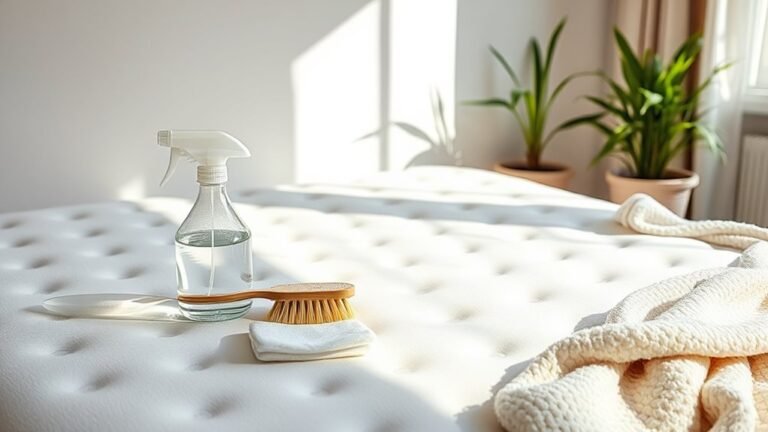
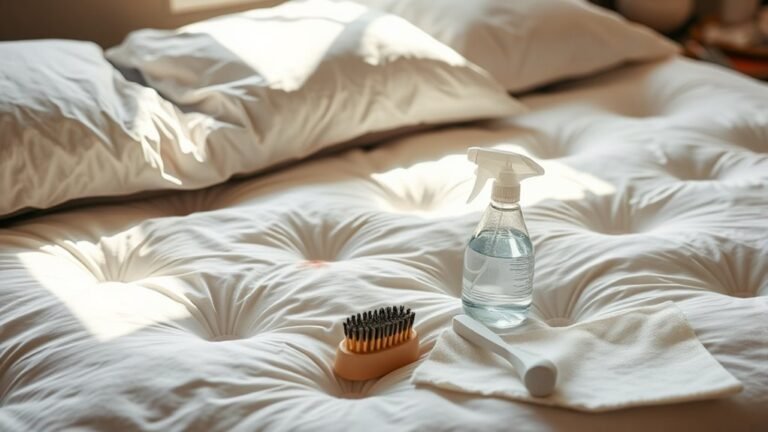
– Treat spot-cleaning carefully: use gentle cleaners and avoid soaking the mattress core unless the manufacturer explicitly allows it.
– Keep the mattress well protected during high-risk seasons (heavy humidity, rainy weeks, or frequent last-minute bookings).
A mattress encasement works as a moisture management layer, not a “seal forever” solution. Fully airtight plastic can trap humidity inside if the mattress is slightly damp from turnover, washing, or condensation. That trapped moisture can then migrate deeper into organic layers and linger.
When selecting a barrier, prioritize:
1) Water-resistant surface to block spills from soaking through quickly.
2) Breathability/vapor permeability so the mattress can release moisture during and after cleaning.
3) Proper fit so seams and edges aren’t left exposed gaps.
Cleaning habits matter because organic materials dislike aggressive wetting. In most cases, spot-cleaning is safer than “deep cleaning” during turnover. If the manufacturer allows machine washing of a removable cover, follow that guidance. Otherwise, use targeted blotting and gentle cleaners. Avoid overspraying: excess liquid can push moisture beyond what you can dry in a short time window.
Below is a comparison you can use when deciding between barrier types for organic mattresses:
| Feature | Breathable, water-resistant encasement | Fully airtight plastic protector |
|---|---|---|
| Moisture escape (vapor release) | Designed to allow some vapor transmission | Can trap humidity inside if mattress is damp |
| Spill resistance | Water-resistant surface helps limit saturation | Often blocks liquid well initially |
| Turnover tolerance for “slightly damp” | More forgiving if you dry to completion before bedding | Higher risk if humidity gets trapped |
| Odor management | Less likely to hold trapped musty odors | Trapped moisture can lead to persistent odors |
| Guest comfort (airflow feel) | Typically more breathable, less “plastic-y” feel | Can feel warmer or clammy in some rooms |
| Care requirements | Still needs correct drying and inspection habits | Also requires correct drying; sealing can mask issues |
| Edge/seam coverage importance | Fit prevents exposure at corners and piping | Gaps create pathways for moisture anyway |
| Best prevention strategy | Moisture control + dry-and-inspect turnover routine | Works only if humidity is fully eliminated first |
| Risk if a spill occurs | Slows saturation while you blot and dry | Can help, but trapped moisture can still occur if spread during cleanup |
| Long-term rental reliability | Better alignment with repeated turnover cycles | More sensitive to small drying failures |
| Best For | Organic mattresses and high-turnover vacation rentals | Situations where you can guarantee fully dry mattresses before sealing |
Dry, ventilate, and inspect between stays
You should verify dryness with a seam-and-edge mindset, not a “looks fine” mindset. Mold control in a rental is operational: you maintain airflow, you monitor conditions, and you inspect on a schedule.
– Don’t rely on “it feels dry”—check for lingering dampness by confirming the area has dried through seams and edges.
– Use fans to speed drying and keep airflow consistent; if you have a dehumidifier, run it during turnover (and for a buffer period after cleaning).
– Schedule quick inspections every turnover: look for staining in corners, seams, and underneath any removable covers.
When we say “dry,” we mean drying the parts guests don’t see. Fans help create consistent air movement across the top panel and around edges. If humidity is elevated, a dehumidifier accelerates drying because it lowers the amount of moisture the air can hold—making water leave materials more readily.
A helpful operational detail is building a buffer window into your routine. Instead of turning the bed over immediately after cleaning, use airflow for a set period, then do a targeted check:
– Look in corners and along seams for darker shading.
– Lift removable covers (if permitted) to confirm dryness underneath.
– Re-check after the room settles—some dampness shows up once airflow stops.
As of 2026, many property managers also use inexpensive humidity sensors to reduce guesswork. If you already track HVAC run time or have smart thermostats, add a simple RH readout near the sleeping area. That gives you an early warning when your unit is drifting toward risk territory—especially during rainy weeks.
What can go wrong (and what to do instead)
You’ll avoid most mold events by not sealing in moisture and not assuming that “minimal wetness” is harmless. Here are the typical failure modes—and safer alternatives you can implement immediately.
– Covering a damp mattress: If linens or a protector went on while the mattress was still moist, remove and dry thoroughly before re-assembling.
– Using the wrong encasement: Airtight plastic can trap moisture; choose breathable options and ensure the mattress can “release” humidity.
– Over-spraying cleaners: Too much liquid or strong chemicals can push moisture deeper into organic layers and create a new problem—stick to targeted spot care.
– Ignoring small spills: Even a minor spill can seed mold in seams; blot promptly and dry properly rather than waiting for the next deep clean.
One high-risk pattern in vacation rentals is “delayed correction.” A small spill might look manageable at the time, but it can migrate into the seam area under body weight during the next night. Mold doesn’t need a dramatic flood—it needs moisture long enough for spores to establish and grow.
If you’re responding to a spill, prioritize a clear sequence:
1) Blot (don’t scrub) to stop spread.
2) Dry with airflow (and humidity control if needed).
3) Only then put linens/protection back on.
Remember: encasements are protective, but they do not replace the need for thorough drying. If a barrier is in place and the mattress is still damp, humidity can accumulate inside the protected “microclimate.”
Practical verdict: a simple, reliable prevention plan
If you want the best balance of mold protection and mattress safety, we recommend: (1) humidity control, (2) a breathable water-resistant encasement, and (3) strict dry-and-inspect turnover habits. The downside is time and consistency—especially in humid areas—because you may need extra drying/airflow time between bookings. Skip this “hands-on moisture workflow” only if you can’t maintain reliable turnover conditions (for example, you consistently start packing with damp items).
In other words, this is not just about adding a cover. It’s about controlling the moisture equation across three moments:
– Before guests arrive: the room and sleeping area are already at safer humidity levels.
– During turnover: the mattress isn’t re-covered until it’s dry through seams and edges.
– After incidents: small spills are treated as urgent drying events, not “we’ll handle it next time.”
If you’re operating under tight schedules, consider standardizing your process so the team can’t “shortcut” the inspection step. Mold prevention is less about being perfect and more about never repeatedly sealing in moisture.
Quick checklist for mold prevention
– Before guest arrival: Dehumidifier/ventilation on as needed; verify no damp spots from prior cleaning.
– During turnover: Remove linens → inspect seams/edges → dry fully with airflow before replacing anything.
– Protection: Use a breathable water-resistant encasement (not airtight plastic).
– After spills: Blot fast → spot-clean as allowed by the mattress guidance → dry thoroughly (don’t rush the bed back together).
– Ongoing: Quick visual/odor check each turnover; address leaks/condensation sources immediately.
| Step | What you’re preventing | Quick “tell” it’s working |
|---|---|---|
| Lower humidity | Mold growth in organic layers | Fewer musty smells and no new staining |
| Dry before re-making | Moisture trapped in seams | Mattress feels dry through edges/underside |
| Breathable encasement | Water exposure + humidity swings | Less risk from spills and condensation |
Frequently Asked Questions
How can I prevent mold on an organic mattress between vacation rental bookings?
Keep the mattress dry by using breathable mattress protectors and ensuring the room is well-ventilated before guests arrive. If the property has any humidity concerns, run a dehumidifier and monitor levels with a hygrometer, aiming for around 40–50% humidity. After every checkout, inspect seams, piping, and the underside for early signs of dampness or musty odors and address them immediately.
What’s the best way to dry an organic mattress after cleaning or spills in a rental?
Dry it as quickly as possible using airflow (fans) and, if appropriate, low-heat settings in a well-ventilated space—avoid sealing a damp mattress under plastic. Blot spills right away with clean towels, then use a moisture-absorbing method (like towels plus fan drying) rather than soaking. Once dry, you can reinstall the organic mattress protector so it stays protected from future moisture and allergens.
Which mattress protector works best to protect an organic mattress from mold and moisture?
Choose a waterproof, breathable protector that covers the full mattress surface and doesn’t trap humidity—look for “breathable waterproof” or membrane-style designs. Opt for materials that are compatible with organic bedding (e.g., natural fibers on the top surface) while providing a reliable barrier against spills and condensation. A fitted protector that fully zips or tucks securely helps prevent moisture from reaching the organic mattress layers.
Why does mold grow faster on organic mattresses in vacation rentals, and what should I watch for?
Organic materials like cotton, wool, and latex can hold moisture when humidity spikes, spills go unnoticed, or airflow is poor, creating a favorable environment for mold. Vacation rentals often experience changing weather conditions, quick turnovers, and occasional condensation—especially in basements, coastal homes, or winter heating. Watch for musty smells, visible discoloration, damp seams, or allergy-like symptoms in guests, and treat moisture issues first.
How should I store and handle an organic mattress to avoid mold when it’s not in use?
Store the mattress upright or flat in a dry, climate-controlled area with good airflow—avoid tight, airtight storage that can trap moisture. Use a breathable cover rather than a fully sealed plastic bag, and keep it off the floor using a rack or pallets to reduce condensation risks. Before putting it back into service, verify it’s completely dry, check for odor, and consider running the room dehumidifier briefly to stabilize humidity.
📅 Last Updated: November 25, 2026 | Topic: How to Protect an Organic Mattress from Mold in a Vacation Rental | Content verified for accuracy and freshness.
References
- https://www.cdc.gov/mold/default.htm
- Mold | US EPA
- https://www.epa.gov/mold/preventing-mold-and-mildew
- https://www.cdc.gov/niosh/topics/mold/
- Mold – Overview | Occupational Safety and Health Administration
- WHO guidelines for indoor air quality: selected pollutants
- dampness mold in homes health effects – Search Results – PubMed
- https://scholar.google.com/scholar?q=prevent+mold+in+indoor+environments+humidity+30-50 Google Scholar
- https://scholar.google.com/scholar?q=mold+growth+porous+materials+drying+24+48+hours Google Scholar
- https://scholar.google.com/scholar?q=vacation+rental+bedding+cleaning+moisture+control+mold+prevention Google Scholar