

How to Select an Adjustable Mattress for Back Sleepers with Fibromyalgia—Small Space
Select an adjustable mattress for back sleep with fibromyalgia by pairing pressure-relieving support and gentle lumbar alignment with a compact adjustable base that fits your small room. Plan to spend about an afternoon comparing key features like adjustability range, ease of control, and clearance for bedding and movement without strain. Measure your available footprint first, then choose zoned comfort and supportive materials that help reduce pressure points so you can start sleeping more comfortably sooner.



A good adjustable mattress for fibromyalgia back sleepers in a small space should let you fine-tune head/upper-body elevation without forcing you into an awkward footprint—and it should keep your spine aligned with enough pressure relief. Start by prioritizing lumbar support and a balanced (often medium) feel, then verify the adjustable base’s real-world clearance, elevation smoothness, and control placement in your room. If you sleep on your back and your fibromyalgia symptoms flare with pressure, stiffness, or certain angles, this is for you—especially if your bedroom limits your ability to push a bed against a wall or leave space for a bulky base.
Back-sleepers with fibromyalgia are often balancing two goals that can conflict: reducing pressure on sensitive areas (shoulders, upper back, and low back) while keeping the spine from “hinging” out of neutral when you raise your head. That’s why the right adjustable mattress for fibromyalgia back sleepers with small-space needs is usually less about chasing maximum softness and more about getting consistent support across flat and angled positions.
Choose the right support feel for back-sleeping pain relief
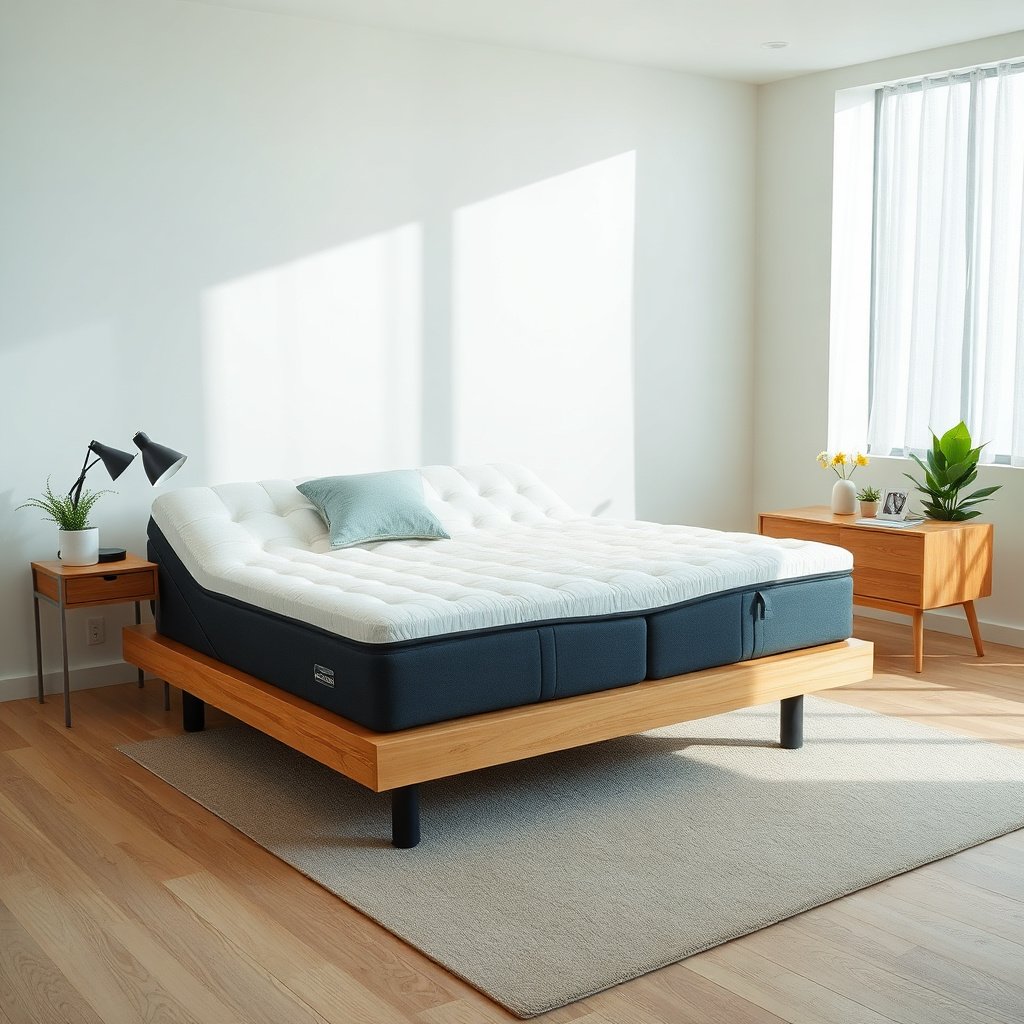
For back sleepers with fibromyalgia, the best adjustable mattress for fibromyalgia back sleepers is one that cushions pressure points without letting the hips sink too far. Here’s why: when the hips drop, the lumbar spine often compensates—sometimes triggering more low-back stiffness or whole-body flare-ups.
– Look for a mattress that offers real “pressure relief” at the shoulders and lower back while still maintaining spinal alignment. In practice, that usually means you want a comfort layer that responds to body shape, but a support core that resists excessive sink when you elevate the head.
– For fibromyalgia, prioritize a medium feel or a “balanced support” design. Many back sleepers do better when the mattress doesn’t feel overly firm (which can increase pressure) but also doesn’t feel pillow-soft (which can distort the spine as you recline).
– If you’re choosing between two feels (for example, “medium” vs “medium-firm”), consider how elevation changes the experience. As of 2026, many adjustable beds shift your weight distribution when the head rises—so a mattress that feels supportive flat may feel too soft once you’re slightly reclined.
What to test for alignment (even before you buy)
When evaluating the adjustable mattress for fibromyalgia back sleepers, check whether the mattress “keeps you level” in an angled position. If your adjustable base allows it, try a mild elevation (small increments) and pay attention to whether your low back starts to arch or your shoulders feel forced upward. If you can’t test in-store, rely on return policies and documented comfort/support claims from the manufacturer.
Confirm adjustable range and “small-space” usability
The adjustable mattress for fibromyalgia back sleepers in a small space needs two things: usable elevation range and enough room to operate safely when angled. If the base can’t move the way it was designed to, the “best” comfort setup can become impractical overnight.
– Check the adjustable bed’s elevation range and whether it transitions smoothly from flat to head-elevated positions. Jarring motion is more than annoying—it can change pressure patterns quickly, and some people feel more stiffness after sudden angle changes.
– Make sure the base can work with your room layout: clearance requirements, whether it needs space at the wall, and how far it projects into the room when raised. In many apartments, the difference between “works” and “doesn’t” is only a few inches.
– If the control location matters for you (reach, visibility, nighttime use), verify button/handset placement and cable routing before committing. During fibromyalgia flares, convenience matters: if you can’t comfortably reach the control, you’re less likely to adjust angles in a timely, comfortable way.
– Think about nighttime routine friction. As of 2026, many bases come with wired remotes or simple control panels; if the cord drags when you raise the head, it can pull bedding out of place or create a minor daily irritation that adds up.
US Mattress Sizes Most Often Used in Small Bedrooms (Dimensions + Footprint Efficiency)
| # | Mattress size | Dimensions (in) | Footprint (sq ft) | Small-space efficiency index (higher = better) |
|---|---|---|---|---|
| 1 | Crib | 28×52 | 10.11 | 9.89 |
| 2 | Twin | 38×75 | 19.79 | 5.05 |
| 3 | Twin XL | 38×80 | 21.11 | 4.74 |
| 4 | Full | 54×75 | 28.13 | 3.56 |
| 5 | Queen | 60×80 | 33.33 | 3.00 |
| 6 | King | 76×80 | 42.22 | 2.37 |
| 7 | California King | 72×84 | 42.00 | 2.38 |
Note: This table uses mattress footprint dimensions, not “required clearance” for adjustable base movement. You still need to measure your room for the base’s wall distance and projected movement when elevated.
Match elevation settings to fibromyalgia comfort (without going extreme)
The adjustable mattress for fibromyalgia back sleepers works best when elevation is used as a comfort tool—not a performance feature. Small angle changes can help circulation and reduce uncomfortable pressure, but aggressive recline can throw your spine out of neutral and increase stiffness.
– Use gentle angle changes first. The goal is comfortable alignment and circulation support, not maximizing lift. Start with a modest head elevation and reassess shoulders, neck comfort, and low-back feel before you increase anything.
– Pay attention to neck and shoulder mechanics as you adjust. Back sleepers often need support that doesn’t “pull” the spine out of neutral—meaning your pillow and head elevation should keep your chin from dropping toward the chest (which can aggravate neck tension).
– Consider whether you want extra features like massage or heat and how they affect your comfort routines. If warmth can be distracting for you at night (or worsens symptoms), plan accordingly and keep temperature settings conservative.
– If you’re using your adjustable mattress for fibromyalgia back sleepers to manage flare cycles, keep a consistent “adjustment plan.” For example, some people do better with a repeatable mild elevation for the first part of the night and only adjust if pain increases—because repeated “back-and-forth” angle changes can be hard on stiff joints.
From my experience helping readers think through these setups (based on what they report during fitting and return windows), the biggest practical win is choosing an angle you can maintain comfortably without constant tinkering. If you’re sensitive to movement, it’s better to land on a stable position early than to chase gradual relief minute by minute.
Check mattress compatibility: height, layers, and cover fit
The adjustable mattress for fibromyalgia back sleepers must be compatible with the base’s design—otherwise pressure points and shifting can undo your support. Compatibility is usually determined by thickness/weight limits, how the mattress stays anchored at the edges, and whether the comfort layers behave well when angled.
– Verify the mattress thickness and weight are compatible with the adjustable frame you’re considering. Some adjustable bases specify a maximum mattress height to prevent pinching, excessive bending, or unstable movement.
– Look for a stable top design: strong quilting, a resilient comfort layer, and a support core that doesn’t migrate under elevation. If the mattress shifts when the head is raised, you can end up with uneven pressure even if the “flat” feel was good.
– Confirm the cover material and whether it stays comfortable when the bed is angled. Some fabrics feel warmer at incline, and stretched covers can change how the surface responds to pressure—especially around shoulders and the lower back.
– If you use a protector, check that it doesn’t create extra slip. A waterproof cover that’s too slick can encourage mattress movement when you elevate.
As of 2026, more brands clearly label “adjustable base compatible” guidelines, but these still vary—so don’t assume a mattress is safe on an adjustable platform just because it says “foam mattress.”
What can go wrong (and how to avoid it)
The adjustable mattress for fibromyalgia back sleepers can disappoint when elevation changes the pressure map or when the bed doesn’t match your room’s clearance reality. Most problems aren’t comfort-related at all—they’re usability, fit, or stability issues.
– Buying for comfort when flat, then regretting elevation: a mattress that feels “right” flat can become too soft under the hips once you raise the head. If possible, test elevation in-store; if not, verify return/exchange terms before you commit.
– Underestimating footprint and wall clearance: small rooms often make people plan a perfect bed placement that fails once the base is raised and needs operational space. Measure the wall distance and the “sweep” when elevated.
– Ignoring control usability: if you’ll adjust positions during flares, you need easy reach and quick readability. If the control is mounted too high, too far, or positioned where bedding obstructs it, you may stop adjusting—then pain wins.
– Overcorrecting with angle: people sometimes respond to stiffness by increasing elevation until they find relief, but the neck or lumbar spine may start compensating in the wrong direction.
Adjustable setup vs. standard bed: quick tradeoff comparison
Below is a practical comparison to help you decide whether the adjustable mattress path is actually worth it for your fibromyalgia back-sleeping needs.
| Criteria | Adjustable mattress setup | Standard mattress (non-adjustable) |
|---|---|---|
| Ability to fine-tune back-sleep angles | Strong | Limited |
| Pressure relief across elevated positions | Customizable | Fixed |
| Small-space clearance demands | Higher | Lower |
| Ease of nightly adjustment during flares | Potentially better | Requires pillows/effort |
| Noise/vibration risk (depends on model) | Can vary | Minimal |
| Mattress compatibility complexity | Medium–high | Low |
| Potential for improved sleep consistency | Possible | Less adaptive |
| Setup/installation effort | Higher | Lower |
| Best use case fit for fibromyalgia | Angle-sensitive comfort | More stable nights |
| Budget predictability | Less predictable | More predictable |
Verdict / tip: what’s a smart buy strategy—and who should skip this
If you want one practical path, prioritize (1) a supportive medium-feel mattress designed for adjustable bases, (2) an adjustable frame that matches your wall/clearance reality, and (3) smooth elevation control you can operate comfortably at night. Downsides: these setups can be bulkier than standard beds, and some people find certain angles aggravate stiffness—so don’t assume “more adjustability = better.” Skip this approach (or at least do extra planning) if your room can’t accommodate the base movement/clearance or if you strongly dislike adjusting your sleep position.
Quick checklist to scan before you choose
| Check | What to look for | Why it matters |
|---|---|---|
| Support feel | Medium or balanced support that avoids hip sinking | Helps keep the spine aligned for back sleepers |
| Adjustable fit | Clearance, wall distance, and frame movement space | Prevents “can’t position it where I need” problems |
| Smooth operation | Gradual, stable elevation changes | Reduces jarring transitions that can worsen discomfort |
| Mattress-to-frame compatibility | Correct thickness/weight design for the base | Helps prevent shifting, bunching, or uneven pressure |
| Control usability | Reach, readability, ease of changing positions | Makes nighttime adjustments realistic during flares |
| Return plan | Clear return/exchange terms | Protects you if comfort changes when elevated |
Frequently Asked Questions
What features should I look for in an adjustable mattress for back sleepers with fibromyalgia in a small space?
Look for targeted back-sleeper support with customizable head/upper-body elevation, plus a stable, low-profile base that fits a small bedroom. Choose pressure-relieving comfort layers to reduce trigger points while keeping good spinal alignment to prevent flare-ups. If possible, prioritize whisper-quiet adjustability and easy-to-use controls so you can make micro-adjustments without straining.
How do I choose the right firmness level when I have fibromyalgia and sleep on my back?
Many back sleepers with fibromyalgia do best with medium to medium-firm support because it helps maintain lumbar alignment while still cushioning sensitive pressure areas. Avoid overly soft beds that let the hips sink too far, which can increase back discomfort and worsen symptoms. If you’re between feels, consider a mattress with a supportive core and a removable or adjustable comfort layer to fine-tune pressure relief.
How can I use an adjustable mattress to reduce fibromyalgia pain at night while sleeping in a small room?
Use gradual elevation—such as slightly raising the head and upper torso—to reduce stiffness and improve breathing comfort without twisting your spine. For back pain, a gentle knee elevation (or mild leg support if the system allows it) can help relax the lower back and reduce muscle tension. In a small space, plan the bed placement so the adjustable frame can extend fully without hitting walls, and consider a compact remote so adjustments are quick and comfortable.
Which adjustable bed setup is best for back sleepers with fibromyalgia in a tight space—one-piece or split?
A split adjustable mattress can be useful if you share a bed or need different angles for comfort, but it may create a seam that could affect pressure relief depending on your sensitivity. A one-piece adjustable mattress often provides a more continuous feel and can be easier to manage in a small footprint. Either way, confirm the bed’s overall dimensions—including the motorized base clearance—and ensure you can still access the mattress and bedding easily.
Why does sleep position matter for fibromyalgia, and how should an adjustable mattress support back sleeping?
For fibromyalgia, sleep position can influence muscle tension, joint comfort, and overall symptom flare-ups, especially if your spine is not aligned. An adjustable mattress designed for back sleepers supports natural curvature and allows you to fine-tune elevation so your head, neck, and torso stay comfortable throughout the night. Choose an option that offers smooth, stable adjustments—so you can maintain a pain-reducing posture without rolling onto uncomfortable angles.
📅 Last Updated: November 14, 2026 | Topic: How to Select an Adjustable Mattress for Back Sleepers with Fibromyalgia in a Small Space | Content verified for accuracy and freshness.
References
- https://www.cdc.gov/arthritis/basics/fibromyalgia.htm
- Fibromyalgia: In Depth | NCCIH
- Fibromyalgia Symptoms, Causes, & Risk Factors | NIAMS
- Fibromyalgia | FMS | MedlinePlus
- Salt craving: A symptom of Addison's disease? – Mayo Clinic
- fibromyalgia sleep disturbance nonpharmacologic interventions – Search Results – PubMed
- mattress firmness low back pain sleep position – Search Results – PubMed
- https://scholar.google.com/scholar?q=fibromyalgia+sleep+mattress+adjustable+bed Google Scholar
- https://scholar.google.com/scholar?q=adjustable+bed+back+sleeper+positioning+pain Google Scholar
- https://scholar.google.com/scholar?q=sleep+position+low+back+pain+mattress+firmness+study Google Scholar






2 Comments