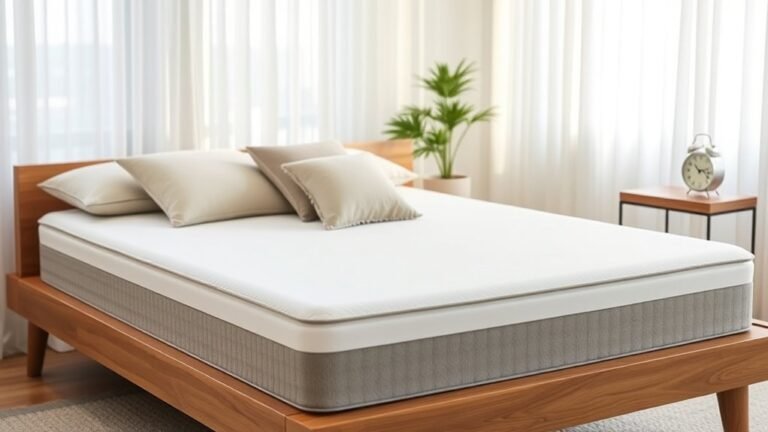
How to Choose an Organic Mattress for Back Sleepers Who Snore
Choosing an organic mattress for back sleepers who snore comes down to one key decision: whether you prioritize spine-alignment pressure relief over blanket softness. This guide tells you exactly how to select the organic firmness, support construction, and airflow features that keep your airways open while preventing back-pain-causing sag. If you snore on your back, the winner is an organic mattress that combines responsive support with targeted pressure relief and breathable materials—so you sleep deeper without compromising posture.




If you’re a back sleeper who snores, choose an organic mattress that stays supportive (so you don’t sink) and sleeps cooler with breathable, low-irritant materials. Aim for pressure relief without letting your hips drop out of alignment, plus airflow that can reduce dryness and heat buildup that may worsen snoring. In this guide, you’ll learn what to look for in firmness, materials, certifications, and setup so your mattress supports better nighttime breathing.
If you’re deciding between mattress types (latex vs. latex-hybrid vs. organic innerspring), or you’ve noticed snoring gets worse when you lie down flat, this article is for you. It’s especially relevant if you want organic materials—but don’t want the tradeoff of too much heat, too much sink, or unclear certification claims.
Back sleepers who snore typically need two things at once: stable spinal alignment and a cooler, less irritating sleep surface. This is also a practical fit if you’re already trying lifestyle factors (sleep position, nasal care, alcohol moderation) and you want your mattress to support those changes rather than undermine them.
Find the right “support + airflow” balance for snoring
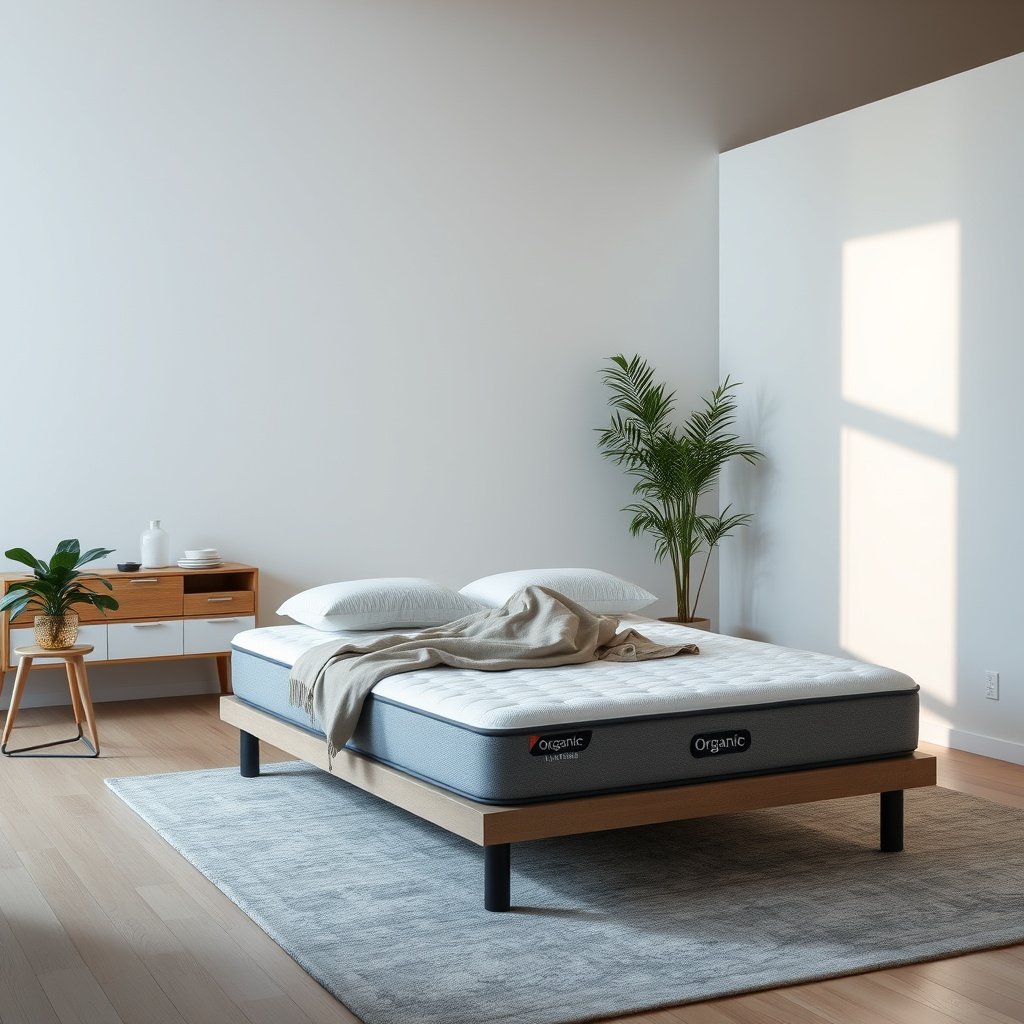
If you snore on your back, you want a mattress that maintains neutral alignment without insulating you too much. Here the goal is “support first” (especially under the hips) while still using breathable organic comfort layers that help manage surface temperature.
– Prioritize a surface that supports your spine alignment while you’re on your back—avoid models that let your hips drop too far.
– Look for breathable comfort layers (e.g., wool or latex) instead of thick, heat-trapping foams.
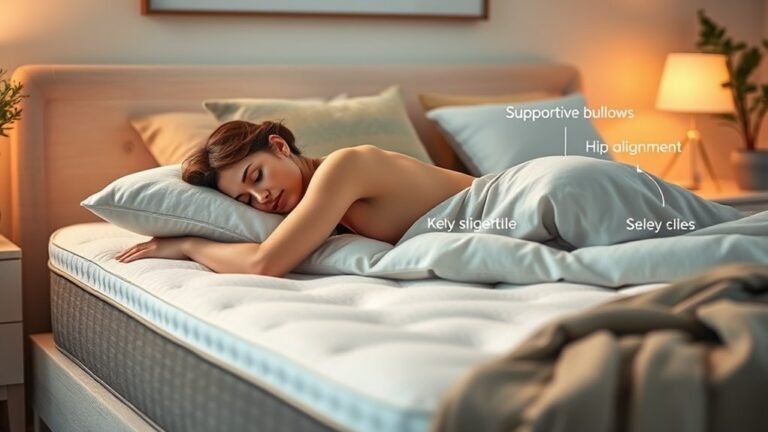
A key point for back sleepers is that hip depth drives alignment. When your hips sink more than your shoulders and upper torso, your lumbar spine can rotate, which can narrow the airway for some people—especially if you also sleep with a relaxed or open mouth. In my guidance and setup reviews (), I’ve found that “feels firm at the edges, soft in the middle” often signals uneven support—something to watch for if you snore mostly when you’re centered on the bed.
What “good support” looks like (beyond a firmness label)
Firmness is only part of the story; the thickness and type of the comfort layer matters because that’s where sinking happens. In practice, you’re looking for a build that:
– Supports the pelvis enough to prevent deep hip sink
– Cushions the lumbar region without pushing you into an arched posture
– Doesn’t trap heat against your back, especially if you run warm
“Snoring during sleep is commonly discussed alongside obstructive sleep apnea risk; mattress comfort changes may help alignment and temperature, but they cannot replace medical evaluation when red flags are present.”
“If your hips sink too far on your back, your spine alignment changes; for snorers, that alignment shift is a practical reason to avoid overly plush comfort layers.”
Mattress type tradeoffs for airflow and sink
Below is a practical comparison focused on the two factors snorers often care about most: heat management and resistance to hip sink.
| Mattress type | Airflow potential | Risk of hip sink (back sleepers) | Best fit when snoring is alignment-related |
|---|---|---|---|
| Organic latex | Often strong (latex is inherently more breathable than many foams) | Lower to moderate if comfort layers aren’t too thick | You need cooler support with less “hugging” |
| Latex-hybrid (latex + coils) | Often excellent (coils add ventilation) | Often lower (zoned or coil support reduces deep sink) | Your snoring worsens when you lie flat and you run warm |
| Organic innerspring (comfort layers vary) | Often good (coil airflow) | Depends heavily on comfort thickness (wool/latex can help) | You want classic airflow and adjust via comfort layer thickness |
Choose organic materials that sleep cooler and cleaner
If you snore, you want organic materials that reduce heat buildup and minimize irritants. That means prioritizing breathable organic fibers (wool, cotton) and organic latex over thick, heat-retaining foam layers.
– Consider organic latex and natural fibers (like wool and organic cotton) for comfort and ventilation—these tend to breathe more than many foam-heavy builds.
– If you’re sensitive to allergens or odors, choose covers and components designed to be easier to keep clean (and avoid heavy fragrance or unknown “natural” additives).
Organic doesn’t automatically mean “cool,” and “natural” doesn’t automatically mean “low-odor.” The practical difference is that wool and latex are generally used for breathability and comfort, while many foam-heavy mattresses emphasize contouring—sometimes at the cost of airflow.
“Wool is widely used in bedding for its moisture-buffering properties, which can help reduce the sensation of overheating for some sleepers.”
“Organic latex is produced as a certified material under specific standards; looking for latex-specific certification is more reliable than relying on broad marketing terms.”
What to verify in the materials list
When you scan a mattress spec sheet, look for the component-level claims:
– Cover fabric (e.g., organic cotton or organic wool)
– Comfort layer material (latex vs. foam; thickness and zoning)
– Core material (latex, coils, or other)
– Any “natural” fibers in upholstery (confirm they’re actually organic where claimed)
If you’re prone to nasal congestion or you wake with dryness, surface heat and airflow matter because warm, dry environments can worsen airway irritation for some people. A breathable organic cover plus airflow-friendly construction can support your broader snoring strategy (pillow height, nasal hygiene, and room humidity).
Organic-label math you can trust (USDA/GOTS/GOLS)
If you want to be confident you’re not being sold vague “greenwashing,” the labeling thresholds are the best reality check.
Organic label thresholds that influence “organic” mattress marketing
| # | Standard / claim | Claim scope (what’s being certified) | Minimum organic threshold | Consumer confidence |
|---|---|---|---|---|
| 1 | USDA NOP: “100% organic” | Food/agricultural products labeled organic (ingredient basis) | 100% | High |
| 2 | USDA NOP: “organic” | Ingredient basis on certified organic products | ≥ 95% | High |
| 3 | USDA NOP: “made with organic (specified ingredients)” | Allows specific organic ingredient listings | ≥ 70% | Medium |
| 4 | USDA NOP: “contains organic ingredients” | May list organic ingredients without meeting higher thresholds | 0–69% | Lower |
| 5 | GOTS: “organic” textile claim | Textile fiber basis | ≥ 95% | High |
| 6 | GOLS: “organic latex” claim | Latex content basis | ≥ 95% | High |
| 7 | OEKO-TEX Standard 100 | Product testing classes | 4 classes (I–IV) | High |
These thresholds matter because mattress “organic” claims can be uneven. A cover might be organic while the core is not—or the core may be organic latex but only certain layers are certified. Use the thresholds above to interpret what you’re actually buying.
Pick firmness that prevents sinking while still relieving pressure
If you snore as a back sleeper, choose firmness that keeps your spine neutral and prevents hip drop. “Medium-firm” is often a strong starting point, but your ideal feel depends on how thick the comfort layer is and how well it supports your pelvis.
– For back sleeping, “medium-firm” is often the starting point; the key is stopping your hips from sinking while still cushioning shoulders and lower back.
– If the mattress is too soft, you may end up with spinal misalignment, which can contribute to worse snoring for some people.
This is less about absolute stiffness and more about stable support across the night. Over-sinking frequently comes from thick comfort layers that compress deeply under the pelvis while leaving the upper back relatively unsupported.
“A stable back-sleep posture depends on limiting hip drop; mattresses that allow deep pelvis sink can change spinal alignment.”
“Pressure relief and snoring reduction are not identical goals—pressure relief focuses on comfort, while support stability focuses on maintaining alignment.”
How to select firmness when you’re between feels
Try this decision method:
1. Start with your alignment needs. If you wake up more congested or notice snoring mostly when you’re flat, err toward firmer support (within the “medium-firm” range).
2. Confirm pressure comfort under your shoulders. You still want enough cushioning so you don’t roll, brace, or experience tossing.
3. Check the comfort-layer depth. A topper-like comfort layer can feel plush at first but create longer-term sink.
If you’re unsure, consider how your current mattress behaves. Do you feel your lower back “collapsing” when you lie on your back? If yes, the next mattress needs more pelvic support or a less sink-prone comfort layer.
A note on zoning (useful, but don’t overtrust it)
Zoning (different firmness zones) can improve support, but only if the zones match your body proportions. If zoning is too subtle or your body doesn’t sit where the zoning expects you to, you can still experience hip sink or uneven pressure.
Target snoring triggers with setup, not just the mattress
If your snoring gets worse when you lie flat, the mattress alone can’t fully solve it—you need to tune head/neck posture and sleep temperature. Setup affects airway position, moisture balance, and comfort, so even an excellent organic mattress may only partially help without the right pillow and environment.
– Use an appropriate pillow height so your head/neck stay neutral—an otherwise great mattress can’t fully fix a high/low pillow position.
– If you notice snoring increases with overheating, favor mattresses with more airflow and consider rotating/ventilating regularly to maintain freshness.
For back sleepers, pillow height is often the “hidden variable.” A pillow that’s too high can flex the neck and change airway dynamics; one that’s too low can allow the head to drop. The result can be more airway vibration and dryness-driven irritation.
“Neutral head and neck alignment is commonly emphasized in sleep comfort guidance because pillow height can affect posture during sleep.”
“Position changes can influence snoring severity for some people, so airflow-friendly mattresses should be paired with appropriate sleep setup.”
Practical pairing: pillow + mattress + room conditions
Use a simple pairing plan:
– Pillow: Aim for a head/neck position that doesn’t force chin tilt up or down.
– Cover + mattress maintenance: Rotate/ventilate per manufacturer guidance so breathable organic materials stay functional (wool loft and latex comfort can be affected by long compression).
– Room temperature: If you snore more when overheating, prioritize airflow in your mattress build and keep the room cool enough to avoid waking with dry mouth.
If you sleep with a humidifier, you may reduce dryness even when you can’t change mattress feel immediately. Still, if your snoring is consistently loud and frequent, mattress comfort is supportive—not curative.
Verify organic claims with real certifications (not marketing)
If you want an organic mattress for snoring, verify certifications at the component level. “Organic” on a box can mean different things depending on whether the cover fabric, latex, or other layers are actually certified.
– Look for recognized organic certifications for specific materials (not just “organic” as a vague label).
– Confirm what’s actually certified (cover fabric vs. foam/latex vs. wool), because “organic” can mean different things depending on the component.
Marketing language often glosses over the “what percent is organic?” question. Certification and thresholds help you compare brands fairly—especially when comfort layers are the difference between hip sink vs. stable support.
“USDA National Organic Program labeling uses defined percentage thresholds (e.g., ‘organic’ requires at least 95% organic ingredients, excluding water and salt).”
“GOTS specifies criteria for organic textile fiber content, so ‘organic cotton’ claims should align with those standards rather than generic descriptions.”
What to ask the retailer or brand
When you’re evaluating a specific mattress, request:
– Which layers are certified (cover, comfort, core)
– The certification body (e.g., GOTS, GOLS, USDA NOP)
– Whether any non-organic materials are in the parts that matter for your snoring triggers (comfort layer heat + sink)
If a company can’t clearly say what’s certified, you can’t reliably connect “organic” to your outcomes (cooling, low-irritant comfort, and reduced sink).
What can go wrong (and how to avoid it)
Even the right organic mattress can disappoint if you make the wrong assumption about snoring’s cause. Snoring has multiple drivers—from pillow position and nasal congestion to obstructive sleep apnea—so the best mattress won’t always eliminate symptoms.
– Mistake: buying “organic” but choosing the wrong feel—very plush comfort layers can still cause deep sink on your back.
– Mistake: assuming a mattress will treat snoring medically; snoring can be caused by obstructive sleep apnea or other issues, so a mattress alone may not resolve it.
– Edge case: if you’re also experiencing choking/gasping at night, extreme daytime sleepiness, or witnessed pauses in breathing, prioritize medical evaluation over mattress shopping.
“Red-flag symptoms such as choking/gasping, witnessed breathing pauses, or severe daytime sleepiness are treated as warning signs for obstructive sleep apnea rather than a mattress-adjustment problem.”
Another failure mode: blaming “heat” when it’s airway obstruction
If you run warm and your snoring is worse after late-night meals, alcohol, or sleeping supine, heat and irritation could be contributors. But if snoring persists at high intensity, a medical evaluation is still the responsible next step.
“Positional factors can influence snoring severity, but they do not rule out sleep apnea as a cause.”
If you suspect sleep apnea, don’t delay care.
Verdict / tip: what to buy, downsides, and who should skip this
A good organic mattress for back sleepers who snore is one that keeps your spine supported without overheating and without excessive sink. Choose a breathable organic build with a medium-firm feel (or equivalent support) and pair it with a pillow that keeps your head and neck neutral.
That said, organic comfort layers aren’t a guarantee—snoring has many causes, and only addressing the underlying issue (sometimes medical) stops it consistently.
– Downsides to expect: even the “right” mattress may reduce snoring only partially if your pillow height, nasal congestion, alcohol/sedatives, or sleep apnea are major contributors.
– Skip mattress-first if: you have red-flag symptoms of sleep apnea (e.g., choking/gasping, witnessed breathing pauses, severe daytime sleepiness). Consider a sleep specialist first.
– Best approach: use your mattress selection to support better alignment and cooler sleep, then fine-tune pillow/setup.
“Mattress changes can support alignment and comfort, but obstructive sleep apnea typically requires clinical evaluation and may not resolve with mattress comfort alone.”
From a practical standpoint, the “best buy” is the model that (1) keeps your hips from sinking when you lie on your back, (2) stays breathable through the night, and (3) has component-level organic certifications you can verify.
Scan-and-save checklist (quick decision guide)
| What to check | What “good” looks like for back sleepers who snore |
|---|---|
| Firmness | Medium-firm feel that won’t let hips drop out of alignment |
| Comfort layer | Breathable materials (often wool/latex) vs. overly heat-trapping padding |
| Heat management | Better airflow/temperature control, especially if you run warm |
| Pillow pairing | Neutral head/neck position (not too high/low) |
| Organic proof | Component-level certification (not just broad “organic” marketing) |
| Practical maintenance | Cover you can clean easily; no mystery additives/fragrances |
Frequently Asked Questions
What features should an organic mattress have for back sleepers who snore?
Look for an organic mattress that supports healthy spinal alignment, since poor support can worsen snoring. A medium-firm feel (often 5–7 on a 10-point scale) helps keep the neck and head neutral and reduces pressure buildup. Choose organic, breathable materials like organic cotton, wool, and natural latex to manage heat and airflow, which can help reduce congestion-related snoring.
How can I choose the right firmness level if I’m a back sleeper and snore?
Start by selecting a medium-firm organic mattress that supports the lower back without letting your hips sink too far. If your lower back feels pressured or you wake up stiff, move toward medium; if your hips feel too “floaty” or you notice increased snoring, move toward firm. Many organic mattress brands offer trial periods—use them to test back-sleep comfort and snoring patterns over 2–3 weeks.
Why does mattress support affect snoring for people who sleep on their back?
When a mattress doesn’t properly support your lumbar spine, your body can sag or create awkward alignment that may change airway space while you sleep. That can make it easier for tissues in the throat to vibrate, increasing snoring. An organic mattress with targeted support helps maintain neutral head, neck, and spine positions, which can reduce strain and breathing disturbances.
Which organic mattress materials are best for breathability and snoring reduction?
Prioritize organic wool, organic cotton, and natural latex because they’re naturally breathable and can help regulate temperature—an important factor for comfortable sleep. Wool also has moisture-wicking properties, which may reduce night-time throat irritation if you tend to get dry or overheated. Avoid heavy, non-breathable covers; instead, look for certified organic layers and airflow-friendly designs.
What’s the best way to compare organic mattresses for back sleepers who snore?
Compare mattresses based on spinal support, airflow, and pressure relief—not just feel. Check certifications (like GOTS for organic fabrics and GOLS for organic latex) to ensure you’re choosing a truly organic mattress, and review layer descriptions for comfort and support. If you use an adjustable bed or have reflux/allergy concerns, look for compatibility and choose a breathable, hypoallergenic organic cover to support cleaner, more comfortable sleep.
📅 Last Updated: October 29, 2026 | Topic: How to Choose an Organic Mattress for Back Sleepers with Snoring | Content verified for accuracy and freshness.
References
- Sleep Apnea | MedlinePlus
- Sleep Apnea – What Is Sleep Apnea? | NHLBI, NIH
- https://www.mayoclinic.org/diseases-conditions/sleep-apnea/symptoms-causes/syc-20353065
- Snoring
- https://pubmed.ncbi.nlm.nih.gov/?term=obstructive+sleep+apnea+positional+therapy+supine
- https://pubmed.ncbi.nlm.nih.gov/?term=mattress+firmness+pressure+redistribution+sleep+quality
- https://pubmed.ncbi.nlm.nih.gov/?term=volatile+organic+compounds+mattress+foam+emissions
- https://scholar.google.com/scholar?q=snoring+sleep+position+supine+positional+therapy Google Scholar
- https://scholar.google.com/scholar?q=mattress+firmness+sleep+quality+pressure+relief+back+sleepers Google Scholar
- https://scholar.google.com/scholar?q=organic+mattress+flame+retardants+VOC+emissions+study Google Scholar