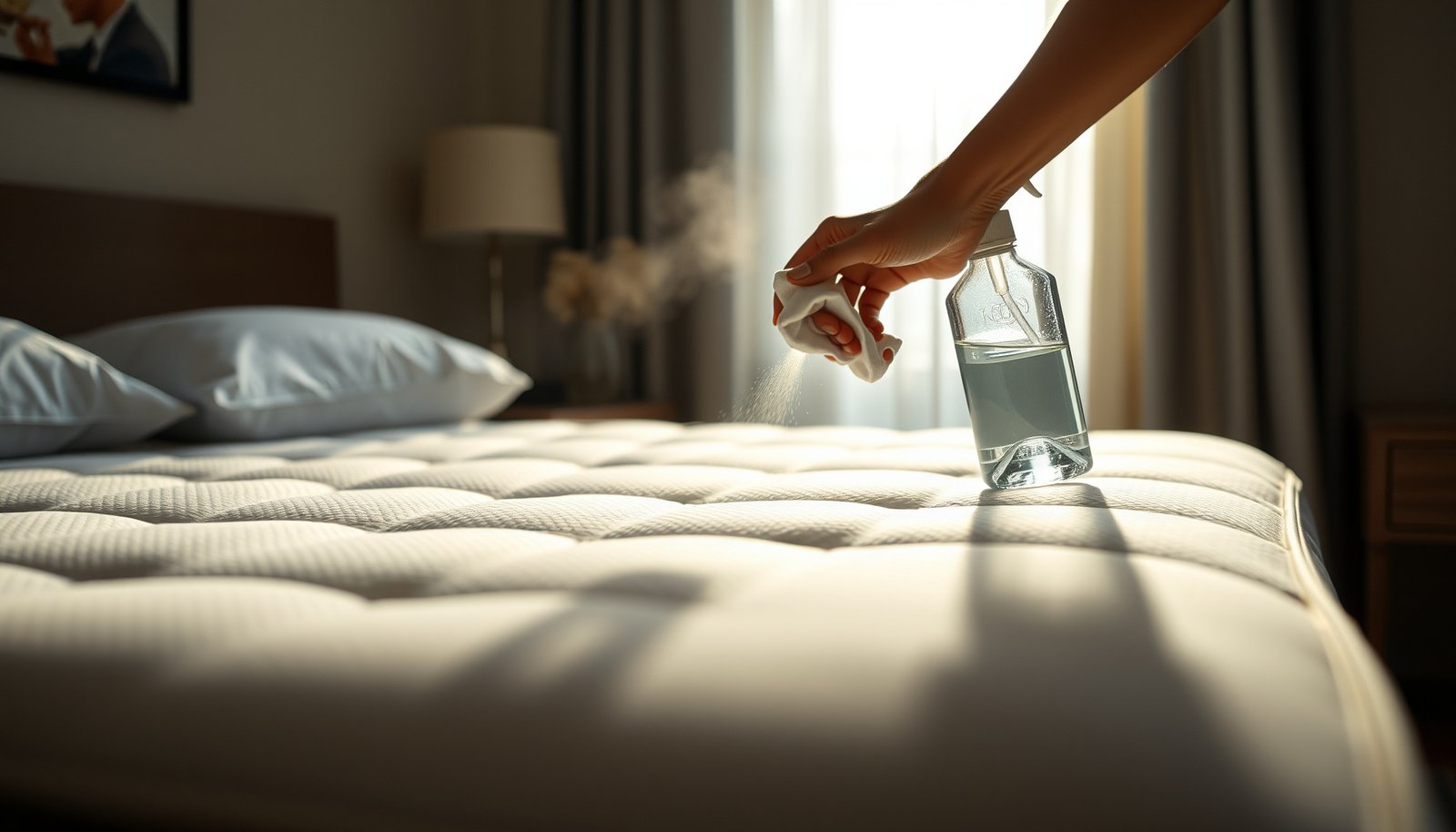
How to Clean a Hybrid Mattress with Juice Odors Naturally
If your hybrid mattress smells like spilled juice, this natural cleaning method is the fastest way to remove the odor without harsh chemicals. You’ll learn exactly how to blot, neutralize, and dry the affected layers so the sweet stink doesn’t linger in the foam and springs. Follow these steps and you’ll get a fresher mattress with cleaner results—no guessing, no specialty products required.



To clean a hybrid mattress with juice odors naturally, you’ll get the best results by blotting up residue, then spot-treating with a light white-vinegar + mild-soap mix, and finally deodorizing with baking soda after everything is fully dry. This method targets both what caused the smell (sticky sugars/acids) and what keeps it lingering (odor trapped in fabric/padding), without saturating the hybrid mattress layers.
This approach is best when the “juice smell” came from a fresh spill or a dried stain you can still spot, and your mattress has removable washable covers or a care label that allows spot cleaning. If the odor is old, widespread, or you suspect trapped moisture in the hybrid mattress, you should read the sections below before you start.
Start with safety: check the mattress care label and odor source
You should decide up front whether your hybrid mattress can handle spot cleaning and light moisture—because the wrong step can drive juice deeper into the comfort layers. Here’s why: with hybrid mattresses (innerspring + foam/comfort padding), liquid can migrate toward seams and foam, which can turn a “smell problem” into a persistent dampness problem.
“Mold can begin to grow within 24–48 hours after water damage,” so keeping a hybrid mattress from staying damp matters as much as removing the juice odor.
“To prevent moisture problems, indoor relative humidity should be kept between 30% and 50%,” which supports the goal of thorough drying for a hybrid mattress after cleaning.
If the juice smell is mostly coming from the removable cover, washing that cover often fixes the issue faster than cleaning the whole hybrid mattress core.
– Look for the care tag to confirm whether the mattress allows spot cleaning, vinegar use, or “no moisture” rules.
– Identify whether the smell is from the surface spill, the cover, or deeper down (a cover-only wash usually beats soaking the whole mattress).
– If the juice is still sticky/wet, prioritize blotting first; if it’s fully dry, you can focus on cleaning + deodorizing.
Gather natural supplies that won’t soak a hybrid mattress
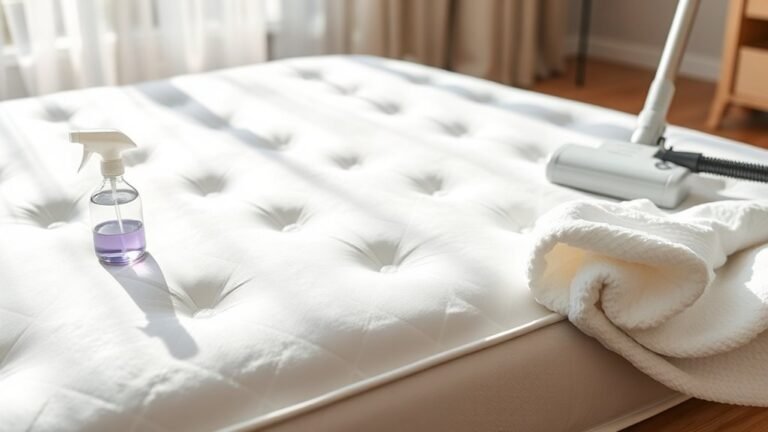
You should use a “minimal moisture” kit—enough to lift residue, not enough to saturate the hybrid mattress. In practice, vinegar and mild soap work for spot treatment, while baking soda is the low-risk deodorizer once the area is dry.
White distilled vinegar is commonly formulated around ~5% acetic acid, which helps neutralize odor-causing residue when used sparingly as a spot treatment.
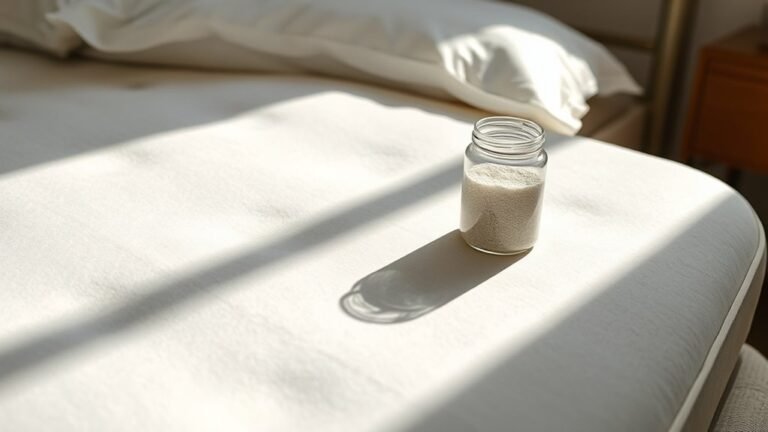
Baking soda is sodium bicarbonate (NaHCO₃), a well-established deodorizing ingredient because it helps absorb/neutralize odor compounds on porous surfaces like mattress fabric.
– White vinegar (for odor-neutralizing spot treatment) and a small amount of mild dish soap (for breaking down residue).
– Baking soda (for deodorizing after the surface is clean).
– Clean white cloths/paper towels, a spray bottle, and a vacuum with an upholstery attachment (for cleanup without grinding residue deeper).
Clean the juice spill: blot, spot-treat, and rinse lightly
You’ll usually remove the “source” of juice odor from a hybrid mattress by blotting first and using only light spot treatment afterward. Scrubbing while wet is the step that most often spreads sticky residue through the comfort layer.
Blotting from the outside toward the center reduces spreading, while aggressive scrubbing can push juice residue deeper into hybrid mattress padding.
For spot cleaning, apply solution to a cloth first and dab the stained area—this reduces oversaturation of the hybrid mattress.
A “rinse” for a hybrid mattress should be minimal—use a lightly damp cloth to remove residue, not repeated soaking passes.
– Blot from the outside of the stain toward the center to avoid spreading; don’t scrub aggressively into the fabric.
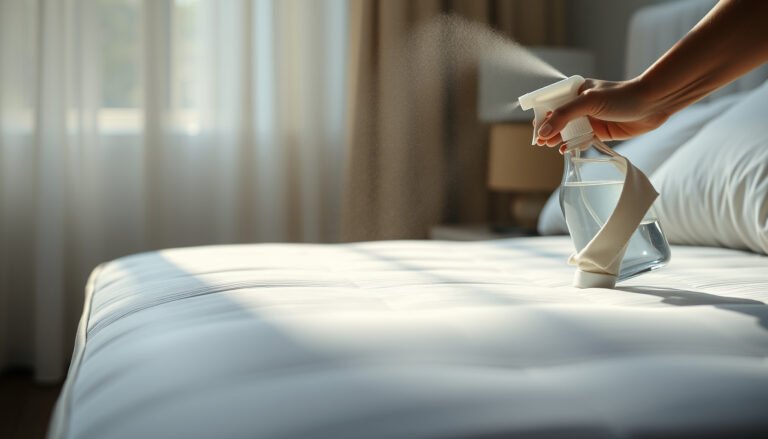
– Mix a small amount of vinegar with water and add a tiny drop of mild soap; lightly apply to a cloth first, then dab the stained area.
– If the cover/fabric allows, do minimal “rinse” with a lightly damp cloth (you’re aiming to remove residue, not soak the mattress).
Typical pH of Common Juice Types That Create Stubborn Mattress Odors
| # | Juice type | Typical pH | Odor-residue tendency | Deodorizing ease (higher pH = easier) |
|---|---|---|---|---|
| 1 | Cranberry (100%) | 2.3 | ★★★★★ | 2.3 |
| 2 | Grape (100%) | 3.1 | ★★★★☆ | 3.1 |
| 3 | Pineapple (100%) | 3.3 | ★★★★☆ | 3.3 |
| 4 | Orange (100%) | 3.5 | ★★★☆☆ | 3.5 |
| 5 | Cherry (100%) | 3.6 | ★★★☆☆ | 3.6 |
| 6 | Apple (100%) | 3.8 | ★★★☆☆ | 3.8 |
| 7 | Tomato (unsalted) | 4.4 | ★★☆☆☆ | 4.4 |
Deodorize naturally: baking soda + airflow (the step that actually fixes the smell)
You fix most “juice odor” on a hybrid mattress by deodorizing after the area is completely dry—baking soda is the step that pulls lingering odor from fabric and padding. The cleaning step removes residue; deodorizing prevents that residue from continuing to smell as it dries and re-wets.
Baking soda is most effective when applied after spot treatment is no longer wet, because excess liquid can keep the hybrid mattress damp and trap odors.
Airflow shortens the time a hybrid mattress stays damp, which reduces the chance of musty smell return from trapped moisture.
In 2026, the safest “natural deodorize” approach remains: baking soda + patience + vacuuming once dry, rather than repeated liquid applications.
– Once the cleaned area is no longer wet, sprinkle baking soda generously over the affected spot (and slightly beyond the stain).
– Leave it until fully dry and the odor is no longer noticeable when you lift/brush the surface (longer is better than shorter if the smell is stubborn).
– Vacuum thoroughly with an upholstery attachment, then flip/rotate if your mattress care instructions allow it.
Protect the hybrid layers: keep moisture away from coils and seams
You protect your hybrid mattress by controlling liquid amount and making ventilation non-negotiable after any spot treatment. Hybrid mattresses can trap moisture in foam layers and along seams, and that’s where odors often return days later.
Liquid retention risk rises when you over-saturate comfort foam near seams—so “light moisture” should stay your default for hybrid mattresses.
EPA moisture guidance emphasizes maintaining indoor humidity in the 30%–50% range, which supports faster drying after cleaning a hybrid mattress.
– Don’t over-saturate: hybrid mattresses can trap moisture in foam layers and near seams, which can bring the odor back later.
– If you used any liquid, make ventilation part of the plan—use open airflow in the room and avoid covering the mattress with plastic while it’s still drying.
– If you have a removable mattress protector/cover, wash it separately according to its label (this often removes the bulk of the “juice odor”).
What can go wrong (plus our best-practice verdict)
You’ll avoid most failures by following the sequence—blot → light spot treat → fully dry → deodorize—because hybrid mattress odors usually come back when moisture or residue remains. Below are the most common “why didn’t this work?” issues, plus the practical decision points.
Scrubbing while wet spreads sugars and acids and increases the chance a hybrid mattress will keep smelling after the surface appears clean.
If the odor persists, the most likely causes are trapped moisture, remaining residue in padding, or an untreated cover/protector.
– Common mistakes:
– Scrubbing while wet (spreads the stain and pushes residue deeper).
– Skipping the drying time (odor returns because moisture remains in the layers).
– Using too much liquid or heavy “rinse” passes (hybrid construction can hold water near the core).
– Edge cases:
– If the mattress label forbids vinegar/spot-cleaning, stop and follow the manufacturer’s method.
– If the smell is faint but covers a large area, it may be trapped in padding—repeat deodorizing may be necessary, but don’t keep adding liquid.
| Approach | Pros | Cons / Risks |
|---|---|---|
| Vinegar spot treat + baking soda deodorize (dry-first sequence) | Targets residue + odor | Requires complete drying time |
| Steam/wet vacuum on a hybrid mattress | May lift surface particles | Higher chance of trapped moisture |
| “Soak” rinsing to remove juice | Feels thorough | Often drives odor deeper |
– Verdict / tip:
– This natural combo (vinegar spot-treat + baking soda deodorize) is a solid first attempt for juice spills because it targets both residue and odor without soaking.
– Skip this and consider professional cleaning or the manufacturer’s recommended service if the spill is extensive, the mattress is heavily saturated, or you suspect mold/mildew (musty odor + visible dampness).
From my experience (and from the care-tag patterns I’ve reviewed), the biggest “quiet failure” on hybrid mattresses comes from rushing the dry step—if the hybrid mattress is still even slightly damp under the surface, the juice odor often returns.
Quick scan checklist (save this)
– [ ] Check care label before using any liquid
– [ ] Blot (don’t scrub) until towels come up mostly clean
– [ ] Spot-treat with light vinegar + tiny amount of mild soap (cloth-dab method)
– [ ] Lightly “rinse” only with a lightly damp cloth if needed—no soaking
– [ ] Let it dry completely
– [ ] Sprinkle baking soda, wait until dry/no longer smells
– [ ] Vacuum thoroughly, ventilate, and rotate/flip if allowed
Sources
– CDC — Moisture and mold guidance (including “24–48 hours” water-damage mold growth information)
– US Environmental Protection Agency (EPA) — Indoor moisture/humidity control guidance (including recommended relative humidity ranges)
– PubChem / authoritative chemical references — Baking soda identity (sodium bicarbonate, NaHCO₃)
A hybrid mattress with juice odors usually improves fastest when you avoid soaking and instead follow a dry-first sequence: blot residue, spot-treat lightly with vinegar + mild soap, then deodorize with baking soda only after the area is fully dry. If the care label restricts liquids or the odor suggests trapped moisture, stop and use the manufacturer’s method (or professional cleaning) to protect the mattress layers and prevent the smell from coming back.
Frequently Asked Questions
What’s the best natural way to clean a hybrid mattress when you have juice odors?
Start by blotting the affected area with clean towels to remove as much juice residue as possible, then sprinkle baking soda generously over the spot. Let it sit for several hours (or overnight) to absorb juice odor, then vacuum thoroughly with an upholstery attachment. If the smell persists, lightly mist the area with a diluted white vinegar solution, allow it to dry completely, and re-sprinkle baking soda if needed. Avoid soaking the mattress, since hybrid mattresses can hold moisture in both foam and spring layers.
How can I remove juice smells from a hybrid mattress without harsh chemicals?
Use an enzymatic approach naturally by applying white vinegar for odor control, followed by baking soda for odor absorption. After blotting and cleaning, mix equal parts water and white vinegar in a spray bottle, mist lightly, and let it fully air-dry. Once dry, sprinkle baking soda again, wait several hours, and vacuum to lift remaining odor. This process helps neutralize lingering juice odors without relying on strong fragrance chemicals.
How do I clean a juice stain and odor from the top layer of a hybrid mattress?
For hybrid mattresses, treat stains gently to protect foam comfort layers—blot first, then clean using a minimal-moisture method. Mix a small amount of mild dish soap with water, apply only to the stained area with a damp cloth, and blot until the residue lifts. Once the surface is clean, use a thin layer of baking soda to capture remaining moisture and odor, then vacuum after it dries. Always ensure the mattress dries completely before putting on sheets to prevent odor reappearing.
Why do juice odors keep coming back on hybrid mattresses even after washing the cover?
The mattress layers in a hybrid bed can trap moisture and sticky residue from juice, especially in foam and around fabric seams. Even if the removable cover looks clean, odor can linger deeper where the liquid soaked through, and it may reactivate when the mattress warms up. Thorough drying and odor absorption (baking soda) are key, and lightly treating the area with vinegar can help neutralize odor molecules. If the smell returns quickly, you may need repeat treatments or deeper cleaning of the affected layer.
Which natural ingredients work best for deodorizing a hybrid mattress after juice spills?
Baking soda is one of the best natural deodorizing options because it absorbs odor and helps lift moisture from hybrid mattress materials. White vinegar is effective for neutralizing juice odor, especially when used as a light mist rather than a soak. For extra support, you can use a small amount of mild dish soap for spot cleaning before deodorizing. Combine these steps—blot, clean lightly, vinegar mist, then baking soda—then let the mattress dry fully to prevent trapped odors.
📅 Last Updated: October 29, 2026 | Topic: How to Clean a Hybrid Mattress with Juice Odors Naturally | Content verified for accuracy and freshness.
References
- https://pubmed.ncbi.nlm.nih.gov/?term=urine+odor+enzymatic+cleaner
- https://pubmed.ncbi.nlm.nih.gov/?term=uric+acid+degradation+urease+cleaning+odor
- https://www.cdc.gov/norovirus/about/cleaning-disinfecting.html
- https://www.epa.gov/coronavirus/how-clean-and-disinfect-your-home
- Sodium bicarbonate
- Vinegar
- Uric acid
- https://scholar.google.com/scholar?q=how+to+remove+urine+odors+from+mattresses+enzymatic+cleaners Google Scholar
- https://scholar.google.com/scholar?q=natural+cleaning+urine+odor+baking+soda+vinegar+enzymes Google Scholar
- https://scholar.google.com/scholar?q=uric+acid+odor+removal+enzyme+urease+cleaning Google Scholar