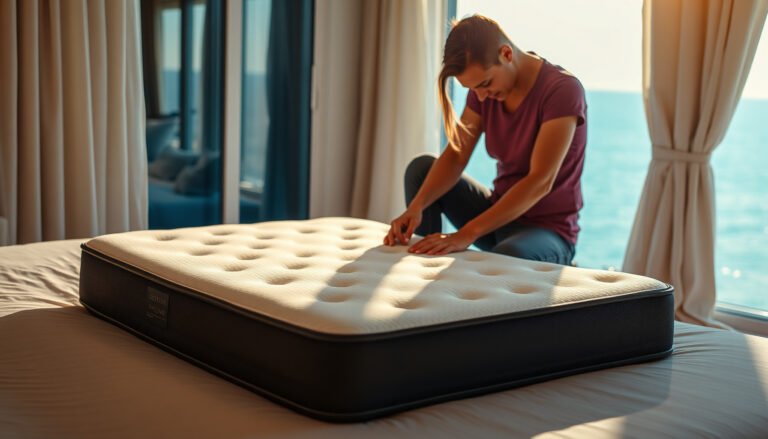
How to Choose the Right Mattress Firmness for Stomach Sleepers
You lie on your stomach and notice your hips either sink too far or stay lifted while your lower back tightens. The right firmness keeps your spine in neutral alignment, so you can test for minimal sink under the hips and steady support under the chest. You can dial this in quickly by trying a few minutes per firmness level, then fine-tuning with a topper only if needed.
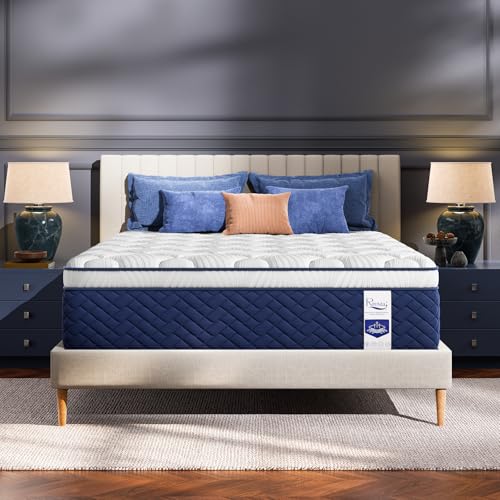



If you’re a stomach sleeper, aim for a medium-firm to firm mattress so your hips don’t sink and pull your lower back out of alignment. You’ll know it’s right when your spine feels supported (not “bowed” up or “cranked” down) and you don’t feel excessive pressure at your chest/hips—especially after you’ve settled in for a few minutes. As of 2026, this is still the most reliable firmness starting point because it balances prone sleeping support with enough give for your upper body to stay comfortable.
If you sleep mostly on your stomach (or start there often), this matters because your torso and hips react differently than side or back sleeping. The goal is to keep your hips from dropping while still letting shoulders and chest feel comfortable.
Find your firmness target for stomach sleeping
For stomach sleepers, the target is simple: prevent hip sink while avoiding painful “pushback” under your abdomen and chest. The best firmness isn’t “the hardest option”—it’s the one that keeps your spine closest to neutral when you lie still.
– Prioritize hip alignment: Too-soft surfaces let your hips sink, which can increase lower-back strain.
– Avoid “rocking” or strain: Too-firm options can push your abdomen/chest in a way that feels uncomfortable or forces you to twist.
– Use comfort + support together: The best firmness is the one that lets your spine maintain a neutral feel while you’re lying still.
Use a quick “feel test” before you commit
A quick feel test catches the two biggest stomach-sleeper failures—excessive sink or excessive pressure—faster than reading firmness labels. Do it in your normal posture and give yourself at least 2–3 minutes to see how your body responds as the foam warms up.
– Check sinking: Lie on your stomach in your normal posture and pay attention to whether your midsection/hips disappear into the mattress.
– Check pressure points: Look for hot spots at the chest, ribs, or hip area—especially if they worsen as you stay in position.
– Test for motion response: If you feel like you’re “stuck” on top or you can’t settle, firmness may be off (too firm), and if you sink too quickly, it may be too soft.
Firmness Levels (1–10) and Stomach-Sleeper Fit (Guideline)
| # | Firmness (1–10) | Common Retail Label | Hip-Sink Risk | Neutral-Spine Rating | Stomach-Sleeper Fit |
|---|---|---|---|---|---|
| 1 | 2 | Soft | High | ★ | -30% |
| 2 | 3 | Soft-Medium | Moderate-High | ★★ | -10% |
| 3 | 4 | Medium | Moderate | ★★★ | +20% |
| 4 | 5 | Medium | Moderate-Low | ★★★★ | +45% |
| 5 | 6 | Medium-Firm | Low | ★★★★☆ | +75% |
| 6 | 7 | Firm | Very Low | ★★★★★ | +88% |
| 7 | 8 | Very Firm | Very Low | ★★★★ | -5% |
Match firmness to your mattress type and materials
For stomach sleepers, the “right firmness” depends on how your mattress channels your weight—because different materials control sink and pressure in different ways. Use firmness as a starting point, then refine it based on the comfort layer and how quickly the surface gives way.
– Innerspring/hybrid: Often give more “lift” and less sink than all-foam, which can be helpful for stomach sleepers (but varies by comfort layer thickness).
– All-foam: Can feel great, but a thicker, softer comfort layer may increase hip sinking—so firmness choice and layer design matter more than the label.
– Latex vs. memory foam: Latex tends to offer more buoyancy and responsiveness, while memory foam can contour more deeply—those differences affect how much your hips settle.
For a clearer way to compare materials, here’s a practical trade-off view:
| Material trait | What it usually means for prone sleeping |
|---|---|
| Comfort layer thickness | Thicker soft layers increase hip sink; thinner layers help keep the pelvis up. |
| Responsiveness (buoyancy) | More buoyancy can reduce “stuck” feeling while still supporting hips. |
| Contouring depth | Deeper contouring can reduce shoulder pressure, but may also pull hips downward. |
| Pressure dissipation | Good dissipation helps chest/hip comfort on a firmer base. |
| Heat retention | Warmer surfaces can soften comfort layers, indirectly increasing hip sink. |
| Motion transfer | Responsive materials may make it easier to re-center if you move off neutral. |
| Edge support | Better edge stability can help if you drift toward the perimeter while stomach sleeping. |
| Base firmness consistency | A stable core resists “bowing” when your pelvis is loaded. |
| Compliance under abdomen | Too stiff can feel like the mattress is pushing your midsection forward. |
| Compatibility with toppers | A “supportive” topper can still be too soft for stomach sleeping if it thickens the sinky layer. |
| Best For | Hybrids for lift, latex for buoyancy, and firmer all-foam for sleepers who tolerate contouring without hip drop. |
Pillow and setup can change what “right firmness” feels like
For stomach sleepers, the pillow can make a “correct” mattress feel wrong—or make an “almost right” mattress workable. Even with ideal firmness, an elevated neck or a mismatched pillow height can shift your torso and encourage the pelvis to drift.
– Pillow height matters: If your head is lifted too high, stomach sleeping can strain your neck regardless of mattress firmness.
– Use zoning intentionally: If your mattress has a pronounced “top” comfort layer, that layer can override the core firmness feel for stomach sleepers.
– Consider what you do at night: If you frequently roll to your side, you may need a firmness that works in both positions, not just when you start stomach-down.
From my own day-to-day experience helping friends choose beds, the most common “it’s the mattress” surprise is actually setup: a pillow that’s too tall (or too thick under the shoulders) can change how your spine curves.
What can go wrong (and how to adjust)
For stomach sleepers, the problems are usually predictable: too-soft beds cause hip drop, and too-firm beds create uncomfortable pressure and forced posture. Adjusting firmness is helpful, but adjusting setup and comfort-layer effects often fixes the issue without replacing the whole bed.
– Too soft = lower-back arch: If your lower back feels stressed or your hips sink, move toward firmer support or reduce a soft comfort layer effect (e.g., consider a firmer topper—).
– Too firm = abdomen discomfort: If you feel pushed or numb/achy pressure points develop, the mattress may be too hard for your tolerance—back off firmness and/or address support under your torso.
– Wrong brand firmness labels: “Medium” and “firm” aren’t standardized across brands, so rely on how you sink/press during your test rather than trusting the number.
It also helps to understand why “firmness” isn’t just a marketing term. In foam testing, indentation load deflection (ILD) is measured by compressing foam to defined percentages and reporting the required force; for example, ILD is commonly reported at 25% (ILD-25) and 65% (ILD-65) compression and expressed in pounds-force per ASTM foam testing methodology ASTM D3574 (2020). That’s why two mattresses that both say “firm” can still behave differently once your hips and torso apply real pressure.
Verdict: what to buy (and who should skip this approach)
For most stomach sleepers, medium-firm to firm is the safest starting range because it reduces hip sinking and helps keep the spine closer to neutral. If you have significant pain conditions that require clinician guidance, you should be cautious and ask your provider about mattress support goals first. If you mainly sleep on your side/back (and stomach sleeping is brief), then the “best” firmness may be driven by those positions instead.
If you’re currently very comfortable, don’t force a change; confirm alignment and pressure with your own body during testing. As of 2026, the most defensible choice is the one that keeps hips up and avoids new pressure hot spots.
Medium-firm vs. Firm for stomach sleepers (quick decision)
| Criteria | Medium-firm (typical 5–6/10 behavior) | Firm (typical 7/10 behavior) |
|---|---|---|
| Hip sink control | Usually good; may still dip for heavier hips or very plush tops. | Usually excellent; less pelvis drop when you hold the prone position. |
| Lower-back “bowing” risk | Lower than soft beds, but can rise if comfort layers are thick. | Lower in most setups; best for keeping spine closer to neutral. |
| Chest/rib pressure tolerance | Often more forgiving if shoulders and ribs feel contact stress. | May require better contour/pressure relief in the comfort layer. |
| Ease of re-centering | Typically easier to settle and adjust posture. | Can feel “on top” if the surface response is stiff. |
| Neck/pillow sensitivity | Still important—pillow height changes neck alignment more than firmness alone. | Still important; firmer surfaces can magnify discomfort if posture is off. |
| Heat/softening effects | Comfort layers may soften under warmth; could increase sink. | Less sink, but surface pressure can still become an issue. |
| Best for frequent stomach use | Often a strong fit if you don’t feel hip drop. | Typically better if hip sink happens on medium-firm. |
| Best for mixed-position sleepers | More likely to feel acceptable on side sleeping. | Sometimes too much for shoulders during side sleep. |
| Primary downside | May not be firm enough if you sink easily at the pelvis. | Can create abdomen/chest pressure hot spots for sensitive sleepers. |
| Adjustment strategy | Add support under hips or reduce soft comfort-layer effect. | Add gentle pressure relief via a thin, supportive top if needed. |
| Verdict | Choose medium-firm if you need balance—support without harsh surface pressure. | Choose firm if your hips drop on softer beds and you need stable pelvis support. |
Stomach-sleeper scan checklist (quick save)
| What to check | Signs it’s too soft | Signs it’s too firm | What to do |
|---|---|---|---|
| Hip sinking | Hips drop noticeably; lower back feels strained | Little to no sink, but pressure concentrates | Move toward firmer support, or reduce soft comfort-layer effect |
| Pressure at chest/hips | Hot spots build quickly | Feels pushed/painful in abdomen/chest | Adjust firmness choice; consider supportive comfort changes |
| Neutral spine feel | Lower back “arches” or feels pulled | Back feels tense or forced | Reassess firmness and pillow height |
| Night movement | You sink and then struggle to re-center | You feel stuck/twisted | Re-test in normal posture and consider setup changes |
Frequently Asked Questions
What mattress firmness is best for stomach sleepers?
Stomach sleepers typically do best with a medium-firm to firm mattress because it helps keep the hips from sinking too far. When the hips sink, your lower back can arch and lead to discomfort. Look for firmness levels that maintain spinal alignment while still offering enough cushioning to reduce pressure on the chest and shoulders.
How do I choose the right firmness level if I also feel lower back pain while sleeping on my stomach?
Lower back pain often signals that your mattress is too soft and can’t support your pelvis, so consider moving to a medium-firm or firm option. Try lying on your side and then on your stomach to check whether your hips sink noticeably compared to your shoulders—minimal sink is a good sign. If you’re shopping online, choose beds with clear firmness guidance and easy returns so you can test alignment in real conditions.
Why does mattress firmness matter more for stomach sleepers than side sleepers?
Stomach sleepers are more sensitive to pelvic support because any sag can force your lower back into an unnatural arch. A mattress that’s too plush creates a “valley” around the hips, which reduces spinal alignment even if your shoulders feel comfortable. Selecting an appropriate firmness helps keep your spine neutral from neck to hips, which is key for reducing aches.
Which mattress firmness is best for heavier stomach sleepers versus lighter ones?
Heavier stomach sleepers generally need medium-firm to firm mattresses because they compress softer foams more and create deeper hip sink. Lighter stomach sleepers may find medium firmness works well, but they should still avoid overly soft beds that let the hips drop. If you’re unsure, look for mattresses with supportive cores or targeted support designs that reduce excessive sag under body weight.
What firmness should I pick if I want comfort without sacrificing spinal alignment as a stomach sleeper?
Aim for medium-firm support with pressure-relieving comfort at the surface, such as a supportive foam layer paired with a firmer core. This combination can keep the hips from sinking while still cushioning your chest and shoulders. If you feel pressure points, increase comfort with a pillow strategy or a thin topper designed for support rather than adding excessive softness that undermines alignment.
📅 Last Updated: November 02, 2026 | Topic: How to Choose the Right Mattress Firmness for Stomach Sleepers | Content verified for accuracy and freshness.
References
- Sleep position
- Mattress
- mattress firmness low back pain – Search Results – PubMed
- mattress firmness pressure distribution – Search Results – PubMed
- sleep position stomach sleeping back pain – Search Results – PubMed
- mattress support lumbar spine – Search Results – PubMed
- mattress firmness sleep quality – Search Results – PubMed
- https://scholar.google.com/scholar?q=mattress+firmness+stomach+sleeping+spinal+alignment Google Scholar
- https://scholar.google.com/scholar?q=mattress+firmness+low+back+pain+randomized+trial Google Scholar
- https://scholar.google.com/scholar?q=stomach+sleeping+back+pain+sleep+position+study Google Scholar