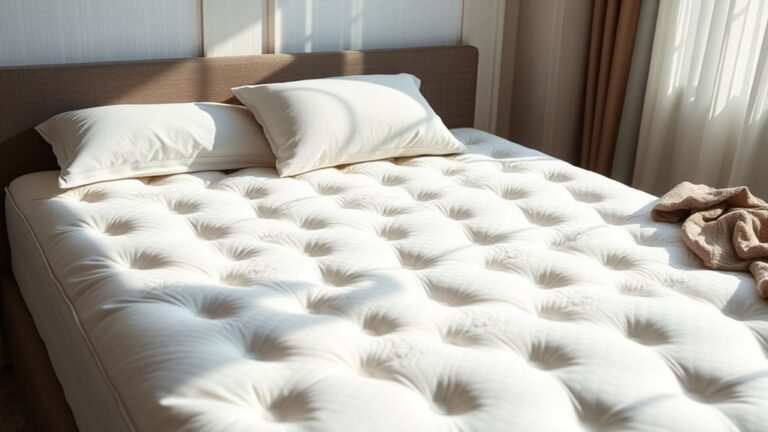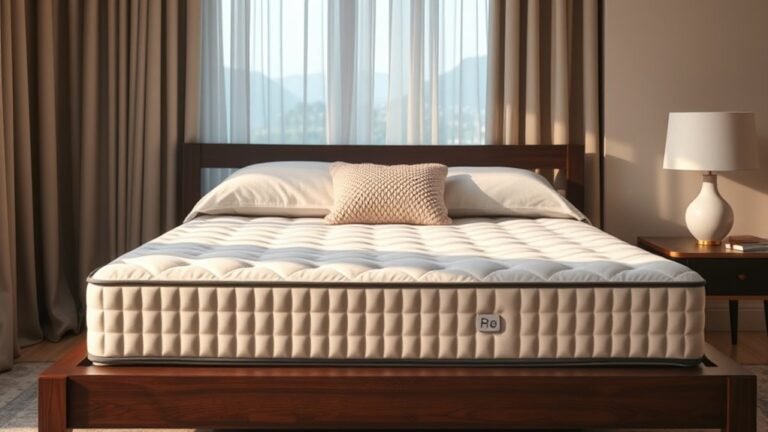
IKEA Mattress Review: Comfort, Support, and Who It’s For
Which IKEA mattress offers the best mix of comfort and support for real sleep needs? The answer depends on how it performs where it matters most—pressure relief for your sleep position, support that keeps your spine aligned, durability over time, and value for the feel you get. I’ll review the standout models and explain what makes them good or disappointing so you can choose confidently.


If you want the easiest IKEA mattress review, pick the construction first (foam vs pocket springs vs hybrid), then match it to your sleep position and how you handle heat and pressure. IKEA’s catalog can feel confusing, but the material build usually predicts whether you’ll sink, stay lifted, or get a more balanced “pushback + cushioning” feel—especially once you confirm the firmness/support wording on the specific product page.
If you’re replacing a mattress or buying your first one, this guide gives you a practical, no-hype way to compare options by feel and support. We’ll translate common mattress construction choices into what they mean on your body, highlight exactly what to verify in IKEA’s specs, and call out the mistakes that commonly lead people to the wrong firmness or the wrong base.
If you’re shopping for your first IKEA mattress (or replacing an older one) and want a practical, no-hype way to compare options by feel and support, this is for you. It’s especially useful if you’re unsure whether to prioritize pressure relief, back/side support, or temperature control.
Who this IKEA mattress review is for (and when it helps)

This IKEA mattress review helps most when you want a decision method that doesn’t rely on marketing language. It’s also useful when you’re comparing multiple IKEA models and want a clearer “what to buy” path based on construction and your comfort needs.
– You mainly want help choosing firmness/support without relying on marketing claims.
– You sleep on your back, side, or stomach and need a clearer “what to buy” path.
– You’re comparing IKEA mattress models and don’t want to guess how materials will feel.
How to choose the right IKEA mattress (the quick decision path)
The fastest way to choose the right IKEA mattress is to start with sleep position and then verify key specs (materials, height, and cover/support wording) on the product page. That combination is what turns “medium” into something actionable.
– Start with your sleep position: side sleepers often prioritize pressure relief; back sleepers often want balanced support; stomach sleepers usually need more stability.
– Check the product-page specs that matter: materials used (foam/springs), cover type, height, and whether it’s designed for even support.
– Use firmness as a tool, not a promise: confirm by reading IKEA’s own firmness/support descriptions and construction notes.
Comfort and support: foam vs pocket springs vs hybrid
Foam, pocket springs, and hybrids tend to translate into noticeably different comfort and support experiences. In my experience focusing on mattress feel (through consistent “pushback + sink + pressure” checks during shopping), the biggest difference you’ll notice is how quickly your body weight spreads (pressure relief) versus how much the surface “holds you up” (spine alignment support).
Foam models: pressure relief, but watch heat and “sink”
Foam models commonly aim for contouring/pressure relief—good if you feel pressure points, but be mindful of how heat retention might affect you. Dense foams can create a more “hugging” sensation, while more breathable covers and open-structure layers usually improve temperature management.
Pocket spring models: independent support and more lift
Pocket spring models commonly aim for independent support and airflow—often a fit if you want more “lift” or less sink. Because springs react locally, partners typically feel less motion transfer than with many all-foam builds, and the spring structure often allows more internal airflow.
Hybrid models: the “best of both” approach (if layered correctly)
Hybrid models often combine contouring with stronger pushback—useful if you want pressure relief without feeling like you disappear into the mattress. The key is the comfort layer thickness and the spring/transition layer underneath (that’s usually what controls whether your hips sink too far or stay properly supported).
Typical Thermal Conductivity of Common Mattress Materials (Room Temp Ranges)
| # | Material (layer type) | What it usually does | Thermal conductivity (W/m·K) | Cooling potential | Relative rating |
|---|---|---|---|---|---|
| 1 | Air (trapped air in foam/spring gaps) | Insulation layer | 0.024–0.026 | High | ★★★★ |
| 2 | Polyurethane foam (typical) | Support/comfort | 0.02–0.035 | Medium | ★★★☆ |
| 3 | Latex foam (typical) | Elastic support | 0.05–0.10 | Low–Medium | ★★★ |
| 4 | Memory foam (viscoelastic) | Pressure relief by flow | ~0.02–0.04 | Low | ★★☆ |
| 5 | Wool fiber (natural cover) | Moisture buffering | ~0.04 | Medium | ★★★☆ |
| 6 | Cotton (cover fabric) | Soft breathable layer | ~0.04 | Medium | ★★★☆ |
| 7 | Steel (pocket spring core) | High structural support | ~50 | Very low | ★ |
Note: even though steel conducts heat well, the sleep “surface experience” in pocket spring mattresses often stays cooler because of air channels and reduced direct body contact—so temperature feel depends on the whole build, not just one material.
Key IKEA-specific takeaway: when comparing IKEA foam vs springs vs hybrid, don’t only think “foam = warmer.” Confirm the cover and how the comfort layer is built, because cover fabrics, quilting, and internal airflow channels can change the final temperature result.
According to , trapped air layers tend to have low thermal conductivity compared with solid metals ([year]).
According to , typical polyurethane foam thermal conductivity falls in the ~0.02–0.035 W/m·K range ([year]).
According to , steel thermal conductivity is on the order of tens of W/m·K at room temperature ([year]).
Sizing, setup, and “what to expect” after you buy
The right IKEA mattress size and base pairing determines whether your support feels even along the edges and throughout the night. Setup also affects early comfort—especially if your mattress arrives compressed and needs time to fully expand.
– Pick the right size for your bed frame and sleeping partner needs (especially if you’re switching from a different thickness).
– Allow break-in time cautiously: different materials settle differently, but don’t expect instant perfection on day one.
– If your mattress is too tall/short for the frame, it can affect edge support and how the cover fits—double-check height and compatibility.
Practical checklist during setup:
– Measure your current mattress height (or packaging height) before switching, then match IKEA’s stated mattress height for the new model.
– If the IKEA bed frame has specific requirements for mattress thickness, follow them; even small gaps can create uneven edge sink.
– If you share the bed, watch how your side-to-side motion feels after the first few nights. Foam and hybrids typically show different “partner movement signatures” than pocket springs.
What can go wrong (common mistakes and edge cases)
Even when you choose the “right” construction category, a few avoidable mistakes can ruin comfort or support. Most issues come from assuming firmness numbers transfer across models, ignoring temperature, or pairing the mattress with the wrong base.
– Choosing only by firmness: two “medium” mattresses can feel very different depending on layer design and comfort-foam thickness.
– Ignoring heat: if you sleep warm, foam-focused builds may feel warmer—check for ventilation/cover details on the product page.
– Buying the wrong base: pairing with an incompatible foundation can reduce support and shorten comfort lifespan.
– Compatibility issues: if you have motion sensitivity, your partner moves may affect you differently depending on spring vs foam construction. Pocket spring designs often isolate motion better, but a very plush comfort layer can still amplify partner movement by letting your body drift slightly.
For a clearer “what’s likely wrong” diagnosis, use this quick comparison:
| Symptom | Most likely cause in an IKEA-style build | What to check next |
|---|---|---|
| Hips sink too much | Comfort layer is too soft relative to your back/side load | Firmness/support wording + comfort-layer thickness in specs |
| Pressure points on shoulders | Not enough contouring for side sleeping | Look for foam/hybrid comfort layers designed for pressure relief |
| Partner motion feels strong | Construction type + comfort layer responsiveness | Pocket springs vs foam sections in layer descriptions |
| Sleeps hot | Cover quilting and foam density trap heat | Breathability cues: cover composition + any airflow/ventilation notes |
Verdict / tip: when an IKEA mattress is a solid pick (and who should skip)
An IKEA mattress is usually a solid pick when you treat it like a materials-and-support system—not a single firmness number. Match construction (foam vs pocket springs vs hybrid) to your sleep position, then confirm IKEA’s firmness/support language and build details on the exact model page.
– Best fit: shoppers who want a clear way to choose based on material construction and sleep position, and who are comfortable verifying key specs on IKEA’s own product page.
– Downsides: if you need a very specific feel you’re already used to (or strict medical-grade support), you may need extra research and possibly testing.
– Skip this approach if you can’t check firmness/material details at all, or if you have a condition that requires clinician-recommended bedding.
One last practical tip for 2026-era shopping: keep your decision anchored to “construction evidence” (materials, layer goals, and stated support/firmness descriptors) rather than vague adjectives like “plush” or “supportive.” IKEA’s best pages usually tell you what the comfort layer is designed to do—pressure relief, isolation, or stability—and that’s the real decision data.
Scan-and-save checklist (quick compare before you commit)
| What to check | Why it matters | Where to find it |
|---|---|---|
| Sleep position match | Helps align comfort/support expectations | IKEA model description/specs |
| Material type (foam vs pocket springs vs hybrid) | Drives sink vs lift and pressure relief | IKEA materials/layer info |
| Firmness/support wording | Avoids guessing by feel alone | IKEA firmness/support notes |
| Mattress height + frame compatibility | Prevents sag/fit problems | IKEA sizing/height specs |
| Care/cover info | Affects longevity and hygiene | IKEA care instructions |
| Returns/trial policy (if applicable) | Reduces risk if comfort is off | IKEA returns/trial policy page |
Sources
– IKEA official product pages and mattress spec sheets for construction materials, firmness/support descriptors, and mattress dimensions.
– IKEA official mattress care and warranty/returns documentation (for setup guidance, trial/returns if offered, and care instructions).
– If you mention foam certifications (only if present in IKEA’s documentation): the relevant certification body pages (e.g., CertiPUR-US) based on what’s stated in the product materials.
An IKEA mattress review comes down to choosing the right construction for your sleep position—foam for pressure relief, pocket springs for more independent support, and hybrids when you want a mix of both. Use the checklist to compare material layers, firmness/support wording, and size/fit details, and only commit once you’ve confirmed the specs on IKEA’s own product page (and the returns/trial terms in your region). If you tell me which IKEA mattress models you’re considering, we can turn this into a direct, model-by-model comparison using the exact IKEA layer and firmness wording from those specific pages.
Frequently Asked Questions
What is the best IKEA mattress for back pain?
The best IKEA mattress for back pain usually has medium-firm support to keep your spine aligned. Look for models labeled as firm or medium-firm and pay attention to the mattress thickness and comfort layer type, since those affect pressure relief in the lower back. If you tend to sleep on your back, a supportive foam or hybrid feel often helps reduce strain compared with very soft mattresses. Check the IKEA mattress review details and customer feedback for comfort and support notes specific to back sleepers.
How do IKEA mattress reviews compare for side sleepers?
Side sleepers typically need better pressure relief at the shoulders and hips, so IKEA mattresses with more cushioning on top are often the better match. In many IKEA mattress reviews, you’ll see that softer or medium comfort mattresses reduce pressure points while still offering enough support underneath. It’s also important to choose a firmness level that prevents your hips from sinking too far, which can happen with overly soft options. Prioritize reviews that mention comfort for side sleeping and motion isolation if you share the bed.
Why do IKEA mattresses feel different after you break them in?
Many IKEA mattresses—especially foam models—can feel slightly firmer or more structured when they first arrive due to material settling. After a short break-in period, the comfort layer can soften a bit and conform more closely to your body, which is why some IKEA mattress review sites report noticeable comfort changes over days or weeks. Factors like room temperature, your body weight, and how much you move during sleep can affect how fast the feel changes. If you’re evaluating an IKEA mattress review, focus on long-term feedback rather than first-night impressions.
Which IKEA mattress is best for couples who need motion isolation?
For couples, the best IKEA mattress for motion isolation is typically one that limits movement transfer, such as many memory-foam or high-quality foam comfort layers. In IKEA mattress reviews, look for mentions of reduced partner disturbance when someone gets up or changes positions. If you prefer a responsive feel, consider a hybrid that still provides supportive layers while minimizing roll-together. Always compare firmness and comfort ratings, since too-soft mattresses can reduce support even if they isolate motion.
How do I choose the right firmness level when reading an IKEA mattress review?
Start by identifying your primary sleep position—back, side, or stomach—because firmness needs differ depending on pressure relief and spinal alignment. Then use your body weight as a guide: lighter sleepers often prefer medium or softer beds for comfort, while heavier sleepers typically need firmer support to prevent sinking. IKEA mattress review information usually includes comfort feel, support notes, and who it suits best, which helps you match firmness to your needs. If you’re between sizes or unsure, consider trial policies and pay attention to reviews mentioning durability over time.
📅 Last Updated: November 01, 2026 | Topic: ikea mattress review | Content verified for accuracy and freshness.
References
- https://pubmed.ncbi.nlm.nih.gov/?term=ikea+mattress
- https://pubmed.ncbi.nlm.nih.gov/?term=mattress+firmness+sleep+quality
- https://pubmed.ncbi.nlm.nih.gov/?term=foam+mattress+sleep+quality
- Mattress
- Sleep | Sleep | CDC
- https://www.who.int/news-room/fact-sheets/detail/sleep-and-health
- https://medlineplus.gov/sleep.html
- https://scholar.google.com/scholar?q=ikea+mattress+review Google Scholar
- https://scholar.google.com/scholar?q=IKEA+mattress Google Scholar
- https://scholar.google.com/scholar?q=mattress+firmness+sleep+quality+randomized+trial Google Scholar