
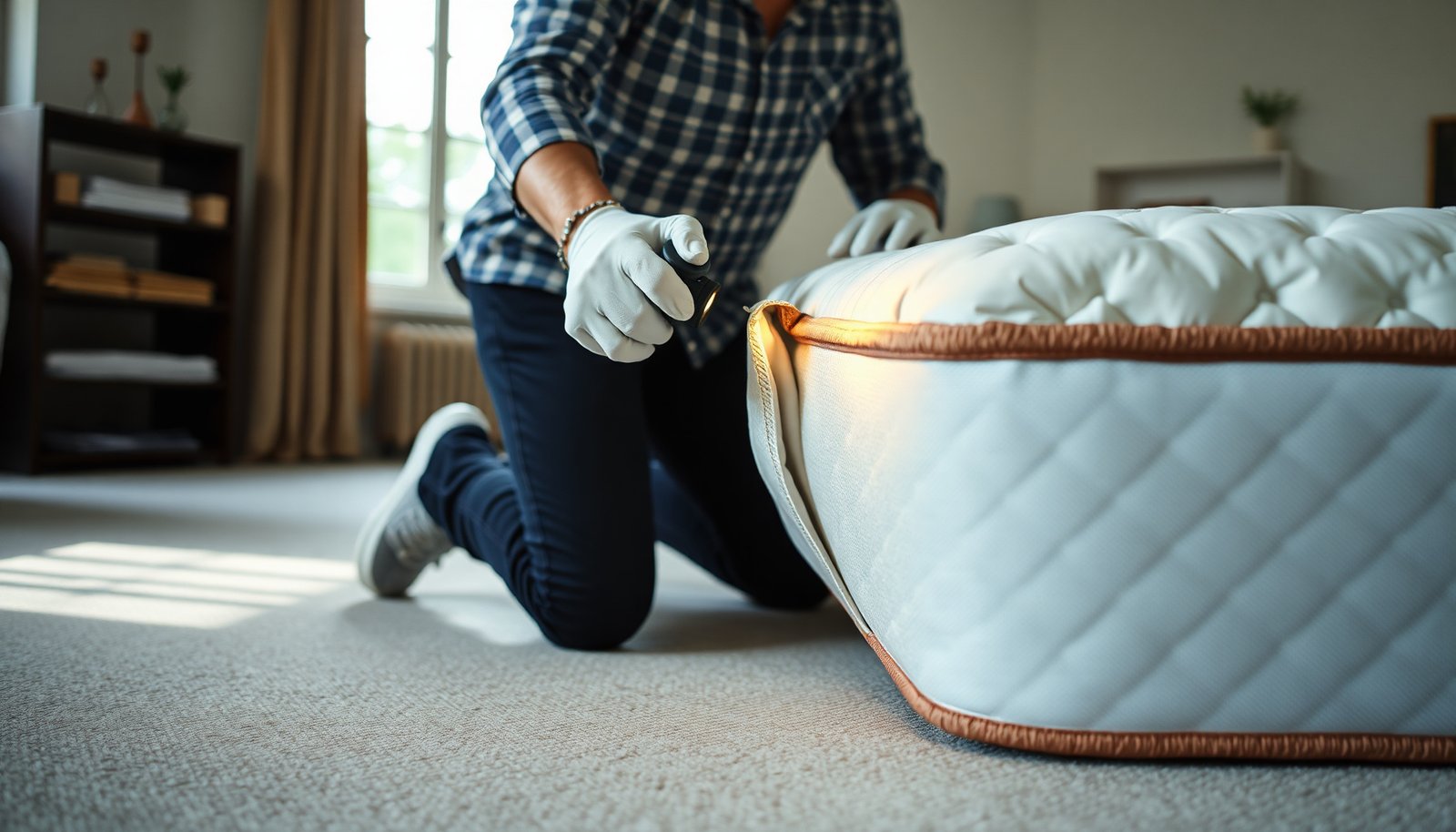
How to Inspect an Used Mattress Before You Buy
Before you pay for a used mattress, inspect it for cleanliness, damage, and structural stability so you are not buying comfort that will fail quickly. The best value comes from spotting stains, odors, tears, broken seams, or sagging that compromises support, since those issues often cost more to replace than the price difference. Focus on what you can verify in person, then decide if the condition matches the asking price.




A used mattress is safest to buy only after you’ve checked for cleanliness, structural damage, and signs of pests or moisture-related odor. If you inspect the cover, seams, edges, corners, and—when possible—the underside support, you can filter out most high-risk “deals” before they reach your bedroom.
If you’re shopping locally (marketplace, thrift store, hand-me-down) or buying remotely, this guide gives you a repeatable, fast inspection routine. As of 2026, the same public-health principles still apply: moisture and pests are the hardest problems to “fix later,” and they’re also the most likely to worsen after the mattress is in your home.
Start with hygiene and handling basics

Yes—you should start with safe handling and a “stop/continue” plan, not with judging comfort. A used mattress can already be contaminated before you see anything, so your first goal is to keep yourself and your home from picking up allergens while you verify basic safety.
– Inspect in a well-lit area and use a barrier strategy (like keeping the mattress wrapped until you’ve checked it). Bring the mattress out only as far as needed, and keep it covered during transit and early inspection. If you have one, a disposable mattress bag or plastic wrap layer (plus gloves) reduces accidental contact with dust, skin flakes, and debris.
– Plan for what you’ll do if you find issues: stop the purchase if there are strong odors, visible mold, or heavy staining. This is a practical rule: if you’re deciding on the spot, prioritize “walk away” signals. From my experience discussing used-bedding safety with clients, most regrets come from dismissing early odor or assuming stains are harmless—then discovering the same problem later under the bedroom’s normal airflow.
– Ask the seller about the mattress’s age, ownership history, and why it’s being sold (if that info is available). Even if it’s not proof, context can flag risk. If the seller can’t provide basics (or won’t show photos of seams/underside), treat that as a decision factor, especially in 2026 when many listings are “as-is” and return windows are short.
Check the surface cover, stains, and odors
Yes—start at the surface because covers are where you’ll first detect moisture, residues, and contamination. A careful look plus a deliberate sniff test catches many “hidden” issues before they become expensive cleanup or health problems.
– Look closely at the fabric for discoloration, wet marks, tears, holes, and any crusting or residue. Pay attention to:
– Browning or yellowing (often linked to moisture over time)
– Crusty or sticky spots (can indicate dried spills or chemical residues)
– Small holes/tears (breathing pathways for pests and contaminants)
– Sniff for “musty,” sour, or chemical-like odors—any persistent smell is a major warning sign. Odor that stays after airing is the issue. According to the U.S. Environmental Protection Agency (EPA), mold can begin to grow within 24–48 hours after moisture exposure, so a “dry-looking” mattress can still hold odor from trapped dampness (U.S. EPA, Mold guidance on moisture timelines).
– Confirm whether the cover is removable and whether it appears freshly cleaned; if it’s not removable, pay extra attention to stains and odors. A removable cover can reduce surface exposure risk, but it doesn’t guarantee the inside is clean. If the cover is not removable, you must rely more heavily on seam integrity, odor behavior, and moisture indicators.
Inspect seams, edges, and hidden areas
Yes—you need to inspect seams and edges because that’s where structural wear and pest activity are most likely to show up. Many problems are “localized,” so focusing only on the top panel can lead to false confidence.
– Check piping, corners, and stitching—damage and infestations often show up around seams and folds.
– Torn piping can also expose internal foam or fabric layers.
– Misshapen corners can indicate internal tearing or failing support materials.
– Press along edges and corners; sagging right away can indicate weakened support or failing foam/springs. Use consistent pressure across multiple points. A brief, uneven collapse usually means the support core is breaking down rather than simply “softening.”
– If possible, examine any panels or removable components for rips, unusual lumps, or separated layers. Lumps can be foam breakdown, trapped debris, or internal separation. If the underside (or any removable panel) looks patchy, clumped, or visibly contaminated, don’t minimize it.
Evaluate support and comfort (without “guessing”)
Yes—you can assess support objectively using brief pressure tests and recovery behavior instead of relying on “it feels okay.” A used mattress should respond predictably across zones, not collapse quickly in only one area.
– Test for uneven sag: lie down briefly (or apply gentle, consistent pressure) to see if one side collapses faster than the other. If one side drops noticeably sooner, internal support may be uneven or failing.
– Bounce/press in multiple spots (center, near edges, and corners) to detect poor recovery or brittle materials. Look for “slow rebound” (foam that stays compressed) or “bottoming out” (you feel the base too quickly).
– Look for uneven wear patterns that suggest body-imprint breakdown or broken internal support. For example, if the top surface looks flat but the edges feel unstable, the support structure (not just the top comfort layer) may be compromised.
Important limit: comfort testing is still subjective, so you’re using it to detect extreme failure (fast sag, unstable edges, poor recovery), not to “score” luxury feel.
Look for pests, allergens, and moisture damage
Yes—pests and moisture are the two categories that most often turn a used mattress into a health risk you can’t fully reverse. If you see signs here, the correct move is usually to stop the purchase.
– Watch for tiny droppings, shed skins, or pinpoint spotting, especially around seams and the underside if accessible. These signs are small, which is why seam-level inspection matters.
– Check for signs of moisture: water stains, bubbling fabric, soft spots, or a damp/musty smell. According to EPA guidance on indoor mold, mold risk rises rapidly when moisture persists, and the safest approach is to avoid contaminated materials when signs appear (U.S. EPA, Mold and moisture-related guidance).
– If the mattress is visibly damp or you suspect mold, treat it as a stop sign—airing alone may not fix contamination. As of 2026, mainstream health guidance still emphasizes that porous items with active mold contamination are difficult to remediate safely and often require removal.
Evidence-Based Benchmarks That Matter for Used Mattress Safety
| # | Inspection trigger or action | What to check on the mattress | Documented target | Risk impact |
|---|---|---|---|---|
| 1 | Moisture/mold timeline risk | Odor + wet marks on cover/seams | Mold can start in 24–48 hours after moisture exposure | ★★★★★ |
| 2 | Dust-mite control via hot laundry | Removable cover; laundering availability | Wash at 130°F / 54°C or hotter | ★★★★☆ |
| 3 | Air filtration after inspection | Dust stirred by handling (especially remote pickup) | HEPA: captures 99.97% of particles at 0.3 microns | ★★★★☆ |
| 4 | Indoor humidity target | Room conditions that worsen moisture retention | Aim for 30–50% relative humidity to reduce mold risk | ★★★☆☆ |
| 5 | Heat treatment reference for bed bugs | Pest signs in seams and folds | 50°C / 122°F for ~90 minutes (whole-item heat) | ★★☆☆☆ |
| 6 | Odor persistence as a “remediation uncertainty” flag | Musty/sour odor even after brief airing | No reliable “odor-only” standard—odor often correlates with trapped moisture/contaminants | ★☆☆☆☆ |
| 7 | Seller disclosure quality | Age/history consistency; ability to show seams | Higher disclosure reduces uncertainty for allergens/pests (practical risk factor) | ★★★☆☆ |
Notes on interpretation: This table is not a guarantee—used mattress risk depends on condition at pickup and how long moisture/pests were present. Still, it helps you understand why “moisture evidence” and “persisting odor” dominate safety decisions.
What can go wrong (and common inspection mistakes)
Yes—most problems happen when buyers skip the “hard-to-see” parts or treat odor as subjective. Even if the top looks fine, internal support, seam damage, pests, and trapped moisture are what can make a used mattress unsafe.
– Missing hidden damage: focusing only on the top surface while skipping seams, corners, and underside areas. The top can mask internal foam breakdown, seam tears can open pathways for pests, and the underside can show dampness patterns.
– Relying on “it smells fine to me” or quick passing tests—some issues are subtle until pressure is applied. Odor sensitivity varies by person. If a smell returns after handling, that’s meaningful.
– Underestimating moisture/mold: a “dry-looking” mattress can still have lingering odors or trapped dampness. EPA guidance highlights how fast mold can begin after moisture exposure (U.S. EPA, Mold and moisture timeline). In practice, porous materials can retain odor longer than you’d expect.
– Buying without context: skipping seller questions about age, prior pets/smoke, and why it’s being removed. CDC notes that bed bugs are a common nuisance and are difficult to eradicate once established, reinforcing why prevention matters (U.S. CDC, Bed bug information and prevention). Smoke exposure also tends to linger in textiles.
To make the decision more analytical, here’s a simple comparison of used vs. new risk controls:
| Factor | Used mattress approach | New mattress approach |
|---|---|---|
| Inspection control | High—if you check seams/edges/underside and odors | Moderate—fewer unknowns, but you still verify packaging/cleanliness |
| Moisture uncertainty | Higher—porous materials can hold odor and contaminants | Lower—less history, fewer handling variables |
| Pest risk | Higher—requires careful seam/fold checks | Lower—reduced exposure path |
| Best-fit buyer | Anyone willing to walk away at first true red flag | Buyers prioritizing certainty and minimal variability |
Verdict: what to do after you inspect
If the used mattress is clean-looking, structurally stable across multiple pressure points, and free of strong odors, stains, tears, pests, and moisture signs, it may be reasonable to consider. If you find major red flags—especially mold/moisture evidence, persistent musty odors, visible infestation clues, or significant structural damage—don’t “hope it’s fine.”
Downsides and who should skip:
– Severe allergies/asthma: if you can’t fully verify cleanliness and can’t return it, risk isn’t worth the savings.
– No in-person inspection or limited return policy: remote shopping increases uncertainty, especially for odor and underside conditions.
– Visible moisture indicators: airing is not a reliable fix for porous contamination, and EPA guidance emphasizes how quickly mold can start after moisture exposure (U.S. EPA, Mold and moisture timeline).
If you do proceed, use a mattress protector and consider laundering/remediating removable components—but treat those as risk reducers, not proof of safety.
Quick scan checklist (save this)
– [ ] No strong musty/sour odors
– [ ] No visible mold, damp stains, or bubbling fabric
– [ ] No tears/holes/crusting/residue on the cover
– [ ] Seams and corners look intact (no ripped stitching/piping)
– [ ] Edges/corners don’t sag immediately
– [ ] No signs of pests (droppings, shed skins, pinpoint spotting)
– [ ] Seller can share basics (age/history/why it’s being sold)
– [ ] No “soft spots” or uneven, fast breakdown under pressure
Frequently Asked Questions
What should I check when inspecting a used mattress before buying?
Start by inspecting the mattress surface for stains, tears, missing tufting, and uneven wear, since these can signal hidden damage. Check seams and edges for fraying, which often happens with age and heavy use. Lift the mattress slightly (and if possible the corners) to see if there are sagging or lumps, and look for any foul odor that may indicate mold or persistent moisture.
How can I inspect a used mattress for bed bugs and allergens?
Use bright light to look closely at seams, piping, tag areas, and button tufting for tiny dark spots, shed skins, or live insects. Even if you can’t confirm bed bugs, prioritize mattresses with minimal staining and intact seams, since these areas are common hiding spots. For allergens, consider asking about the mattress’s cleaning process and use a mattress encasement after purchase to reduce exposure to dust mites and other irritants.
How do I test for sagging, firmness loss, and uneven support on a used mattress?
Press your hands along the surface and focus on the areas where a sleeper typically rests—near the center and edges. If you feel deep body impressions, the mattress may have lost its support and could worsen back or hip discomfort. For a quick comparison, check both sides and walk-test if the seller allows it, watching for bounce consistency and edge stability.
Which mattress materials are safest to buy used, and what should I avoid?
In general, inspect foam and spring mattresses carefully for odor, stains, and structural damage—well-maintained models with intact covers are often safer bets than heavily soiled ones. Avoid mattresses with water damage indicators like discoloration, a musty smell, or visible mold, because these can be difficult to fully remediate. Also skip models with extensive rips, broken springs, or missing support components, since repair is usually not cost-effective and can reduce hygiene.
Why is it important to inspect a used mattress right away, and what’s the best way to document issues?
Inspecting at the point of sale helps you spot hygiene and structural problems before you commit, especially for stains, odors, and compromised support. Bring a flashlight, check all seams and labels, and take clear photos of any concerns so you can reference them if you need a return or discount. If the seller won’t allow inspection or refuses to address hygiene concerns, that’s a strong signal to choose another used mattress.
📅 Last Updated: November 02, 2026 | Topic: How to Inspect an Used Mattress | Content verified for accuracy and freshness.
References
- https://www.cdc.gov/parasites/bedbugs/index.html
- Bed Bugs: Get Them Out and Keep Them Out | US EPA
- https://www.hud.gov/program_offices/healthy_homes/bedbugs
- Insect Pest Identification and Control | Penn State Extension
- Sore throat – Symptoms and causes – Mayo Clinic
- https://www.cdc.gov/mold/index.html
- bed bugs public health – Search Results – PubMed
- https://scholar.google.com/scholar?q=inspect+used+mattress+bed+bugs+checklist Google Scholar
- https://scholar.google.com/scholar?q=used+mattress+mold+dust+mites+inspection Google Scholar
- https://scholar.google.com/scholar?q=bed+bug+prevention+used+furniture+inspection Google Scholar



2 Comments