

How to Choose Cooling Mattress for Heavy Joint Pain in Tiny Home
If you weigh more and wake up with heavy joint pain, a “cooling” mattress that lacks the right support can leave pressure points worse—especially in a tiny home where there’s little room to test and adjust. You can select a cooling mattress that stays comfortable for heavier bodies while reducing stress on hips, shoulders, and knees in about an hour, using a few specific factors. Keep reading to know exactly what to look for so you can sleep cooler, feel steadier, and stop settling for guesses.




If you’re heavy and dealing with joint pain, choose a cooling mattress that delivers support strong enough to prevent sink and pressure relief where your joints contact the bed, then make sure the mattress system stays breathable in a small space. In a tiny home, the “cooling” that matters most usually comes from airflow and moisture control—not from marketing terms alone.
This guide is for heavy sleepers with shoulder/hip/knee pain who sleep in a smaller footprint (tight room layouts, limited clearance near walls, and less overall airflow). It’s also for anyone tired of mattresses that feel cool at first but quickly warm up and aggravate joints the next morning in 2026.
Prioritize support + pressure relief (not just “soft”)
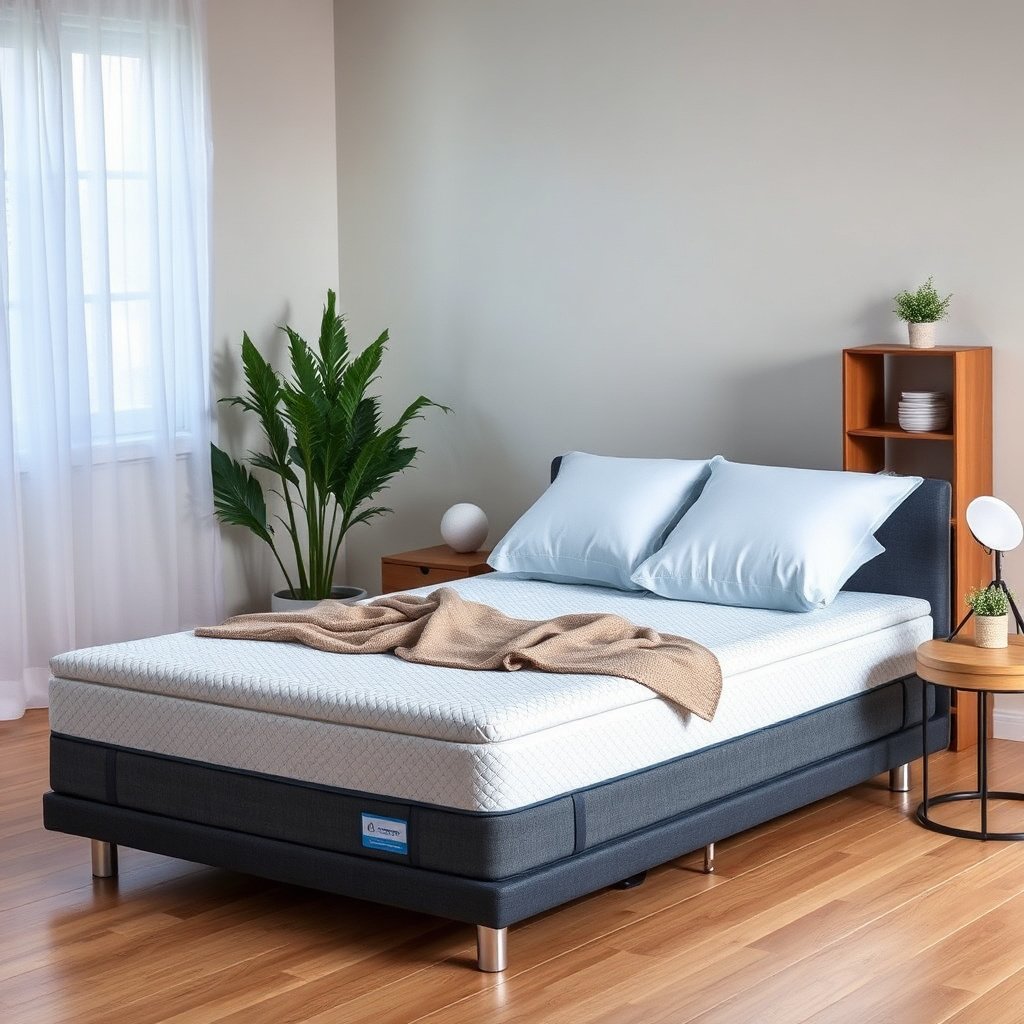
A cooling mattress won’t help joint pain if it lets your body sink and misalign your spine. Your top priority is the combination of pressure relief (cushion where joints touch) and anti-sink support (enough structure to keep hips and shoulders from dropping).
– Look for a mattress that cushions sore spots without allowing your hips/shoulders to sink excessively over time. Bottoming out is a common reason joint pain flares up—especially for heavy sleepers, because they compress softer comfort layers more deeply and faster.
– For joint comfort, the goal is “aligned spine + reduced pressure,” which usually means a supportive surface with targeted cushioning, not a hammock-like feel. Think of it as: joints get a softer landing, but your pelvis stays “held” so your back doesn’t tilt.
– If you’re a side sleeper, choose pressure relief where your joints contact the bed (usually hips and shoulders). If you’re more back- or stomach-sleeping, you’ll typically need stronger overall support to keep hips from dropping, even if the mattress feels less plush at first.
The “pressure relief without sink” test (simple, home-friendly)
In practice, you want a mattress to feel comfortable when you settle—and remain supportive when you shift. Here’s a practical approach:
1. Sit test: Sit on the mattress where you’ll sleep. Press your weight through your hips/shoulders and observe whether you feel “stopped” or whether you keep sinking.
2. Settle test: Lie in your normal sleeping position for several minutes. You should feel pressure reduction, not progressive sinking.
3. Shift test: Move slightly (side-to-side or bend/straighten your knees) and see if the mattress “springs you back” or holds you down.
Choose cooling features that reduce heat and moisture buildup
Cooling mattresses for joint pain work best when the heat and moisture they create can escape. That means you should prioritize airflow paths and a breathable cover before you chase the newest “cooling” foam buzzwords.
– Instead of relying on the word “cooling,” focus on airflow and heat-dissipating materials: breathable covers, ventilated layers, and designs that avoid trapping warmth.
– If you’re considering “cooling” foam (gel/infused/phase-change), treat it as one layer in the system—not a full solution. A mattress can feel cooler at first and still sleep warm if the comfort layers above it seal in heat and your bedding absorbs moisture.
– For joint pain, moisture control matters too: if you sweat more (or the room stays humid in a tiny home), consider covers that breathe and wash easily.
Tiny-home moisture reality: humidity drives “sticky warmth”
Tiny homes can concentrate humidity near walls, windows, and corners because airflow is limited. According to the U.S. EPA, indoor relative humidity ideally stays around 30–50% to reduce moisture problems (U.S. Environmental Protection Agency, humidity guidance). Mold risk increases when humidity climbs; the U.S. CDC notes mold growth is more likely at relative humidity around 60% or higher (CDC, mold and dampness guidance). For heavier sleepers, higher humidity can also make foam feel warmer and more “pressure-holding,” which can worsen next-day joint stiffness.
Humidity Targets That Protect Mattress Cooling in Small Rooms (2026)
| # | Indoor RH Level | Moisture Risk Focus | Cooling Comfort Fit | Safety Margin vs 60% Mold Threshold |
|---|---|---|---|---|
| 1 | 35% RH | Very low dampness | ★★★★★ | +25 pts |
| 2 | 40% RH | EPA “ideal” zone | ★★★★☆ | +20 pts |
| 3 | 45% RH | Dry comfort at night | ★★★★☆ | +15 pts |
| 4 | 50% RH | Upper comfort boundary | ★★★☆☆ | +10 pts |
| 5 | 55% RH | Moisture creep | ★★☆☆☆ | +5 pts |
| 6 | 60% RH | Mold threshold risk | ★☆☆☆☆ | 0 pts |
| 7 | 65% RH | High dampness likelihood | ☆☆☆☆☆ | -5 pts |
Pick the right firmness and mattress construction for heavy weight
For heavy joint pain, the “best” cooling mattress is usually the one that stays supportive after years of compression, not the one that feels plush on night one. In practice, you’re selecting for durability and stability—while still getting enough targeted cushioning to reduce pressure at contact points.
– For heavier sleepers, durability and support stability are usually the deciding factors—choose builds known for stronger support rather than ultra-plush toppers alone.
– Mattress types each have tradeoffs:
– Innerspring / hybrid: often easier airflow and a more “supportive feel,” which can help prevent sink.
– Latex: generally more responsive and can balance comfort and support (still depends on firmness/structure).
– Memory foam (especially thicker comfort layers): can feel great for pressure relief, but may be warmer or prone to deeper sink if not built for heavier use.
– If you’re unsure, target a “medium-firm” feel rather than going overly soft—especially if joint pain worsens when you sink. Medium-firm often gives the spine a more neutral alignment while still offering cushioning at hips and shoulders.
Mattress type comparison (what tends to matter for heavy sleepers with joint pain)
Below is a practical, side-by-side comparison focused on the things that typically affect joint comfort and cooling in a tiny home.
| Feature / Consideration | Innerspring / Hybrid | Latex | Memory Foam |
|---|---|---|---|
| Airflow potential | Often higher | Moderate–high | Often lower unless ventilated |
| Anti-sink support | Usually strong | Often strong (structure-dependent) | Can vary; risk increases with thick soft layers |
| Pressure relief for shoulders/hips | Good with proper comfort layer | Good and even | Often excellent initially |
| Heat retention risk | Lower | Lower–moderate | Higher unless ventilated and breathable |
| Motion transfer | Can be noticeable | Often moderate | Often low |
| Responsiveness (“surface memory”) | Higher | Higher | Lower, slower rebound typical |
| Longevity for heavy bodies | Often good with quality springs | Often good due to cell structure | Depends heavily on foam density/thickness |
| Edge support | Often better | Moderate | Can be softer on thicker comfort layers |
| Compatibility with tight frames | Often flexible in bases | Depends on slab/spacing | More sensitive to slat spacing/rigidity |
| Joint-pain risk if it “bottoms out” | Lower when properly built | Lower–moderate (structure-dependent) | Higher if comfort layer is too soft/thick |
| Best For | People prioritizing airflow + stable support | Balanced comfort, responsiveness, and cooling | Strong pressure relief needs—if built for heavier use |
Account for tiny home realities (size, frame, airflow, setup)
A cooling mattress in a tiny home is only as effective as the frame support and the airflow around it. The same mattress can sleep warm in one layout and feel much better in another because heat and moisture escape through pathways you can unintentionally block.
– Measure your space for the usable layout: in tiny homes, small changes in placement (near a wall or window) can affect airflow, temperature, and how quickly the bed cools.
– Make sure your frame supports the mattress as intended. Even a great cooling mattress can sag early if slats are too far apart, the platform is too flexible, or the base isn’t rated for foam/hybrid layers.
– Cooling is often an airflow problem in small spaces. If you frequently sleep in a confined area, prioritize a breathable top cover and keep some clearance around the bed so heat can escape.
Why “tiny fit” can ruin cooling (even if the mattress is good)
In 2026, many tiny home setups place the mattress close to walls to maximize walking space. That can trap heat against the sides, especially if you use thick curtains, low ventilation, or a tightly fitted mattress encasement that reduces airflow. The goal isn’t just surface coolness—it’s keeping the mattress from becoming a heat reservoir that warms up your bedding and soft tissue pressure points.
A practical workaround is to improve airflow where possible:
– leave clearance from walls where feasible
– choose breathable bedding (cotton or moisture-wicking that still breathes)
– wash and fully dry covers regularly to prevent lingering humidity
What can go wrong (common mistakes with cooling + joint pain)
Cooling mattresses often fail heavy sleepers when buyers chase “cool” without protecting joint alignment and pressure distribution. In a tiny home, small setup errors can also overpower the cooling design.
– Thinking “cooling” replaces support: many cooling mattresses are still soft enough to let heavier bodies sink, which increases pressure on hips/shoulders and can aggravate joints. Temperature relief doesn’t fix load-bearing problems.
– Choosing a comfort layer that’s too thick: plush layers can feel good temporarily but may reduce stability, especially under heavier weight. If your hips sink first, your spine alignment changes and pain often follows.
– Bad base/poor airflow: using the mattress on a tight, non-breathable setup (or directly on a surface that traps heat) can cancel out cooling features. Tiny home frames matter as much as the mattress.
– Ignoring sleeping position: if you switch positions overnight and the mattress only supports one posture well, joint pain may rise even if the mattress feels “comfortable” at bedtime.
Cooling-only vs support-first cooling: what usually changes the outcome
| Evaluation criteria | Cooling-first marketing mattress | Support-first cooling mattress |
|---|---|---|
| Primary goal | Reduce surface temperature | Maintain alignment + reduce pressure |
| Anti-sink behavior for heavy sleepers | Often weaker | Designed to resist bottoming out |
| Pressure relief stability over time | May degrade as comfort layer compresses | More consistent due to firmer support core |
| Moisture management in tiny spaces | May rely on surface “cooling” only | Uses breathable covers/airflow paths |
| Heat trapping risk from setup | Higher if encasements/bases block airflow | More resilient because airflow pathways exist |
| Joint pain trigger likelihood | Higher when hips/shoulders sink | Lower when support holds alignment |
| Long-term feel after months | Often softer in high-load zones | Better stability in heavy sleepers |
| Best sleeping positions | May support only one posture well | Works across side/back shifts better |
| Setup sensitivity (frame + clearance) | Very high—small errors ruin performance | More forgiving when the base is correct |
| Buy decision risk | Feels good at first, then pain rises | More likely to stay supportive |
| Verdict | Riskier for heavy joint pain in tiny homes | More likely to deliver real relief long-term |
Verdict: what to buy (and who should skip this approach)
Start your search by filtering for mattresses that balance support + pressure relief, then secondarily look for breathability/airflow and a cover you can keep clean. If you’re heavy and have joint pain, avoid “cooling-only” options that are primarily built for light sleepers or that feel like they’ll let you sink.
Downsides to know:
– More supportive mattresses can feel firmer at first, which may require an adjustment period.
– Cooling features that focus on comfort layers (not airflow) may help only briefly, especially if the tiny home is warm or humid.
– If your joint pain is tied to a specific medical condition or injury, mattress changes alone may not be enough.
Who should skip (or be extra cautious):
– If you can’t keep a breathable setup (poor ventilation, constant high humidity, no way to manage airflow), “cooling” claims may underperform.
– If you know you’ll tolerate only a very soft surface, you may struggle to find the combo of joint relief and anti-sink support—consider exploring mattress toppers or guided trials instead.
Quick checklist / scan-and-save table
Use this to narrow choices fast:
| What to check | Why it matters for heavy + joint pain | Quick “yes” sign |
|---|---|---|
| Support stability (anti-sink) | Prevents hip/shoulder pressure from building | Feels supportive when you sit and shift |
| Pressure relief in key contact points | Reduces joint stress at night | Comfort where you actually lie (side/back) |
| Cooling via airflow + breathable cover | Helps manage heat/moisture in tight spaces | You can feel less “trapped warmth” over time |
| Frame compatibility | Poor bases cause early sag and worse pain | Base matches mattress requirements |
| Tiny home airflow plan | Heat can build up near walls/curtains | Bed isn’t boxed in; some clearance exists |
Frequently Asked Questions
What size and thickness cooling mattress should heavy people with joint pain choose for a tiny home?
In a tiny home, prioritize a cooling mattress size that still supports proper alignment—most heavy sleepers do best with a thicker comfort system (often 10–14 inches or more) so pressure relief doesn’t bottom out. Look for high-density support layers under the comfort foam or hybrid springs to reduce sagging that can aggravate hips and shoulders. If your space allows, consider a mattress that won’t feel overly “firm” but remains stable when you move, helping joint pain throughout the night.
How do heavy sleepers with joint pain use cooling features to stay comfortable without sacrificing support?
Choose a mattress that combines cooling materials (like breathable covers, phase-change fabrics, or gel-infused foam) with strong temperature regulation across the entire surface. For joint pain, the key is targeted pressure relief—look for zoning, medium-soft comfort layers, and supportive transition layers that cushion without allowing excessive sink. This balance helps prevent restless sleep caused by both overheating and pressure buildup around shoulders, knees, and hips.
Why does a cooling mattress need stronger support for heavy people, especially in a small space?
Heavier bodies create more load per square inch, which can compress weaker comfort layers faster and reduce support—leading to misalignment and increased joint pain. In a tiny home, where you may also have less room to change positions or get up often, mattress performance matters even more because you stay in one spot longer. A supportive cooling mattress helps maintain spinal alignment and reduces pressure points while still controlling heat.
Which firmness level is best for a heavy sleeper with joint pain on a cooling mattress?
Many heavy sleepers with joint pain find a “medium” or “medium-firm” cooling mattress provides the sweet spot between pressure relief and stable support. If your hips and shoulders feel especially sore, aim for a comfort layer that cushions those areas while keeping the support core firm enough to prevent deep sink. Testing by lying on your side and back (or reviewing return policies) can help you confirm that the mattress relieves pressure without throwing your spine out of alignment.
Best cooling mattress materials for heavy people with joint pain in a tiny home—what should you look for?
Look for breathable, cooling covers and advanced foam options such as gel memory foam, graphite-infused foam, or phase-change cooling fabrics that reduce heat retention. For durability under higher weight, prioritize high-density foam or a hybrid design with individually wrapped coils plus supportive base layers. These materials help keep you cooler while improving pressure relief for sore joints, which is especially important when space and mobility in a tiny home are limited.
📅 Last Updated: November 25, 2026 | Topic: How to Choose a Cooling Mattress for Heavy People with Joint Pain in a Tiny Home | Content verified for accuracy and freshness.
References
- Mattress
- Memory foam
- Phase-change material
- mattress firmness back pain randomized trial – Search Results – PubMed
- mattress firmness pressure distribution study – Search Results – PubMed
- gel memory foam cooling temperature thermal comfort – Search Results – PubMed
- obesity sleep quality pain – Search Results – PubMed
- https://scholar.google.com/scholar?q=cooling+mattress+thermal+comfort+gel+phase+change Google Scholar
- https://scholar.google.com/scholar?q=mattress+firmness+pressure+relief+joint+pain+osteoarthritis Google Scholar
- https://scholar.google.com/scholar?q=obesity+sleep+surface+support+pressure+distribution+matress Google Scholar



2 Comments