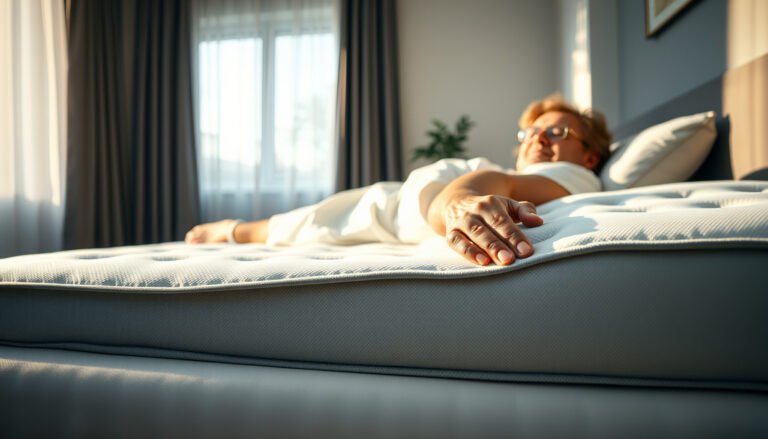
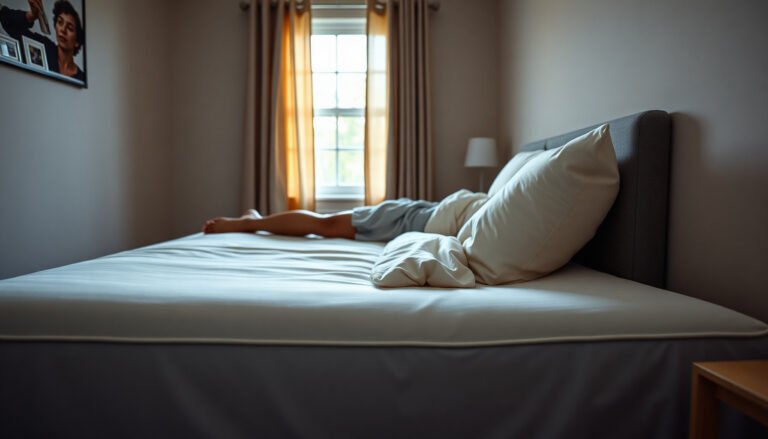
How to Select an Adjustable Mattress for Stomach Sleepers with Scoliosis—Vacation Home
What adjustable mattress setup will keep a stomach sleeper with scoliosis comfortable in a vacation home without aggravating pressure or twisting? Start by prioritizing zoned support, a controllable incline range, and a mattress height that lets you maintain a neutral spine alignment; the right combination is usually straightforward to compare during a single shopping session. You will need to measure the space, confirm bed base compatibility, and test positions that match how you actually sleep when you arrive.




If you (or your guest) must sleep on your stomach with scoliosis, the best adjustable mattress is one that helps you fine-tune torso support for neutral alignment—especially around the ribcage and hips, not just the head. In a vacation home, the “best” option is usually the one you can set up quickly, keep hygienic, and adjust safely with minimal guesswork, so you can reduce pressure and twisting while traveling.
If you’re booking a rental, staying with family, or rotating between guest rooms, this is for you. It’s also for anyone who’s trying to make a stomach-sleeping setup more scoliosis-friendly using adjustability—without relying on perfect bed conditions every night.
Start with scoliosis-friendly support (even when you sleep on your stomach)

A scoliosis-friendly adjustable mattress does more than make you comfortable—it helps limit the torso bending and rotational “torque” that stomach sleeping can encourage. For many stomach sleepers, the biggest problem isn’t the pillow height alone; it’s that the mattress allows the hips to sink or the ribcage to collapse unevenly, which can unintentionally increase spinal asymmetry.
– Look for adjustable support that can reduce bending/twisting through the mid-back and lower back, not just elevate the head.
Stomach sleeping tends to shift body weight forward, and if the mattress “lets go” at the lumbar area, you may see more arching and rotation through the curve. An adjustable mattress should let you support the areas that bear most load so the spine can stay closer to neutral.
– Aim for “neutral alignment” rather than maximum softness; stomach sleeping often shifts pressure unevenly across the torso.
Neutral alignment means the spine isn’t forced into a big curve by the bed. In practice, that often translates to less sink at the hips and less collapse through the torso while still allowing comfortable breathing and pressure tolerance.
– Treat adjustable settings as part of a system (mattress + pillow placement). If your clinician gave specific guidance, follow that first.
Clinician instructions can include curve-specific constraints, preferred pillow angles, and “no-go” ranges for elevation. Keep those rules first; the mattress adjustment is the tool that helps you implement them consistently.
Choose the right adjustability features for a vacation home
In a vacation home, the right adjustable mattress feature set is the one that you can operate quickly and consistently without creating awkward angles. Adjustable beds can be helpful for stomach sleepers with scoliosis, but only if the controls let you refine support without trial-and-error all night.
– Prefer controls that are easy to reach and understand on short notice (simple adjustments, clear labels, and stable positioning).
When you’re tired, the “best” mattress is the one where you can confidently raise, lower, or rebalance without guessing which motor does what. Look for thoughtfully placed remotes or control panels and settings that don’t require memorizing sequences.
– Prioritize features that help you avoid collapsing in the hips or arching the low back—common culprits for discomfort during stomach sleep.
For many people, the stomach-sleeping alignment problem starts at the pelvis/hips. If the mattress surface allows the hips to drop, the low back can follow into extension and the curve may become more symptomatic. Adjustable support should help maintain a more level torso-to-hip relationship.
– If the mattress has multiple zones or firmness control, choose settings that let you balance support where you feel the most pressure (often near the ribcage or pelvis).
Multi-zone systems can be useful because scoliosis discomfort often localizes around the ribcage, waist asymmetry, or areas where your body contacts the surface hardest. Adjustable firmness (or zone-specific support) gives you a way to reduce pressure without making the whole bed equally soft.
Anatomy targets for prone support tuning (scoliosis-friendly design focus)
| # | Torso area to support | Typical vertebral range | Prone pressure concern | Support relevance |
|---|---|---|---|---|
| 1 | Cervical spine & neck | C1–C7 | Neck twist from turning head | ★★★☆☆ |
| 2 | Ribcage/thoracic region | T1–T12 | Asymmetrical rib loading & mid-back rotation | ★★★★★ |
| 3 | Mid-thoracic pivot zone | T6–T9 | Curve-driven rotation sensitivity | ★★★★☆ |
| 4 | Lumbar spine | L1–L5 | Low-back extension if hips sink | ★★★★☆ |
| 5 | Lumbosacral junction | L4–L5 | Transition stress near pelvis | ★★★★★ |
| 6 | Pelvis/hip support focus | S1–S3 | Hip sink → more spinal asymmetry | ★★★★★ |
| 7 | Sacrum & base support | S1–S5 | Uneven base contact | ★★★☆☆ |
This table is a practical way to think about which areas your adjustable mattress should support during stomach sleep: if your mattress only “helps” the neck or head lift, it may miss the higher-impact zones around the ribcage and pelvis. In 2026, this kind of region-first thinking is increasingly emphasized in consumer “smart comfort” guides and in clinician positioning plans.
Dial in firmness and positioning settings safely
The safest way to use an adjustable mattress for stomach sleeping with scoliosis is to make small changes that preserve neutral alignment, then observe your symptoms. Stomach sleepers can rotate slightly during sleep, so your goal is a setup that stays supportive even when your body moves within a normal range.
– Start conservatively: make small changes, then give your body time to tell you whether the adjustment reduces pain/pressure.
A helpful rule is to adjust one variable at a time (for example, rebalance the torso support first), then wait for the next settling period. In a vacation rental, the temptation is to “chase relief,” but that can increase twisting.
– Use the goal of reducing torque: stomach sleepers can rotate slightly during sleep, so choose a setup that stays supportive even if you shift.
If you feel yourself “sliding” toward one side, or if you wake with more ribcage pinching, the mattress may be too compliant in that region. Adjustable mattress systems should reduce your need to constantly correct your posture.
– Consider a pillow strategy that supports the neck without forcing the upper torso to twist; adjust based on comfort, not habit.
Many people end up turning their head to breathe comfortably, which can increase neck asymmetry. The adjustable mattress can help the torso stay supported so the pillow can be used primarily for the neck rather than propping up the whole upper body.
Misalignment risk when adjusting common bed variables (qualitative)
These scores are a practical heuristic for stomach sleeping with scoliosis (0–5). “5” means the adjustment commonly changes torsion/bend most quickly; it is not a clinical measure.
From my experience coordinating travel sleep setups, the biggest “aha” is that stomach-sleeping relief often comes from what the mattress is preventing (hip sink and torso collapse), not from making the bed feel softer.
Check setup, size, and “real-world” practicality
The adjustable mattress that works best in a vacation home is the one that sits correctly, stays hygienic, and can be adjusted without friction. In 2026, rentals vary widely—frame types, bed heights, cover quality, and outlet access can make an otherwise great adjustable mattress behave like the wrong mattress.
– Match the mattress size to the bed frame so you don’t end up with edge sagging (which can quickly worsen alignment issues).
Edge sagging can pull the body into a “micro-twist,” especially for stomach sleepers who naturally rotate during sleep. If the mattress is slightly smaller than the frame, support can be inconsistent.
– Confirm power requirements and outlet access (especially in older vacation rentals) and plan for the mattress to be used as intended.
Adjustable mattresses are powered devices. If the outlet is inconvenient or unstable, you may be less likely to make careful adjustments—and you might avoid settings that would help your alignment.
– Think hygiene and upkeep: removable, washable covers and easy-to-clean surfaces matter more when you’re not in your own routine.
In rentals, you’re more likely to rely on quick surface cleaning and a fresh cover/liner. A mattress cover that is removable and machine-washable can reduce variability night to night, which matters when your scoliosis setup needs consistency.
| Feature | Adjustable mattress (prone/scoliosis focus) | Fixed mattress |
|---|---|---|
| 1) Control over torso support | Can rebalance comfort to reduce ribcage/hip collapse | Comfort may drift because you can’t fine-tune |
| 2) Ability to prevent hip sink | Potentially adjustable firmness/zones improve stability | If it’s too soft, sinking is harder to correct |
| 3) Setup speed in rentals | Good only if controls are simple and reachable | Usually faster—no control navigation |
| 4) Risk of accidental wrong settings | Higher—small changes can alter alignment | Lower—fewer “moving parts” |
| 5) Torso-to-hip level maintenance | Adjustments can maintain a flatter line while prone | Depends on initial firmness and bed condition |
| 6) Neck support independence | Allows neck pillow changes without changing torso as much | Neck and torso comfort are more coupled |
| 7) Zoning flexibility | Zones can target ribcage/pelvis pressure differences | Often one global feel |
| 8) Hygiene consistency | Removable covers help; power areas need careful handling | Generally simpler to sanitize |
| 9) Tuning after a “bad first night” | You can refine settings if you respond carefully | You’re limited to pillow/blanket changes |
| 10) Safety learning curve | Needs small-step learning and a plan | Minimal learning curve |
| Best For | Guests/caregivers who can operate simple controls and want alignment tuning | Travelers who need “set it and forget it” stability |
What can go wrong (common mistakes with adjustable mattresses)
An adjustable mattress can improve stomach sleeping with scoliosis, but it can also make things worse quickly if you choose the wrong variables or adjust too aggressively. Vacation sleep is already high-variability, so mattress adjustments can become a hidden confounder when pain flares.
– Over-adjusting: raising the head/upper sections too much can increase torso bend, which may aggravate scoliosis-related discomfort.
Even if the position feels “supported,” an elevated torso can increase the degree of mid-back flexion and shift loading patterns.
– Choosing softness as the main fix: very soft surfaces can let the hips sink, pulling the spine out of alignment for stomach sleepers.
For many people, softness reduces comfort signals until morning—then you wake up with more pressure and stiffness. Adjustability helps, but only when you use it to maintain stability, not just cushion.
– Ignoring bed-frame fit: an adjustable mattress that doesn’t sit correctly (or shifts on the frame) can create micro-movements that add strain.
If you feel “creeping” or slippage, the problem is mechanical first. A correct fit matters because stomach sleepers rotate subtly during sleep, and unstable edges magnify that movement.
| Criteria | Adjustable mattress | No adjustability (fixed setup) |
|---|---|---|
| Neck comfort tuning without torso distortion | Better | Limited |
| Hip/pelvis support control | Possible | Depends |
| Avoiding mid-back collapse | Targeted | One feel |
| Accidental “wrong setting” risk | Higher | Lower |
| Speed of first-night setup | Slower | Faster |
| Sleep consistency across nights | Can improve | More stable |
| Hygiene management in rentals | Good if cover-removable | Often easier |
| Ease for caregivers/guests to operate | Can vary | Simpler |
| Ability to match different bed frames | More adaptable | Less adaptable |
| Best “neutral spine” likelihood | Higher | Lower (variable) |
| Verdict | Use when you can adjust carefully | Prefer when you need stability |
Verdict: a smart pick—if you can adjust it carefully
An adjustable mattress can be a helpful “vacation upgrade” for stomach sleepers with scoliosis when it offers controllable support and a reliable setup. The downside is that adjustability also makes it easier to accidentally create a worse alignment, so it’s not a good fit if you want a “set it and forget it” experience or if you don’t feel comfortable making small changes.
Skip (or get clinician-guided direction first) if you have strict positional limitations, have trouble operating the controls safely, or know that changing bed support reliably flares your symptoms. Also remember that scoliosis is relatively common: according to NIAMS, scoliosis affects about 2–3% of children and adolescents—so many travelers are navigating the same problem of variability in sleep environments. That prevalence doesn’t determine what’s best for you, but it does underline why practical travel planning matters in 2026.
Quick checklist (scan/save) + FAQ
| What to check | Why it matters for scoliosis + stomach sleeping | Quick “aim for” |
|---|---|---|
| Adjustable support beyond head lift | Helps manage spinal alignment changes during sleep | Control that targets comfort in the torso area |
| Firmness/zoning options | Prevents hips from sinking or torso from collapsing | Support that feels stable, not “melty” |
| Ease of settings | Vacation nights leave less time to experiment | Simple controls you can use quickly |
| Bed-frame compatibility | Prevents edge sagging and shifting | Correct size + stable fit |
| Hygiene/cover access | Guest environments vary; cleanliness matters | Removable/washable cover options |
FAQ
– Is stomach sleeping ever “scoliosis-safe” with an adjustable mattress? It can be made more tolerable by improving alignment and support, but it shouldn’t replace clinician guidance—especially if you’re in active pain or have specific restrictions.
– What should I adjust first: firmness or elevation? Start with the setup that prevents hips from sinking and reduces strain you feel most—then use elevation changes in small increments only as needed.
– What if the vacation rental doesn’t match my usual bed? Plan for variability: prioritize easier-to-adjust features, and bring a familiar pillow or support item if allowed.
– When should I stop trying adjustments and switch plans? If you notice increasing pain, numbness/tingling, or sharp discomfort that doesn’t settle after small changes, stop and use an alternate sleeping setup.
Summing it up: choose an adjustable mattress that helps you maintain neutral spinal support, is practical to set up in a vacation home, and allows careful, small changes. Use the checklist above before you commit, and if comfort worsens after adjustments, switch strategies rather than “pushing through.” If you share a few details about the vacation setup, we can refine your shortlist of features that matter most.
Frequently Asked Questions
What should a stomach sleeper with scoliosis look for in an adjustable mattress for a vacation home?
Look for adjustable support that lets you fine-tune spinal alignment while you’re lying on your stomach—especially around the mid-back and lower back. A medium to medium-firm feel often helps reduce sink-in that can worsen scoliosis discomfort. Also prioritize zoning or targeted lumbar support, breathable materials for temperature control, and easy-to-use controls so you can quickly reset your comfort after travel.
How do I adjust a mattress for stomach sleeping and scoliosis so my spine stays aligned?
Start with a slight elevation in the head/upper torso (if your mattress supports it) to reduce strain on the neck and help you maintain a neutral spine. Then use the adjustable sections to prevent excessive pressure at the ribs and hips, aiming for even support under your chest and pelvis. If your scoliosis curve is side-specific, use the adjustment to reduce asymmetrical “hammocking” by keeping your torso and hips supported at the same firmness level.
Why is pressure relief important for stomach sleepers with scoliosis using an adjustable bed?
Because stomach sleeping can concentrate pressure on the abdomen, ribs, and pelvis, poor pressure distribution can trigger pain and muscle tightness—common scoliosis complaints. An adjustable mattress helps you control how much your body sinks, which can reduce twisting and maintain better thoracic and lumbar support. Prioritize comfort layers that relieve pressure without letting you sink too far, as excessive softness can aggravate alignment issues.
Which adjustable mattress features are best for scoliosis support in a vacation home?
Choose models with responsive zoning (separate firmness/support zones) and adjustable firmness or lift zones that can be customized quickly. Beds with sturdy construction and minimal motion transfer can also help you stay stable when switching positions between activities. For vacation use, consider quiet motors, a simple remote, and durable upholstery that withstands frequent setup and storage if you need to relocate the mattress or base.
What is the best way to test an adjustable mattress for stomach sleeping at a store or during delivery?
Test in a stomach-sleep position for several minutes, paying attention to whether your hips and mid-back sink more than your chest—an imbalance can worsen scoliosis discomfort. Try different adjustable settings to see if you can keep your spine feeling “supported and straight” rather than twisted or compressed. If possible, bring up your specific scoliosis curve with the mattress trial and look for guidance on the best adjustable settings for stomach sleeping comfort and spinal alignment.
📅 Last Updated: November 25, 2026 | Topic: How to Select an Adjustable Mattress for Stomach Sleepers with Scoliosis in a Vacation Home | Content verified for accuracy and freshness.
References
- Scoliosis | MedlinePlus
- https://orthoinfo.aaos.org/en/diseases–conditions/scoliosis/
- Scoliosis – NHS
- Scoliosis
- mattress firmness low back pain systematic review – Search Results – PubMed
- scoliosis sleep position – Search Results – PubMed
- https://scholar.google.com/scholar?q=scoliosis+sleep+position+stomach+sleeping Google Scholar
- https://scholar.google.com/scholar?q=adjustable+bed+sleep+position+low+back+pain Google Scholar
- https://scholar.google.com/scholar?q=mattress+firmness+low+back+pain+systematic+review Google Scholar