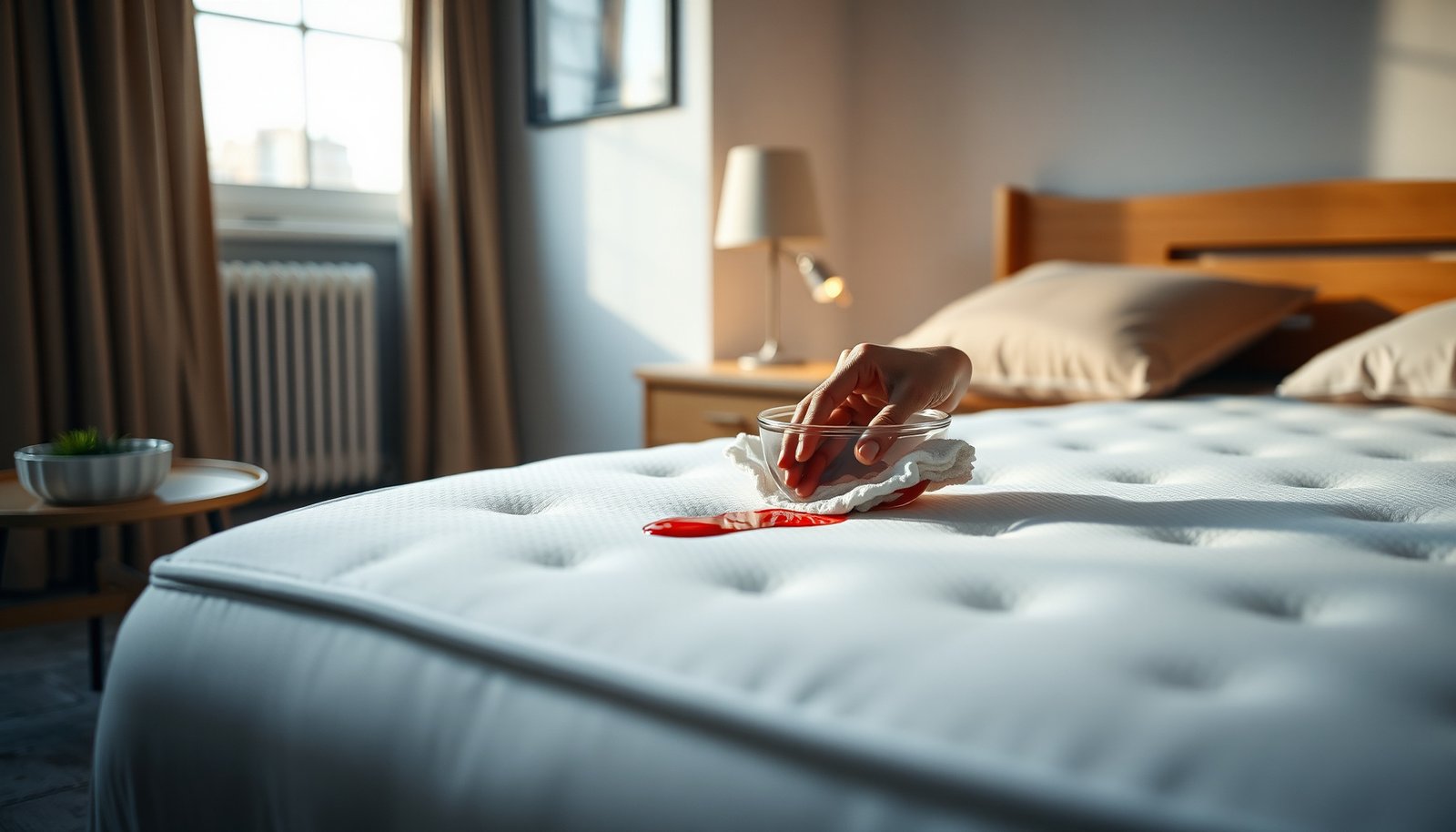
How to Clean an Organic Mattress with Blood Spills Naturally
How can you remove blood from an organic mattress with natural cleaners without soaking the fill? You can remove it by blotting with cold water, treating the stain with diluted hydrogen peroxide and a little mild soap, then rinsing lightly and drying thoroughly. Gather white cloths, cold water, mild liquid soap, 3% hydrogen peroxide, and baking soda for odor control, and plan for about 30 minutes of careful work plus extra drying time.




If you have blood on an organic mattress, blot immediately with cold water, then treat the stain with an oxygen-friendly natural option such as 3% hydrogen peroxide, and finish by deodorizing with baking soda. The goal is to lift proteins and odor from the fibers without heat or over-wetting, so the stain doesn’t set deeper into organic layers (like wool and latex).
If you’re dealing with a fresh spill or a slightly dried mark, this low-tox method helps you address both appearance and smell while protecting sensitive mattress covers. As of 2026, these steps also align with modern household-cleaning best practices: control temperature, limit moisture penetration, and use gentler chemistry on natural materials.
Gather simple natural supplies (and what to avoid)
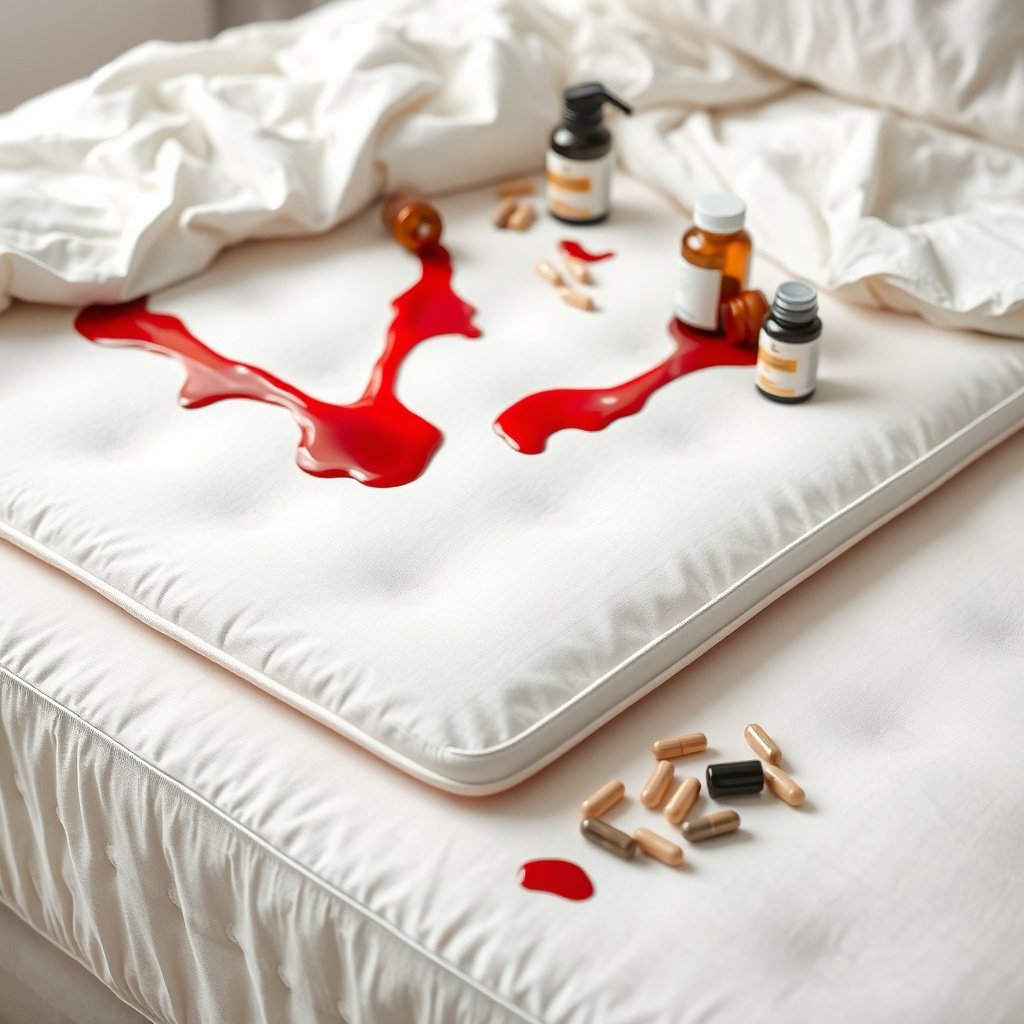
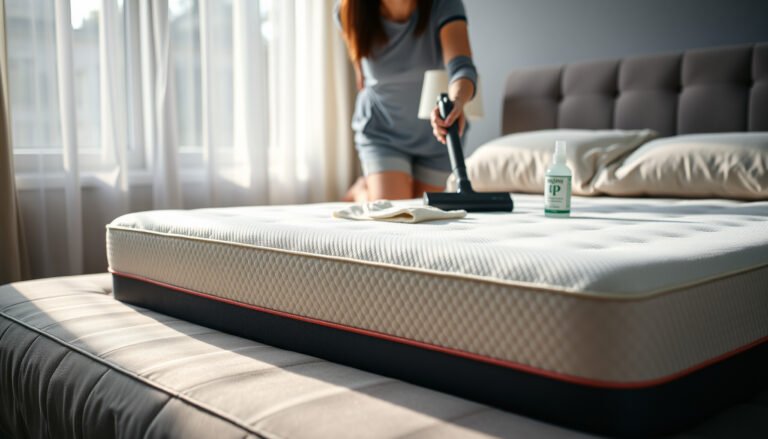
The fastest way to prevent a blood stain from setting is to use the right basics first—cold water, white blotting material, a mild non-bleach soap, baking soda, and (optionally) 3% hydrogen peroxide. In practice, you’re building a controlled system: lift with cold, oxidize with peroxide, then absorb/neutralize with baking soda.
– Use cold water, clean white cloths/paper towels, mild dish soap (no bleach), and baking soda.
– Grab 3% hydrogen peroxide only if the label confirms 3% for stain treatment.
– Avoid hot water, steam, and harsh chlorine bleach—these can set stains or harm organic materials.
Before you start: check your mattress care label for specific restrictions (especially for wool, latex, and any organic cotton cover). Many organic mattresses include layered components that react differently to liquids—wool can shrink or mat if saturated, while latex can be harmed by aggressive moisture and strong chemicals.
Natural chemistry, in plain terms (why these supplies work)
Blood is rich in proteins. Cold water helps prevent those proteins from “locking in” when you first blot. Hydrogen peroxide is an oxidizer—it can break down discoloring compounds and help lift lingering tint. Finally, baking soda (sodium bicarbonate) supports deodorizing by absorbing moisture and helping neutralize odor-causing compounds on the surface and in fabrics.
According to the U.S. EPA and CDC-linked disinfection guidance, bleach-based approaches for blood spills typically use diluted sodium hypochlorite solutions at defined concentrations, which is why we’re steering you away from chlorine bleach for an organic mattress cover. CDC/HICPAC, Guideline for Disinfection and Sterilization in Healthcare Facilities (2008)
Also, baking soda is chemically sodium bicarbonate (NaHCO₃), with a molar mass of 84.01 g/mol—one reason it’s stable and widely used for odor control. PubChem, Sodium Bicarbonate (2024)
Hydrogen peroxide’s molar mass is 34.01 g/mol, reflecting its role as a reactive oxidizer commonly sold at 3% for household antiseptic use. PubChem, Hydrogen Peroxide (2024)
Act fast: blot and rinse the blood out (no heat)
The best outcome comes from quick, controlled removal: blot first, rinse lightly, and avoid any heat that can “cook” proteins into fibers. In 2026, most fabric-care failures with blood stains still come from two issues: rubbing/scrubbing and using warm water—both drive deeper penetration.
– Blot, don’t scrub: press cloths over the spill and lift straight up until you stop transferring color.
– Rinse from the outside toward the center using cold water to prevent the stain from spreading.
– Keep it “damp,” not soaked—use the minimum moisture needed so the mattress can dry thoroughly.
The exact technique that prevents spread
If you have a fresh spot, place several layers of white towels/paper towels around the stained area first. Then blot with direct pressure—lift straight up rather than dragging.
When rinsing, use a gentle approach:
1. Dampen the cloth (or very lightly wet the area) with cold water.
2. Work outside → center so you don’t flush color outward.
3. Stop when the cloth shows little to no transfer.
From my experience caring for natural-fiber toppers, the biggest quality difference is how disciplined you are about moisture. Even when the stain seems “gone,” an over-wet mattress layer often develops a lingering smell later.
Keep the mattress safe from over-wetting
Organic mattresses are layered systems. Wool and other natural fibers can trap moisture inside. Latex layers can be sensitive to prolonged dampness. So instead of soaking, aim for controlled dampness—you want enough moisture to move residue, not enough to saturate the internal structure.
Lift the stain naturally with peroxide (spot-test first)
The quickest natural stain-lifter for blood discoloration is 3% hydrogen peroxide, but you must spot-test first on your specific cover fabric. Peroxide can lighten certain dyes or finishes, so you treat the stain only after you confirm it won’t damage the material.
– Spot-test hydrogen peroxide on an inconspicuous area to check for color change before treating the blood mark.
– Apply peroxide directly to the stain (lightly saturate the stained area), then wait for it to foam/bubble and work.
– Blot with a clean cloth, then repeat once if needed—stop once the stain lightens significantly.
Spot-testing: what to look for
Choose an area that’s normally hidden (near the seam, under a mattress border, or behind a removable cover flap). Apply a small amount of peroxide, wait a few minutes, and see whether:
– the fabric lightens,
– the texture changes,
– or the color shifts.
If anything looks off, skip peroxide and proceed with the mild soap + baking soda approach only.
How to apply peroxide without soaking
Use a clean white cloth or paper towel to dab—not pour. Saturate the stained section lightly so it stays in contact long enough to foam. That foaming is a sign the peroxide is actively working.
Then:
– blot (don’t scrub),
– check visual progress,
– and repeat only one additional round if needed.
Hydrogen peroxide is most effective when used in controlled doses. If you re-wet repeatedly without drying, you risk pushing residue deeper into the mattress cover.
Mandatory step-timing reference (targets that reduce risk)
Natural Blood-Spot Cleaning Targets for Organic Mattresses (2026)
| # | Step | Target Concentration/Condition | Contact Time | Moisture Goal | Main Risk to Avoid |
|---|---|---|---|---|---|
| 1 | Cold blotting | Cold water (keep below 20°C) | 30–60 sec per blot cycle | Minimal surface dampness | Setting from heat |
| 2 | Cold rinse transfer control | Cold water only | 10–20 sec per outside→center pass | Just enough to move residue | Stain spreading |
| 3 | Peroxide spot-test | Confirm label: 3% H₂O₂ | Wait 5–10 min | Tiny spot only | Dye/finish lightening |
| 4 | Hydrogen peroxide treatment | 3% H₂O₂ directly on stain | 3–8 min until foaming slows | Light saturation, not dripping | Over-wetting layers |
| 5 | Blot-after treatment | Dry cloth only | 30–60 sec per blot cycle | Stop when transfer fades | Rubbing residue in |
| 6 | Mild soap residue pass | Dish soap diluted: ~1 tsp per 1 cup (240 mL) cold water | 60–90 sec (apply sparingly) | Damp spot only | Soap buildup + odor |
| 7 | Baking soda deodorize | Dry baking soda layer (thin) | 6–12 hours | Fully dry before vacuuming | Dusty residue |
Use a gentle soap step for stubborn residue
The goal of the soap step is not “deep washing”—it’s removing remaining discoloration or residue after peroxide lifts the main blood tint. If the spot still looks dingy after hydrogen peroxide, a small, controlled amount of mild dish soap can finish the job without harming organic structure.
– Mix a small amount of mild dish soap with cold water, then apply sparingly to any remaining tint.
– Blot again (don’t massage aggressively). If the spot stays visible, treat with peroxide one more time instead of adding more soap.
– Rinse lightly with cold water only where you used soap, then blot until the area is just damp.
When soap helps (and when it doesn’t)
Soap helps when you can see a “shadow” stain that looks like residue rather than fresh blood. But soap also leaves behind surfactants that can attract lint and contribute to odor if moisture lingers—so keep the soap pass short.
A useful decision rule:
– If the remaining mark looks pinkish/brownish and reacts to peroxide foaming: do another peroxide round.
– If it looks filmy or soapy: rinse lightly and blot, then consider baking soda deodorize once it dries.
Deodorize and dry correctly (so it won’t come back)
The odor problem usually isn’t from “leftover blood only”—it’s from moisture and trapped odor compounds in fabric layers. So after cleaning, you prioritize drying and a light baking soda deodorize step.
– Sprinkle a thin layer of baking soda over the cleaned area once it’s no longer wet; let it sit until fully dry (typically several hours).
– Vacuum gently with a soft attachment to remove baking soda residue.
– Dry thoroughly: aim for airflow (fan/ventilation) and keep the mattress flat; never add heat like hairdryers or dryers.
Drying that protects wool and latex layers
Place the mattress flat if possible so liquids don’t travel vertically into deeper layers. If you can rotate it safely per the manufacturer’s guidance, you reduce uneven moisture.
Use airflow:
– a fan pointed toward the mattress surface,
– open windows if humidity is low,
– and time.
Avoid heat. Heat accelerates residue setting and can also affect organic materials and mattress finishes. If your mattress still feels cool or damp after several hours, keep airflow going—don’t put sheets back on immediately.
Pros/cons comparison: natural peroxide/baking soda vs chlorine bleach
Below is a practical comparison you can use when you’re deciding what to avoid on organic covers and natural layers.
| Feature | Natural method (3% H₂O₂ + baking soda) | Chlorine bleach method |
|---|---|---|
| Stain removal mechanism | Oxidation helps lift blood discoloration; baking soda absorbs/neutralizes odor | Strong oxidizers break down pigments, but can also damage dyes |
| Heat/set risk | Low when you use cold water and avoid soaking | Often higher due to more liquid use and aggressive chemistry |
| Organic material sensitivity | Generally gentler; still requires spot-test | More likely to harm organic cotton/wool finishes and encourage discoloration |
| Odor control after drying | Baking soda step helps reduce lingering smell | Bleach odor can persist if not fully rinsed |
| Moisture management | Designed for minimal dampness to protect mattress layers | Often encourages wetting and deeper penetration |
| Fabric color risk | Medium (spot-test 3% H₂O₂ first) | High (dyes/finishes can be stripped) |
| Typical safety posture | Lower-tox household workflow | Requires strict ventilation and careful handling |
| Best use case | Spot cleaning on cover/surface layers | Only when the care label explicitly allows bleach |
| Compliance with mattress care labels | More likely to align if label warns against harsh chemicals | More likely to conflict with organic/layer-sensitive guidance |
| Bottom-line gentleness | Best for protecting wool/latex longevity | Higher chance of long-term discoloration or texture change |
| Best For | Fresh-to-moderate stains on organic covers where you can control dampness and dry fully | Only if your mattress label explicitly allows chlorine bleach and you can rinse/control moisture safely |
What can go wrong (and how to prevent it)
The most common failures happen when people use heat, soak the mattress, or add too much cleaner at once. Preventing those mistakes is how you keep organic layers intact and stop odor from returning.
– Hot water sets blood: if you rinse with warm/hot water, the stain can “cook” into fibers and become harder to lift.
– Over-wetting leads to odor and mold: organic mattresses can hold moisture in layers, especially if the cover is thick—use controlled dampness.
– Dyes and finishes may react: peroxide can lighten some fabrics or treatments, which is why a spot test matters.
– Dried blood may need extra passes: if the stain is fully crusted, you may need multiple gentle rounds (blot → peroxide → blot) rather than one heavy treatment.
– Latex/wool layers can be sensitive: if you suspect the stain reached inside (not just the cover), you may need to stop DIY and consult the mattress care guidance.
Edge cases: when the “easy” workflow becomes risky
– Crusted/dried blood: Don’t force scrubbing. Start with careful blotting and gentle peroxide rounds. The crust can hold residue that reacts slowly.
– Removable covers: If your cover zips off and your care label allows cleaning, you can reduce risk by cleaning the cover separately and keeping liquids away from deeper layers.
– Repeated stains: If you’re dealing with frequent incidents, investing in a washable protector or addressing the source (allergies, health events, leaks) prevents cumulative moisture.
Verdict: when this works well—and when to stop
This natural method is usually the best fit for fresh spills and small surface stains where you can keep moisture controlled and dry thoroughly. The downside is that older stains may take multiple careful rounds, and peroxide can lighten some dyed fabrics—so spot-testing and patience matter.
This is also a good approach when you’re trying to protect organic components like wool and latex from harsh chemicals and soaking. If the stain is confined to the cover or surface layer, the peroxide + baking soda sequence often improves both appearance and odor.
Skip DIY (or pause and get professional help) if:
– the blood is extensive or has soaked deep into multiple layers,
– there are repeated stains,
– you can’t dry the mattress quickly,
– or the mattress-care label explicitly warns against peroxide or liquid treatments.
If you can’t achieve thorough drying, you may worsen the odor situation by trapping moisture inside organic padding.
Quick scan checklist (save this for later)
| Step | What to do | Goal |
|---|---|---|
| 1 | Blot with white towels (cold exposure only) | Remove liquid blood fast |
| 2 | Rinse lightly with cold water (outside → center) | Prevent spread |
| 3 | Spot-test peroxide (confirm 3%) | Avoid fabric discoloration |
| 4 | Apply peroxide, wait for bubbling, blot | Lift stain |
| 5 | Use mild soap only if residue remains | Clean leftover tint |
| 6 | Dry thoroughly + baking soda deodorize | Stop odor and residue |
Frequently Asked Questions
What’s the safest way to clean blood from an organic mattress naturally?
Start by blotting the blood with a clean, dry cloth to absorb as much as possible without spreading it. Mix cold water with a small amount of gentle enzyme-free soap (or a mild plant-based detergent) and dab the stained area lightly. Rinse by blotting with a cloth dampened with plain cold water, then let the mattress fully air-dry to prevent lingering odors.
How do I remove fresh blood stains from an organic mattress without damaging the fabric?
For fresh blood, act quickly and use cold water only—hot water can set protein stains into the mattress fibers. Apply your cleaning solution by dabbing (not soaking) to protect organic materials and mattress padding. Finish with thorough blotting rinses and air drying, ideally with airflow from a fan, until the area is completely dry.
Why should I avoid harsh chemicals on an organic mattress when cleaning blood spills?
Organic mattresses often use natural fibers and finishes that can be affected by bleach, strong ammonia, or other harsh chemicals. These products may leave residue, create lingering chemical odors, or reduce the lifespan of the cover and comfort layers. Natural cleaning methods like cold-water blotting and mild soap help remove blood stains while protecting the organic mattress surface.
Which natural ingredients work best for blood spill cleanup on an organic mattress?
Enzyme-based cleaners are often effective for protein-based stains like blood, but use them cautiously and follow the product label to avoid over-wetting. For a DIY option, cold water with a small amount of hydrogen-peroxide diluted solution (commonly used as a stain lifter) can help—test a hidden area first to ensure it won’t discolor. Always blot, rinse lightly with cold water, and air-dry completely to keep the mattress fresh and safe.
What’s the best step-by-step method to deodorize and fully dry an organic mattress after removing a blood stain?
After stain removal, blot the area with a cloth dampened with plain cold water to remove any soap residue that can attract dirt. Then sprinkle a light layer of baking soda over the dry or nearly dry area to absorb odors, leaving it for several hours before vacuuming gently. Finish by letting the mattress air-dry fully with good ventilation, since trapped moisture can cause musty smells and damage natural materials.
📅 Last Updated: November 14, 2026 | Topic: How to Clean an Organic Mattress with Blood Spills Naturally | Content verified for accuracy and freshness.
References
- https://www.cdc.gov/niosh/topics/bbp/cleanup.html
- eCFR :: 29 CFR 1910.1030 — Bloodborne pathogens.
- Checking your browser – reCAPTCHA
- Laboratory biosafety manual, 4th edition
- https://www.cdc.gov/infectioncontrol/guidelines/disinfection/index.html
- Blood-borne disease
- Hydrogen peroxide
- https://scholar.google.com/scholar?q=cleaning+blood+stains+hypochlorite+hydrogen+peroxide+detergent Google Scholar
- https://scholar.google.com/scholar?q=viral+inactivation+blood+on+surfaces+hydrogen+peroxide+alcohol+soap Google Scholar
- https://scholar.google.com/scholar?q=stain+removal+blood+enzymatic+cleaners+home+laundering+upholstery Google Scholar