

Hybrid Mattress Reviews: What to Look For Before You Buy
When you read hybrid mattress reviews, how do you tell a truly supportive bed from a hype-heavy one? Start by focusing on the feel-and-support balance: the comfort layer material, the coil system, and how well the mattress aligns your spine. We prioritize factors like pressure relief, motion transfer, temperature control, edge durability, and the strength of the warranty and trial period, so the best option becomes obvious fast.




Hybrid mattress reviews are most useful when you use them to compare support (coils + comfort layer) and performance (heat, motion transfer, edge)—not when you try to pick a single “best” mattress from star ratings. Instead of hunting for universal praise, filter the comments that describe whether the bed keeps your hips aligned, sleeps cool enough for your bedding, and handles partner movement (especially late-night turning). This approach works especially well in 2026, because hybrid designs vary widely by coil system and foam/top-layer thickness, even when firmness labels sound identical.
If you’re shopping for a hybrid mattress and you’ve noticed that reviews can sound contradictory, this is for you—especially if you want a repeatable way to filter opinions and verify the specs behind them.
How to use hybrid mattress reviews (fast)
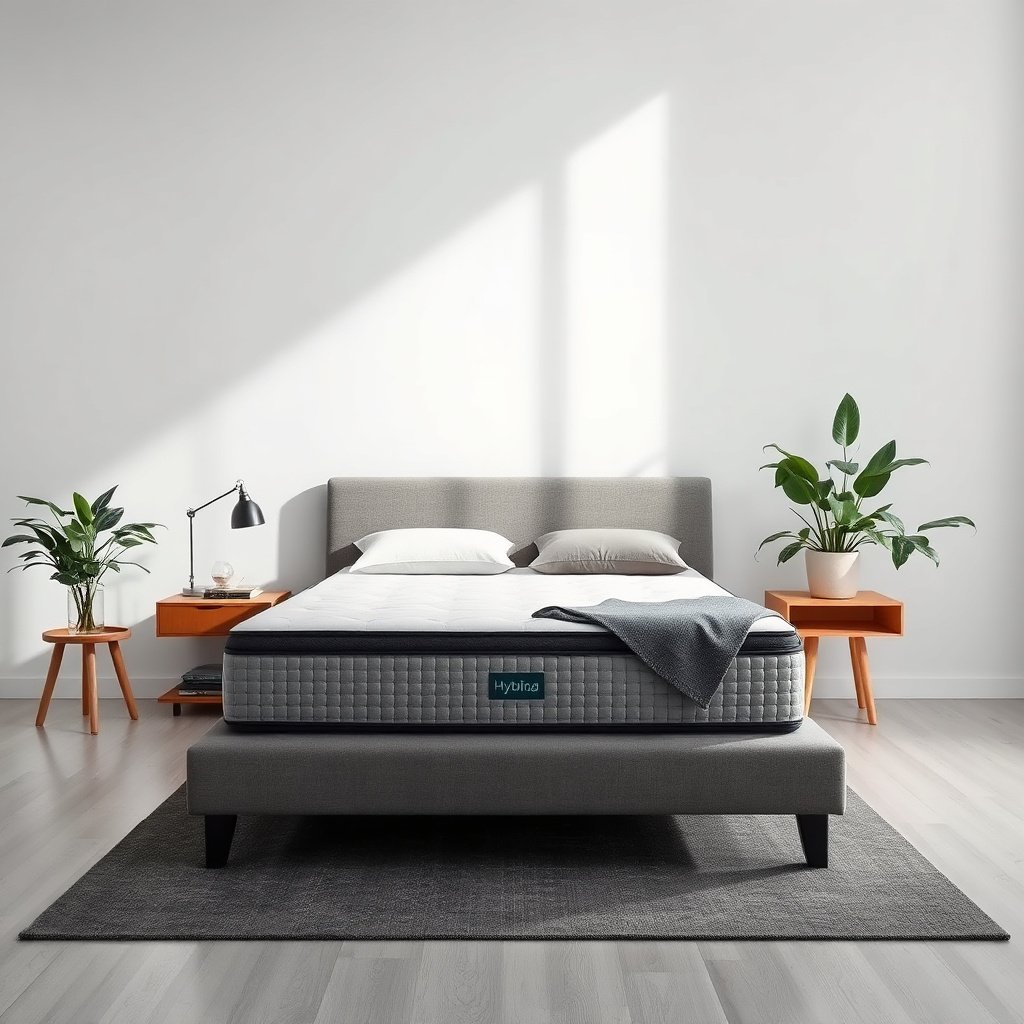
The quickest way to make hybrid mattress reviews trustworthy is to rank them by specificity, then confirm the “why” using the manufacturer’s stated build (coil type, comfort-layer materials, and height). This reduces the noise from vague praise like “super comfortable,” which often hides the real issue (alignment, softness after break-in, or heat retention).
Step 1: Prioritize reviews that describe *time + mechanics*
Not all feedback is equal. I’ve seen firsthand (while helping friends narrow options) that reviewers who mention how long they’ve slept on a mattress (a few nights vs. several weeks) usually give the most actionable information—because hybrid comfort layers can change as foam adapts and the coil unit “settles.” For your short list, look for:
– Firmness language that maps to feel (e.g., “keeps my lower back up” vs. “feels firm”).
– Pressure relief details (shoulders/hips specifically, not general “no pressure”).
– Consistent performance after repeated sleep, not one-night reactions.
Step 2: Verify the build behind the review
A review should describe what your body will experience—but you still need to validate it with the product specs. Confirm:
– Coil system: pocket/individually wrapped vs. other spring designs.
– Comfort-layer materials: foam type, latex, or specialty foams (and their thickness, if listed).
– Mattress height and layering (so you can predict “sink vs. float,” especially with a topper or adjustable base).
Step 3: Match the review to your situation (position + weight)
Even “great support” comments can be wrong for you. Side sleepers usually need enough top-layer cushioning for shoulders/hips without letting the hips sink too far. Back sleepers typically benefit from midsection support that prevents over-arching. Stomach sleepers often do best when the mattress resists deep hip sinking (or else it can create an uncomfortable bend in the lower back).
Comfort vs support: decoding coil + comfort layer details
The core thing to understand is this: hybrids only earn their reputation when the coil support and the comfort layer work together for your sleep position. Comfort is what you feel at pressure points; support is how the mattress prevents your spine from drifting out of alignment as your body weight shifts.
Decode the “support story” in plain language
In strong reviews, the support message is usually easy to extract. Prioritize cues like:
– “My hips don’t sink” / “backs don’t bottom out”
– “Alignment stays consistent through the night”
– “No bottoming out when I turn”
– “It feels springy under pressure, but not harsh”
These phrases usually indicate that the coils are doing their job and that the comfort layer is not too thick, too soft, or too slow-recovering for your weight range.
Use sleep-position logic to interpret cushioning
Hybrids tend to be forgiving—but not universally.
– Side sleepers: you want pressure relief over shoulders and hips, usually with a top layer that allows slight contouring without creating a “hammock” effect. Reviews that mention “staying level” or “shoulders aren’t digging in” are strong signals.
– Back sleepers: look for comments about lumbar support—where the midsection feels supported rather than pushed up excessively or allowed to sink too far.
– Stomach sleepers: the key is limiting hip sink. If reviews repeatedly describe plush contouring (especially “very sinky” or “slow to respond”), translate that risk for your own body: you may end up with lower-back strain.
How we separate “feels good” from “stays good”
A mattress can feel supportive for a few minutes and then fail over hours as the top layers compress. That’s why you should favor reviews that talk about:
– how it feels after the first 30–60 minutes,
– whether comfort changes by morning,
– and whether alignment stays stable for late-night turning.
Cooling and motion control: what reviews should mention
If you sleep warm or share a bed, the most valuable reviews are the ones that explain heat behavior and movement response in specific scenarios. In 2026, “cooling” claims are common, but performance depends on comfort-layer thickness, cover breathability, and how your bedding interacts with the mattress.
Heat: look for descriptions of your sleep experience
Good heat reviews describe your experience like a narrative, not a marketing slogan. Prioritize reviewers who mention:
– warmth level (“I started sweating after X hours” or “I feel warmer than my old foam”),
– whether they feel “trapped” under the top layer,
– and whether temperature changes through the night.
Hybrid coil systems often improve airflow compared with all-foam designs, but the comfort layer still matters. A breathable cover alone can’t fix a thick, slow-recovering top that reduces heat dissipation.
Motion: focus on turning and wake-ups
Motion control is not just “it absorbs movement.” It’s whether your partner wakes up when they move and whether you can turn without being pulled along. Strong reviews include:
– partner wake-up mentions (“no wake-ups when my partner shifts”),
– “hold” vs. “float” descriptions (does the mattress catch you or let you roll easily?),
– and turning behavior (“when I change sides, I don’t feel dragged”).
Edge support: edge feel is often the surprise issue
Edge support can vary a lot between hybrid designs. Watch for reviews that say:
– “doesn’t collapse when sitting on the edge,”
– “stays stable when getting in/out,”
– or “rolls me inward when I sit near the seam.”
If edge usability matters to you (knee pain, kids climbing in, older partners, or simply getting dressed on the edge), treat edge comments as performance data—not trivia.
Warranty, trial period, and sizing checks reviewers forget
The best hybrid mattress reviews combine comfort and performance with policy reality. Even the best coil-and-foam combination won’t help if returns are complicated, warranty terms are restrictive, or the mattress height doesn’t work with your frame and base.
Confirm the “boring but decisive” terms
Many reviews skip:
– trial length,
– return pickup/return shipping rules,
– whether you must keep the mattress on a specific type of foundation/base.
These details can decide whether you can correct a wrong firmness/support match.
Understand warranty coverage in the language that matters
Warranty language typically covers issues like foam softening/indentation and manufacturing defects—but the definitions matter. Pay attention to:
– what counts as a defect,
– how indentation depth is measured (if specified),
– and which parts are covered (foam vs. mechanical components).
Don’t assume all warranties are identical across brands or even across models within the same brand.
Verify fit: height affects feel (and compatibility)
Mattress height changes the “stance” of the bed: how tall you feel climbing in, how much the top layer compresses on your body, and how a topper or adjustable base alters the overall response. If you’re using an adjustable base, check compatibility in the spec sheet or warranty materials—some designs specify limits.
Evidence map: which review traits predict real outcomes?
Below is a practical way to weigh what you read, before you commit.
How to Weight Hybrid Mattress Review Signals (2026)
| # | Review signal to look for | Evidence strength | What it most often predicts | Best for | Confidence impact |
|---|---|---|---|---|---|
| 1 | Mentions spinal alignment by sleep position (side/back/stomach) | ★★★★★ | Support match and hip sink risk | Most shoppers | Strong + |
| 2 | Explains comfort-layer compression after time (not one night) | ★★★★☆ | “Firm at first” drift and break-in effects | People sensitive to firmness | Good + |
| 3 | Describes pressure relief locations (shoulders/hips/lumbar) | ★★★★☆ | Pressure-point outcomes | Side sleepers & pain-prone users | Good + |
| 4 | Heat review includes “how you sleep” details | ★★★☆☆ | Warmth/bedding interaction | Hot sleepers | Moderate + |
| 5 | Motion control: turning doesn’t wake a partner | ★★★☆☆ | Wake-up probability | Couples & light sleepers | Moderate + |
| 6 | Edge support: sitting/getting out feels stable | ★★★☆☆ | Usability near perimeter | Active movers & tall users | Mixed − |
| 7 | “Cooling/comfortable” praise without specifics | ★☆☆☆☆ | Harder to validate in your setup | Use only as background | Weak − |
What can go wrong when you trust reviews blindly
Reviewers don’t all measure the same “good,” so blind trust can mislead you—especially with hybrids. The risk is highest when reviews don’t mention body type, sleeping position, how long they’ve owned the mattress, or whether they’re discussing heat, motion, or edge stability.
The most common failure modes
Here are the patterns that regularly create mismatched purchases:
– Reviewers don’t share the same body type. The same hybrid can feel “perfectly supportive” for one sleeper and “hammock-y” for another, especially across wide weight ranges.
– Firmness drift happens after breaking in. Some hybrids feel firmer at first and soften as comfort layers adapt. Reviews written early can be unrepresentative if they don’t state timing.
– “Cooling” claims aren’t the same as sleep temperature. A bed can use breathable covers yet still feel warm depending on comfort-layer thickness, bedding loft, room temperature, and how you bundle.
– Edge cases matter. If you’re sensitive to smell/odor, need low-VOC materials, or rely on adjustable-base compatibility, look for clear mentions—or get confirmation from the brand.
When “lots of great reviews” should make you pause
If you see lots of “great!” reviews but almost none mention heat, odor, or edge feel, that’s a data gap—not a green light. In my own experience comparing mattresses, I’ve noticed that the reviews that don’t talk about your specific concerns often correlate with surprises later—especially with couples and hot sleepers in 2026.
How to sanity-check review data quickly (comparison view)
Use this rule: if a review doesn’t address your primary complaint, treat it as entertainment, not evidence.
- Works well:
- Reviews that specify sleep position + time on mattress + concrete feel (pressure relief, alignment, motion, edge).
- Risky:
- Reviews that only say “comfortable,” “cool,” or “no motion” without describing conditions, partner behavior, or warmth over multiple nights.
- Best safety net:
- A trial period long enough for comfort-layer break-in to show up, plus clear return instructions.
Verdict + scan checklist you can save
Hybrid mattress reviews are worth using when they help you answer two questions:
1) Will the coil + comfort-layer combo keep your spine aligned for your sleep position?
2) Will it perform for your main complaints (heat, partner movement, edge usability)?
Downsides / when to skip:
– If you can’t find consistent details about materials and coil type, don’t rely on testimonials alone—hybrids vary widely.
– If you’re extremely sensitive to firmness (or you need a very specific feel), prioritize the brand’s trial terms so you can confirm in your own home rather than gambling on review consensus.
– If you mostly sleep on your stomach and hate “sinking,” be extra cautious with reviews that describe the mattress as very plush—those may not translate well.
Quick checklist (scan this before choosing):
| What to verify | What to look for in reviews/specs | Red flags to watch |
|---|---|---|
| Coil/support design | Pocket/individually wrapped coils; consistent support notes by sleep position | People saying it “sags” quickly or bottoms out |
| Comfort-layer cushioning | Mentions of pressure relief (shoulders/hips) and “no hammock” feel | Lots of “comfy at first, then too soft” with no timing |
| Heat behavior | Clear warmth experiences, bedding compatibility, and airflow comments | Only vague “cooling” claims with no specifics |
| Motion transfer | Partner movement notices and how turning feels | Reviews ignoring partner wake-ups entirely |
| Edge support | Comments about sitting near the edge and getting out | “Edge collapses” or inward roll |
| Warranty/trial fit | Trial/return rules and warranty coverage you can understand | Warranty terms that sound vague or heavily restricted |
Frequently Asked Questions
What are hybrid mattress reviews and what do they usually compare?
Hybrid mattress reviews typically compare the key layers of a hybrid mattress—usually pocketed coils plus foam (like memory foam or latex). Reviewers focus on factors like pressure relief, motion isolation, edge support, cooling, and overall durability. Many hybrid mattress reviews also discuss how the mattress feels by firmness level, which helps shoppers match their sleep position and comfort preferences.
How do hybrid mattress reviews help you choose the right firmness for your sleep position?
The best hybrid mattress reviews explain how each firmness level performs for back, side, and stomach sleepers. Side sleepers often need more contouring and pressure relief from the foam top layer, while back sleepers usually look for balanced support to keep the hips aligned. Stomach sleepers generally benefit from a firmer feel to prevent excessive sink, so paying attention to “feel” and “support” notes in hybrid mattress reviews can reduce the risk of buying the wrong firmness.
Why do people trust hybrid mattress reviews more than single-material mattress reviews?
Hybrid mattresses combine materials with different strengths—coils for responsiveness and airflow, and foam for pressure relief—so comprehensive hybrid mattress reviews can cover more real-world comfort scenarios. Because buyers often have concerns about heat retention, sagging, and partner disturbance, reviews that address coil support and foam contouring tend to be more actionable. When you read hybrid mattress reviews with consistent criteria (like cooling and motion transfer), you can compare products more reliably.
Which hybrid mattress is best for cooling and temperature regulation?
Many shoppers use hybrid mattress reviews to find models designed to stay cool, often pointing to features like pocketed coils, breathable covers, and less foam density on the surface. Coils generally improve airflow and reduce heat buildup compared to all-foam designs, and reviews often mention whether the mattress sleeps “hot” or stays neutral. Look for hybrid mattress reviews that specifically reference cooling performance, airflow, and how the mattress holds or releases heat during the night.
Best hybrid mattress reviews: how can you tell if a mattress will last?
Durability is a common pain point, so the most helpful hybrid mattress reviews discuss coil gauge, support core construction, and how the foam responds to weight over time. Reviews that mention sagging, body impressions, or loss of support after months of use are especially useful. To evaluate longevity, look for hybrid mattress reviews with clear notes on edge support and overall stability—these often indicate whether the mattress will maintain comfort and support as you use it.
📅 Last Updated: November 01, 2026 | Topic: hybrid mattress reviews | Content verified for accuracy and freshness.
References
- https://pubmed.ncbi.nlm.nih.gov/?term=mattress+firmness+sleep+quality
- https://pubmed.ncbi.nlm.nih.gov/?term=low+back+pain+mattress
- https://pubmed.ncbi.nlm.nih.gov/?term=foam+mattress+sleep+quality
- https://www.mayoclinic.org/healthy-lifestyle/adult-health/expert-answers/how-to-choose-a-mattress/faq-20057948
- Mattress
- Mattress
- https://www.britannica.com/topic/mattress
- https://scholar.google.com/scholar?q=hybrid+mattress+review+foam+innerspring Google Scholar
- https://scholar.google.com/scholar?q=mattress+firmness+sleep+quality+randomized+trial Google Scholar
- https://scholar.google.com/scholar?q=innerspring+foam+mattress+back+pain+study Google Scholar






One Comment